
Last updated November 2, 2026
 Whole-home duct cleaning
 Dryer vent cleaning
 Camera inspection
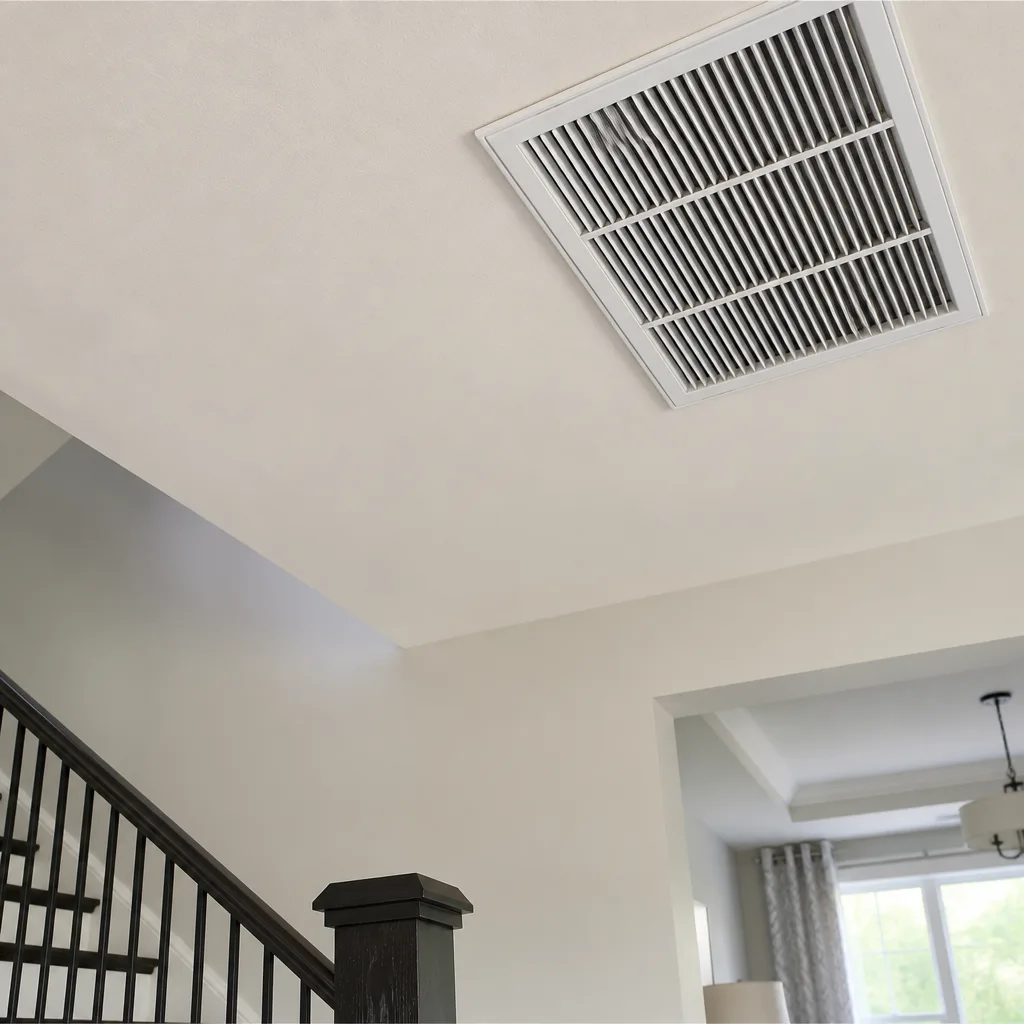 Sanitizing & deodorizing
Whole-system duct and dryer vent check with before-and-after photos - you see exactly what came out of your vents
That "$99 whole-house special" is a bait ad - the real number appears once they are in your hallway, or the "clean" is a shop-vac at the register. We photograph the inside of your ducts before and after instead.
Air Duct Cleaning Troubleshooting: Common Problems and How to Fix Them
If your ducts were cleaned six months ago and the smell is back, the problem was never dirty ducts. It was a moisture source, a dead animal, or a mold colony that a vacuum wand cannot remediate. Cleaning the wrong thing twice costs more than diagnosing it once. This guide maps specific symptoms to their root causes, so you know whether you need a cleaning, a repair, or something else entirely. We’ve built our Duct Cleaning Diamond Bar home service around this diagnostic-first approach because homeowners in Diamond Bar deserve answers, not repeat appointments.
Styles & brands we work with
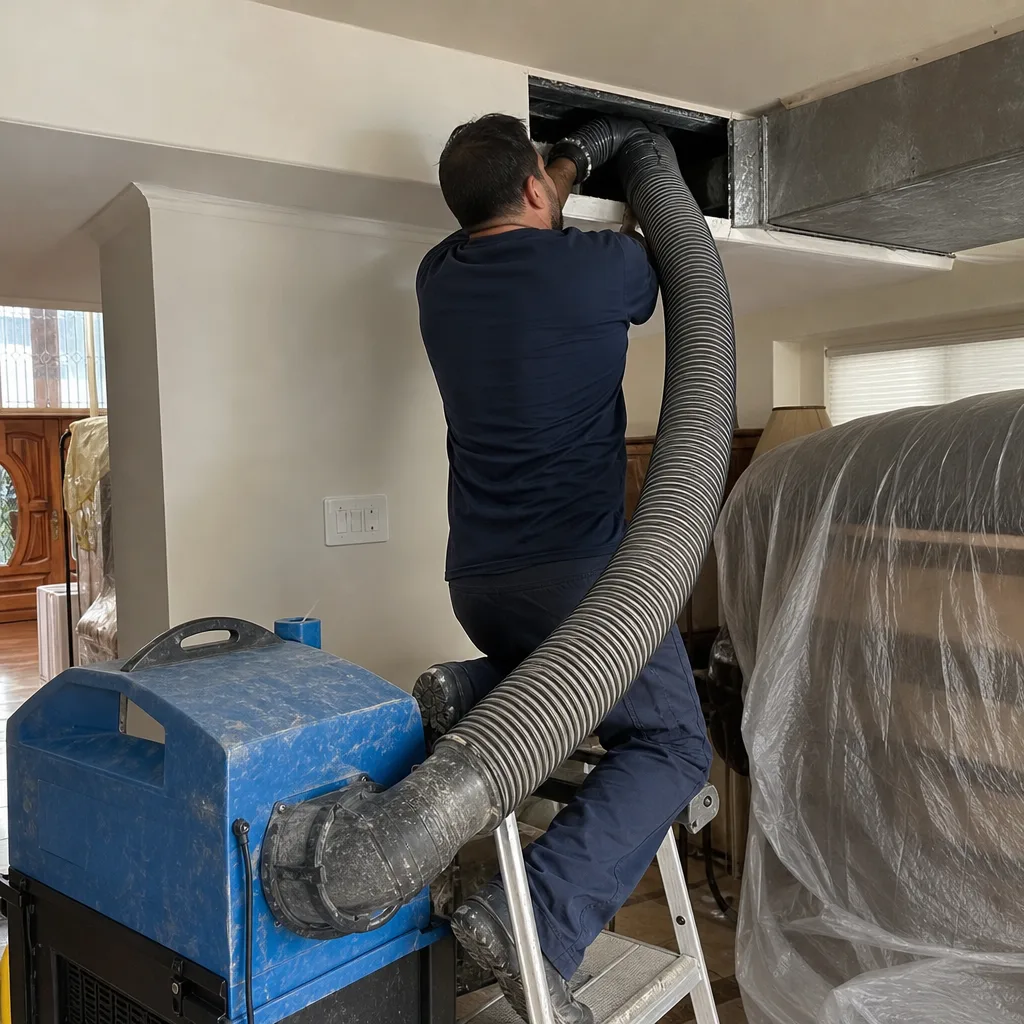
- Whole-home duct cleaning
- Dryer vent cleaning
- Camera inspection
- Sanitizing & deodorizing
Quick Answer
Air duct problems fall into four categories: airflow restriction, odor, visible debris, and moisture. Each symptom points to a different failure point. Fixing the symptom without addressing the cause means the problem returns, usually within months. The most common root causes we find are filter bypass, duct leakage, coil mold, and disconnected runs. Proper diagnosis determines whether you need professional cleaning, duct repair, or humidity control.
Table of Contents
- Musty Odor From Vents: Mold, Coil, or Drain Pan?
- Burning Smell When Heat Runs: What It Actually Means
- Dust Puffs From Vents: Filter Bypass and Return Leaks
- Uneven Room Temperatures After Cleaning: Leakage and Damper Failure
- When Cleaning Makes It Worse: Negative Pressure and Technique
- When Duct Cleaning Is Not the Answer
- Dryer Vent Problems: A Separate Fire Risk
- DIY vs. Professional Equipment: What Actually Removes Debris
- Common Mistakes to Avoid
- When to Call a Professional
- Frequently Asked Questions
- The Bottom Line
Musty Odor From Vents: Mold, Coil, or Drain Pan?
A musty smell from your vents is the most common reason homeowners in Diamond Bar call for duct cleaning. But here is what most companies will not tell you: the smell is a location clue, not a diagnosis. It can come from at least four different places, and only one of them is inside the ducts themselves.
The four sources of a musty HVAC smell:
- Evaporator coil mold: The coil sits above your furnace or inside your air handler. It gets cold and wet every cooling cycle. If the coil collects dust, that dust becomes a damp mat where mold grows. The smell passes through the ducts but the mold lives on the coil, not in the ductwork.
- Drain pan stagnation: Condensation drips off the coil into a drain pan. If the pan does not drain properly, standing water grows biofilm within days. The smell rises into the airstream when the blower runs.
- Duct interior moisture: If ducts run through an unconditioned attic and humid air leaks in through gaps, dust inside the ducts absorbs that moisture. This is where actual duct mold can occur, but it requires a moisture source. In Diamond Bar’s hot, dry summers, attic ducts rarely stay wet long enough for this unless there is a leak or poor insulation.
- Attic or crawlspace infiltration: Return ducts with gaps or disconnected sections pull air directly from the attic or crawlspace. If that space smells musty, so will your supply air, regardless of how clean your ducts are.
Here is the diagnostic sequence we use when a Diamond Bar customer reports a musty smell:
- Turn the system fan on without heating or cooling. If the smell is present with the blower only, the source is in the ductwork or air handler, not the coil.
- Run the air conditioner. If the smell appears only when cooling runs, the coil or drain pan is the prime suspect.
- Run the heat. If the smell appears only during heating, check for debris near the heat exchanger or a dirty blower wheel.
- Inspect the return register and the filter. If dust is bypassing the filter, the coil is being fed a constant stream of particulates. That is the root cause, and cleaning ducts will not stop it.
If the coil is moldy, the fix is coil cleaning and addressing the filter bypass. If the drain pan is stagnant, the fix is clearing the drain line and checking pan slope. If the ducts themselves are damp, you need Air Duct Repair in Diamond Bar to seal the leakage points, because cleaning alone leaves the moisture source in place.
Burning Smell When Heat Runs: What It Actually Means
A burning smell from vents when the furnace first starts is one of the most misunderstood symptoms in residential HVAC. Most homeowners assume it is dust burning off the heat exchanger. Sometimes that is true. Sometimes it is an electrical problem that needs immediate attention. Knowing the difference matters.
Dust burn-off versus component failure:
- Dust burn-off: After a long idle season, dust settles on the heat exchanger and burners. The first few heating cycles burn that dust off. The smell is dusty, dry, and dissipates within 20 to 30 minutes. It does not return until the system sits unused for months again.
- Electrical overheating: A sharp, acrid smell that resembles melting plastic or burning wire is not dust. It can indicate a failing blower motor capacitor, overheating relay, or a blower motor drawing excessive current. This smell does not fade quickly and often intensifies.
- Foreign object on the heat exchanger: If a small toy, piece of insulation, or pest nesting material fell through a register and landed on the heat exchanger, it smolders every time the furnace runs. The smell may be intermittent and often has an organic, non-metallic character.
- If you smell burning for the first time in the season and it fades within half an hour, run the fan for a while and monitor. This is normal dust burn-off.
- If the smell persists beyond one hour, shut the system down at the thermostat and the breaker. Call a professional. Persistent burning odors are not a duct issue and no amount of duct cleaning resolves an electrical fault.
- If you see smoke or smell plastic specifically, do not run the system. Treat it as an electrical hazard until diagnosed.
Duct cleaning plays a supporting role here. Removing accumulated dust from the duct system reduces the volume of material available to burn off each season. But if the burning smell is electrical, the ductwork is irrelevant, and delaying a professional inspection risks damage to the blower motor or the heat exchanger.
Dust Puffs From Vents: Filter Bypass and Return Leaks
Visible dust puffing from supply registers when the system starts is a symptom many people misread as “dirty ducts.” In our experience across Diamond Bar homes, the real culprit is usually airflow bypassing the filter or leaks in the return ductwork.
Think of it this way: your filter is the only barrier between the air in your home and the air moving through your ducts. If the filter does not fit tightly, if it is the wrong size, or if the return ducts have gaps, unfiltered air enters the system. That unfiltered air carries dust, pet hair, and cooking particulates straight into the blower, coil, and supply ducts. The ducts accumulate debris because the filtration is failing, not because the ducts are inherently dirty.
Three signs of filter bypass:
- Dust accumulates on the supply register grille itself within days of wiping it clean.
- The filter shows a clean rectangle in the center while the edges are dirty, indicating air is channeling around the filter rather than through it.
- You find dust caked on the blower motor or blower wheel when the access panel is removed.
Three signs of return duct leakage:
- Dust streaks appear on the return grille and surrounding ceiling or wall.
- The system pulls air from the attic or garage, evidenced by temperature-strange air at the return.
- Cleaning the ducts reduces dust for a month or two, then it returns to previous levels because the leak keeps feeding new debris in.
The fix sequence is seal first, clean second. If you clean ducts while return leaks remain, you are spending money to remove debris that will be replenished within weeks. A proper Air Duct Cleaning in Diamond Bar inspection includes checking filter fit, return integrity, and supply run connections before any cleaning begins. That is the difference between treating the symptom and fixing the system.
Uneven Room Temperatures After Cleaning: Leakage and Damper Failure
Some homeowners schedule duct cleaning expecting it to fix uneven temperatures between rooms. Here is the uncomfortable truth: duct cleaning removes debris, but it does not change airflow balance. If a bedroom was 8 degrees warmer than the hallway before cleaning, it will be 8 degrees warmer after, unless the imbalance was caused by a physical blockage that the cleaning removed.
Uneven room temperatures almost always trace back to one of three causes:
- Duct leakage in unconditioned space: Supply ducts running through an attic or crawlspace lose conditioned air through gaps at joints and seams. The rooms at the end of the longest runs suffer most because pressure drops along the way. Sealing those ducts can recover 20% to 40% of lost airflow in some Diamond Bar homes, especially those built before current duct-sealing standards.
- Balance damper failure or mispositioning: Most systems have manual dampers at the trunk line that control how much air each branch receives. If a damper has slipped, been closed by a previous occupant, or its handle has stripped, the branch it controls gets reduced airflow. This is a 10-minute fix for someone who knows what to look for.
- Undersized or kinked flexible duct: Flex ducts that were installed with sharp bends, crushed sections, or excessive length restrict airflow significantly. This is a duct design or repair issue, not a cleaning issue.
Here is what this means for troubleshooting: if you suspect uneven temperatures are caused by a blockage like a collapsed duct or pest nesting, cleaning may resolve it. If the cause is leakage or damper mispositioning, cleaning does nothing. A technician should inspect airflow at each register before and after cleaning and flag any branch with abnormal static pressure. That diagnostic step is what separates a specialist from a truck-and-hose operation.
In Diamond Bar, where summer temperatures routinely exceed 90 degrees, a single underperforming room is not just uncomfortable. It pushes the entire system to run longer, raising energy costs. Sealing and balancing the ducts addresses the root cause. Air Duct Repair in Diamond Bar is the service that actually resolves this complaint, often more effectively than cleaning on its own.
When Cleaning Makes It Worse: Negative Pressure and Technique
We hear a specific version of this story at least twice a month: “I had my ducts cleaned and now there is dust everywhere.” It is one of the most frustrating outcomes a homeowner can experience, and it usually points to a technique failure on the part of the previous cleaning crew.
Professional duct cleaning works by creating negative pressure in the duct system while agitating debris from the duct walls. The negative pressure ensures that dislodged particles are pulled into the vacuum collection system rather than pushed into the living space. If that negative pressure is not maintained, or if the technician uses a method that pushes air from the supply side without sealing off other registers, debris escapes into the home.
What causes post-cleaning dust outbreaks:
- No containment at registers: Unsealed registers allow agitated dust to escape before the vacuum captures it.
- Insufficient vacuum capacity: Consumer-grade or undersized commercial vacuums cannot maintain negative pressure across an entire trunk and branch system simultaneously.
- Aggressive brushing without airflow: Rotary brushes that spin without adequate vacuum behind them simply aerosolize debris.
- Cleaning only some branches: If the technician seals off half the system and cleans the other half, the sealed portions are never agitated, and the method leaves the job half-done while still charging full price.
- Persistent allergies with clean ducts: If the ducts were cleaned recently and allergy symptoms continue, the issue may be the coil, the blower, or the filter. More likely, the problem is particle sources inside the home: carpeting, pets, upholstery, or outdoor pollen entering through open windows. Consider a Honeywell whole-home filtration upgrade rather than repeated duct cleanings.
- High humidity in summer: Dust mites and mold thrive above 55% relative humidity. If your Diamond Bar home struggles with humidity, an Aprilaire dehumidifier addresses the condition that makes air feel heavy and stale. Cleaning ducts does nothing for indoor humidity levels.
- Static shock and dry air in winter: Dry air is a comfort issue solvable with humidity control, not duct cleaning.
- Smoke or cooking odors that linger: Odors that are not biological in origin may require air washing or filtration changes, not duct cleaning. If grease particulates have entered the ducts through the return, cleaning helps, but ongoing cooking will re-deposit them.
- Drafty rooms or poor insulation: Air leaks around windows, doors, and wall penetrations are envelope problems. Duct cleaning does not touch them.
- Clothes take more than one cycle to dry, especially towels and bedding.
- The dryer exterior gets hot to the touch during operation.
- The laundry room becomes noticeably humid or warm while the dryer runs.
- You smell a musty or burning odor from the dryer.
- The exterior vent flap does not open when the dryer is running.
- It has been more than 12 months since the vent was last cleared.
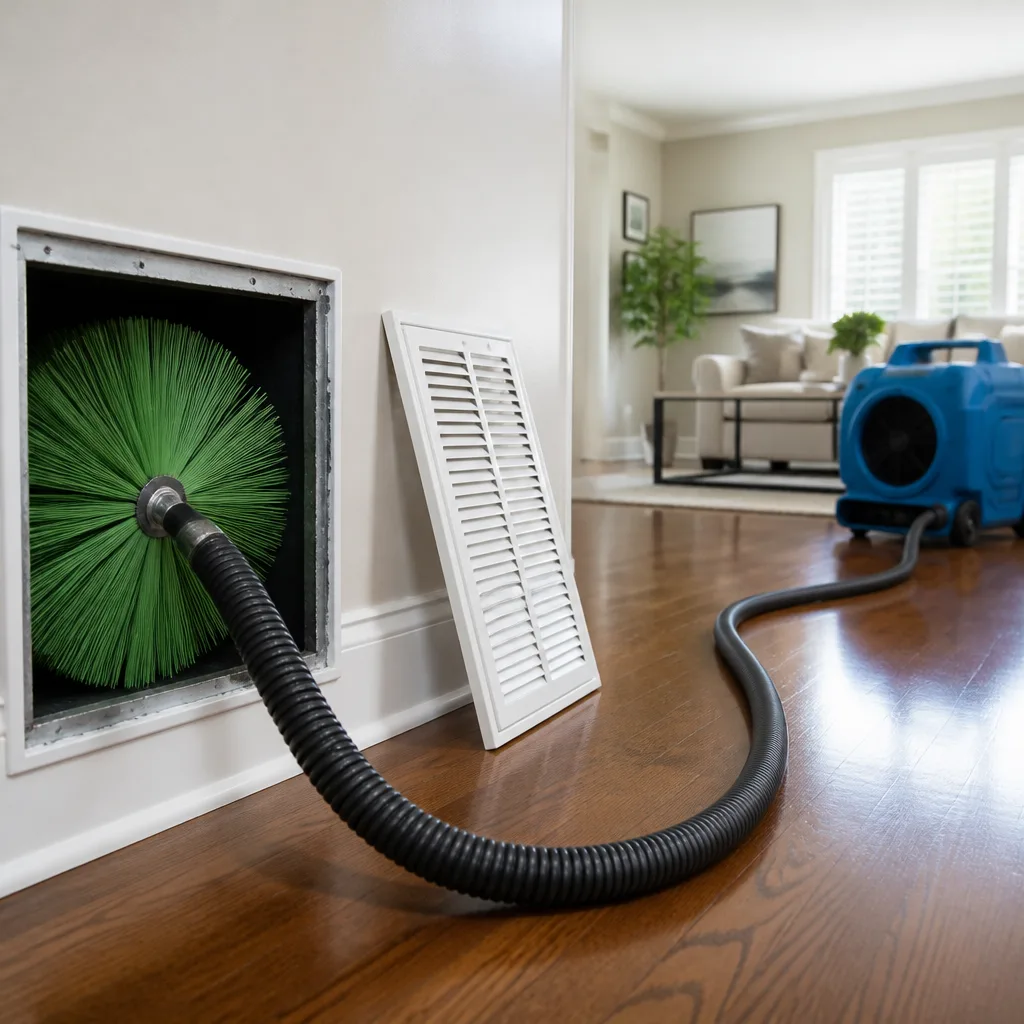
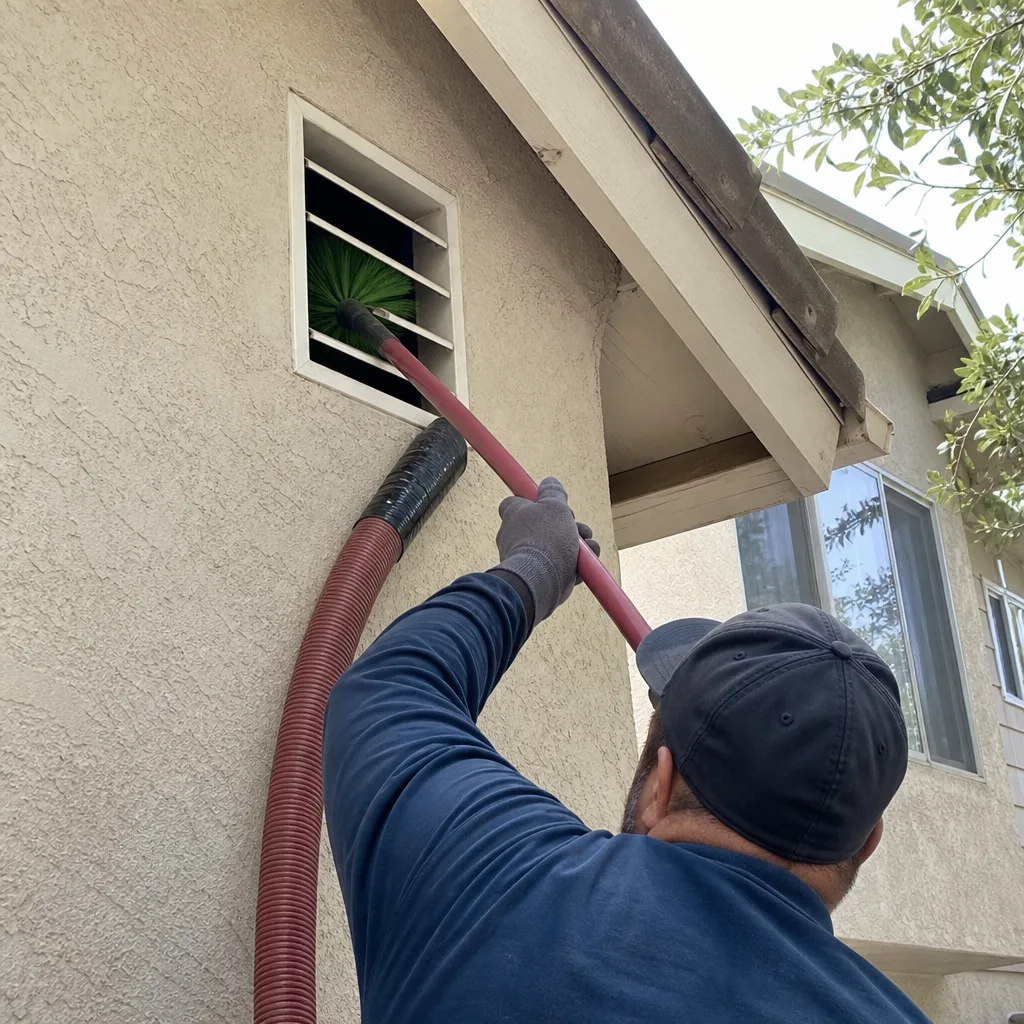
- Rotary brush systems (Rotobrush): A motorized brush head spins inside the duct while compressed air or mechanical agitation breaks debris loose from duct walls. The brush reaches deep into runs that a hose alone cannot agitate.
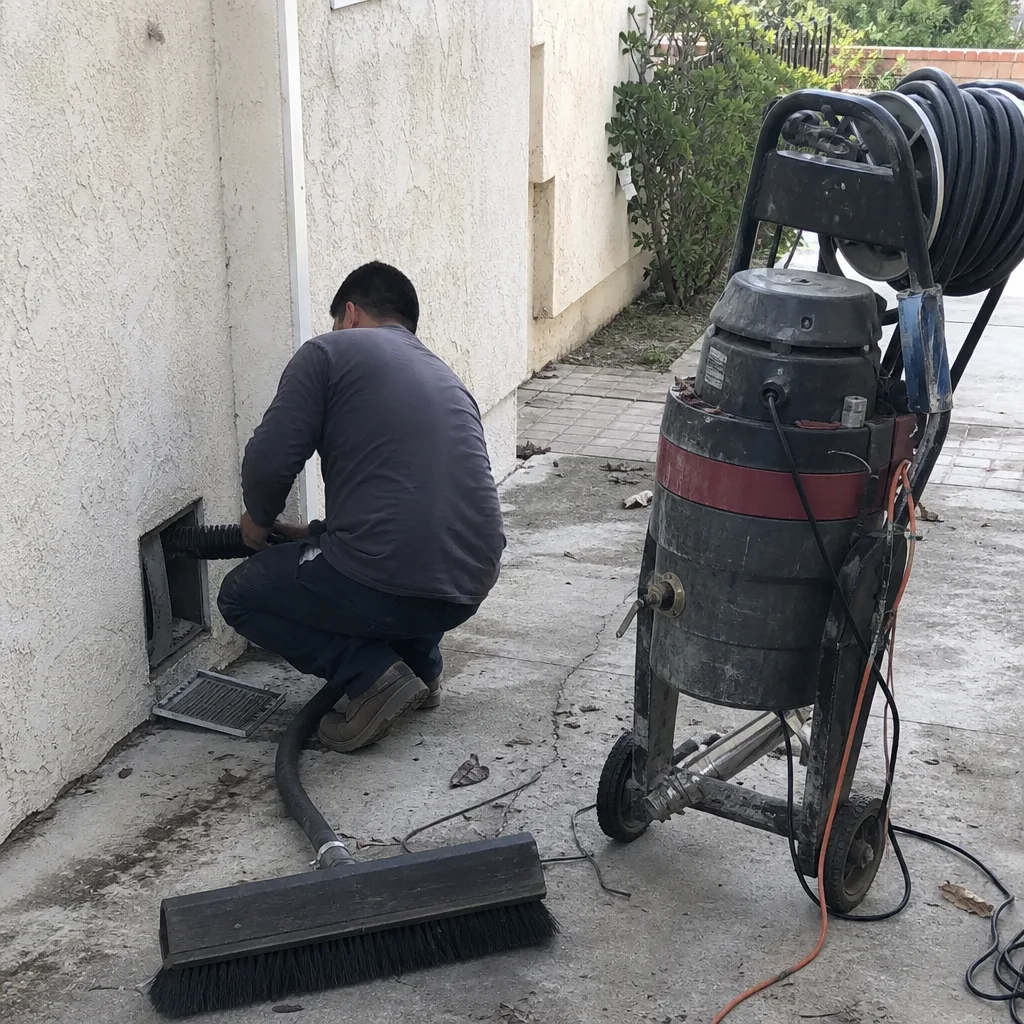
- HEPA-filtered negative air machines (Nikro): These vacuums pull thousands of cubic feet per minute through the duct system while trapping sub-micron particles in HEPA filters. The negative pressure is what prevents debris from escaping into your home during cleaning.
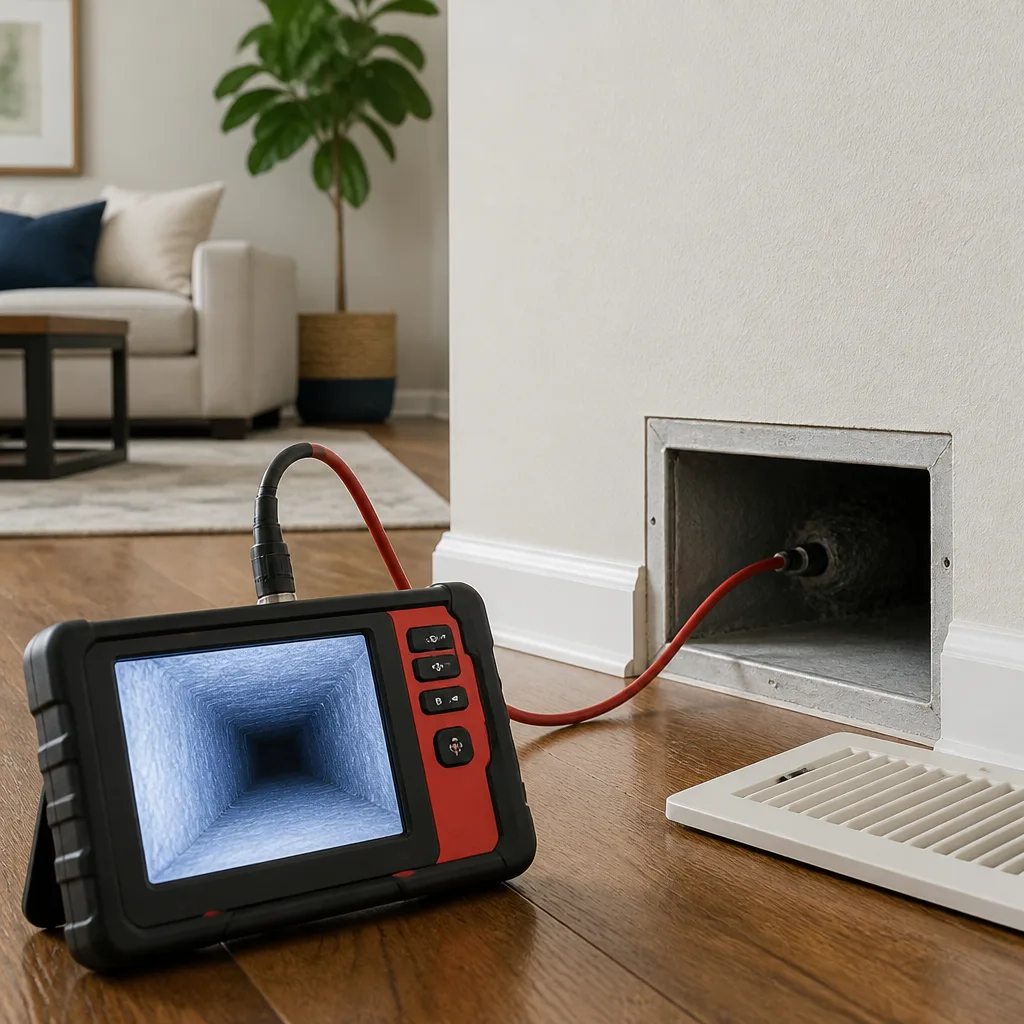
- Inspection cameras: Before and after photos of your actual ducts show what was removed and confirm the work was performed. This is not a marketing gimmick. It is verification.
- Agitation tools: Air whips and skipper balls reach into corners and flat surfaces that brushes miss, dislodging debris that has compacted over years.
- Cleaning before sealing return leaks: If unfiltered air is entering the system through gaps, cleaning is a temporary fix at best. Seal first, clean second. In Diamond Bar’s dusty summer months, return leaks pull in particulates continuously.
- Replacing a dirty filter with the wrong size: A filter that is too small lets air bypass the media entirely. Measure the slot and get a filter that fits tightly. The filter’s job is to protect the coil and ducts, not to look installed.
- Ignoring a musty smell because it “only happens sometimes”: Intermittent odors have sources. If the smell appears only when the AC runs, the coil or drain pan is the likely location. Waiting turns a cleanable coil into a mold remediation problem.
- Assuming ducts never need cleaning because the filter is changed regularly: Filters capture what moves through them, but any leakage, bypass, or construction debris in the system settles in the ducts. After renovations in Diamond Bar homes, drywall dust and sawdust often blanket the duct interior despite a clean filter.
- Treating a dryer vent clog as an inconvenience: A clogged dryer vent is a fire hazard, not a laundry annoyance. If drying times have doubled, do not wait. The lint is already compacted and the dryer is working harder than it should.
- Choosing a duct cleaner on price alone: The lowest quote often comes from a company that spends 45 minutes, uses undersized vacuums, and skips the return side entirely. Ask what equipment they use and whether they take before-and-after photos. If they cannot answer both questions specifically, keep looking.
The equipment matters because physics is not optional. We run Nikro HEPA-filtered vacuums with sealed containment at every register. The HEPA filtration means particles down to 0.3 microns are captured, not exhausted back into the home. The rotary brush systems we use, specifically Rotobrush systems, agitate debris while the vacuum holds negative pressure throughout the run. That combination is what prevents the “it got worse” outcome.
If you experienced a dust outbreak after a previous cleaning, the debris that settled in your home came from your own ducts. It was dislodged without being captured. The fix is a proper cleaning with correct containment, plus a thorough wipe-down of registers and nearby surfaces afterward. And if the previous company did not seal your filter slot or inspect return leakage, those are the next steps to check.
When Duct Cleaning Is Not the Answer
Duct cleaning is a specific service for a specific problem: accumulated debris inside the duct system. It is not a cure for every air quality complaint. Some of the most common requests we receive in Diamond Bar are better served by a different intervention, and an honest technician should tell you when that is the case.
Scenarios where duct cleaning will not resolve the complaint:
We use Abatement Technologies equipment for circumstances that require true particulate capture beyond standard cleaning. That equipment signals we are prepared for the more demanding jobs that consumer-grade tools cannot handle. But we are equally comfortable telling a homeowner that their complaint is not a duct problem. A diagnostic-first approach means sometimes the answer is “your ducts are fine, here is what actually needs attention.”
That said, if you have never had the ducts inspected and the home is more than 10 years old, a professional assessment is worth the hour. Half the problems we find during a standard Air Duct Cleaning in Diamond Bar visit were invisible to the homeowner until we opened the access panels and pointed a camera into the trunk line.
Dryer Vent Problems: A Separate Fire Risk
Your dryer vent is not part of your HVAC system, but it is the most dangerous duct in your home. The National Fire Protection Association identifies dryer vents as a leading cause of residential fires. Lint is highly combustible, and a clogged vent raises the dryer’s internal temperature until ignition becomes a real possibility.
Signs your dryer vent needs attention:
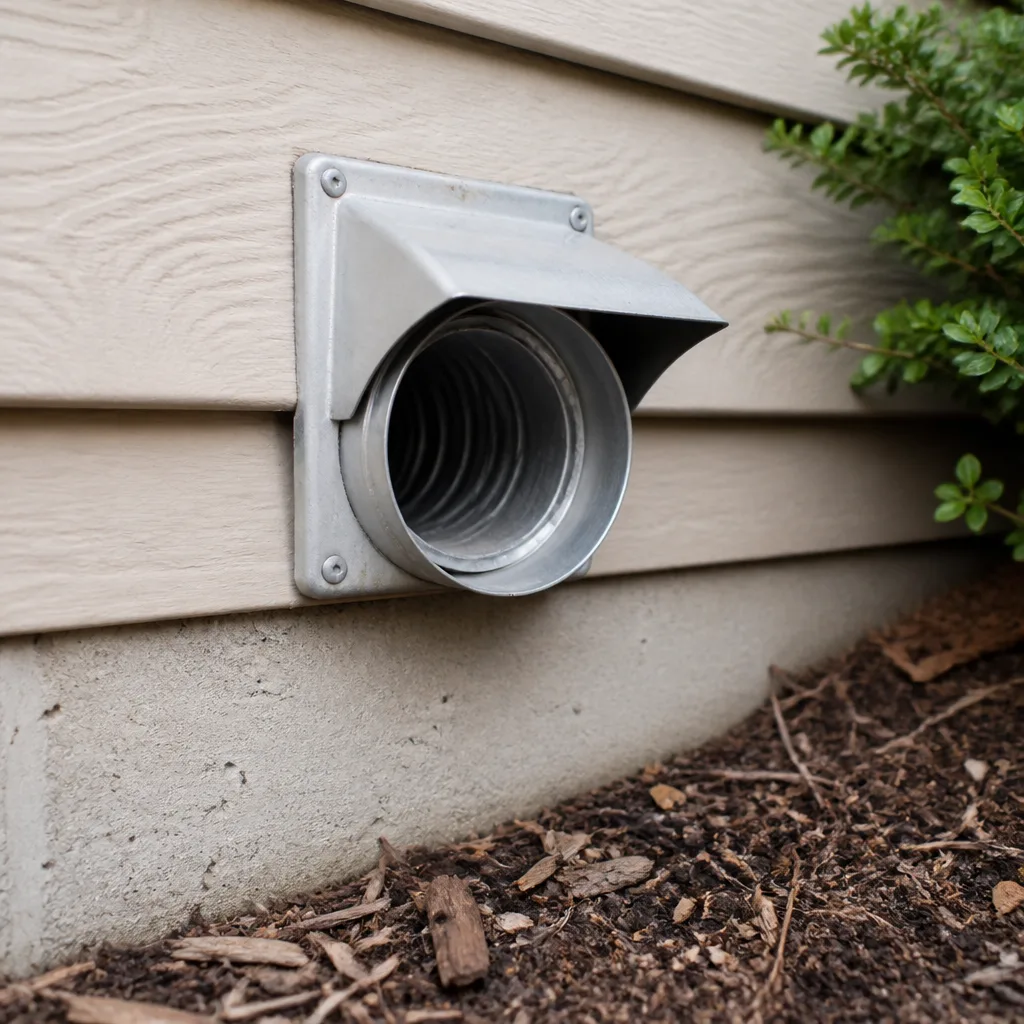
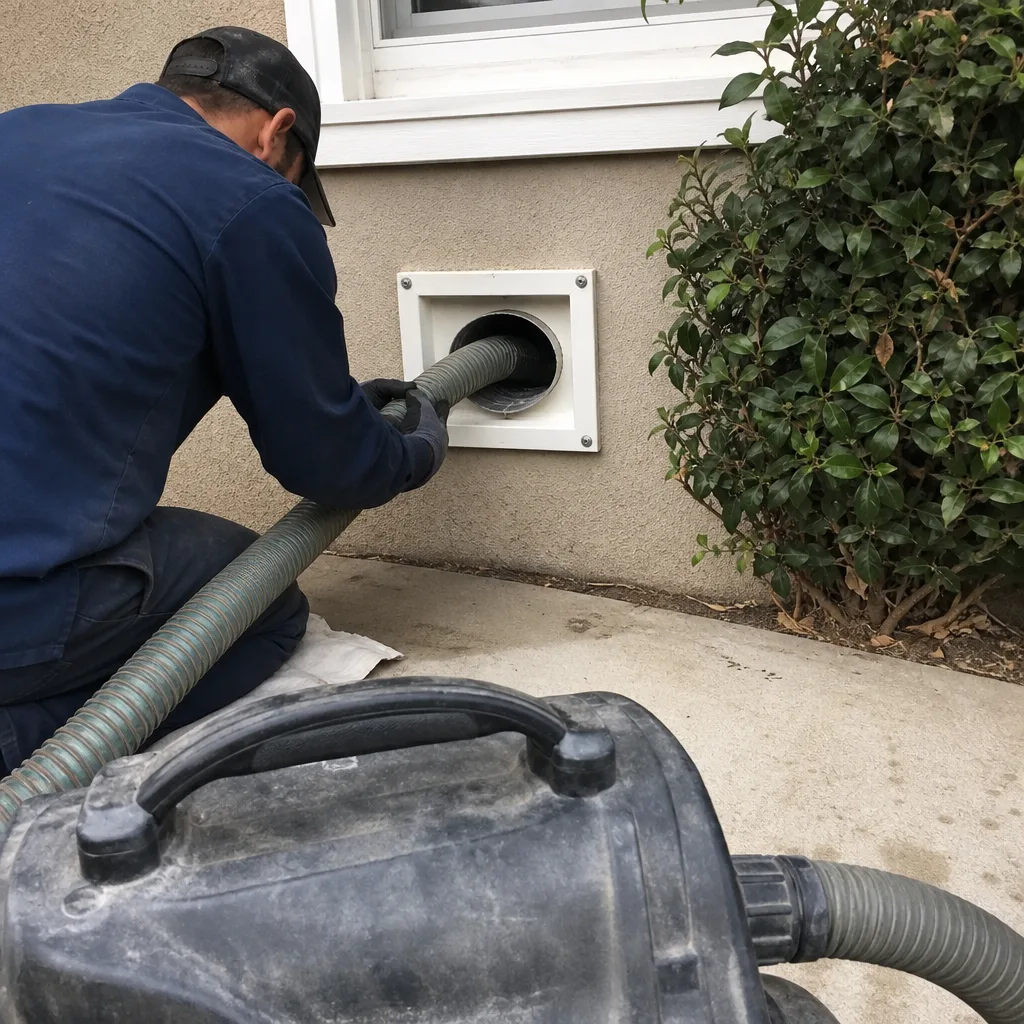
Dryer vent cleaning is a dedicated service, not an add-on. We run dedicated vent-cleaning tools through the entire length of the run, from the dryer connection to the exterior termination. In Diamond Bar homes where dryers are located on interior walls or upper floors, vent runs can be 15 to 30 feet long with multiple bends. Each bend is a lint trap. Each lint trap is a potential ignition point.
This is the one duct-cleaning adjacent task where the safety stakes are highest. Your dryer vent is a fire risk waiting to be cleared. We offer Dryer Vent Cleaning in Diamond Bar as a standalone service because it deserves standalone attention, not a five-minute attachment to an HVAC cleaning.
DIY vs. Professional Equipment: What Actually Removes Debris
We understand the appeal of renting a shop vac and trying to clean your own ducts. In most Diamond Bar homes, the accessible portion of the duct system is maybe 10% to 15% of the total run. Supply registers reach only the first few feet of each branch. The trunk line, plenums, and return drops are behind walls, above ceilings, and beneath floors. You cannot reach them with consumer equipment.
What professional equipment does differently:
The difference between a professional cleaning and a DIY attempt is not effort. It is access and capture. A thorough cleaning requires tools that reach the entire system and contain every particle they dislodge. That is why we bring Rotobrush rotary systems and HEPA-rated Nikro vacuums to every job. Professional-grade equipment, not consumer-grade shortcuts.
We also work with Honeywell and Aprilaire components, which means if your system would benefit from better filtration, humidity control, or air quality monitoring, we can discuss upgrades during the same visit rather than referring you to a different contractor. That whole-home perspective is part of what a specialist brings to the table.
Common Mistakes to Avoid
When to Call a Professional
Call a professional when the symptom has a source you cannot see. If the musty smell persists after you have changed the filter and inspected accessible registers, the coil, drain pan, or duct interior is the next place to look, and that requires opening the system. If dust returns within weeks of cleaning, you have an unresolved leak or bypass. If rooms are dramatically different temperatures, you need airflow diagnostics, not more cleaning. If your dryer takes twice as long to dry clothes, the vent is obstructed and every cycle is a fire-risk event.
Duct Cleaning Diamond Bar offers free estimates in Diamond Bar. We inspect before we clean, document what we find, and recommend only what the system actually needs. Call (877) 693-6770 to schedule an assessment.
Frequently Asked Questions
Whole-home duct cleaning for a typical Diamond Bar residence generally falls between $350 and $700 depending on the number of systems, the length of duct runs, and the level of contamination present. A small condo with one system and short runs will sit at the lower end. A two-story single-family home with two systems, a long trunk line, and post-renovation debris will run higher. The price should be quoted as a flat rate per system, agreed before work starts, with no per-vent add-ons. Call (877) 693-6770 for an exact quote. Estimates are free.
Cheaper quotes generally mean lower-powered equipment, shorter service windows, and fewer steps completed. A company quoting $99 for a whole home is typically spending 30 to 45 minutes, using a consumer-grade vacuum, and cleaning only the supply registers they can reach from inside the home. They are not agitating the trunk line, not photographing the interior, and not sealing registers properly. You are paying for the appearance of cleaning rather than the mechanical removal of debris. A professional cleaning uses commercial negative-air equipment and takes several hours. The price difference reflects the difference in work performed.
Ask for before-and-after photos from the inspection camera. Any legitimate professional company will document the duct interior at the start and end of the job. The photos should show the same duct sections, with visible reduction in debris. If a company cannot provide photos, they either do not have inspection equipment or they are not actually cleaning deep enough to matter. You can also check a supply register after the job: run your finger inside the first few inches of the duct. It should come back nearly clean, not coated in dust.
Most homes benefit from duct cleaning every 3 to 5 years. That interval shortens if you have pets that shed heavily, if you have completed renovations, if anyone in the home has significant allergies or respiratory conditions, or if you live in an area with high outdoor dust. In Diamond Bar, homes near the 57 and 60 freeways tend to accumulate particulate faster than homes further from traffic corridors. The best way to know is to look inside: if there is visible debris, a dust mat on the duct floor, or odor when the system runs, it is time regardless of calendar.
It can, if the ducts are actually holding dust, pet dander, and pollen that gets re-circulated every time the system runs. Removing that reservoir reduces the total particulate load in the home. But it is not a cure by itself. If your filter is inadequate, allergies will persist regardless of duct cleanliness. We recommend pairing duct cleaning with a proper filtration assessment and, where appropriate, a whole-home filtration upgrade. The combination of clean ducts and a filter that actually captures airborne particles makes a measurable difference.
Yes. Diamond Bar’s hot, dry summers mean air conditioning runs for months at a time, pulling air through the return and across the coil continuously. That constant operation deposits particulates on the coil and duct surfaces faster than in milder climates. The dry conditions also make settled dust easier to dislodge when the system kicks on, contributing to visible dust puffs at registers. Homes near the foothills also see more outdoor dust entering through open windows during spring. These factors make regular duct assessment more important here than in coastal areas with lower system runtime.
The Bottom Line
Air duct problems are rarely solved by cleaning alone when the underlying cause is filtration, leakage, or moisture. The sequence that works is diagnosis first, repair second, cleaning third. If you smell must, find the source. If you see dust puffs, find the bypass. If rooms are uneven, find the airflow restriction. Then, once the system is intact and sealed, clean the ducts so they stay clean. Clean ducts. Repaired ducts. The difference matters. In Diamond Bar, where the AC runs for half the year and dust is a constant, that difference shows up in your air, your energy bill, and how often you have to call someone back.
Written by the team at Duct Cleaning Diamond Bar, serving Diamond Bar since 2015.
See the difference
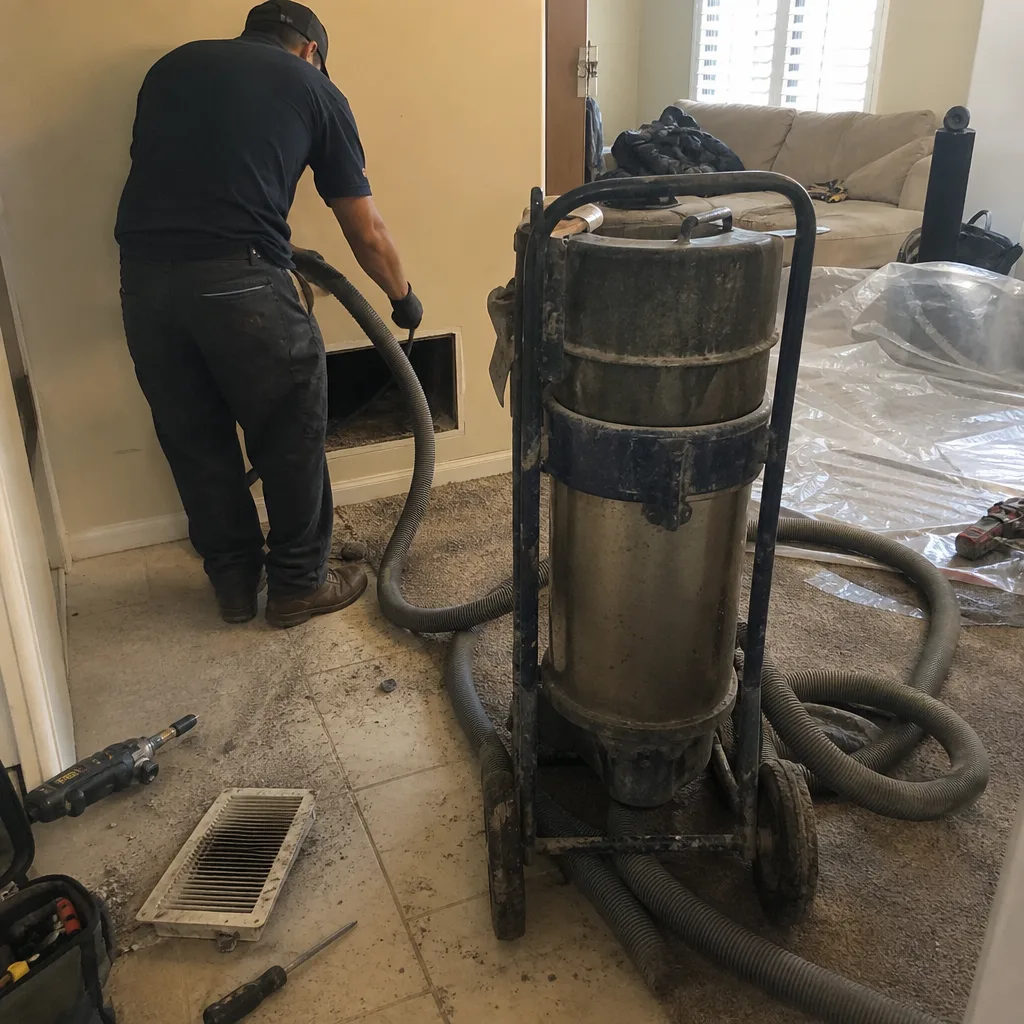 Before
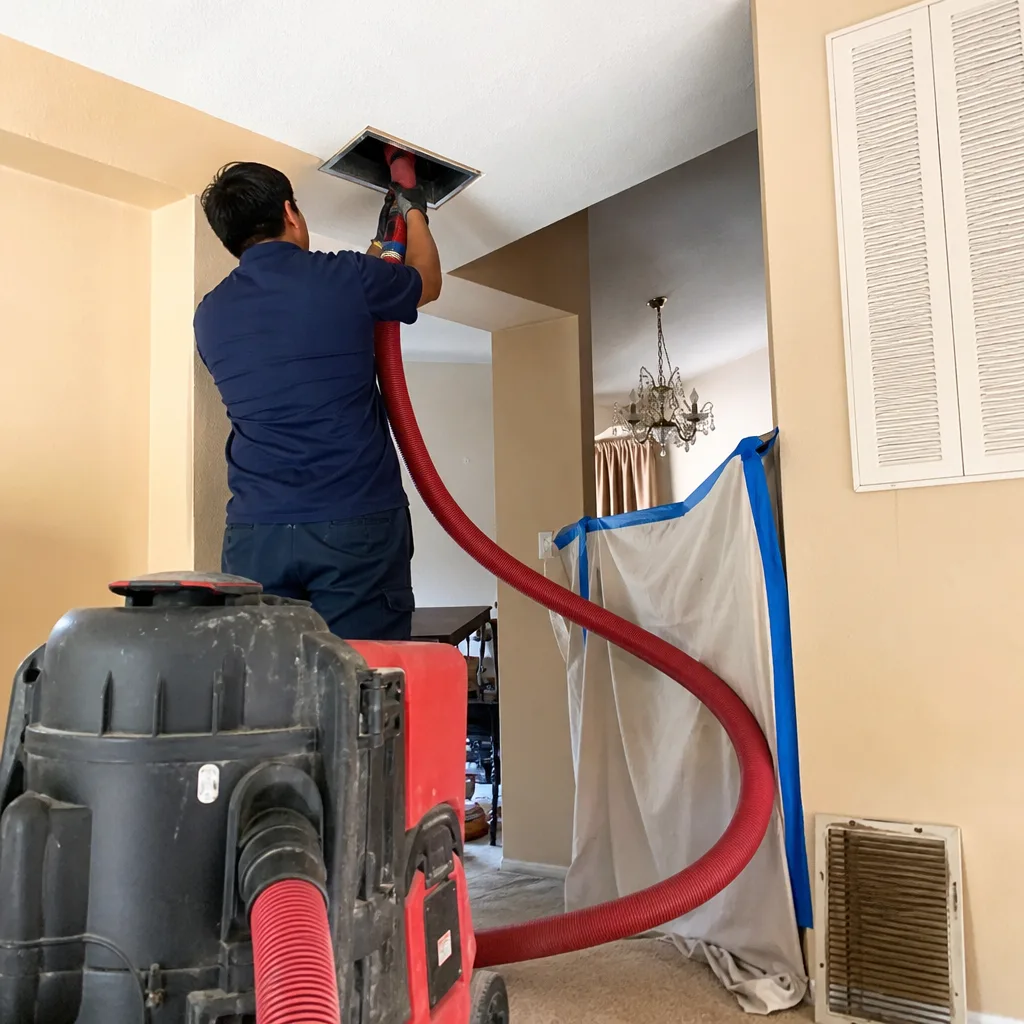 After
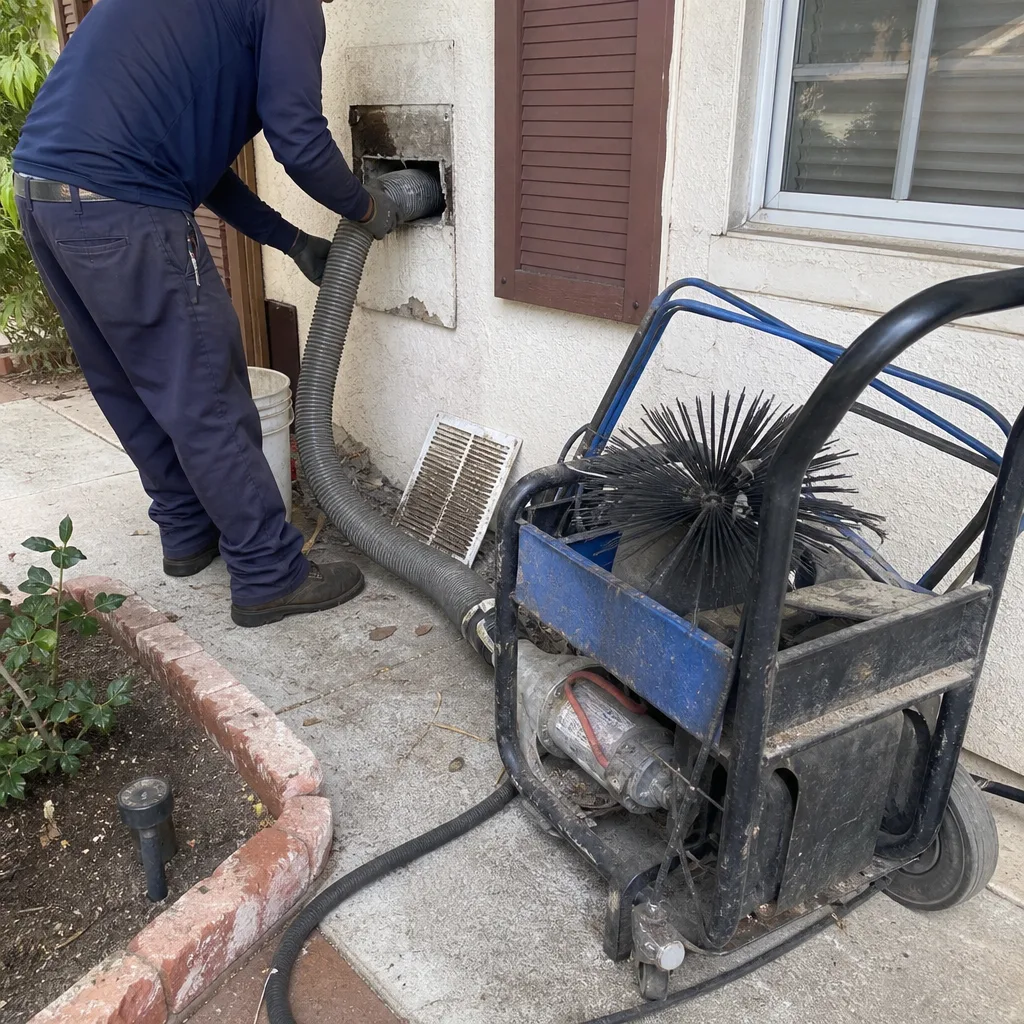 Before
 After
 Before
 After