
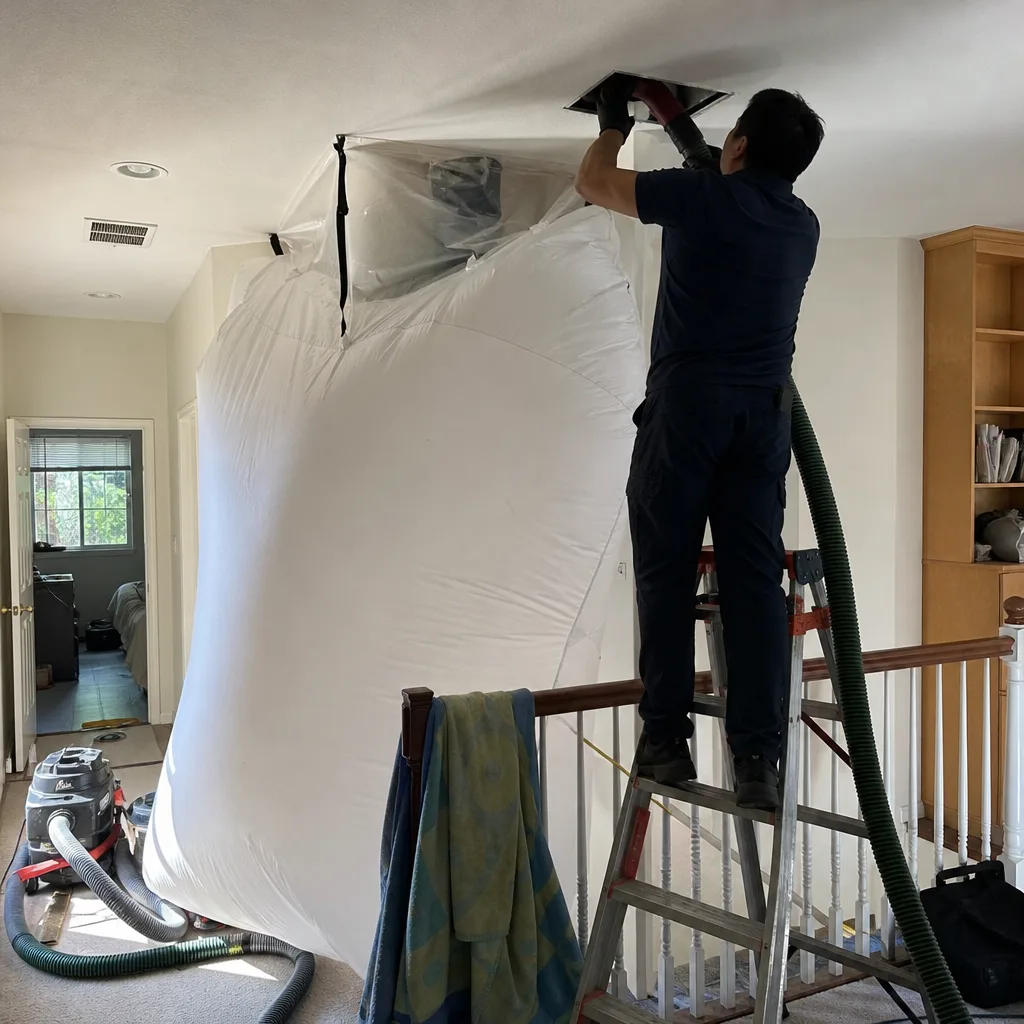
Last updated November 3, 2026
 Whole-home duct cleaning
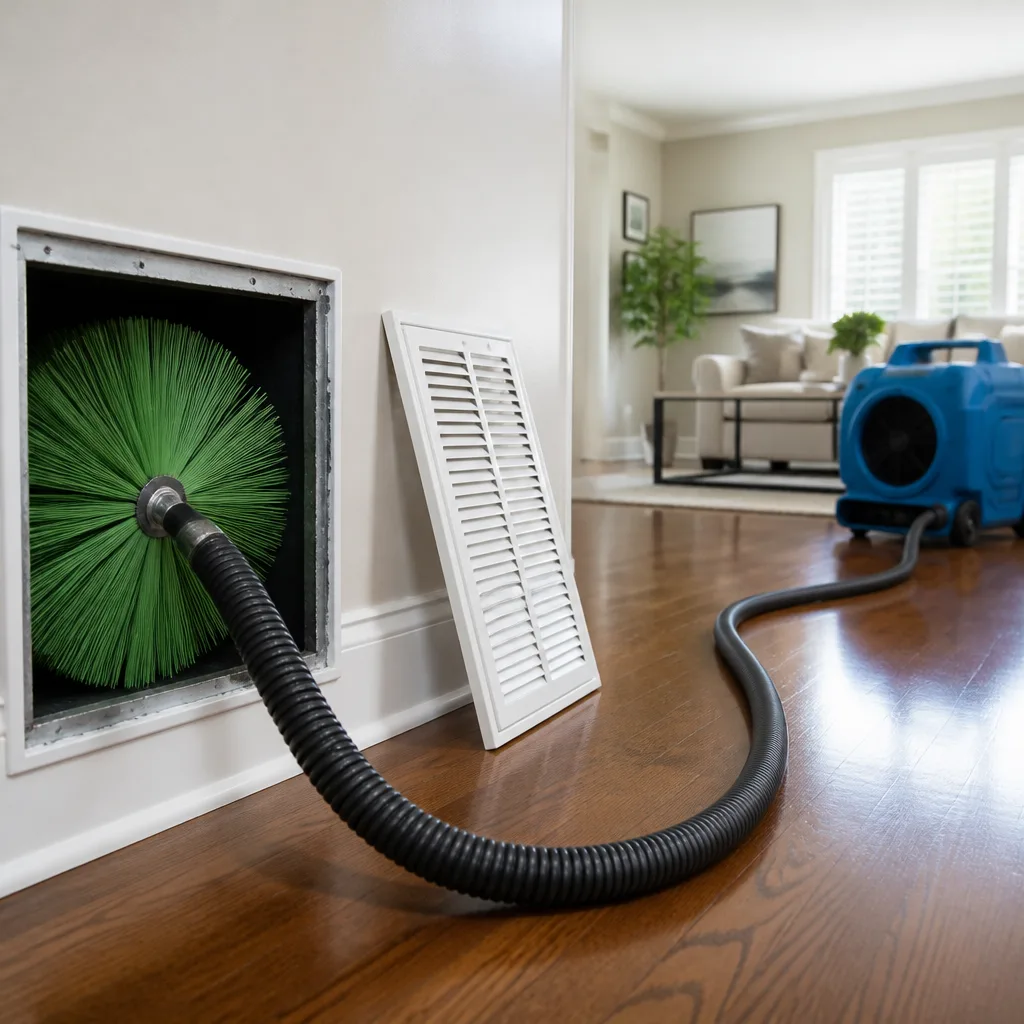
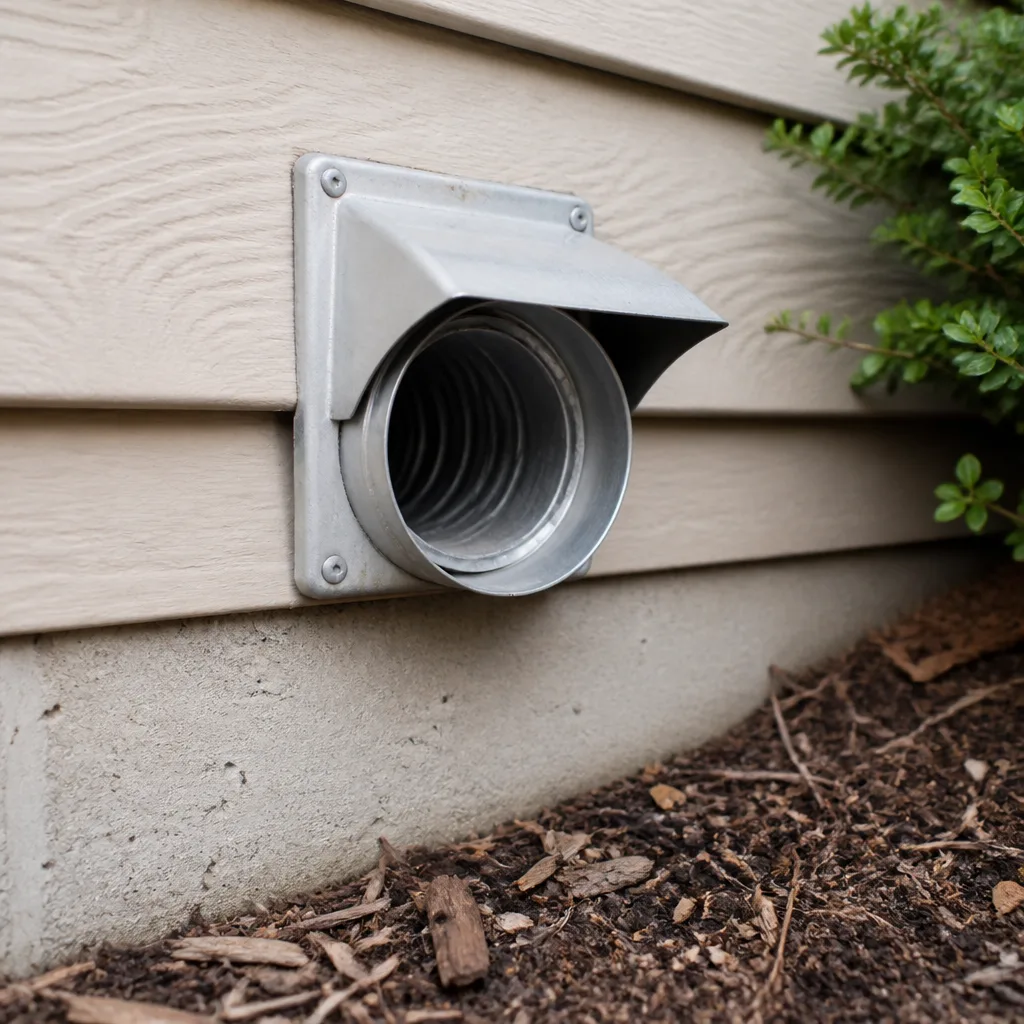 Dryer vent cleaning
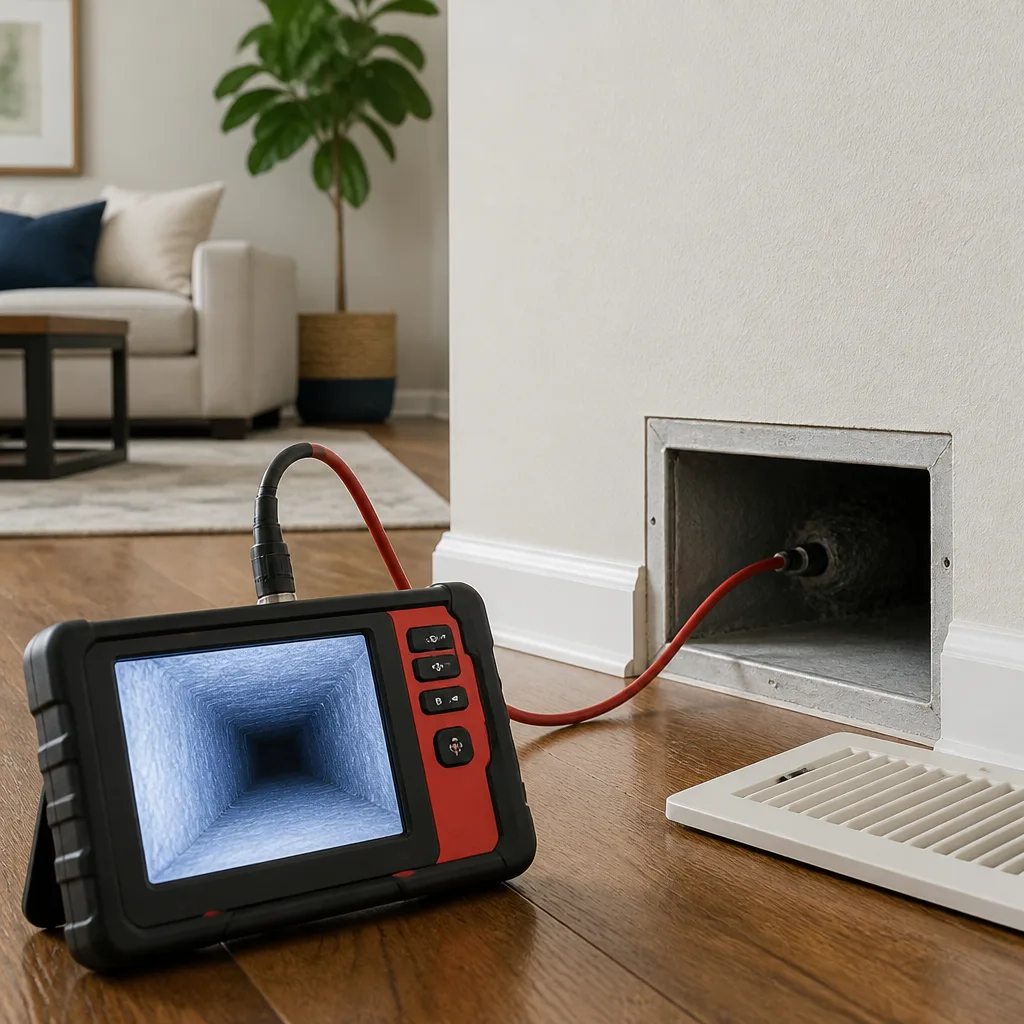 Camera inspection
 Sanitizing & deodorizing
Whole-system duct and dryer vent check with before-and-after photos - you see exactly what came out of your vents
That "$99 whole-house special" is a bait ad - the real number appears once they are in your hallway, or the "clean" is a shop-vac at the register. We photograph the inside of your ducts before and after instead.
The Complete Air Duct Cleaning Guide for Diamond Bar Homeowners
Most air duct cleaning guides read like they were written for a ranch house in Ohio. Flat land, predictable weather, basements. That advice falls apart fast in Diamond Bar, where canyon winds push fine particulate through homes built into the hillsides, and where flex duct installed in 1980s tract homes has spent 40 years sagging, leaking, and trapping what the Santa Anas deliver. This guide explains what actually accumulates in Diamond Bar ductwork, why standard cleaning protocols miss it, and what a thorough Air Duct Cleaning looks like when the equipment matches the problem. You’ll learn how to evaluate a duct cleaning company, what verification looks like after the job, and when repair matters more than cleaning.
Quick Answer
The Complete Guide to Air Duct Cleaning in Diamond Bar notes that service typically costs $350 – $650 for a single-family home, takes 3 – 6 hours, and should include contact agitation with a rotary brush system, HEPA-filtered negative air collection, and before-and-after camera documentation. Diamond Bar homeowners should prioritize cleaning if they’ve experienced a nearby wildfire season, live within a half-mile of the 57 or 60 freeway, or have flex duct from original 1980s – 90s construction that has never been inspected.
Styles & brands we work with
- Whole-home duct cleaning
- Dryer vent cleaning
- Camera inspection
- Sanitizing & deodorizing
Table of Contents
- What Actually Accumulates in Diamond Bar Ductwork
- Why Flex Duct in Diamond Bar Homes Fails Differently Than Rigid Duct
- Rotobrush vs. Nikro: Two Cleaning Methods, Two Different Jobs
- Post-Wildfire Season: What a Real Inspection Should Include
- How to Verify the Cleaning Was Actually Done
- What Air Duct Cleaning Actually Costs in Diamond Bar
- Common Mistakes Diamond Bar Homeowners Make
- When to Call a Professional
- Frequently Asked Questions
What Actually Accumulates in Diamond Bar Ductwork
Diamond Bar sits at the eastern edge of the San Gabriel Valley, where the 57 and 60 freeways converge and carry over 300,000 vehicles a day combined. That’s not a traffic statistic; it’s an air quality variable. Brake dust, tire particulate, and diesel soot carry on prevailing breezes and enter homes through fresh air intakes, window seams, and the natural stack effect of hillside construction. Once inside the return side of an HVAC system, this fine particulate doesn’t fall out of suspension easily. It clings to duct surfaces, fan blades, and coil fins.
Wildfire ash changes the equation further. During the Bobcat Fire and the Canyon Fire seasons, Diamond Bar residents saw ash fall on patios and cars. What most homeowners missed is what entered the return plenum when the HVAC ran during those smoke-heavy days. Ash particles are light, irregularly shaped, and small enough to pass through a standard 1-inch fiberglass filter. They deposit deep in the duct system and stay there until physically removed. A visual check won’t find what’s in the main trunk line past the first elbow.
Construction history matters too. Diamond Bar’s residential build-out peaked from the late 1960s through the 1990s. Homes in neighborhoods like The Country, Diamond Bar Village, and the hillside streets off Grand Avenue were built when return-air design was simpler and filtration standards were lower. Many of these systems have accumulated decades of dust that has gone through multiple owners and renovations. We’ve opened return trunks in Diamond Bar homes and found drywall dust from remodel work done in the 1990s, still sitting in the duct a quarter-century later.
What We Typically Find in Diamond Bar Ductwork
- Freeway-derived fine particulate – black, oily residue from tire and brake wear that adheres to duct walls
- Wildfire ash – present in homes near open canyon areas, especially after Santa Ana wind events
- Pet dander and hair – compacted in returns when return registers sit low on walls near high-traffic pet areas
- Construction debris – drywall mud, paint chips, and sawdust from past remodels, especially in homes renovated before 2000
- Pest evidence – rodent droppings and nesting material in homes near open space where pack rats and roof rats are active
- Fiberglass shedding – from deteriorating flex duct liner in 1980s-era installations
None of this is unusual for a Duct Cleaning Diamond Bar home. What’s unusual is how many homeowners assume their system is fine because they change their filter regularly. A clean filter protects the equipment; it does nothing for what’s already deposited downstream.
Why Flex Duct in Diamond Bar Homes Fails Differently Than Rigid Duct
Diamond Bar’s tract home boom of the 1980s and early 1990s coincided with the industry-wide shift from rigid sheet metal ductwork to flexible duct. Flex duct was faster to install, cheaper to produce, and easier to route through the tight attic spaces common in hillside construction. What installers didn’t know at the time is that flex duct ages poorly. The inner liner, made of thin plastic over a wire coil, degrades under attic heat. Diamond Bar attics routinely hit 130 – 150°F in summer, and that thermal cycling breaks down the liner over decades.
Flex duct also fails mechanically. The same wire coil that makes it flexible also creates friction points where debris catches. Every sag in a flex duct run creates a low spot where heavier particulate settles. Every sharp bend creates turbulence that drops more debris out of the airstream. In a rigid metal duct, an aggressive brush can scrape the walls and dislodge nearly everything. In flex duct, that same aggression tears the liner.
This is why cleaning methods matter. A professional air duct cleaning in Diamond Bar on 1980s flex duct requires a gentler touch: slower brush rotation, fewer passes, and constant visual monitoring through the access point. The goal is to dislodge the surface layer without damaging the liner beneath. If the liner is already torn or collapsed, cleaning alone won’t fix it. The duct needs repair or replacement before any cleaning makes sense. Leaking flex duct pulls attic air, insulation particles, and whatever else is up there directly into the airstream. Cleaning a duct that’s leaking is polishing a wheel with a flat tire.
Signs Your Flex Duct Needs Attention Before Cleaning
- Visible sagging – duct runs that dip more than 1 inch per 4 feet of span
- Crushed sections – often where duct crosses roof trusses or was pinched during installation
- Disconnected joints – especially at boot connections where duct meets the register
- Duct tape failure – the classic gray duct tape dries out and fails in attic heat, leaving gaps at seams
- Audible whistling or hissing – indicates air escaping through liner tears or failed connections
If any of these conditions exist, air duct repair in Diamond Bar needs to happen before or alongside cleaning. Otherwise, you’re paying to clean a system that will re-contaminate within weeks.
Rotobrush vs. Nikro: Two Cleaning Methods, Two Different Jobs
There are two dominant professional duct cleaning approaches, and they’re not interchangeable. Understanding the difference helps you evaluate what a company is actually bringing to your Diamond Bar home, as covered in our DIY vs Professional Air Duct Cleaning: The Diamond Bar Homeowner’s Decision Guide.
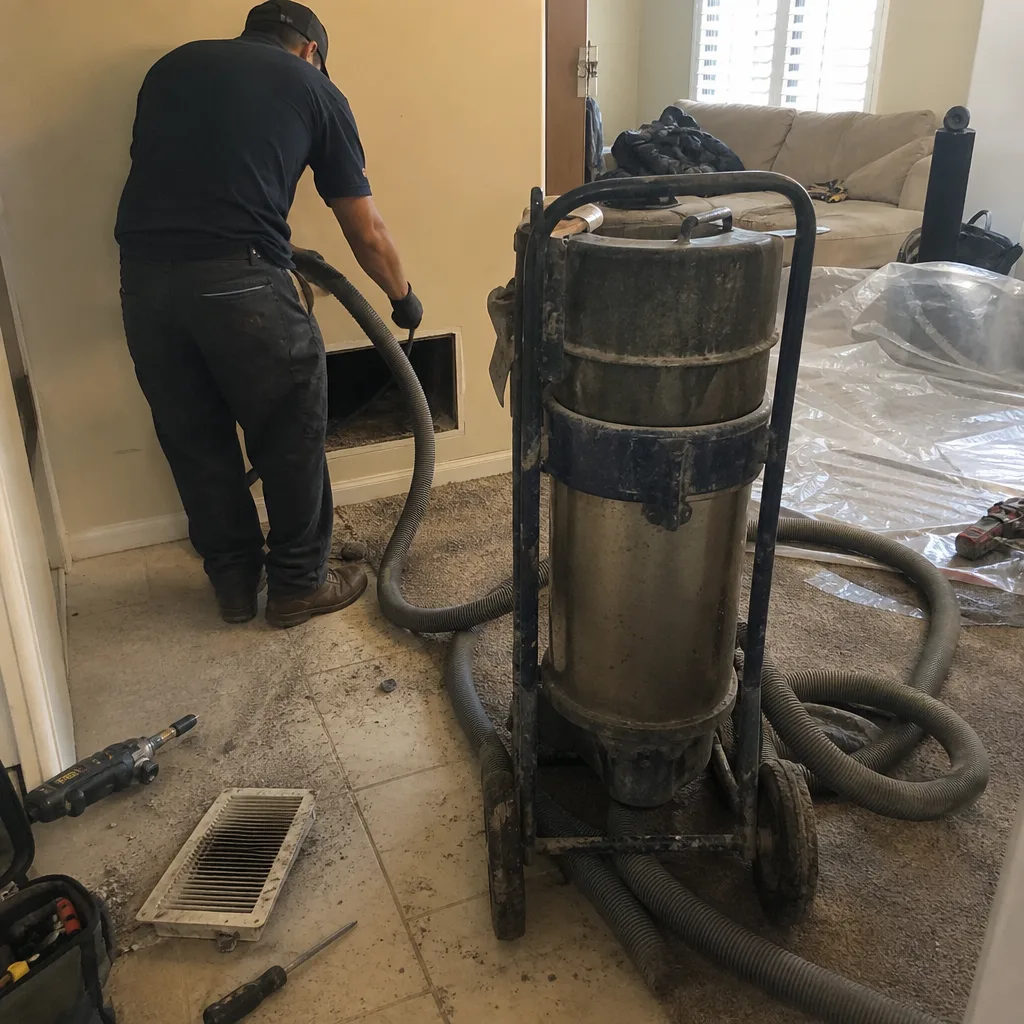
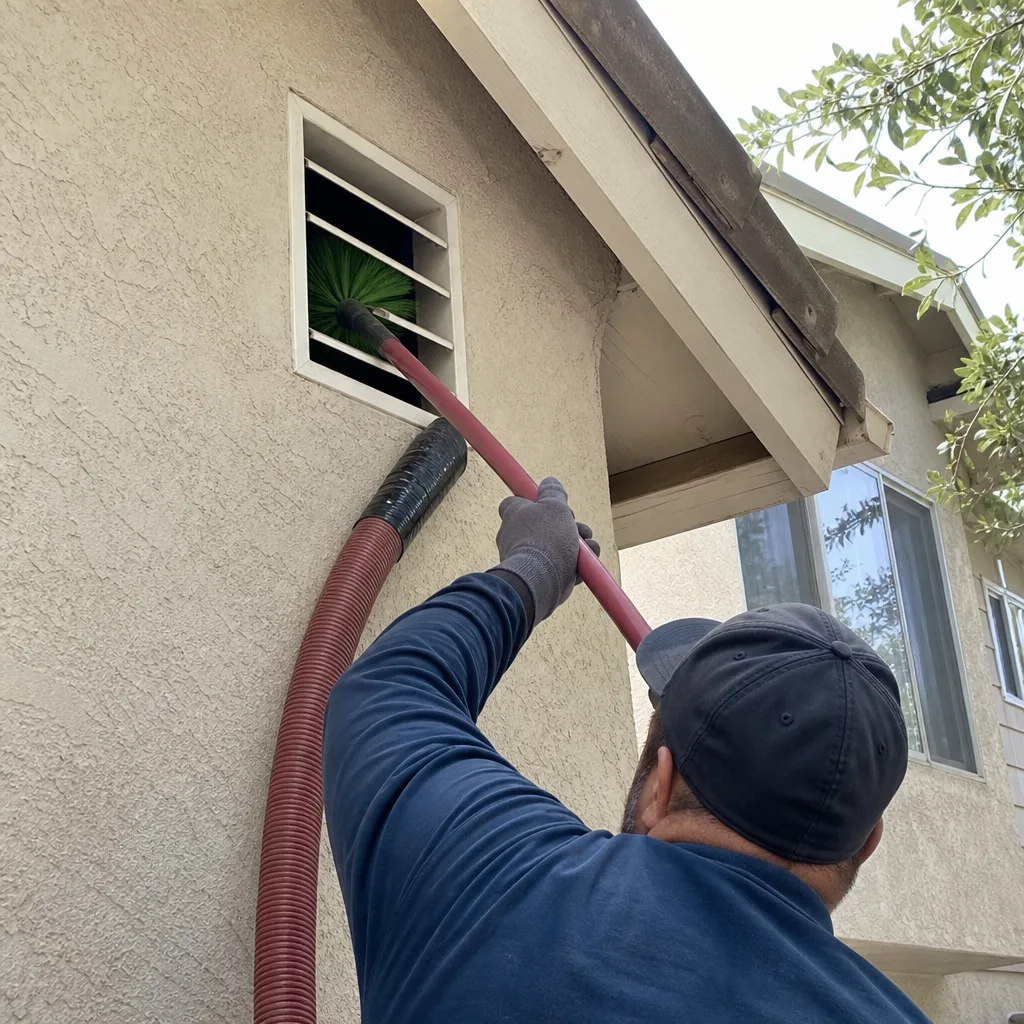
Rotobrush contact cleaning uses a rotating brush head attached to a flexible shaft, fed through each duct run from the register end. The brush physically contacts the duct walls, dislodging adhered debris. A vacuum simultaneously collects what the brush knocks loose. Rotobrush systems are ideal for flex duct, where physical contact is needed but aggression must be controlled. The brush does the work a shop-vac alone cannot: it breaks the static bond between fine particulate and the duct wall.
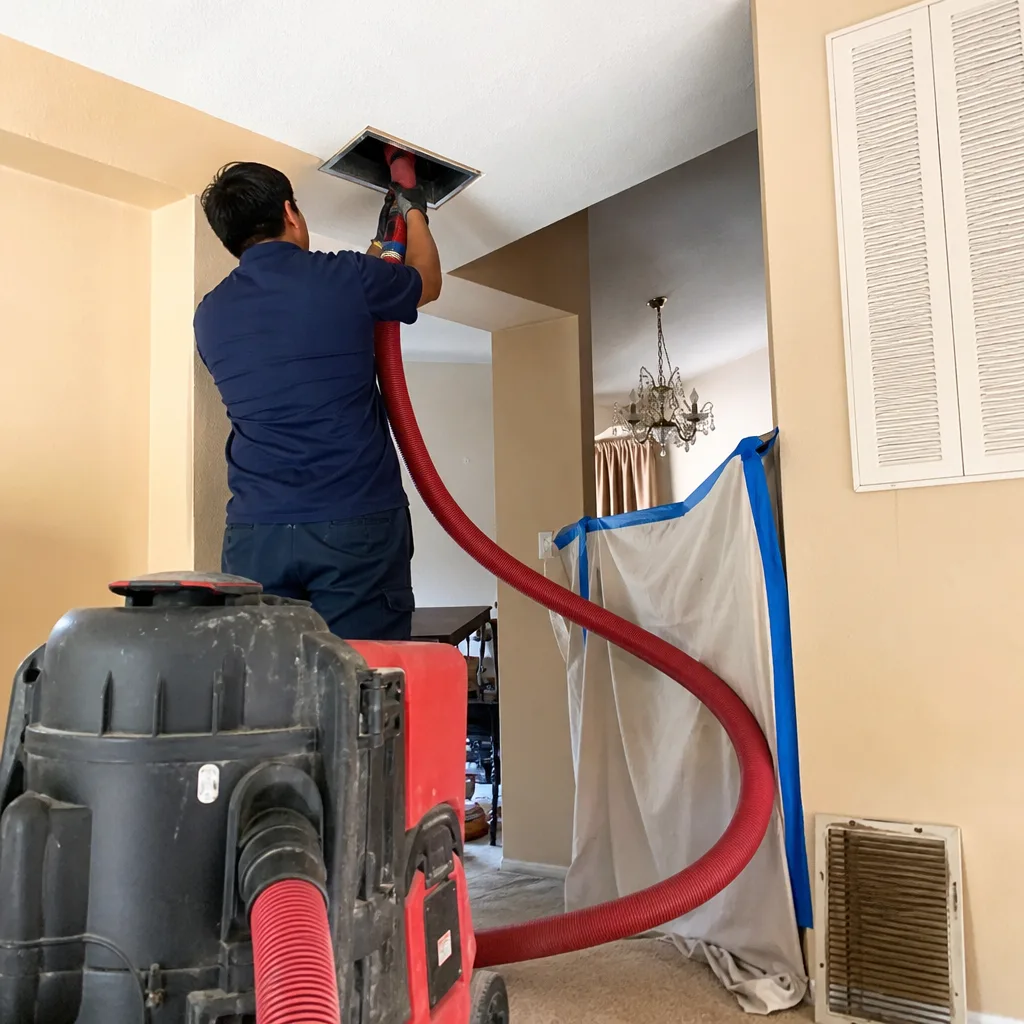
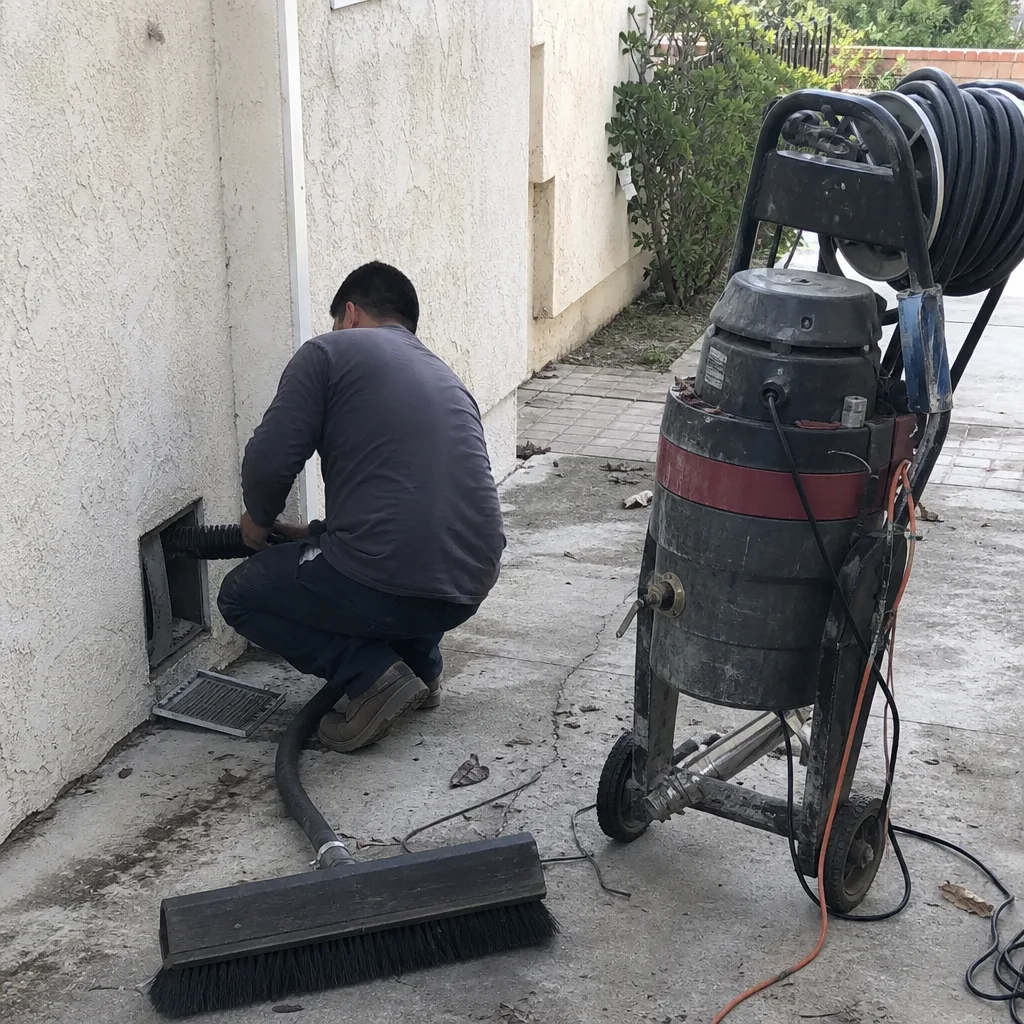
Nikro negative-air cleaning works differently. A powerful HEPA-filtered vacuum connects to the main trunk line, creating negative pressure inside the duct system. With the system under suction, technicians use compressed air tools to agitate debris from each branch, and the airflow carries it toward the collection point. The Nikro approach excels at capturing fine particulates, including smoke and ash, because the HEPA filter traps what would otherwise re-enter the living space. Negative-air is also the standard in remediation work, where containment matters.
For many Diamond Bar homes, the right answer is both. Contact agitation with a Rotobrush dislodges the adhered debris. Nikro negative-air ensures that what’s dislodged is captured, not blown into the living room. A company showing up with only a portable vacuum and a hose is not performing either method. They’re doing an extended surface dusting. Professional cleaning means the equipment matches the contaminant load, the duct type, and the home’s layout. Homes with long flex runs benefit from rotary agitation. Homes with heavy smoke or ash contamination benefit from negative-air containment. Homes with both conditions, which describes much of Diamond Bar after a bad fire season, need both.
At Duct Cleaning Diamond Bar, we run Rotobrush rotary systems and HEPA-rated Nikro vacuums on every job. Not because it looks good in a brochure, but because Diamond Bar duct contamination isn’t one kind of problem. It’s adhered freeway particulate, fine ash, and construction debris all at once. Half-measure equipment gets half-measure results.
Post-Wildfire Season: What a Real Inspection Should Include
A standard duct inspection looks at the return, the supply registers, and maybe the filter. A post-wildfire inspection in Diamond Bar needs to go further. Ash isn’t just dust. It’s burned organic material with a chemical signature that includes volatile compounds and fine carbon particles that penetrate deep into HVAC systems.
After a significant fire season with smoke days in Diamond Bar, here’s what a real inspection should cover:
- Filter bypass check – Many older Diamond Bar homes have filter racks with visible gaps around the edges. During smoke events, these gaps allow unfiltered air to bypass the filter entirely. A putty knife gap check or visual inspection of the filter housing reveals whether the system protected itself at all during the smoke.
- Blower cabinet inspection – Ash deposits on the blower wheel and motor housing indicate that fine particulate reached the heart of the system. This is common in homes where the HVAC ran during smoke advisories.
- Return plenum examination – The return side pulls air into the system, so it’s the first place ash deposits. In hillside homes, the return often pulls from a low wall or floor, close to where doors open to the outside air.
- Supply register odor assessment – That campfire smell that lingers when the system runs is not your imagination. It’s deposited ash volatilizing under heat. Odor assessment helps identify which runs need deeper cleaning.
- Assessment of flex duct integrity – Heat and smoke exposure accelerates liner degradation. Ducts that were marginal before the fire season may be compromised after it.
If you skipped an inspection after the last smoke event in Diamond Bar, you’re not alone. Most homeowners did. But the ash didn’t leave. It’s sitting in the ducts, waiting to recirculate every time the blower kicks on.
How to Verify the Cleaning Was Actually Done
The air duct cleaning industry has a reputation problem, and Diamond Bar homeowners are right to be skeptical. A low-price offer, a truck in the driveway, and a technician with a hose doesn’t tell you whether the ducts were actually cleaned. Here’s how to verify the work.
Before the Job Starts
- Ask for access points – Proper duct cleaning requires opening the main trunk line, not just working through registers. If the technician doesn’t cut or open access to the main supply and return trunks, they’re not reaching the majority of the system.
- Ask what the vacuum exhausts to – HEPA-filtered exhaust should vent outside the living space or be confirmed to be HEPA-rated. A vacuum exhausting inside the home simply redistributes what it’s collecting.
- Confirm the scope – How many supply runs, how many returns, will the plenums be cleaned, will the blower cabinet be addressed? A detailed scope is a sign of a serious operator.
After the Job
- Ask for before-and-after photos – Any company with real equipment can show you camera images of the duct interior before and after. If they can’t, ask why.
- Check the access points – The repair should be sealed and visible. If the access was properly created, you should be able to see where it was cut and sealed.
- Feel the airflow – Clean ducts move more air. Compare airflow at the registers before and after. A measurable improvement in airflow at the furthest register is a strong indicator the restriction was removed.
- Review the work summary – What was found? How much material was collected? Standard professional practice includes documenting the contaminant load removed. If the answer is “we cleaned them,” that’s not documentation.
Airflow verification matters in Diamond Bar specifically because of the square footage and duct layout of the typical home. Supplies that run 30 – 40 feet from the plenum lose pressure even when clean. When partially blocked, they deliver almost nothing. A cleaning that opens those long runs produces a noticeably stronger flow at the register, especially in upstairs rooms where the blower already struggled.
What Air Duct Cleaning Actually Costs in Diamond Bar
Whole-home air duct cleaning in Diamond Bar runs between $350 and $650 for a typical 1,500 – 2,500 square foot single-family home. The range reflects a few variables: the number of supply and return runs, accessibility of the attic or crawl space, the age and condition of the flex duct, and whether dryer vent cleaning or duct repair is bundled in.
Here’s the cost reality in Diamond Bar’s market as of 2025:
- Smaller home (under 1,500 sq ft, one return, up to 8 supply runs): $295 – $425
- Mid-size home (1,500 – 2,500 sq ft, two returns, 10 – 14 supply runs): $425 – $575
- Larger home (2,500+ sq ft, multiple returns, 15+ supply runs, two systems): $575 – $850+
- Post-wildfire or heavy renovation cleanup: Add $100 – $250 for extended work or additional passes
- Dryer vent cleaning as an add-on: $75 – $150
- Flex duct repair or replacement: $150 – $450 per run, depending on length and access
Be wary of any Diamond Bar duct cleaning offer that prices the whole home under $99. The economics don’t work. A genuine whole-home cleaning takes 3 – 6 hours, requires specialty equipment with real operating costs, and produces real labor time. A $99 service is a loss leader designed to get a technician into your home to sell something else. You’re not getting your ducts cleaned for $99. You’re getting a sales pitch.
The other pattern is the per-vent pricing trap. Some companies quote a low per-vent rate and then count every vent twice or discover extra “zones” once they’re inside. Reputable companies quote one flat price per system based on the home’s actual configuration. At Air Duct Cleaning in Diamond Bar, the price quoted is the price paid. No per-vent games.
Common Mistakes Diamond Bar Homeowners Make
- Cleaning only when the system smells bad. Duct contamination builds gradually. By the time you smell it, the deposit layer is thick enough to support odor. Regular inspection catches it before it’s a problem you can detect.
- Assuming a new filter protects the ducts. The filter protects the HVAC equipment, not the ductwork. Fine particulate that passes through a 1-inch filter still deposits downstream.
- Accepting a cleaning without photographic proof. If a company won’t show you before-and-after images of your own ducts, you have no way to verify the work. Camera documentation is standard for any serious operator.
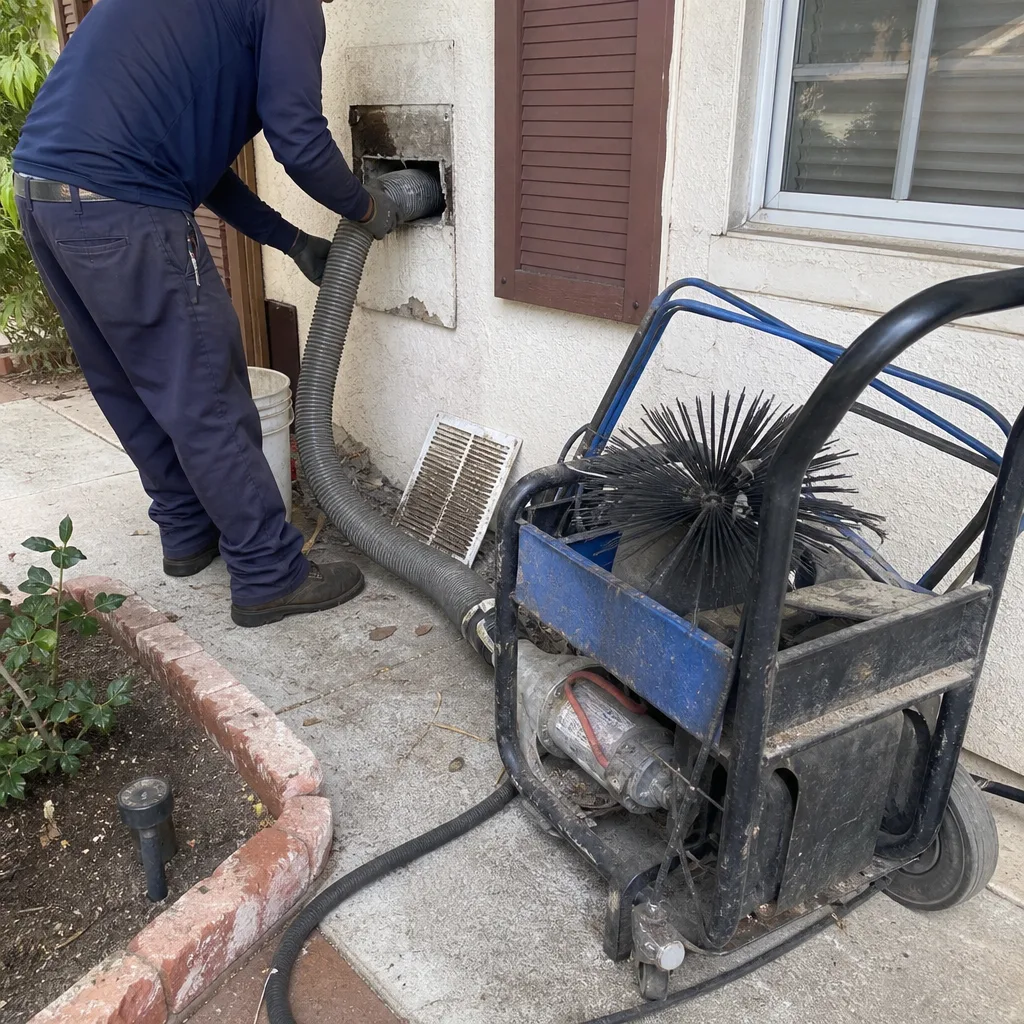
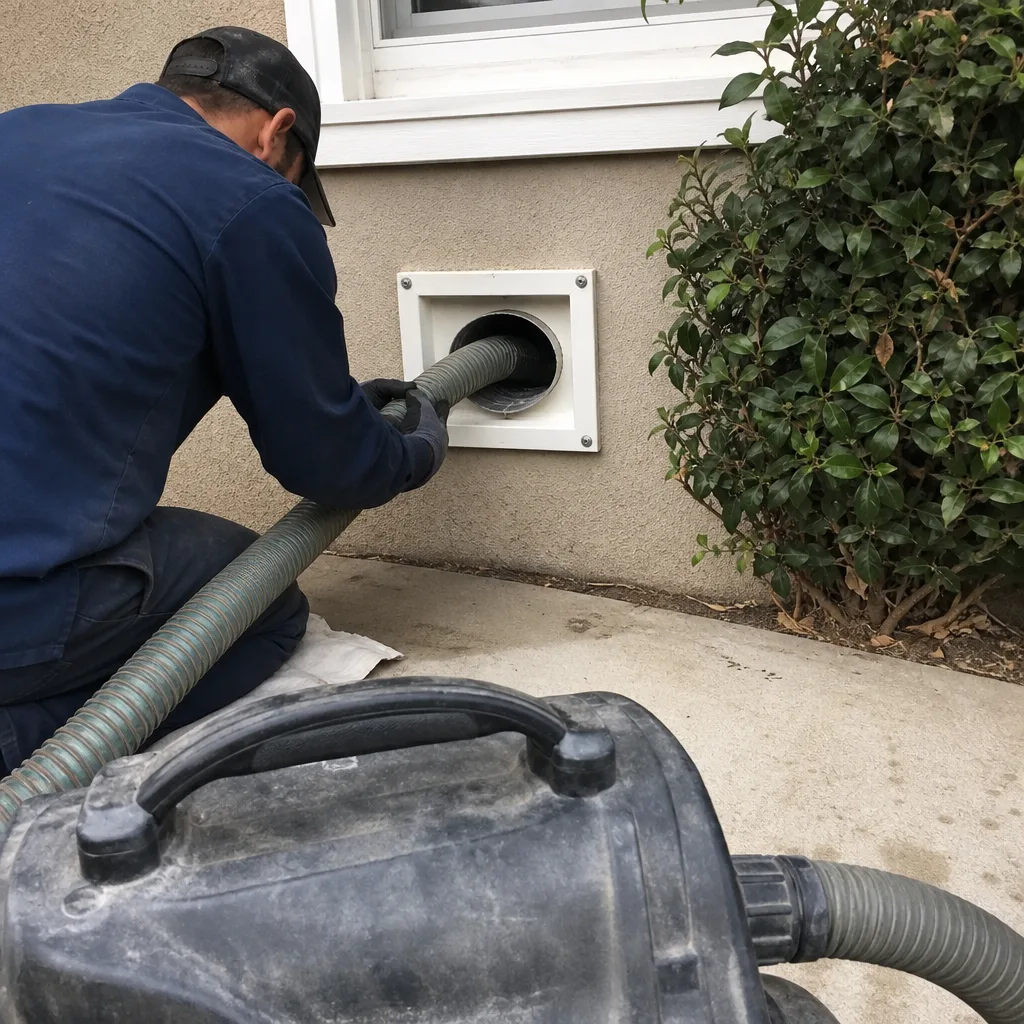
- Ignoring the dryer vent. The dryer vent is a leading cause of residential fires nationwide, and it’s in scope for any genuine whole-home air quality effort. Dryer vent cleaning in Diamond Bar is a safety service, not an upsell.
- Cleaning ducts without addressing leaks. Leaky flex duct re-contaminates within weeks by pulling attic air. Cleaning before repair is money spent on temporary improvement.
- Trusting a low price without asking what it covers. The duct cleaning industry in Southern California is full of bait-and-switch operators. A specific scope of work on paper protects you.
- Skipping post-remodel cleaning. Renovation dust is some of the finest, most pervasive particulate a home faces. If you remodeled and didn’t clean the ducts afterward, that dust is still circulating.
When to Call a Professional
Call a professional duct cleaner in Diamond Bar if you’ve lived in your home for more than five years without a duct inspection and have never had the system cleaned. Call after any significant remodel that generated drywall dust or cutting. Call after a fire season that brought visible ash or sustained smoke to your neighborhood. Call if you’ve had rodent activity in the attic or crawl space. Call if rooms at the end of long duct runs are consistently warmer than the rest of the house, which often signals duct restriction. And call if you’ve moved into a Diamond Bar home built before 2000 where the ductwork is original.
Duct Cleaning Diamond Bar offers free estimates throughout Diamond Bar. Call (877) 693-6770 to schedule an inspection of your system, whether you’re in The Country, near Sycamore Canyon, off Grand Avenue, or anywhere in Diamond Bar’s 91765 and 91789 ZIP codes.
Frequently Asked Questions
Every 3 – 5 years is the general recommendation for Diamond Bar homes. Homes within a half-mile of the 57 or 60 freeway, or those with pets, or those near open canyon where wildfire smoke penetrates, should lean toward the 2 – 3 year end of that range. The first cleaning in a home that’s never been cleaned should be scheduled immediately, regardless of timeline. Call (877) 693-6770 for an assessment suited to your neighborhood conditions.
Yes, when done with real equipment and proper methods. Verified before-and-after testing shows measurable reductions in airborne particulate after professional cleaning with HEPA-filtered extraction. What it doesn’t do is fix a house with leaking ducts, poor filtration, or ongoing moisture problems. Cleaning removes accumulated debris; repair and filtration keep it from returning.
Restricted ductwork forces the blower to work harder to move the same volume of air. Removing obstruction improves airflow and can reduce system runtime. The effect is most noticeable in homes with heavily loaded ducts and long supply runs. Fixing leaking flex duct produces an even larger impact, since every cubic foot of conditioned air that escapes into a hot Diamond Bar attic is wasted energy.
Ask what equipment they use. A legitimate operator runs HEPA-filtered vacuums, either Nikro or equivalent, and uses rotary agitation for contact cleaning. Ask if they provide before-and-after camera documentation. Ask if they open the main trunk line or work only through registers. Ask for a written scope. A company that can’t answer these questions clearly isn’t equipped for the job. We bring Rotobrush rotary systems and HEPA-rated Nikro vacuums to every job we do in Diamond Bar.
The $99 version is a loss leader. It covers a technician showing up and doing a superficial pass, with the real profit built into upselling other services. The $500 version covers actual labor hours, real equipment, real disposal, and documentation. If the price doesn’t support 3 – 6 hours of skilled work with specialty tools, it doesn’t support a real cleaning. We work with Honeywell and Aprilaire systems in Diamond Bar homes, so our technicians understand whole-home air quality beyond just duct surfaces.
Duct cleaning removes the ash and particulate that holds smoke odor inside the HVAC system. If the odor persists after cleaning, the source is likely in soft furnishings, paint, or attic insulation, which are beyond the scope of duct work. A proper post-wildfire cleaning addresses the HVAC component; a complete odor remediation addresses the rest. In our Diamond Bar service area, we’ve found that homes with heavy smoke exposure often need both the duct cleaning and additional filtration support, which is why we stock and service industry-trusted air quality products like Honeywell filtration systems.
The Bottom Line
Air duct cleaning in Diamond Bar is not a generic service. It’s a response to specific environmental conditions: freeway proximity, canyon winds, wildfire seasons, and aging flex duct in hillside homes built before modern filtration existed. The right cleaning uses contact agitation to dislodge what’s adhered, HEPA negative-air to capture what’s dislodged, and camera documentation to prove the work. The right provider cleans, repairs, and verifies. A company that shows up with only a vacuum, a coupon price, and no plan is not going to solve a Diamond Bar duct problem. This is our service area, our specialization, and our standard. If you’re ready to see what’s actually in your ducts, call us at (877) 693-6770. In Diamond Bar, the difference between a clean system and a healthy one is in the details.
Written by the team at Duct Cleaning Diamond Bar, serving Diamond Bar since 2015. See our more guides & resources for additional home air quality information.
See the difference
 Before
 After
 Before
 After
 Before
 After