
Last updated November 2, 2026
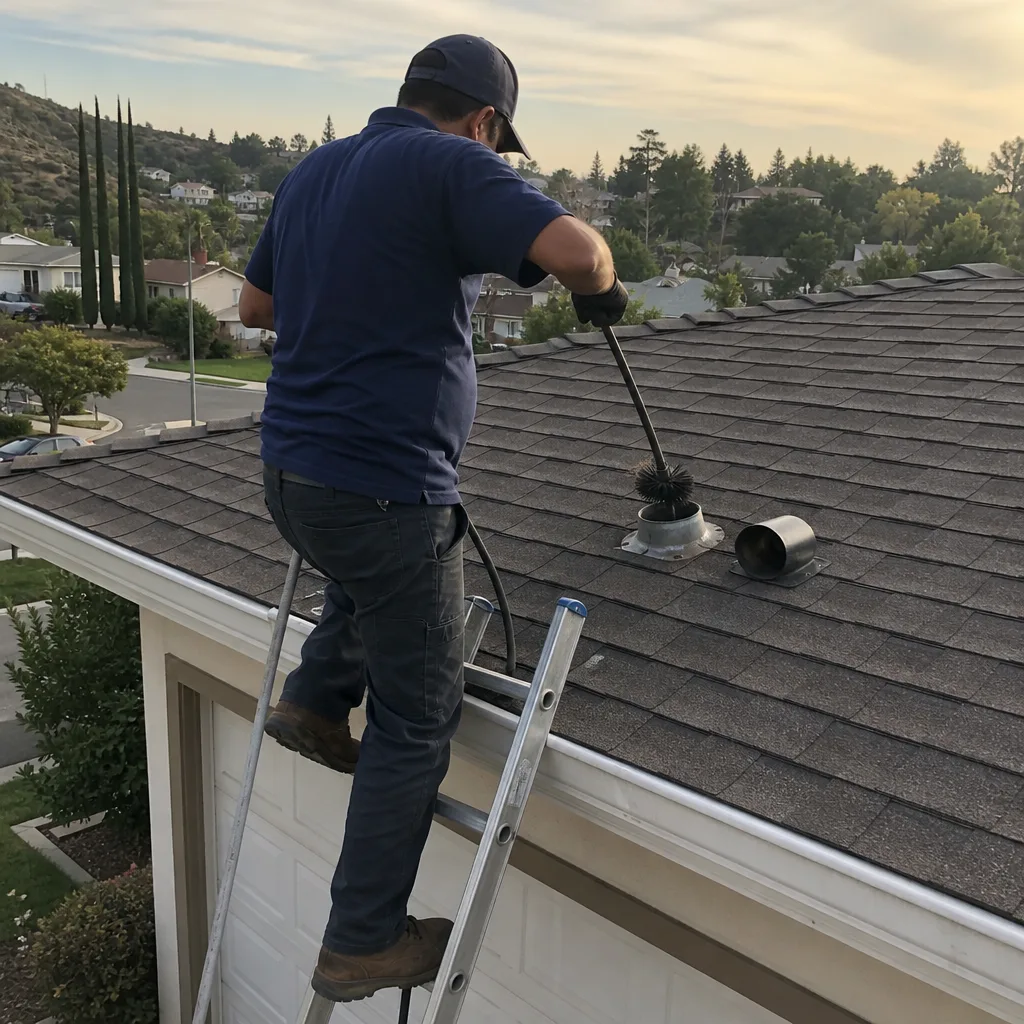
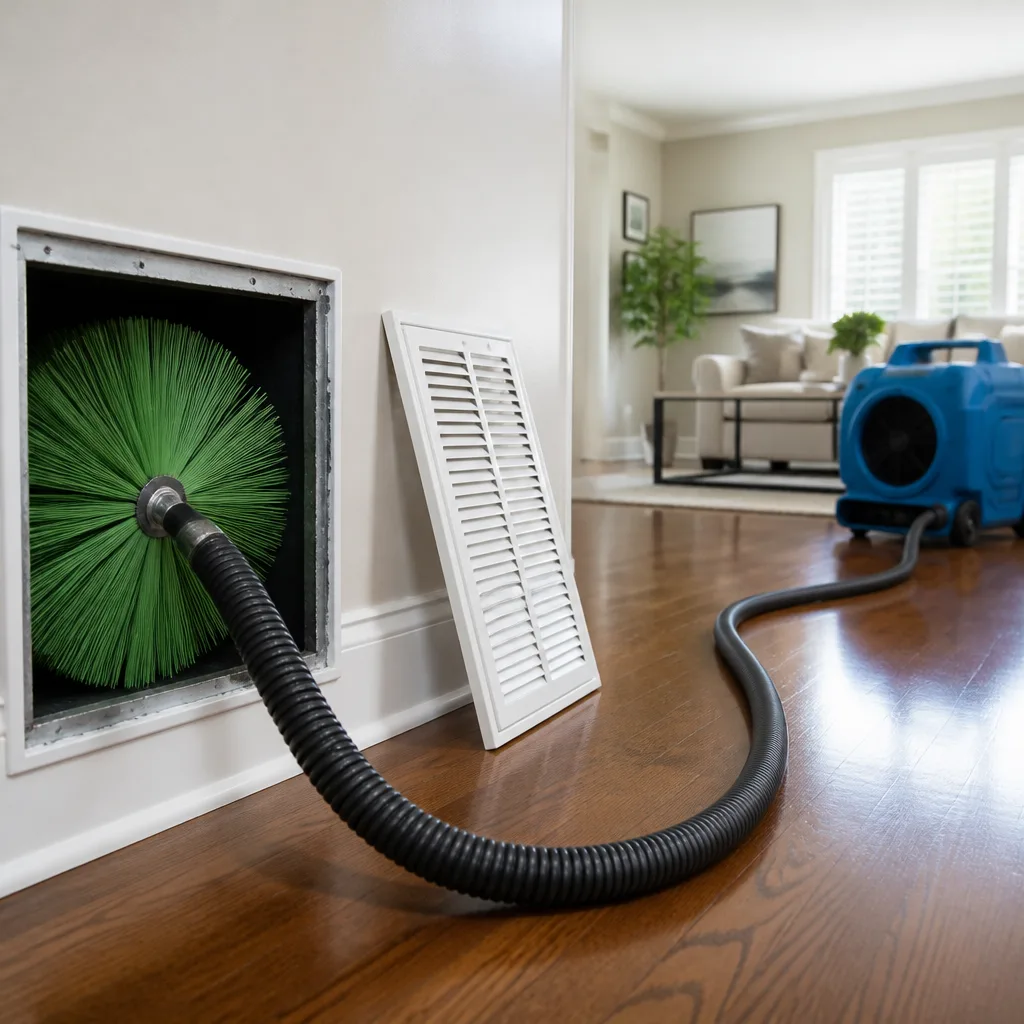 Whole-home duct cleaning
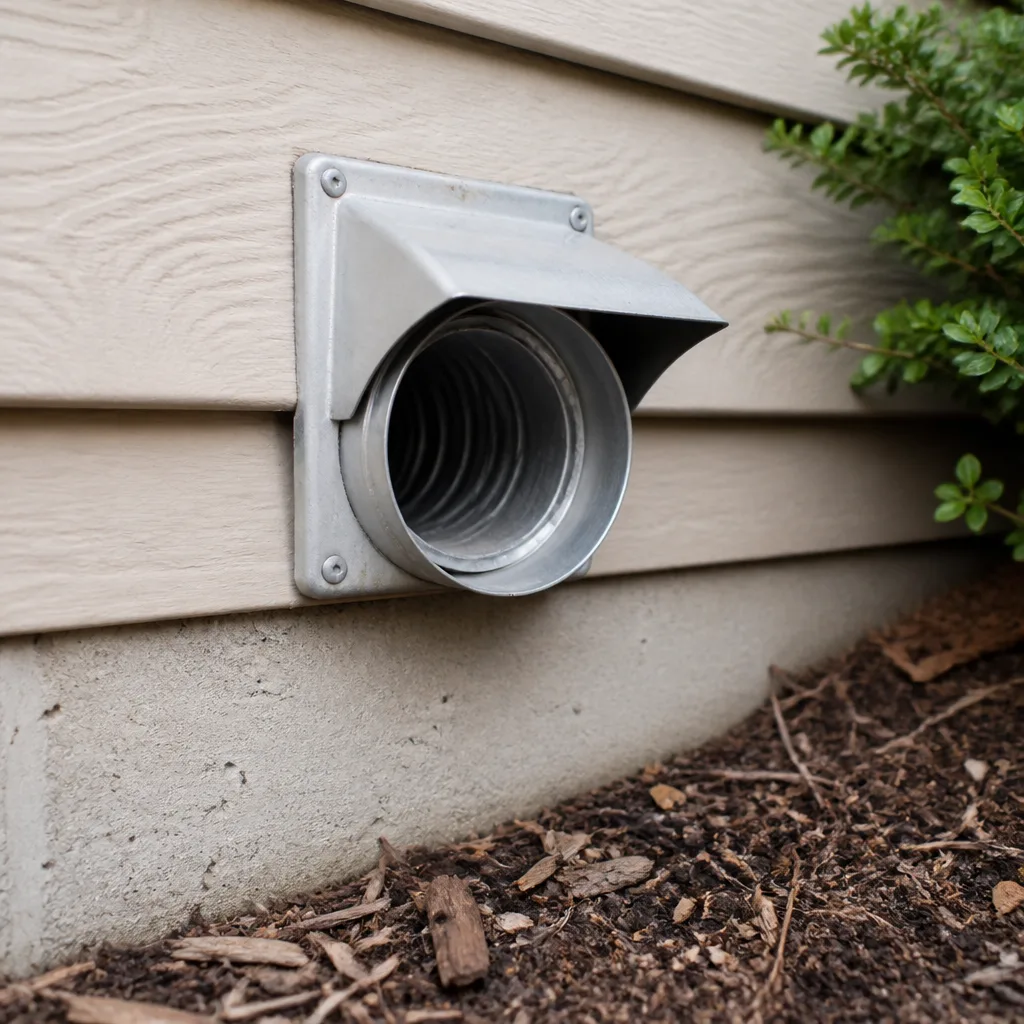 Dryer vent cleaning
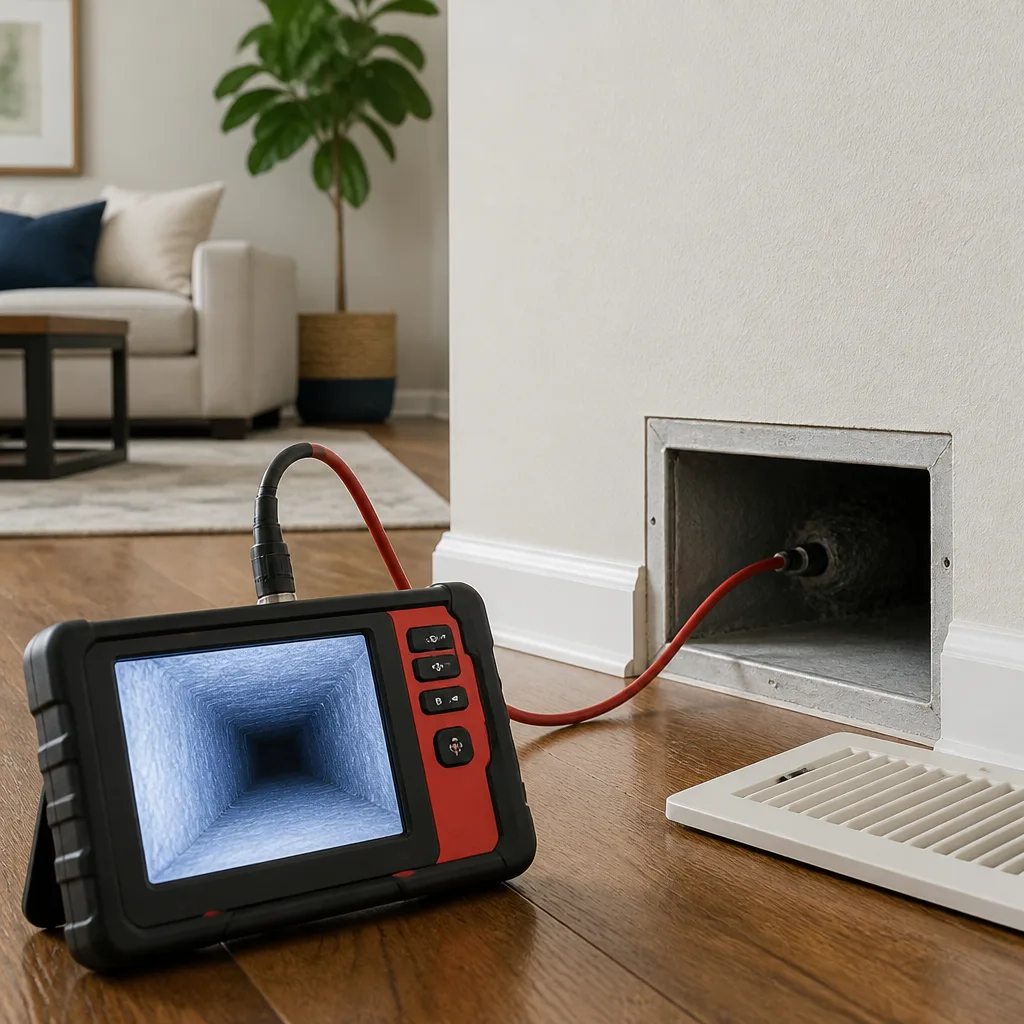 Camera inspection
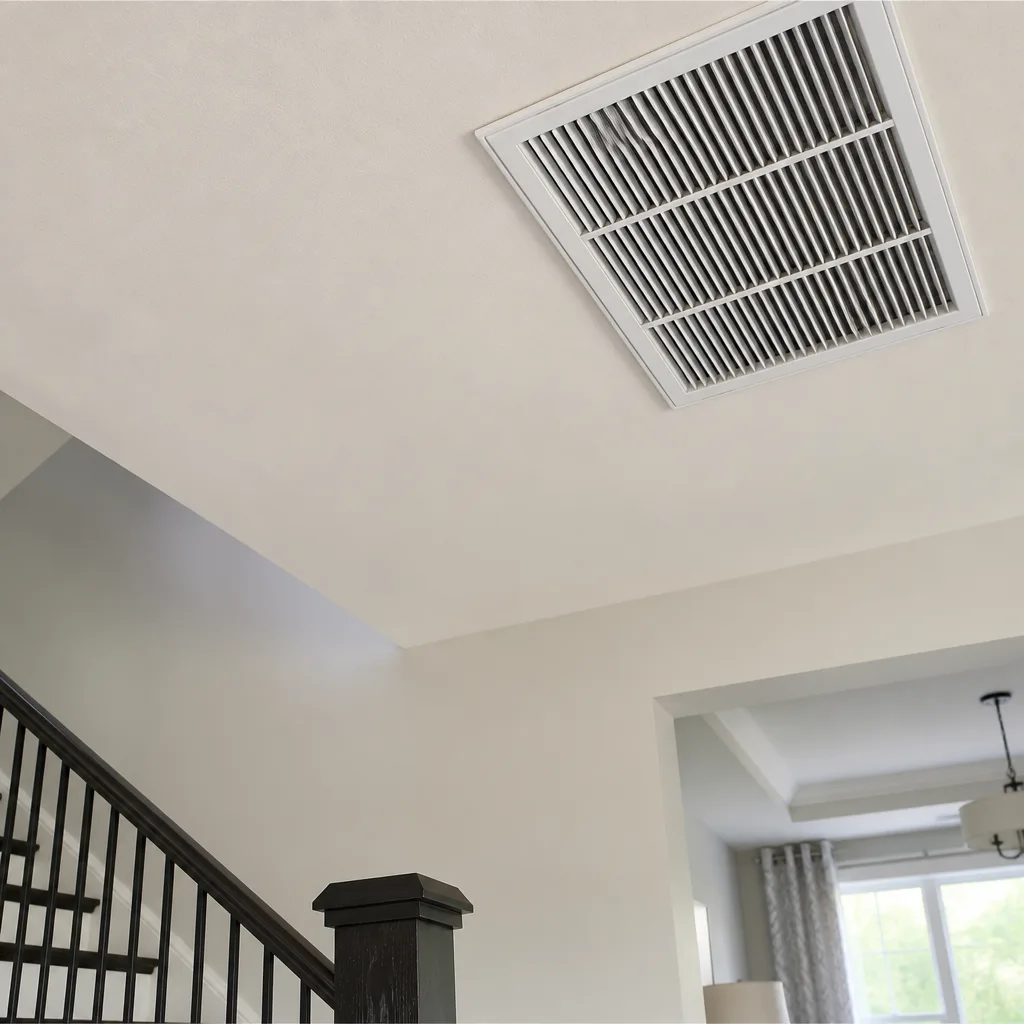 Sanitizing & deodorizing
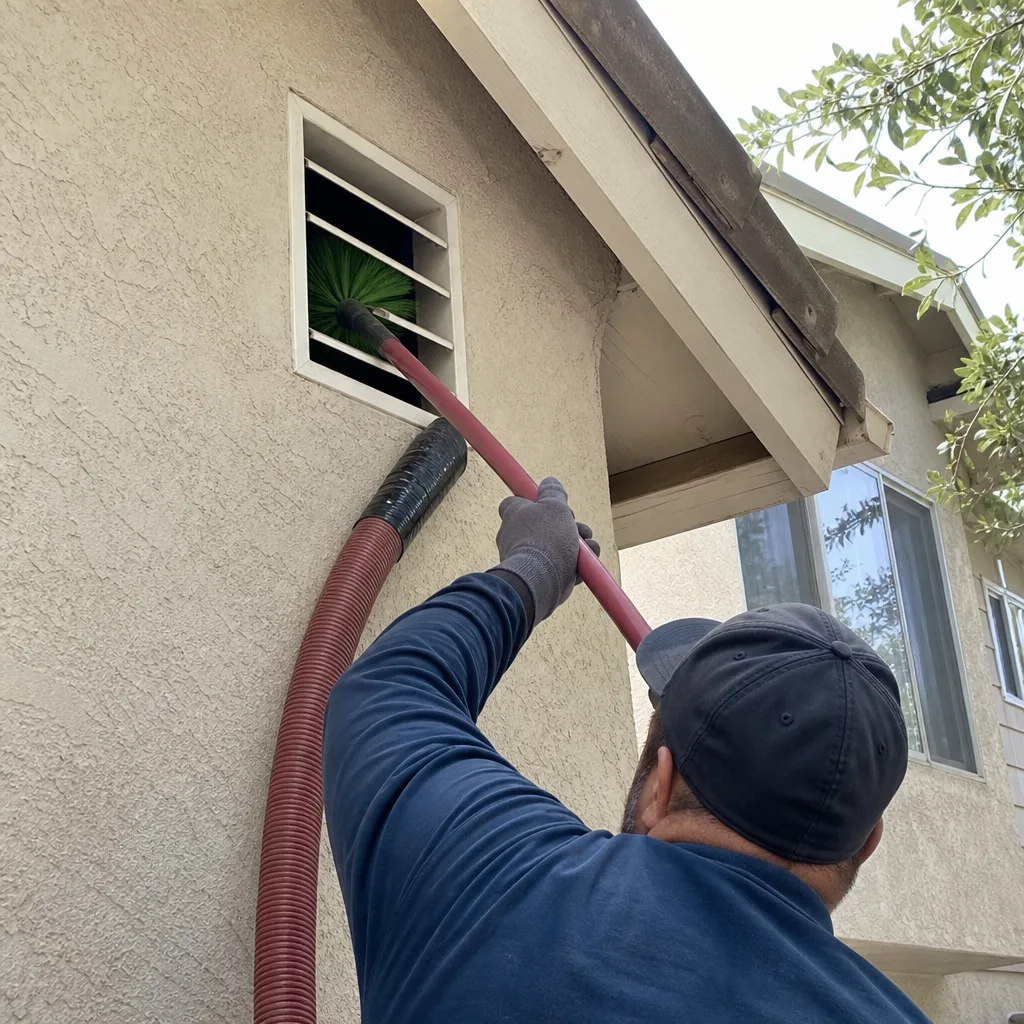
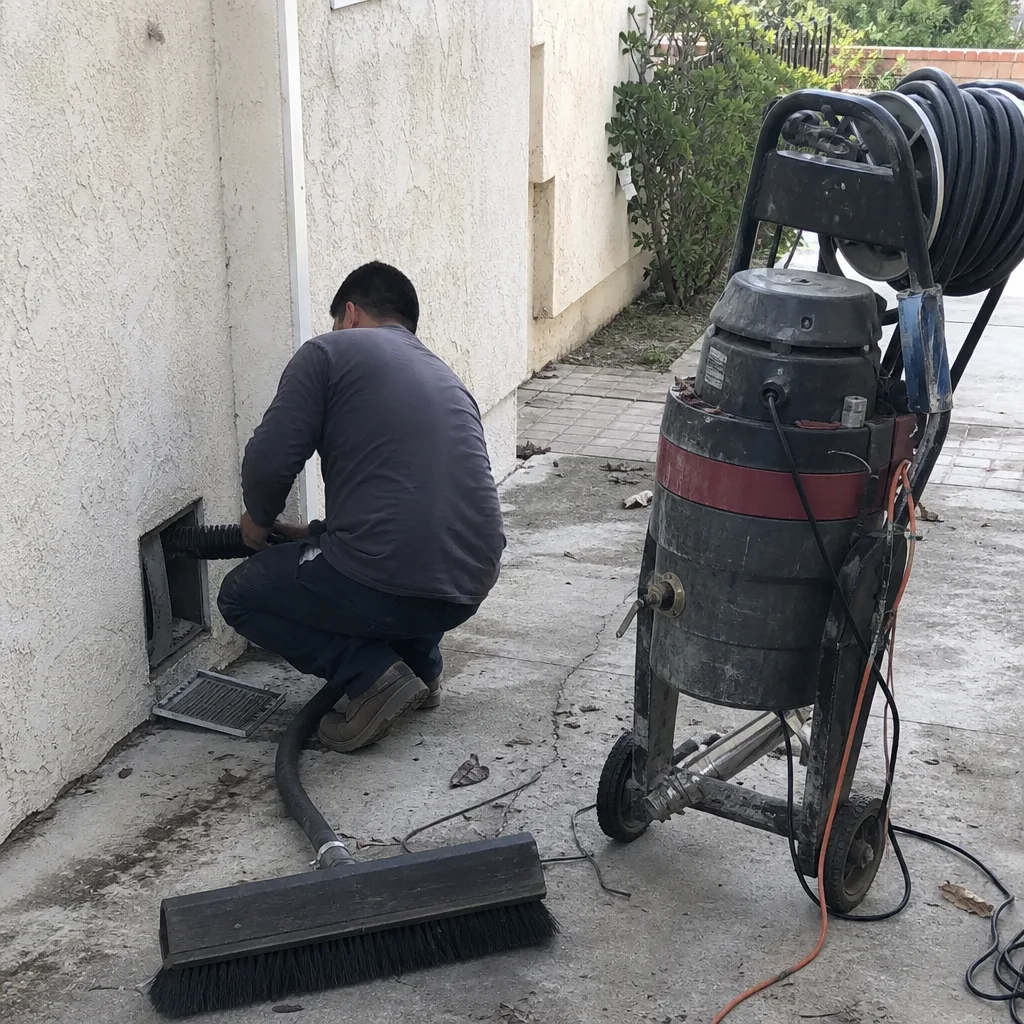
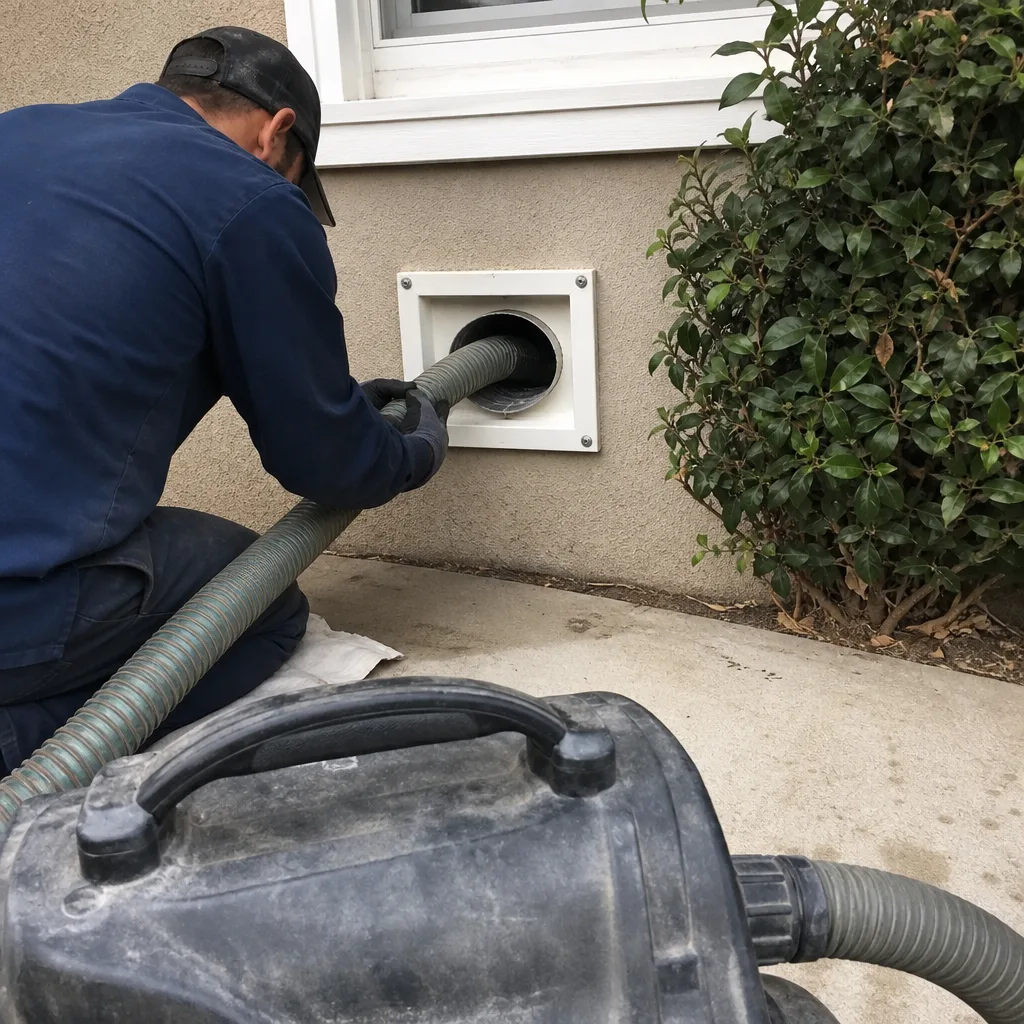
Whole-system duct and dryer vent check with before-and-after photos - you see exactly what came out of your vents
That "$99 whole-house special" is a bait ad - the real number appears once they are in your hallway, or the "clean" is a shop-vac at the register. We photograph the inside of your ducts before and after instead.
Air Duct Cleaning Warning Signs: A Diamond Bar Homeowner’s Reference Guide
Most homeowners in Diamond Bar don’t think about their air ducts until something forces them to. A smell that won’t go away. A room that never cools down. An allergy flare-up that started in March and still hasn’t quit by August. Here’s the counterintuitive part: the air ducts themselves are rarely the root problem. They’re the evidence. Dust, odor, and airflow issues are downstream symptoms of a mechanical or contamination issue happening upstream. This guide maps what you can see, smell, and hear inside your Diamond Bar home back to what’s actually happening inside your duct system, so when you talk to a contractor, you already know which questions to ask and which answers are legitimate.
Quick Answer
The clearest warning signs that your Diamond Bar home needs air duct cleaning are visible dust or debris at supply registers, a musty smell that persists when the HVAC runs, inconsistent room temperatures, unexplained allergy or respiratory symptoms that improve away from home, rodent activity around vents, and any burning or acrid odor when the heat kicks on. One or two of these signs may indicate a localized issue; three or more usually points to system-wide contamination or duct leakage that professional-grade equipment, not a consumer shop-vac, needs to address.
Styles & brands we work with
- Whole-home duct cleaning
- Dryer vent cleaning
- Camera inspection
- Sanitizing & deodorizing
Table of Contents
- Symptom-to-Cause: What Each Warning Sign Actually Means
- Why Uneven Room Temperatures Are a Duct Integrity Problem, Not a Dirt Problem
- Rodent Activity in Diamond Bar Attic Ductwork: What You’re Actually Seeing at the Register
- Normal System Dust vs. Biofilm Growth: One Needs Cleaning, the Other Needs HEPA Extraction
- When to Stop Cleaning and Start Replacing: Contamination Thresholds That Make Cleaning a Waste of Money
- The Smell Test: Decoding What Different Odors Tell You About Your Ducts
- Allergy Symptoms and Indoor Air Quality: The Diamond Bar Climate Factor
- Rattling, Hissing, and Popping: What Duct Noises Reveal
Symptom-to-Cause: What Each Warning Sign Actually Means
Every visible symptom in your HVAC system has a mechanical or contamination cause. Understanding the distinction matters because it determines whether you need cleaning, repair, or both. Here’s the mapping that most contractor websites won’t give you.
Visible debris at supply registers. When you see gray or brown particles accumulating around the vents that blow air into your rooms, that debris is being pushed out of the ductwork under positive pressure. The likely causes: a degrading fiberglass duct liner, construction dust from a past renovation that was never cleaned out, or drywall dust that entered the return side during remodeling. In Diamond Bar homes built in the 1970s and 80s, many of which have original flex duct, the liner itself may be shedding. That’s not a cleaning issue alone; that’s a duct repair evaluation.
Dark filtration lines around return grilles. This is the most common visual sign we see in Diamond Bar homes. Return grilles pull air into the system, and the air in your home carries fine particulate: candle soot, cooking oils, pet dander, and the fine clay dust that drifts in from the Chino Hills foothills during Santa Ana wind events. Those particles collect on the grille surface where airflow is highest. Light gray dust is normal. Black or sticky residue suggests candle or incense soot, or worse, ongoing cigarette or vaping aerosol. This material coats duct surfaces and requires mechanical agitation, not just vacuum, to remove.
Increasing allergy or asthma symptoms at home. When symptoms improve at work or on vacation and worsen within hours of returning home, the HVAC system is recirculating an allergen load. The duct surfaces become a reservoir. Every system cycle re-aerosolizes a fraction of that reservoir. The fix is removal of the reservoir, not masking it with a scented filter. This is where equipment matters: a Rotobrush rotary brush system physically dislodges accumulated allergen from duct walls while a HEPA-rated Nikro vacuum captures it at the point of agitation. Air that has been through a HEPA filter carries measurably less particulate.
Burning or acrid smell when heat first runs. For Diamond Bar homeowners, this typically happens the first cool morning in November or December when the furnace fires for the first time in months. Dust that settled on the heat exchanger burns off, producing a brief odor. That’s normal and should clear within 30 to 60 minutes. If the smell persists or smells like burning plastic rather than burning dust, shut the system off. Persistent acrid odor can indicate a damaged heat exchanger, melting wire insulation, or debris resting directly against a heating element. This is a safety issue; have a qualified technician inspect it before running the system again.
Key Takeaways
- Debris at supply registers means ducts are under positive pressure and pushing contaminants out.
- Dark return grille lines come from household particulate collecting at high-airflow points.
- Allergy symptoms that improve away from home indicate a respirable allergen reservoir in the duct system.
- A brief burning smell at first heat is normal; a persistent plastic-like burning smell is not.
Why Uneven Room Temperatures Are a Duct Integrity Problem, Not a Dirt Problem
When one bedroom in your Diamond Bar home is consistently 5 to 8 degrees warmer than the rest of the house in August, most people assume the system is dirty or undersized. In our experience, the cause is usually structural, not cosmetic. Ductwork is under negative pressure on the return side and positive pressure on the supply side. Any disconnection, perforation, or collapse changes the pressure dynamics of the entire system.
Here’s what a thorough diagnosis should include:
- Visual inspection of accessible flex duct in the attic. Flex duct can become disconnected at the plenum connection, crushed by stored boxes or attic foot traffic, or torn by rodents. A disconnected duct in the attic means your conditioned air is heating the attic, not your bedroom.
- Static pressure measurement. A technician who skips static pressure testing is guessing. High static pressure indicates restriction: a collapsed duct run, a closed damper, a heavily loaded filter, or an undersized return.
- Register airflow comparison. A simple anemometer reading at each register identifies which runs are underperforming. The fix for low airflow is rarely more cleaning; it’s repairing the duct run that’s leaking or collapsed.
Diamond Bar’s summer temperatures routinely exceed 95 degrees. A duct system leaking 20% of its conditioned air into an attic that’s 130 degrees means your AC runs longer cycles, your energy costs rise, and the leaking duct pulls in attic air on the return side. That attic air carries insulation fibers, dust, and whatever else is in your attic. Cleaning the ducts won’t fix a leak. You need Air Duct Repair in Diamond Bar to seal or replace the compromised run first. Only then does cleaning make sense, because otherwise you’re cleaning a system that immediately re-contaminates itself.
Rodent Activity in Diamond Bar Attic Ductwork: What You’re Actually Seeing at the Register
Diamond Bar’s neighborhoods, particularly those backing up to the Chino Hills State Park and the steeper terrain off of Diamond Bar Boulevard, see consistent rodent pressure. Roof rats are the primary culprit. They enter attics through roofline gaps and find flex duct an attractive nesting material. The evidence shows up at your registers in specific patterns that are different from ordinary household dust.
Nesting debris pattern. Rodent nesting material at a supply register appears as shredded fibrous material, often light tan or pink. It has texture and irregularity to it; individual fibers are visible. You may find pieces of insulation from other parts of your attic, chewed paper, or plant material mixed in. This is distinct from normal system dust, which is uniform, fine, and gray.
Insulation degradation pattern. Fiberglass duct insulation degrades over time and releases fine, sparkly fibers into the airstream. Under a flashlight, these fibers glint. Rodent-damaged insulation appears as torn, displaced chunks visible if you remove a register and look into the duct with a flashlight. You can see where the outer vapor barrier has been chewed and the inner liner breached.
The smell that accompanies it. Rodent activity almost always leaves an ammonia-like odor. Rodent urine accumulates in the duct and on the insulation. When the system runs, the odor distributes through the home. If you smell ammonia near a register and see shredded material, that’s the confirmation.
This scenario requires more than a standard cleaning. The contaminated insulation must be removed, the duct interior sanitized, and the breached duct sections evaluated for replacement. This is where commercial-grade extraction equipment matters. An Abatement Technologies HEPA-filtered unit can capture particulate that a standard vacuum recirculates into the home. After the duct is cleaned and repaired, the attic entry points need to be sealed, or the problem repeats within a season. A qualified Air Duct Cleaning in Diamond Bar contractor should be able to identify the entry evidence and refer you to pest exclusion if needed.
Normal System Dust vs. Biofilm Growth: One Needs Cleaning, the Other Needs HEPA Extraction
Not everything growing inside a duct is dust. The distinction between dry particulate and biofilm, a microbial colony attached to the duct surface, determines the level of response. Here’s how to tell the difference from observable evidence.
Normal system dust. Dry, light gray, distributed evenly. It accumulates where airflow changes direction: elbows, register boots, and transitions. It brushes away easily. It’s composed of skin cells, textile fibers, pollens, and the fine mineral dust that settles on every surface in Diamond Bar. This is cleanable with professional rotary brush agitation and HEPA vacuum extraction. It is not, by itself, a health emergency.
Biofilm growth. A biofilm forms when organic material and moisture combine on a duct surface. It appears as a dark, sometimes slimy film that adheres to the surface rather than collecting loosely. It doesn’t brush away easily; it smears. Biofilm in ductwork often follows a moisture event: a leaking AC coil, a humidifier that’s been running too high, a past roof leak that dripped into the return, or condensation forming on poorly insulated ducts running through a hot Diamond Bar attic.
The distinction matters because of what happens if you clean biofilm with the wrong method. A weak vacuum or brush-only agitation can aerosolize the biofilm fragments, spreading a localized problem through the entire home. Professional remediation-grade extraction, the kind used with Abatement Technologies equipment, maintains negative pressure in the duct while HEPA-filtered vacuums capture dislodged material at the source. The result is that what you remove stays removed, not redistributed into bedrooms.
If you suspect moisture in your ducts, ask a contractor these two questions: “What humidity levels did you read in the duct?” and “What’s your containment procedure during agitation?” A contractor who can’t answer both is not equipped to handle anything beyond dry dust removal.
When to Stop Cleaning and Start Replacing: Contamination Thresholds That Make Cleaning a Waste of Money
Duct cleaning is not always the right answer. In some Diamond Bar homes, the duct system has reached a condition where cleaning is either impossible or financially irrational. Knowing where that line sits saves you from paying for a cleaning that won’t hold.
Severe rodent contamination with fiberglass liner breach. If rodents have lived in the ductwork long enough to saturate the insulation with urine and fecal matter, the insulation cannot be sanitized. Flex duct is inexpensive relative to the labor of repeated cleanings. Replacement is the answer for any flex duct section showing evidence of interior nesting.
Collapsed or kinked flex duct. When flex duct is collapsed, the interior surface area is restricted and airflow is compromised. Cleaning a collapsed duct doesn’t improve airflow. The run needs to be replaced or re-supported.
Ducts at end of service life. Flex duct has a realistic service life of 15 to 25 years depending on attic conditions. Diamond Bar’s summer attic temperatures accelerate material degradation. If the vapor barrier is cracking, the inner liner is delaminating, or the duct has lost its structural integrity, cleaning it is throwing good money after bad. Replace the runs, then clean the entire system once the new ductwork is in place.
Visible mold growth on porous surfaces. If mold is growing on the interior fiberglass liner of rigid duct or on the insulation inside flex duct, the material is porous. Surface cleaning cannot remove roots embedded in the material. The contaminated material must be removed and replaced.
Multiple disconnections. If a duct inspection reveals several disconnected runs in the attic, the system was likely installed poorly. Repairing one connection may not fix others that are waiting to fail. In these cases, a full system evaluation and partial or complete re-ducting is the durable answer, followed by comprehensive cleaning of the remaining system.
The Smell Test: Decoding What Different Odors Tell You About Your Ducts
Odor is the warning sign that gets noticed first in a Diamond Bar home, because smell is processed faster than sight. But not all duct odors mean the same thing. Here’s a breakdown of scent profiles and their likely causes.
Musty, earthy smell that appears only when the AC first kicks on and disappears after 10 minutes. This is the counterintuitive one. The smell is not coming from the ducts. It’s coming from a wet evaporator coil growing on the coil surface inside the air handler. When the AC starts, the first few minutes of airflow pass over that wet, microbially-active coil and deliver the odor to your rooms. After 10 minutes, the coil has dried slightly and the smell fades. Cleaning the ducts will not fix this. The coil needs to be cleaned, the condensate drain needs to be verified, and the cause of the persistent moisture needs to be identified. If you clean the ducts and ignore the coil, the same smell returns within 90 days.
Persistent musty smell that doesn’t fade. If the odor remains regardless of system run time, the source is likely inside the ducts themselves, or moisture has penetrated the duct liner. This requires inspection of the ducts for moisture entry points and contamination, not just a surface cleaning.
Burning dust smell on first heat. Normal seasonal startup. Dust on the heat exchanger burns off. Should clear within an hour.
Acrid plastic or electrical smell. Shut the system down. Call a technician. This is not a cleaning issue.
Ammonia smell. Rodent urine. See the section on rodent activity above. Needs cleaning plus exclusion and likely duct section replacement.
Stale, heavy smell that accumulates when the system has been off. When a Diamond Bar home has been closed up for a vacation or the system has been off for a few days, dead air in the ducts picks up a stale quality. Usually resolves with regular operation. Persistent staleness can indicate low airflow or accumulation of dust in return plenums.
Allergy Symptoms and Indoor Air Quality: The Diamond Bar Climate Factor
Diamond Bar sits in a transitional climate zone. The oceanic influence that moderates coastal Los Angeles fades by the time it reaches the 57 freeway corridor. Summers are hot and dry, winters are mild, and the fall brings Santa Ana winds that sweep fine particulate from the Inland Empire across the city. This climate pattern creates two distinct allergy and air quality challenges that affect duct systems.
Spring and early summer pollen load. Diamond Bar’s landscaping mix, including sycamore, oak, olive, and various grasses, produces a significant spring pollen burden. Windows open in the evening to cool the house pulls that pollen into the living space, and the HVAC return captures it. Once in the duct system, it settles and accumulates. High-efficiency filtration at the return helps, but the ductwork still functions as a pollen reservoir.
Fall Santa Ana event dust. The fine mineral dust driven by Santa Ana winds penetrates window seals and door frames. It’s fine enough to pass through standard fiberglass filters, which capture only larger particulate. This dust settles inside ducts and is redistributed every time the system cycles.
If you’re noticing allergy symptoms in your Diamond Bar home that correlate with system runtime rather than with outdoor pollen counts, the duct system is likely the delivery mechanism. Cleaning removes the reservoir. Upgrading filtration, whether through a higher-MERV media filter or a whole-home system from brands like Aprilaire that we service and support, is the secondary step that prevents rapid re-accumulation. The two actions work together: clean first, then filter better.
Rattling, Hissing, and Popping: What Duct Noises Reveal
Sound is the least discussed warning sign and often the most specific. Your duct system is an acoustic amplifier: changes in the physical structure of the ducts produce characteristic sounds.
Rattling when the system starts or stops. This is the sound of a loose duct hanger or a flex duct resting against a framing member. When the blower starts, the duct flexes and the metal hanger or duct wall hits the wood. It’s a structural issue, not a cleaning issue. The fix is re-securing the duct. Left unaddressed, the motion can wear through the duct wall over time.
Hissing or high-pitched airflow at a specific register. That’s air escaping around the register boot where it connects to the wall or ceiling opening. The boot may have separated, or the seal has failed. Air escaping into the wall cavity is conditioned air you’re paying for that never reaches the room.
Popping or oil-canning. When a large flat section of sheet metal duct is under changing pressure, it flexes and pops. This happens when the system’s static pressure exceeds what the duct design can handle. It can indicate an over-restrictive filter, closed dampers, or an undersized duct system. Repeated oil-canning can fatigue the metal joints and create leaks. Repairs may be needed, and an air duct repair evaluation can determine if the duct sizing or the system pressure is the fault.
Scratching or scurrying inside ducts. That’s not the duct moving. That’s an animal moving. In Diamond Bar, roof rats are the most likely candidate. The scratching is active evidence of an entry point that needs sealing after the animal is excluded.
Common Mistakes to Avoid
- Assuming a musty smell means dirty ducts. As covered above, a 10-minute smell that fades is almost always a wet coil. Clean the ducts without fixing the moisture source and the smell returns within a season.
- Hiring based on a low per-vent price. A contractor quoting per-vent pricing has incentive to count vents, not solve problems. Ask for a flat, whole-system price with the scope of work written down before the crew arrives.
- Accepting a “cleaning” that takes 45 minutes. A legitimate professional duct cleaning of a typical Diamond Bar single-family home takes hours, not minutes. If a crew is in and out in under an hour, they didn’t agitate, extract, or inspect.
- Using a portable consumer shop-vac. A shop-vac lacks the airflow volume and filtration to extract from ductwork. It agitates dust and blows the fine fraction back into your home. Professional extraction requires HEPA-filtered negative air equipment like the Nikro units used in commercial and remediation work.
- Ignoring uneven room temperatures because “that room is just always warmer.” A consistently unbalanced room indicates a duct problem: a collapsed run, a disconnected connection, or a closed damper. It won’t fix itself, and it gets worse over time as more conditioned air leaks into the attic.
- Putting off dryer vent cleaning. Lint in a dryer vent is the leading cause of dryer fires per the NFPA. Diamond Bar homes often have longer vent runs to reach exterior walls, meaning more surface area for lint accumulation and a harder path for the dryer to push against. Treat this as a safety task, not a chore.
See the difference
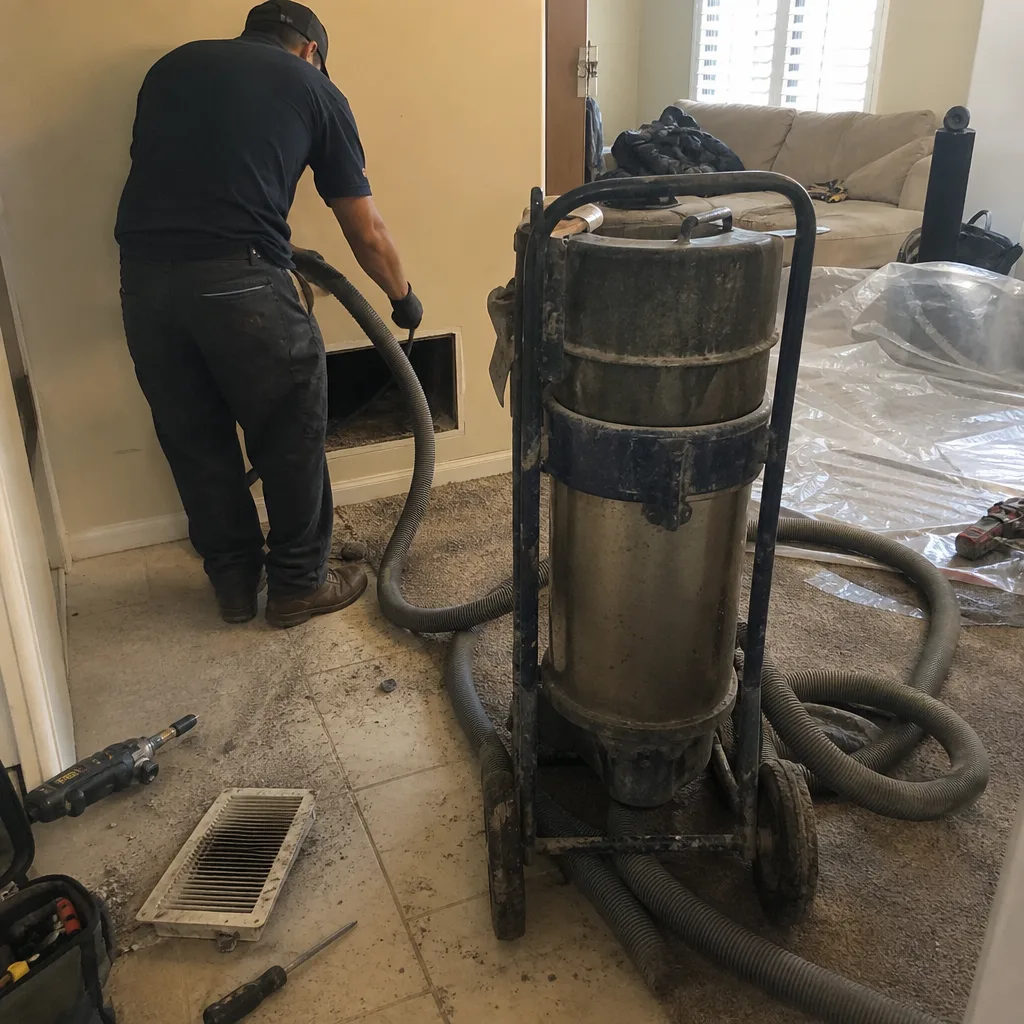 Before
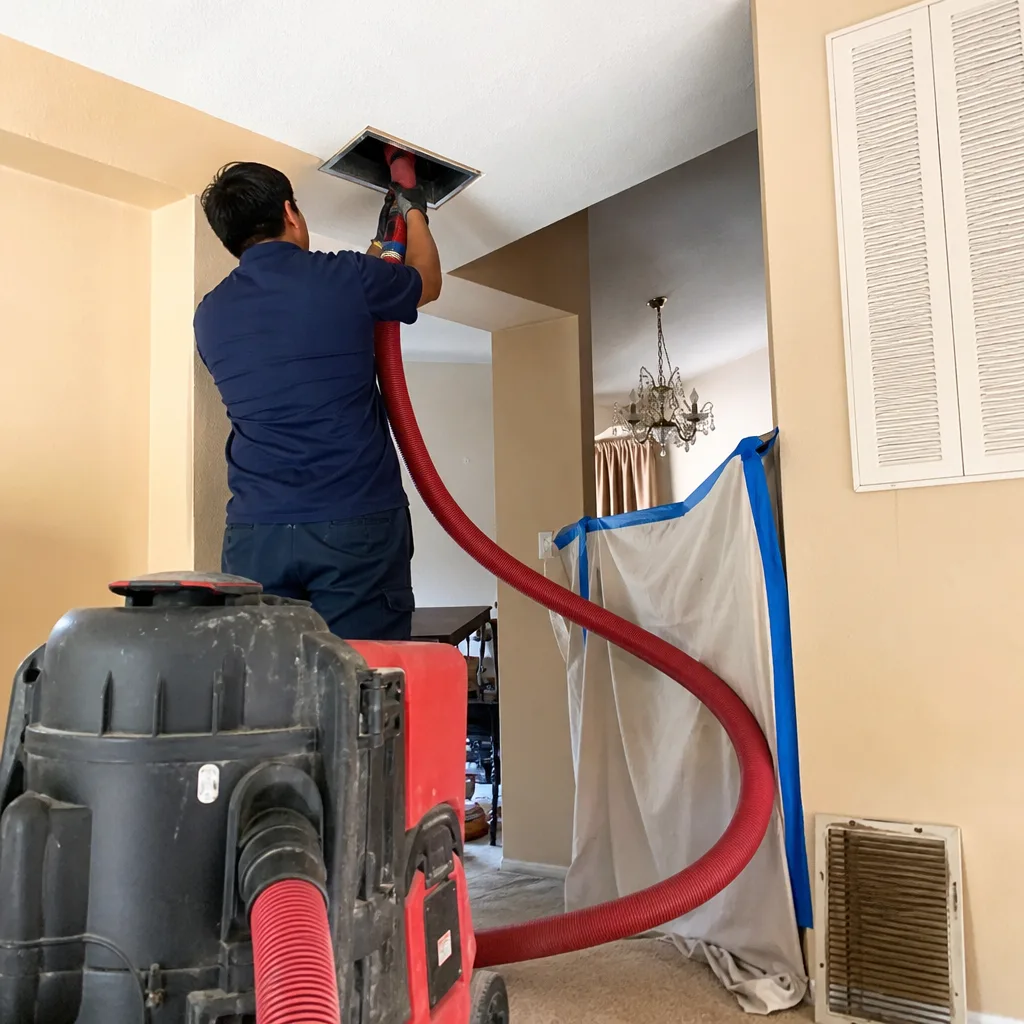 After
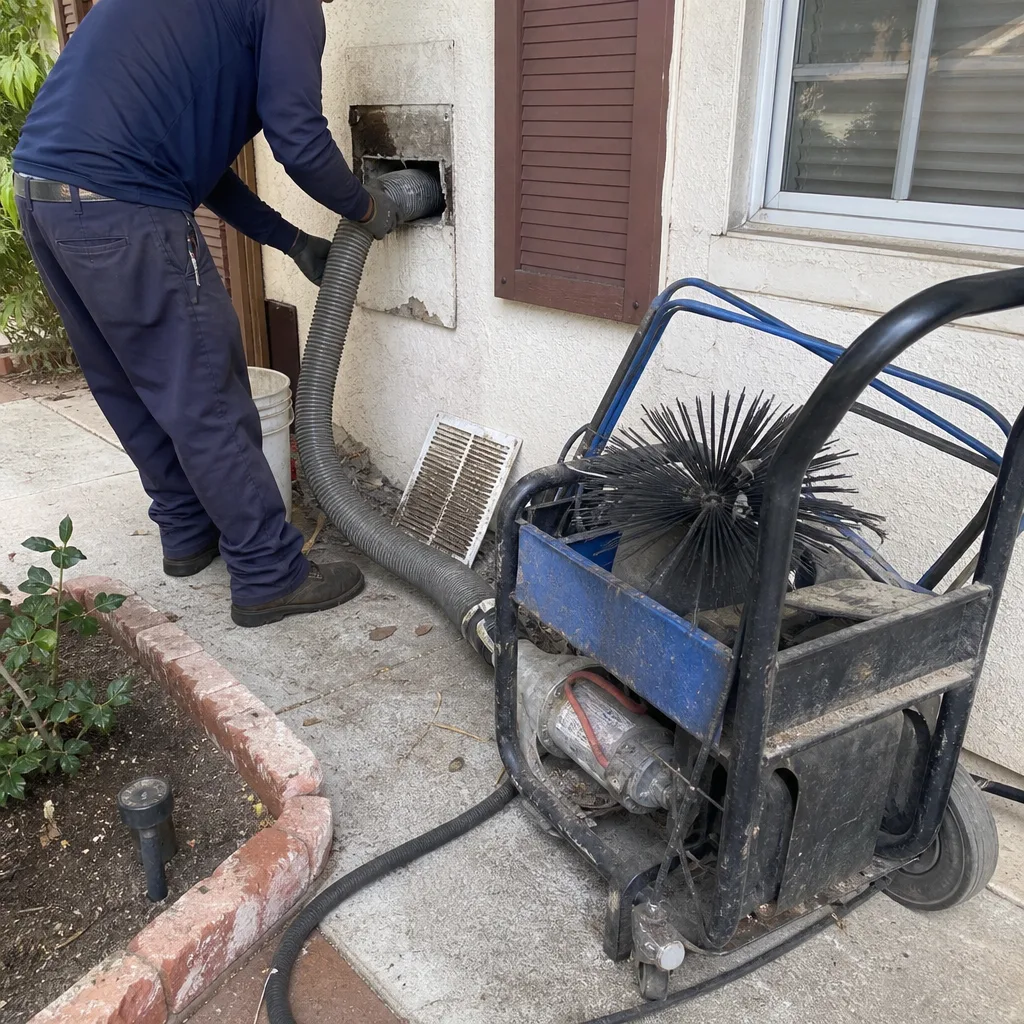 Before
 After
 Before
 After
When to Call a Professional
Call a professional when you see three or more of the warning signs in this guide, when you’ve confirmed rodent activity, when a burning smell persists, or when specific rooms won’t reach temperature. Call when you suspect biofilm rather than dry dust, because that scenario requires containment and HEPA extraction, not just agitation. Call when the system is more than seven years old and has never been cleaned, because the accumulation is guaranteed to be significant. And call when you want a diagnosis, not a sales pitch: Duct Cleaning Diamond Bar offers free estimates in Diamond Bar, and our technicians arrive with Rotobrush rotary systems and HEPA-rated Nikro vacuums, not a truck-mounted hose and a clipboard. Call (877) 693-6770 to schedule.
Frequently Asked Questions
Look for visible debris at supply registers, dark filtration lines at return grilles, a persistent musty smell that doesn’t fade after the first 10 minutes of AC operation, rodent evidence, or allergy symptoms that improve when you leave home. Any three of these together is a clear signal that cleaning is warranted. Call (877) 693-6770 for a free estimate in Diamond Bar.
A whole-system cleaning for a typical Diamond Bar single-family home generally falls in the $400 to $800 range when performed with professional-grade rotary brush and HEPA extraction equipment. Homes with multiple systems, severe contamination, or larger square footage fall higher. Be wary of $99 coupon offers; those are entry points for upsell pressure. For an exact quote, call (877) 693-6770.
Because the scope is different. A low quote covers a basic vacuum-out with a consumer-grade machine that can’t agitate or contain. A professional quote includes rotary brush agitation, HEPA-filtered negative air extraction, register-by-register verification, and before-and-after documentation. The cheaper job is not the same job.
Ask for before-and-after photos of the duct interiors, not just the registers. Most professional equipment includes camera inspection capability. You should be able to see the duct surface transition from coated to clean. Documentation is part of the job, not an add-on.
Yes, when the allergen load is inside the duct system. Diamond Bar’s climate creates two seasonal particulate surges: spring pollen and fall Santa Ana dust. Both settle in ductwork and re-enter living spaces on each system cycle. Cleaning removes that reservoir. Pairing the cleaning with upgraded filtration, such as an Aprilaire media filter, extends the benefit.
For most homes, every 3 to 5 years is appropriate. Homes with pets, smokers or vapers, recent renovation, or spring allergy sensitivity may need cleaning every 2 to 3 years. Homes near open space with consistent rodent pressure should inspect annually.
Heavy contamination on the evaporator coil or in the return plenum increases resistance, which makes the blower work harder. But the larger efficiency loss in Diamond Bar homes comes from leaky ductwork. If you’re seeing rising energy bills, get a static pressure test and duct leak evaluation alongside the cleaning.
The Bottom Line
Warning signs are only useful when they lead to the right response. Visible dust at registers is a cleaning issue. A musty smell that fades is a coil issue. Uneven room temperatures are usually a duct integrity issue. Rodent evidence requires cleaning, repair, and exclusion. The value of this guide isn’t the list of symptoms; it’s the mapping from symptom to cause. When you call a contractor in Diamond Bar, you should already know whether you’re asking for a cleaning, a repair evaluation, or both. That knowledge changes the conversation from trusting a salesperson to verifying a diagnosis. If you’re ready to find out what’s actually inside your ducts, call (877) 693-6770 for a free estimate. We’ll bring the equipment the job requires, not the equipment the truck came with.
Written by the team at Duct Cleaning Diamond Bar, serving Diamond Bar since 2015.