
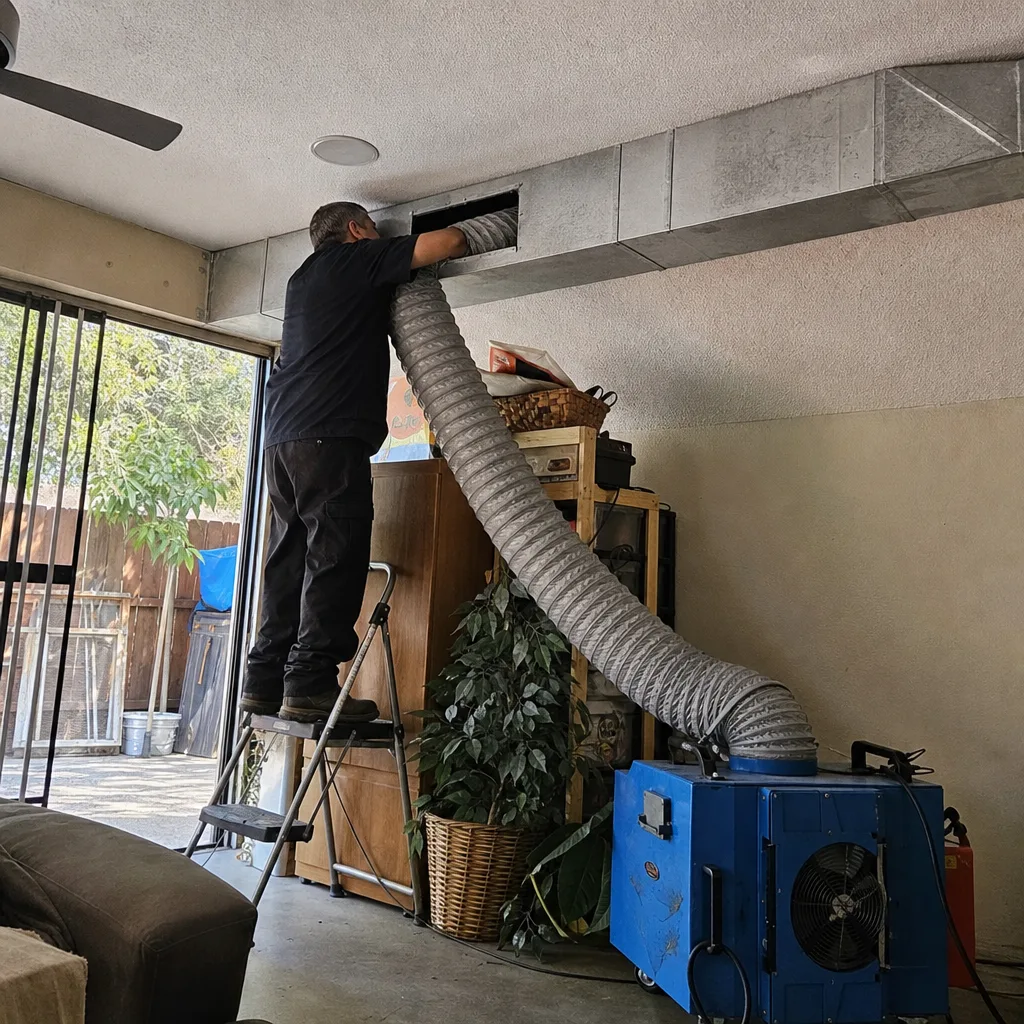
Last updated November 2, 2026
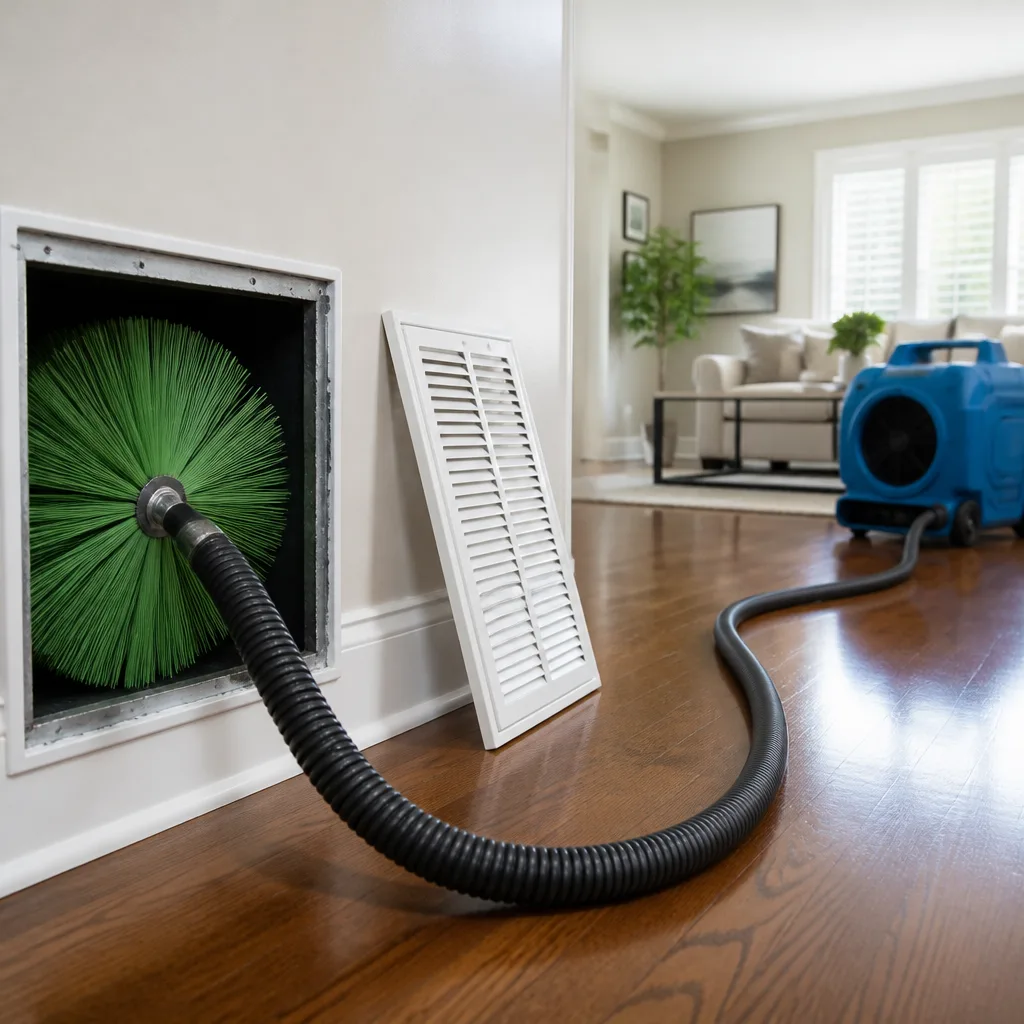 Whole-home duct cleaning
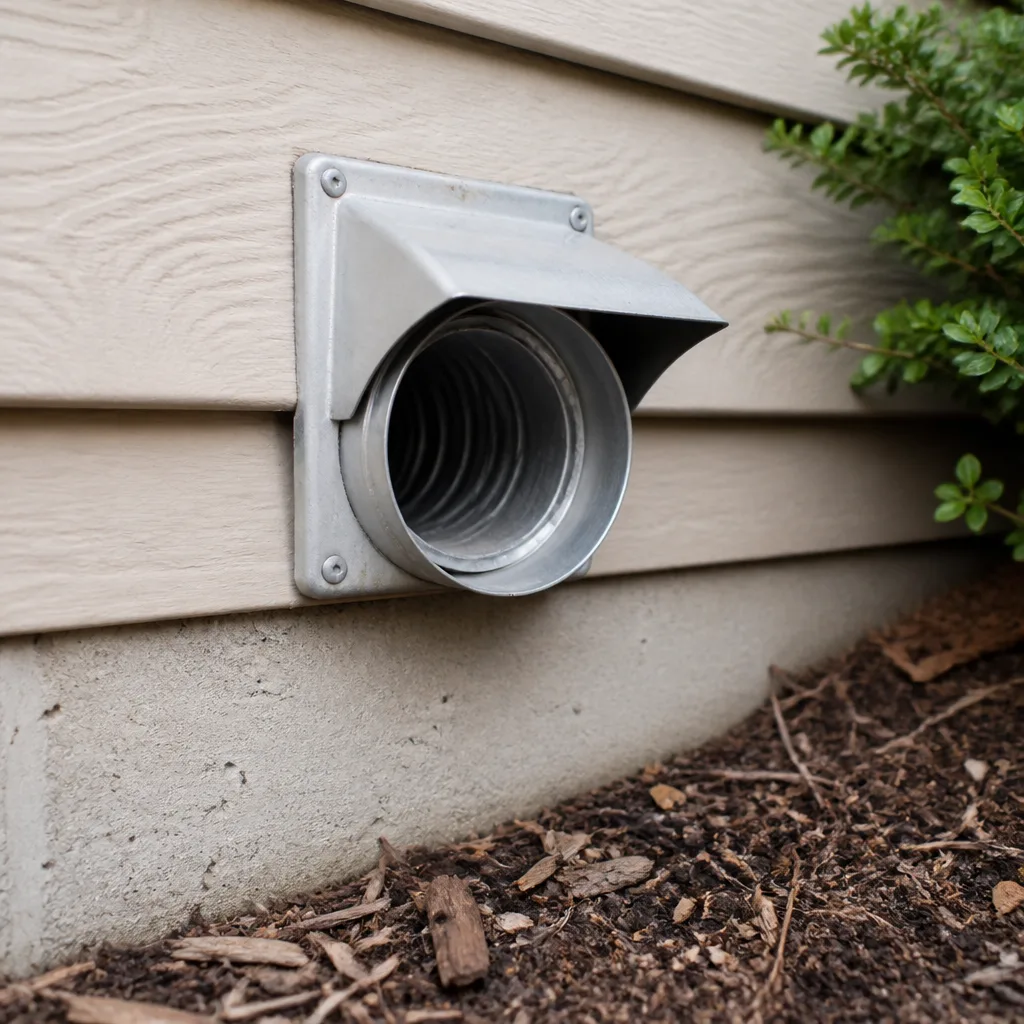 Dryer vent cleaning
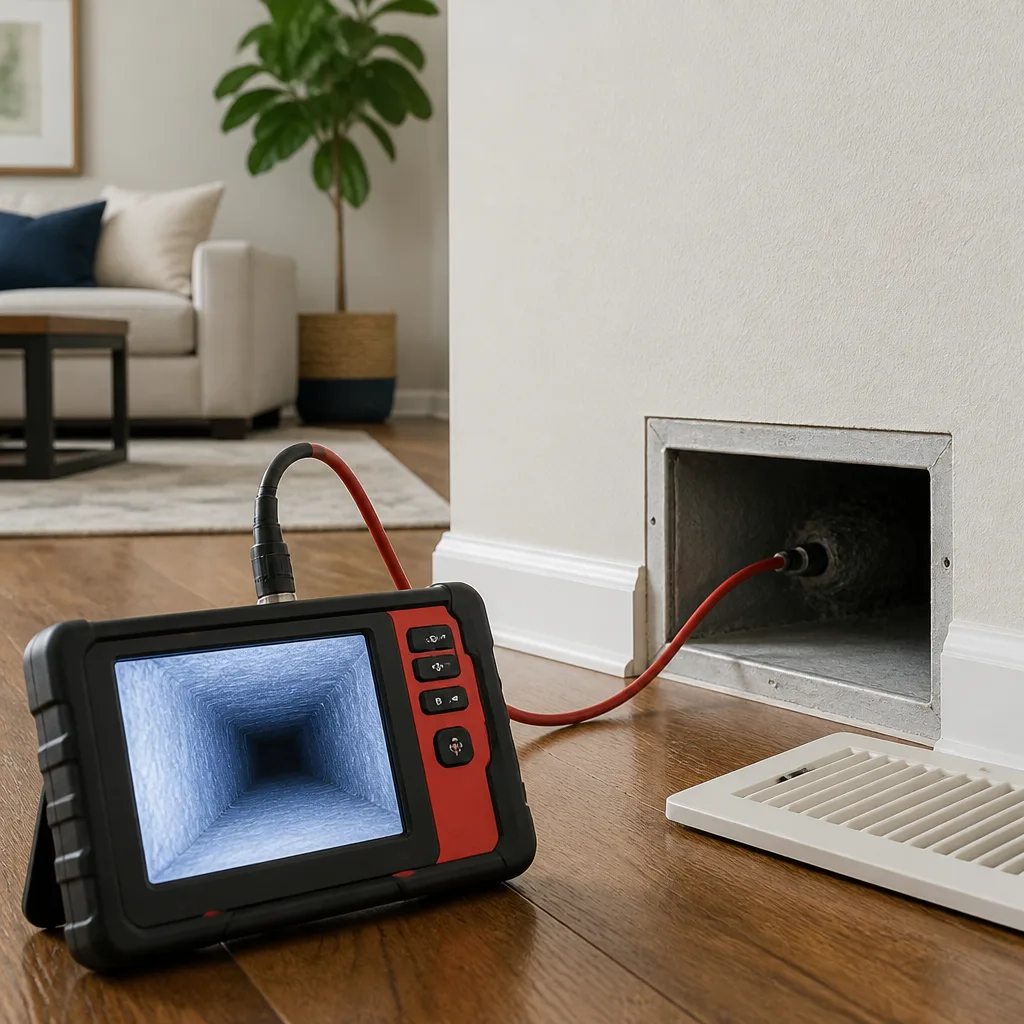 Camera inspection
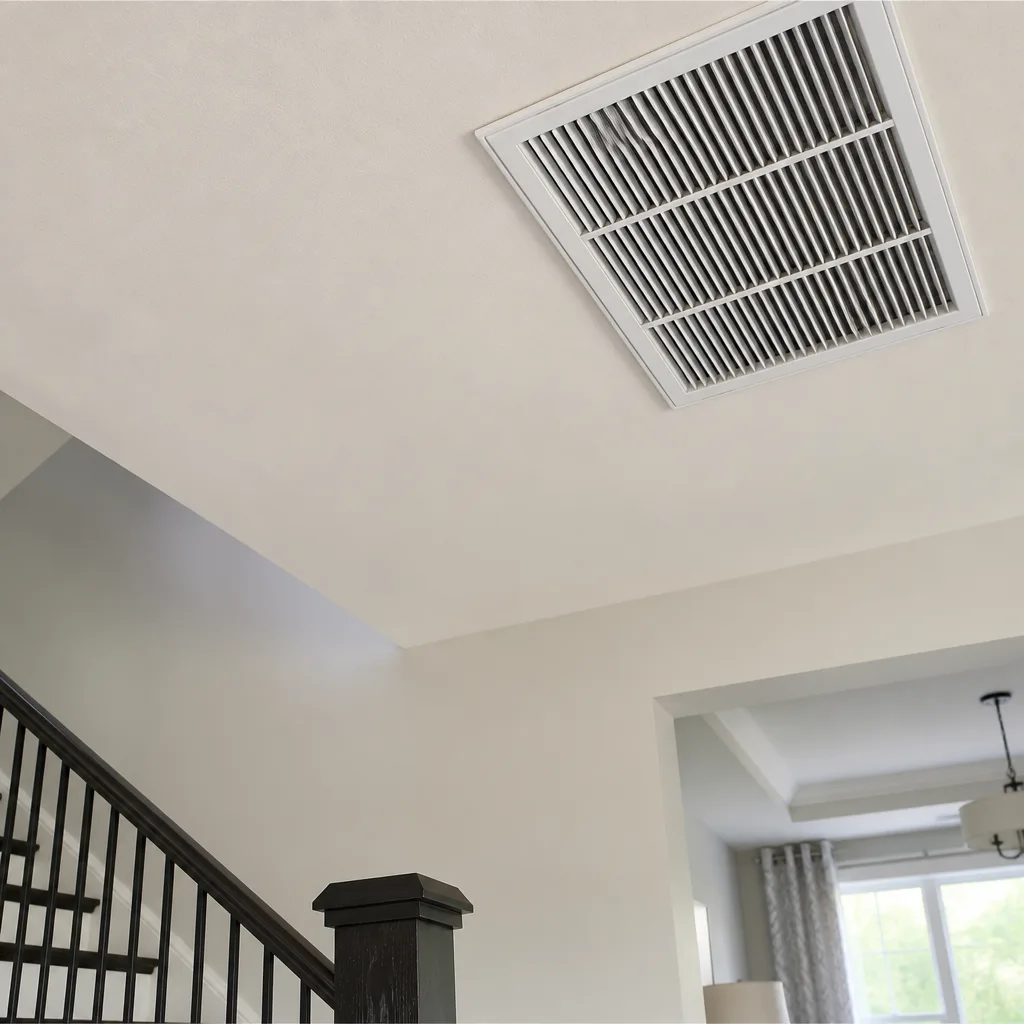 Sanitizing & deodorizing
Whole-system duct and dryer vent check with before-and-after photos - you see exactly what came out of your vents
That "$99 whole-house special" is a bait ad - the real number appears once they are in your hallway, or the "clean" is a shop-vac at the register. We photograph the inside of your ducts before and after instead.
Seasonal Air Duct Cleaning Care for Diamond Bar: Year-Round Homeowner’s Guide
Most homeowners in Diamond Bar think of duct cleaning as a once-a-year checkbox. That’s a costly misunderstanding. The period between October and December isn’t just fire season in the San Gabriel Valley – it’s the window when Santa Ana winds push ash, soil particulate, and combustion byproducts directly into return air intakes, making it the single highest-contamination quarter for most Diamond Bar HVAC systems. This guide breaks down what actually enters your ducts each season, when to act, and how to time professional cleaning so you’re not paying for work that gets undone six weeks later.
Styles & brands we work with
- Whole-home duct cleaning
- Dryer vent cleaning
- Camera inspection
- Sanitizing & deodorizing
Quick Answer
Diamond Bar homes face four distinct contamination cycles each year: Santa Ana wind debris in fall, wildfire ash intrusion during fire season, tree pollen accumulation in spring, and mold-promoting humidity from the June marine layer. Most Diamond Bar homes benefit from Air Duct Cleaning services timed around these events rather than a fixed calendar date. The highest-impact window for cleaning is late fall, after the first Santa Ana events but before winter closures, with a targeted follow-up if a wildfire burns within 15 miles of your home. For a free assessment of your system’s seasonal exposure, call (877) 693-6770.
Table of Contents
- Fall and Santa Ana Winds: The Highest-Contamination Quarter
- Post-Wildfire Protocols: When Ash Changes the Rules
- Spring: San Gabriel Valley Pollen and Your Duct Surfaces
- June Gloom: Moisture, Mold, and the Marine Layer
- Summer: Ozone, HVAC Load, and Filter Strategy
- How to Time Professional Cleaning for Maximum Interval
- Common Mistakes to Avoid
- When to Call a Professional
- Frequently Asked Questions
- The Bottom Line
Fall and Santa Ana Winds: The Highest-Contamination Quarter
From late September through December, Diamond Bar sits directly in the path of the Santa Ana wind corridor that funnels through the San Gabriel foothills. These northeast winds pick up fine soil from the Inland Empire’s dry foothill terrain and push it southwest at sustained speeds that regularly exceed 25 mph during peak events. What this means for your ducts is straightforward: every return air intake on your home becomes a collection point for airborne particulate during multi-day wind events.
The particle profile matters more than the volume. Santa Ana winds carry clay-based soil fines that are smaller than typical household dust particles – often under 10 microns. These particles don’t just settle on visible surfaces; they penetrate filter media and accumulate deep inside duct runs, particularly in the return-side plenum where air velocity drops and deposition increases. In our experience cleaning Diamond Bar homes, fall wind season routinely deposits 2-3 times more fine particulate in return ducting than any other quarter.
What compounds this in newer Diamond Bar subdivisions – places like The Country, Diamond Point, and Carriage Hills – is that modern construction standards call for tight building envelopes. That’s great for energy efficiency, but it means whatever enters the home during a wind event has fewer natural exit points. The particulate load recirculates through the HVAC system until filters capture it or it settles into duct surfaces.
Here’s what we recommend for fall in Diamond Bar:
- Inspect return air intakes after major wind events. If you see visible dust accumulation on vent grilles within 48 hours of a Santa Ana event, that same dust has entered your duct system at proportionally higher volumes.
- Upgrade to a MERV-11 filter during October through December. MERV-8 (the common baseline) passes particles in the 3-10 micron range. MERV-11 captures a meaningful portion of that while still allowing adequate airflow for most residential blowers.
- Consider sealing unused return intakes during red flag warnings. This isn’t a universal recommendation – your HVAC system needs return airflow to operate safely – but homes with multiple return points may be able to temporarily restrict intakes on windward-facing walls during the 12-72 hour window of a red flag event. If you’re unsure about your system’s airflow design, have a professional evaluate whether this is safe for your configuration.
- Schedule professional duct cleaning in November. This catches the accumulated fall load before you close the house for winter, and it means your indoor air starts the wet season with clean duct surfaces rather than a layer of fine soil that will bind with winter moisture.
This fall contamination pattern is why we position our Air Duct Cleaning in Diamond Bar work around event timing rather than arbitrary calendar dates. The difference between cleaning before and after the first major Santa Ana event is measurable in the volume of debris extracted – and visible to homeowners who check before-and-after photos of their return plenum.
Post-Wildfire Protocols: When Ash Changes the Rules
Wildfire smoke and ash in Diamond Bar typically arrives from the northeast – the San Bernardino National Forest, the Angeles National Forest, or the foothill communities along the 210 corridor. When fires burn within 15 miles of your home, the particulate entering your ducts changes character fundamentally. This isn’t household dust anymore.
Wildfire ash is chemically complex: combusted cellulose, resins, and man-made materials produce fine particulate that carries acids, oils, and VOCs. Critically, wildfire ash particulate is often partially hydrophobic – it resists binding with water. That means dry-vacuum duct cleaning methods leave a meaningful residue behind. The ash particles don’t agglomerate and get carried by airflow the way household dust does; they cling electrostatically to duct surfaces and require mechanical agitation plus HEPA-filtered extraction to remove completely.
In our experience with Diamond Bar homes following the region’s fire events, we’ve seen a consistent pattern: homeowners who wait six months after a nearby fire to clean their ducts report persistent smoke odor in their HVAC startup cycles, even after changing filters. The odor isn’t coming from the filter – it’s residual ash layers on the duct walls, re-volatilizing when the system heats up.
Protocol for homes within 15 miles of a recent burn zone:
- Replace all filters immediately. Don’t wait for the scheduled change interval. A filter that has adsorbed smoke particulate becomes a VOC source as it degrades.
- Run the HVAC fan continuously for 48-72 hours after smoke clears – but only if you have a fresh filter installed. This cycles indoor air through filtration repeatedly and captures airborne particulate before it settles.
- Wipe down return air grilles and surrounding wall surfaces with a damp microfiber cloth. This prevents re-entrainment of settled ash into the airstream when the system starts.
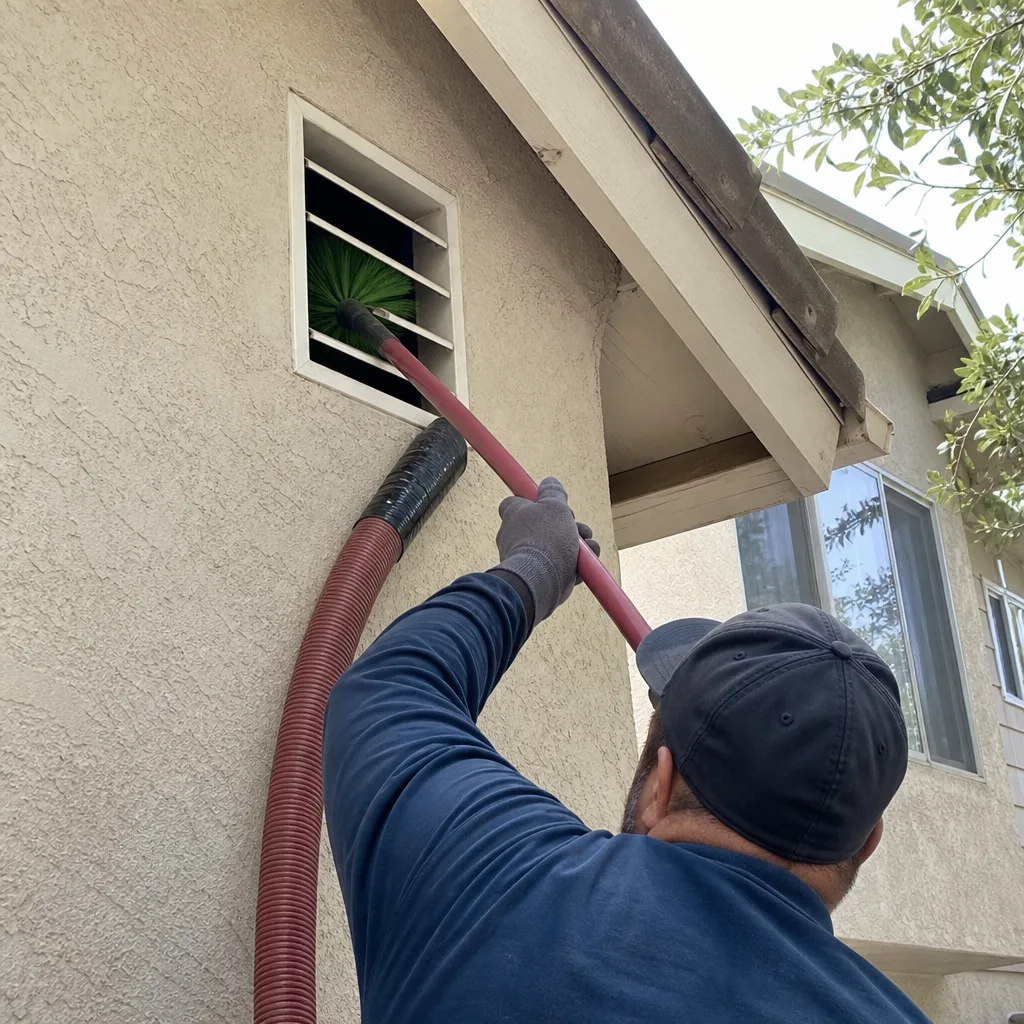
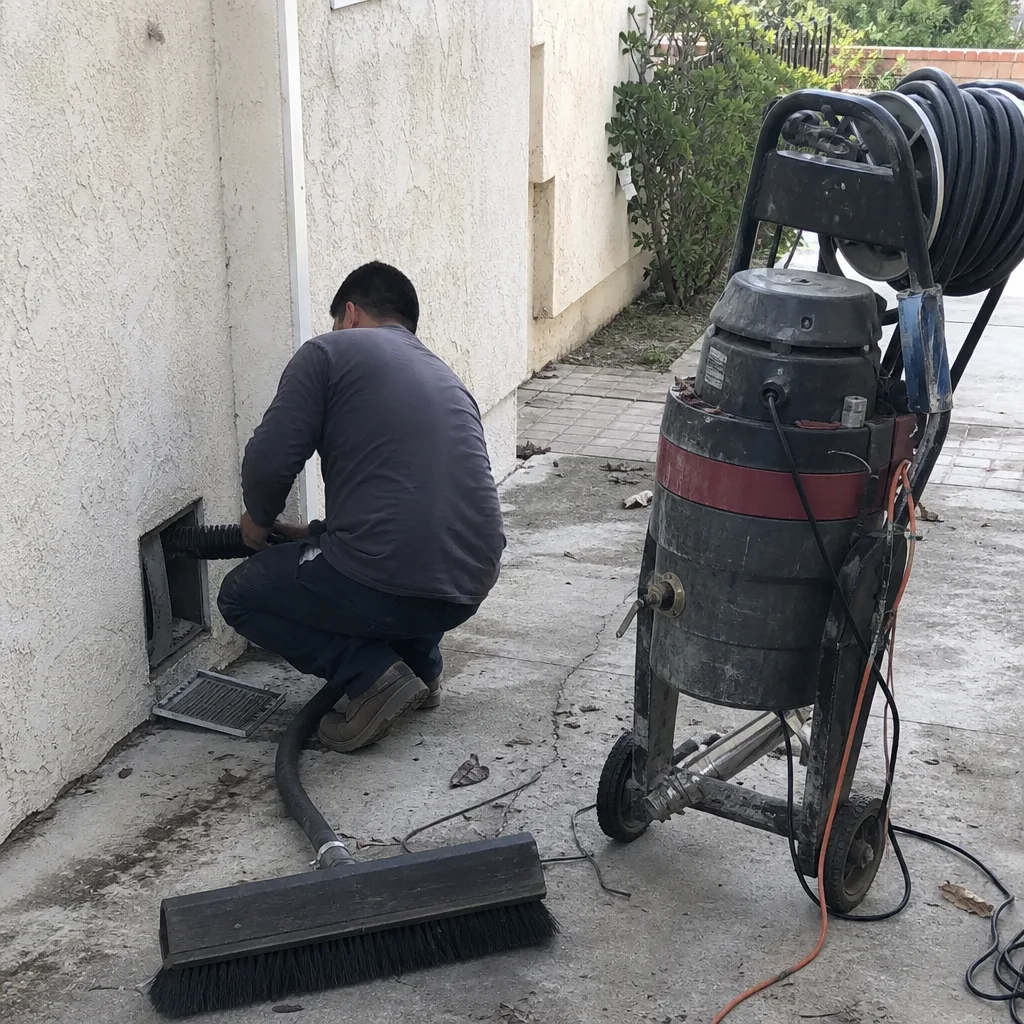
- Schedule professional duct cleaning with wet-extraction capability. This is where equipment matters. We run Duct Cleaning Diamond Bar home systems with Rotobrush rotary brush units paired with HEPA-filtered Nikro vacuums – the mechanical agitation physically dislodges electrostatic ash layers, and the HEPA capture prevents the fine particulate from being exhausted back into your living space. Standard truck-mounted vacuum systems without rotary agitation typically leave 30-50% of wildfire ash behind because the particles resist suction alone.
- Consider a longer-term HVAC filter upgrade if fires are recurrent in your area. Homes along the foothill edges of Diamond Bar – particularly those in the Country Estates or neighborhoods bordering the 60 freeway corridor – are exposed to smoke events more frequently than homes in the central valley area. A MERV-13 filter (with professional confirmation that your blower can handle the pressure drop) provides meaningful smoke particulate capture during active fire events.
The distinction between regular dust and wildfire ash matters because it changes the cleaning method. This is precisely the scenario where professional-grade equipment makes a measurable difference. A homeowner-grade vacuum attached to a hose cannot generate the contact force or filtration efficiency required to remove ash from a 20-foot duct run. Rotobrush systems built for commercial remediation work can.
Spring: San Gabriel Valley Pollen and Your Duct Surfaces
Diamond Bar’s spring allergy season starts earlier than most of the country – typically February through May, with peak tree pollen loads in March and April. The city’s location at the intersection of native oak woodland, ornamental landscaping, and imported species creates a pollen profile that includes coast live oak, sycamore, olive, walnut, and a range of ornamental trees common to the city’s planned developments from the 1960s onward.
Here’s the counterintuitive part: tree pollen grains are large – typically 20-40 microns. That’s big enough that most residential filters, even basic MERV-8 units, capture the majority of intact pollen grains. So why do Diamond Bar homeowners with allergies still suffer during their indoor hours?
The answer is that pollen grains break apart. When oak and sycamore pollen grains dehydrate (which happens rapidly in Diamond Bar’s dry spring air), they fracture into sub-pollen particles in the 1-5 micron range. These fragments pass through HVAC filters entirely and settle on duct surfaces throughout the system. Then, every HVAC start cycle re-entrains those particles into the living space. This is why you can change filters religiously during allergy season and still wake up congested – the reservoir of allergen isn’t in the filter, it’s on the duct walls.
The role of professional duct cleaning in spring allergy management is to remove that reservoir. After we clean a system that hasn’t been serviced in several years, Diamond Bar allergy sufferers frequently report measurable improvement within the first week – not because we changed the filter, but because we removed the accumulated allergen load from the duct surfaces that filters can’t address.
Spring-specific recommendations for Diamond Bar:
- Don’t confuse filter upgrades with duct cleaning. A MERV-11 or MERV-13 filter reduces the rate at which new pollen fragments enter your ducts. It does nothing to remove material already deposited. If you’ve lived in your home for more than three years without a professional duct cleaning, you have a pollen reservoir regardless of your current filter quality.
- Time spring cleaning before peak allergy months if possible. A February or early March duct cleaning removes the prior year’s pollen load before the current season’s exposure begins. This maximizes the symptom-reduction window.
- Consider the interaction between pollen and the June marine layer. Pollen that settles in ducts during spring doesn’t disappear – it becomes a moisture-binding substrate when June humidity arrives. Pollen fragments mixed with elevated indoor humidity can support mold spore development on duct surfaces within weeks. This is a compounding risk most Diamond Bar homeowners never consider.
Spring is also when we see increased demand for Air Duct Repair in Diamond Bar – not because ducts fail in spring, but because pollen symptoms drive homeowners to investigate their systems, and that’s when they discover disconnected runs, kinked flex duct, or degraded seals that have been silently pulling unfiltered air from attics and crawl spaces for years.
June Gloom: Moisture, Mold, and the Marine Layer
Every June, the marine layer parks itself over the LA Basin and pushes inland far enough to reach Diamond Bar, especially in the early morning hours. For 4-6 weeks, evening and morning relative humidity regularly exceeds 80%, then drops sharply during afternoon heat. This is a uniquely problematic pattern for duct systems.
The problem isn’t just humidity – it’s the daily condensation cycle. When humid air enters your ducts during nighttime and early morning operation (thermostat at 72°F, supply air at 55°F), moisture condenses on the interior walls of supply plenums and the first few feet of metal duct runs. Then afternoon heat evaporates that moisture. This daily wet-dry cycle creates ideal conditions for mold spore activation on any organic matter present in the duct system.
What makes this worse in Diamond Bar specifically:
- The spring pollen load provides the organic substrate. Clean ducts don’t grow mold from condensation alone – mold needs an organic food source. Ducts carrying accumulated pollen, skin cells, and household dust provide exactly that. The cleaner your ducts entering June, the less mold risk during the marine layer season.
- Homes in the northern hillside areas of Diamond Bar run AC less aggressively in June. The marine layer keeps temperatures moderate enough that some homeowners leave windows open at night and defer AC use. That open-window humidity enters the home directly and settles in the return ducts, where airflow during the next cooling cycle distributes it throughout the system.
- Running your blower fan continuously during June can help or hurt depending on duct condition. Continuous airflow helps dry condensation between cycles if the ambient air is dry enough – but if your ducts are already contaminated, continuous fan operation distributes mold spores throughout the home on a 24/7 schedule.
June-specific maintenance steps:
- Check visible supply registers for condensation. During early morning operation in June, look at the metal grille surfaces on supply registers. Visible condensation or water beading signals that your system is experiencing the daily wet cycle – and that your ducts have moisture on their interior surfaces too.
- Consider running the AC with the fan in “Auto” rather than “On” for continuous operation if humidity is a concern. Auto mode allows duct surfaces to fully dry between cycles, which reduces mold activation risk. The tradeoff is less consistent air filtration, but during June Gloom, the drying benefit typically outweighs the filtration loss.
- Have ducts inspected if you smell a musty odor on HVAC startup. That smell is the signature of mold and bacteria colonizing duct surfaces. It doesn’t go away on its own, and air fresheners just mask it. The odor is coming from accumulated moisture in contact with organic debris – the exact condition professional cleaning is designed to eliminate.
- If you have an Aprilaire whole-home dehumidifier or similar system, June is when it earns its keep. Homes with whole-home dehumidification see dramatically reduced duct condensation during the marine layer season. If your home struggles with June humidity every year, a dehumidification upgrade is worth considering – and it integrates with your existing duct system rather than requiring separate equipment.
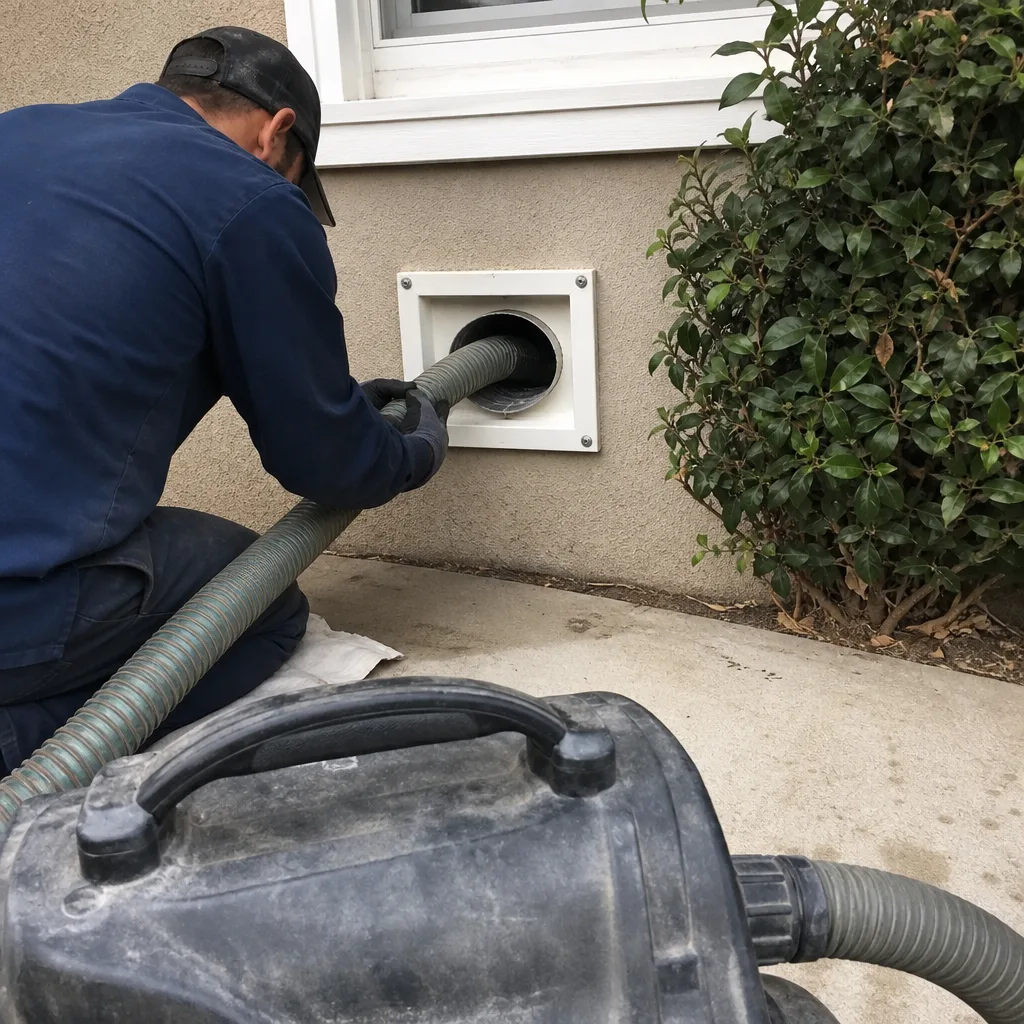
The June Gloom window is why we recommend that Diamond Bar homeowners in older homes – especially 1970s and 1980s construction in the south and central areas of the city, where insulation values are lower and duct condensation is more pronounced – have their duct interiors checked entering summer. A Dryer Vent Cleaning in Diamond Bar service visit is also worth scheduling in this season, because the same humid air that promotes mold in HVAC ducts creates lint clumping in dryer exhaust lines, where the combination of moisture and accumulated lint increases fire risk.
Summer: Ozone, HVAC Load, and Filter Strategy
Diamond Bar sits within the South Coast Air Basin, which has historically recorded some of the highest ambient ozone levels in the United States. Summer is peak ozone season, with ground-level ozone concentrations regularly exceeding the 8-hour federal standard during July and August heat waves. What does ozone have to do with duct cleaning? More than most homeowners assume.
Ozone itself is a gas – it passes through filters and duct systems without depositing. But ozone is also highly reactive. When ozone contacts organic materials inside your home (carpet fibers, upholstery, paint, and yes, the organic dust layer in your ducts), it triggers chemical reactions that produce secondary organic aerosols and ultrafine particles. These reactions happen continuously during high-ozone days, and the reaction products accumulate in exactly the same places that any other fine particulate does: your duct system.
This matters for several practical reasons:
- Summer HVAC operation in Diamond Bar is continuous. When outdoor temperatures exceed 95°F (a regular occurrence in July and August), your system cycles frequently or runs continuously. That means ducts are actively transporting air – and every particle deposited during that flow either exits into the living space or settles on duct surfaces. There’s no “off season” for accumulation.
- Ozone reaction products are smaller and more toxicologically significant than typical dust. The ultrafine particles generated by ozone chemistry penetrate deeper into the respiratory system than standard household particulate. Keeping duct surfaces clean reduces the reservoir of organic material available for these reactions.
- Filter loading accelerates in summer. Continuous operation means more air passes through your filter each day, which sounds good until you consider that a MERV-11 filter running continuously may need replacement every 4-6 weeks during peak summer rather than the 90-day interval printed on the packaging.
Summer filter strategy for Diamond Bar:
- Check filters monthly during July-September. Don’t go by the packaging interval. A filter that looks dark and clogged is past its useful life, and a clogged filter increases blower motor strain while reducing airflow – which shortens equipment life and increases energy use during the hottest months.
- Balance filtration level against system capacity. Many Diamond Bar homes have single-speed blowers sized for MERV-8 filters. Jumping to MERV-13 without confirming adequate static pressure capacity can reduce airflow by 15-25%, which means your AC runs longer to hit the setpoint. If you want higher filtration, have a professional evaluate your system first. We regularly work with Honeywell and Aprilaire filtration systems because they’re designed to integrate with residential HVAC without compromising airflow – unlike some aftermarket filter upgrades.
- Keep the area around return intakes clean. Summer means more dust-generating activity: kids home all day, pets shedding, doors opening more frequently. The return intake is where that dust enters the duct system. Vacuum the grilles and surrounding surfaces regularly during summer.
- Use the highest MERV rating your system can handle during ozone season if anyone in the home has asthma or cardiovascular concerns. Ozone reaction products hit sensitive populations hardest, and filtration is the first line of defense.
How to Time Professional Cleaning for Maximum Interval
Here’s where the seasonal approach delivers measurable value: instead of cleaning on a fixed calendar schedule, you clean when contamination events have already occurred or are imminent. For Air Duct Cleaning Cost Breakdown: The Diamond Bar Homeowner’s Reference for 2026, see our detailed pricing guide. This maximizes the interval before your ducts reach contamination levels that justify the next cleaning.
The sequence that works best for most Diamond Bar homes:
- Primary cleaning: Late October through November. This captures the first major Santa Ana wind deposits, positions your ducts clean before the winter heating season, and removes the accumulated load from summer ozone season and the prior spring’s pollen fragments. This single well-timed cleaning addresses four contamination sources at once.
- Filter replacement: Monthly during Santa Ana season (Oct-Dec), monthly during June-September, every 60-90 days otherwise. Filter freshness is the single most important factor in how quickly ducts re-contaminate.
- Post-event cleaning: Within 30 days of any wildfire that burns within 15 miles. This is not optional if you care about long-term indoor air quality. Ash particulate left in ducts continues degrading air quality for months or years.
- Assessment each June: During the marine layer season, pay attention to musty odors or visible condensation. If you detect either, schedule a targeted inspection before mold becomes established.
- After major home renovations: Remodeling generates drywall dust, sawdust, and construction debris that overwhelms residential filtration. Any renovation that involves drywall work, sanding, or demolition warrants a duct cleaning before you resume normal occupancy. Guardsman-grade surface protection practices during construction help – but even careful crews can’t prevent all particulate intrusion into returns.
The goal is to use professional cleaning as a strategic intervention, not a routine maintenance checkbox. A properly timed cleaning in November might be the only professional intervention your ducts need all year – especially if you’re diligent with filter maintenance and keep return areas clean.
What we’ve observed in Diamond Bar homes across different neighborhoods: homes in the 91765 ZIP code with mature tree landscaping tend to accumulate pollen-driven deposits faster than newer construction areas with less established vegetation. Homes near the 60 and 57 freeway corridors accumulate more fine particulate from brake dust and exhaust than homes in the interior residential blocks. These location factors matter when determining your home’s optimal cleaning schedule.
Common Mistakes to Avoid
- Treating duct cleaning as a once-a-year fixed task. The contamination profile of a Diamond Bar home changes seasonally. A March cleaning that misses Santa Ana season does little for the fine soil particulate that arrives in October. Time your cleaning around events, not the calendar.
- Assuming a high-MERV filter eliminates the need for professional cleaning. A MERV-13 filter prevents new particulate from entering the system. It does nothing for what’s already deposited on duct walls. Both strategies work together; neither replaces the other.
- Ignoring the dryer vent because “it’s a different system.” The same seasonal factors that contaminate your HVAC ducts – Santa Ana dust, wildfire ash, June humidity – affect your dryer exhaust line. A clogged dryer vent is a fire hazard regardless of how clean your HVAC system is. We treat Dryer Vent Cleaning in Diamond Bar as a safety-critical service precisely because the seasonal contamination profile is identical to HVAC ducts.
- Running the fan continuously in “On” mode during wildfire events. This draws smoke-laden air into the system and distributes it throughout the home. During active smoke conditions, switch to “Auto” mode and consider turning off the system entirely if smoke is extreme.
- Waiting until you see visible dust on supply registers. By the time dust is visible on vent grilles, the interior duct surfaces are carrying a much heavier load. Visible dust on the outside means significant accumulation on the inside.
- Assuming a newer home doesn’t need duct cleaning. Construction debris in ducts is common in Diamond Bar’s newer subdivisions. Drywall dust, sawdust, and even paint overspray find their way into duct runs during construction and remain there until professionally removed. New doesn’t mean clean.
When to Call a Professional
If you’ve experienced any of the following in your Diamond Bar home, a professional duct assessment is worth scheduling: persistent musty odor on HVAC startup (indicating mold or bacterial growth on duct surfaces), visible dust accumulation on return grilles within days of cleaning, unexplained increases in energy bills during cooling or heating season (potentially signaling blocked airflow or leaking ductwork), allergy symptoms that worsen indoors, or any wildfire event within 15 miles of your home. Professional-grade equipment matters here: Rotobrush rotary brushes physically dislodge debris that vacuum-only systems leave behind, and HEPA-rated Nikro filtration captures fine particulate instead of exhausting it into your living space. Review our Air Duct Cleaning Emergency Preparedness Guide for Diamond Bar Homes to plan ahead. Duct Cleaning Diamond Bar offers free estimates in Diamond Bar – call (877) 693-6770 to discuss your system’s seasonal exposure and the right cleaning strategy for your home.
Frequently Asked Questions
Most Diamond Bar homes need professional duct cleaning every 3-5 years, but the timing matters more than the interval. A single well-timed cleaning in late fall – after the first major Santa Ana wind events and before winter – often achieves more than cleaning on a rigid 12-month schedule. Homes within 15 miles of a wildfire should schedule post-event cleaning regardless of the last service date, and homes undergoing major renovation should clean before resuming normal occupancy. Call (877) 693-6770 for an assessment of your specific timing needs.
Whole-system duct cleaning in Diamond Bar typically ranges from $450 to $900 for a single-family home, with smaller homes on the lower end and larger homes with complex duct layouts on the higher end. Additional factors include the number of furnace/AC units, the age of the system, and the degree of contamination. Beware of $99 whole-house offers – at that price, the service typically involves limited vent coverage, no return-side cleaning, and no rotary agitation. The most important cost variable is what you’re actually getting: full system cleaning (supply and return, plus plenums and blower cabinet) costs more than vent-only service because it removes more material and delivers longer-lasting results. Call (877) 693-6770 for an exact quote.
The price differences reflect different cleaning scopes, not different levels of generosity. A $99 special typically covers supply registers only – not the return side, not the main trunk lines, not the blower cabinet. That leaves the majority of your duct system untouched while giving you a receipt that says “cleaned.” Full-system cleaning with rotary brush agitation and HEPA-filtered extraction costs more because it takes longer and uses professional-grade equipment – and because it actually removes the material that’s causing your indoor air quality problems. If a quote seems too good, ask specifically what’s included: return plenum? Blower housing? Trunk lines? If the answer is vague, keep shopping.
A legitimate cleaning should include before-and-after visual documentation. With modern camera inspection equipment, the technician can show you the interior of your ducts before cleaning (with visible debris accumulation) and after (with clean metal or flex surfaces). If a company can’t provide photographic proof, you have no way to verify the work. We consider before-and-after documentation non-negotiable – it’s the difference between cleaning to a standard and operating on faith. Look for visible improvement on the return side, since that’s where the heaviest contamination accumulates.
No. A consumer shop vac cannot generate the airflow, agitation, or filtration required to clean duct interiors. The access limitations alone are disqualifying: residential duct systems have turns, transitions, and long runs that a homeowner cannot physically reach. What you can do is maintain the visible surfaces (return grilles, supply registers, filter compartments) and change filters diligently. Interior duct surfaces require professional rotary brush systems paired with HEPA-rated extraction – which is exactly the equipment configuration used in professional remediation work. Attempting DIY duct cleaning with a shop vac can actually make things worse by dislodging particulate that then circulates through the home without proper capture.
Yes, particularly for homes with years of accumulated pollen fragments in the duct system. The mechanism is straightforward: Diamond Bar’s spring pollen loads deposit on duct surfaces throughout the season, those deposits break down into sub-pollen particles that pass through filters, and those particles re-enter the airstream every time the HVAC system runs. Removing the reservoir eliminates a continuous allergen source that filters alone cannot address. Results are typically most noticeable for households with significant pollen sensitivity and homes that haven’t had professional cleaning in 5+ years. Call (877) 693-6770 to discuss whether your system is likely carrying a significant allergen load.
The Bottom Line
Diamond Bar’s air quality profile is seasonal, not static. Santa Ana winds deliver fine soil particulate in fall, wildfire events introduce chemically complex ash that demands specific removal methods, spring pollen creates allergen reservoirs that filters can’t touch, and the June marine layer creates mold-promoting condensation conditions. A single annual cleaning timed without regard to these seasonal forces leaves your system exposed during critical contamination windows. The most effective strategy for most Diamond Bar homes: clean in late fall after the first Santa Ana events, maintain filters aggressively year-round, respond to wildfire events within 30 days, and monitor for musty odors during June Gloom. This isn’t about cleaning more often – it’s about cleaning when it actually matters.
Written by the team at Duct Cleaning Diamond Bar, serving Diamond Bar since 2015. Explore more guides & resources on indoor air quality.
See the difference
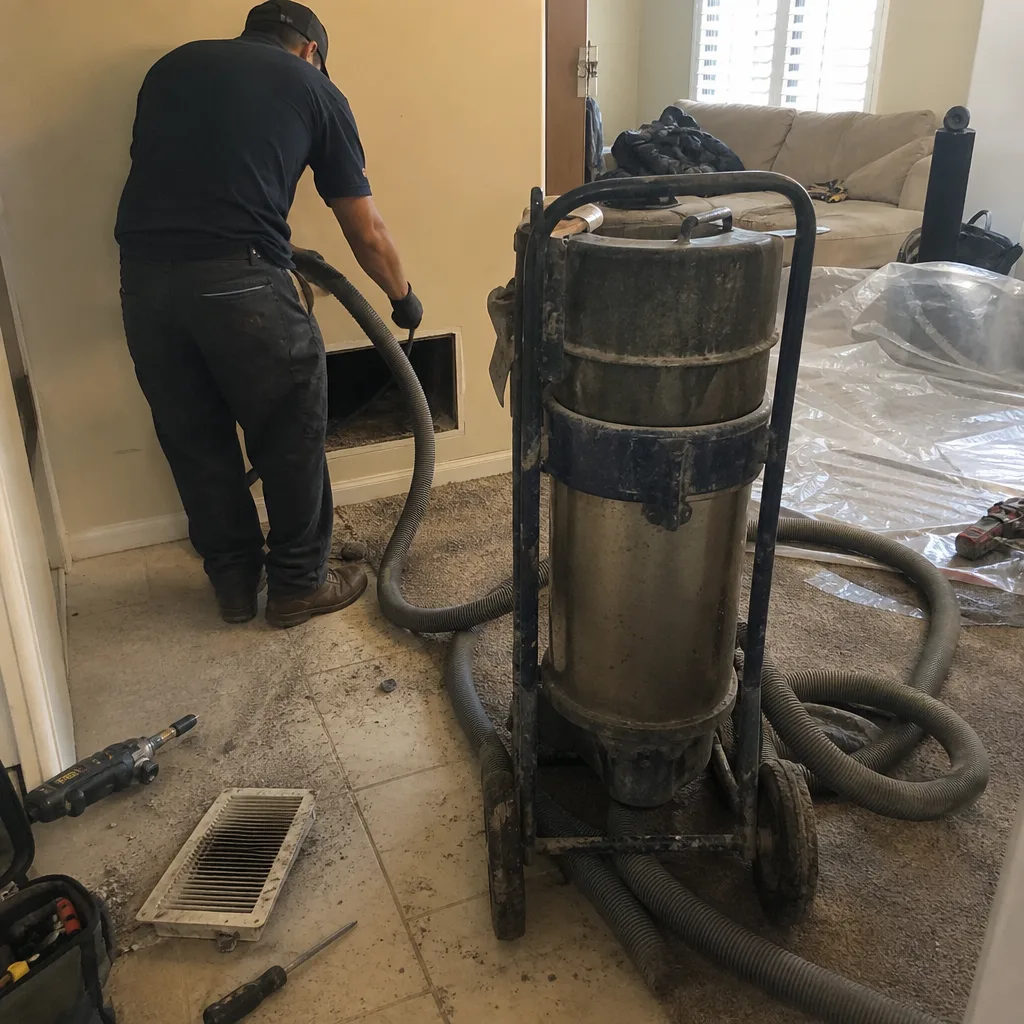 Before
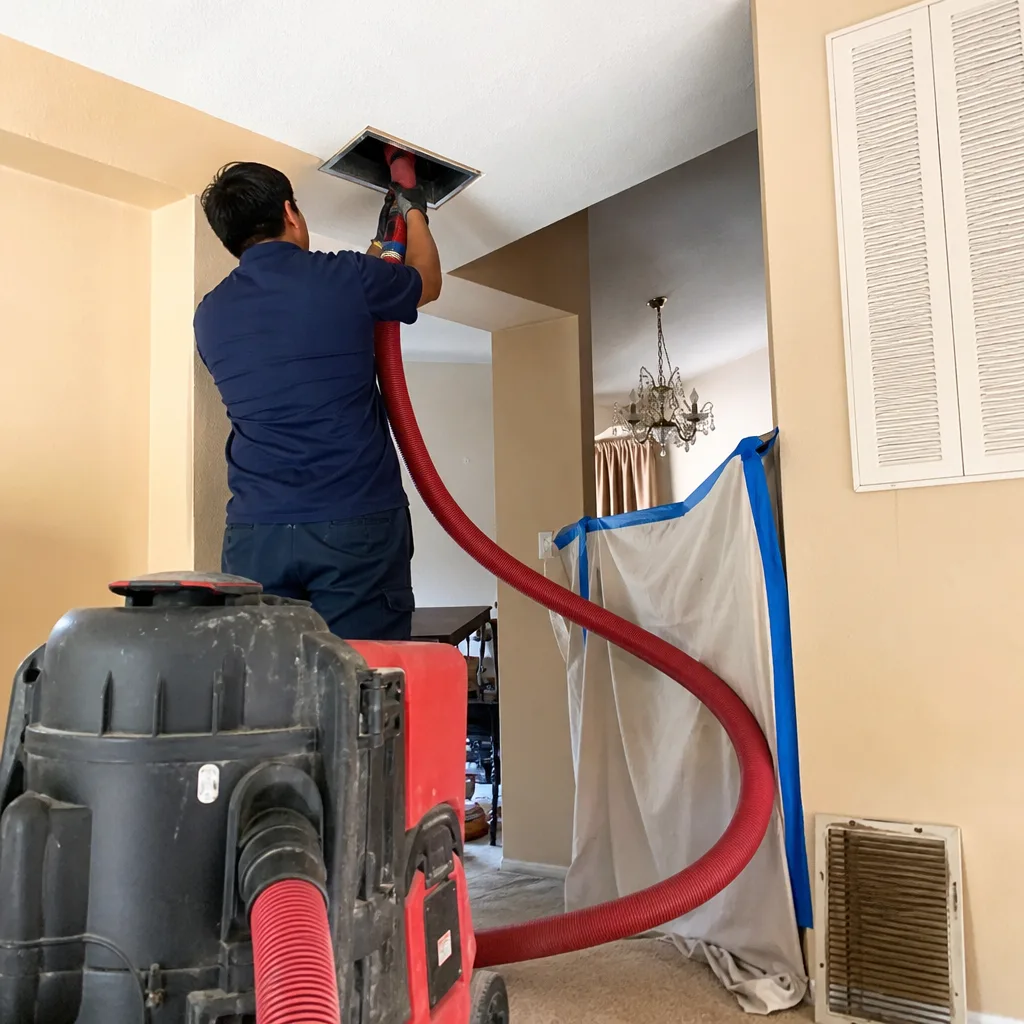 After
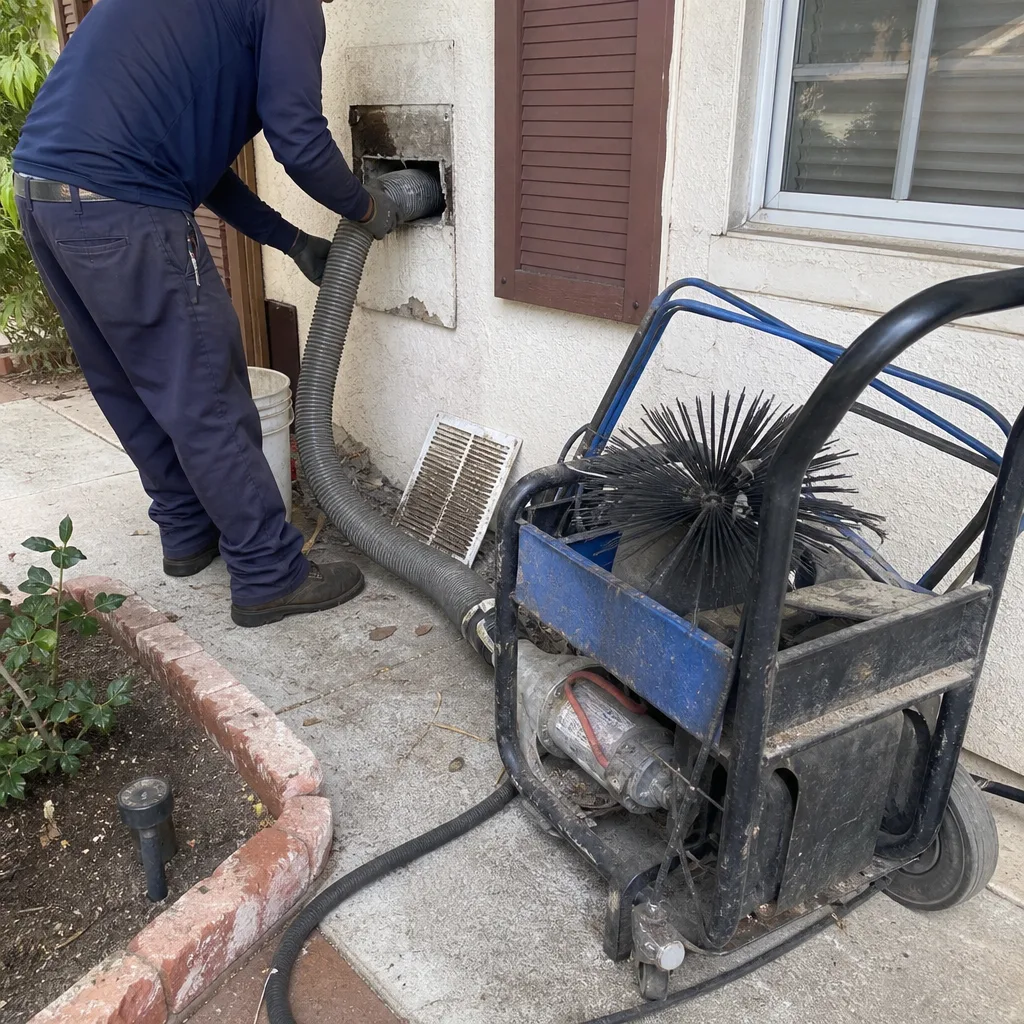 Before
 After
 Before
 After