
Last updated November 2, 2026
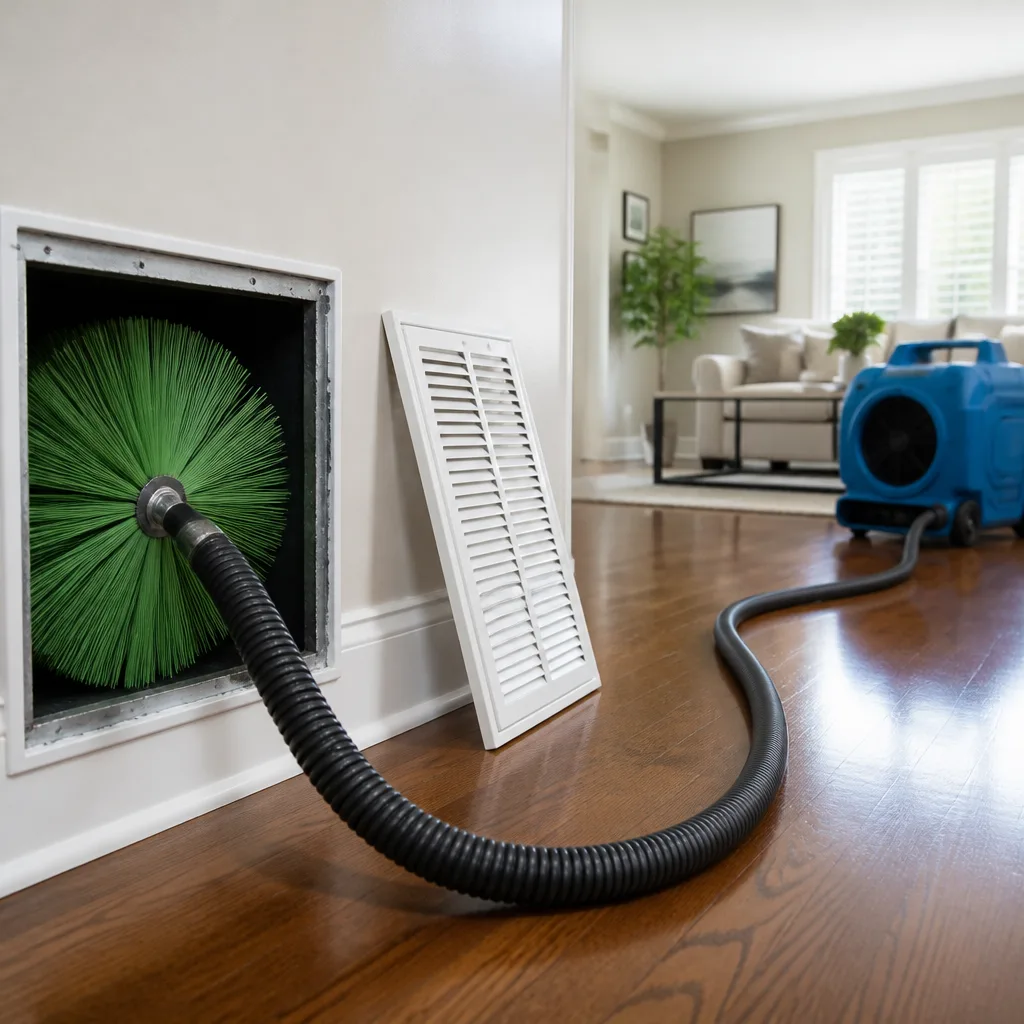 Whole-home duct cleaning
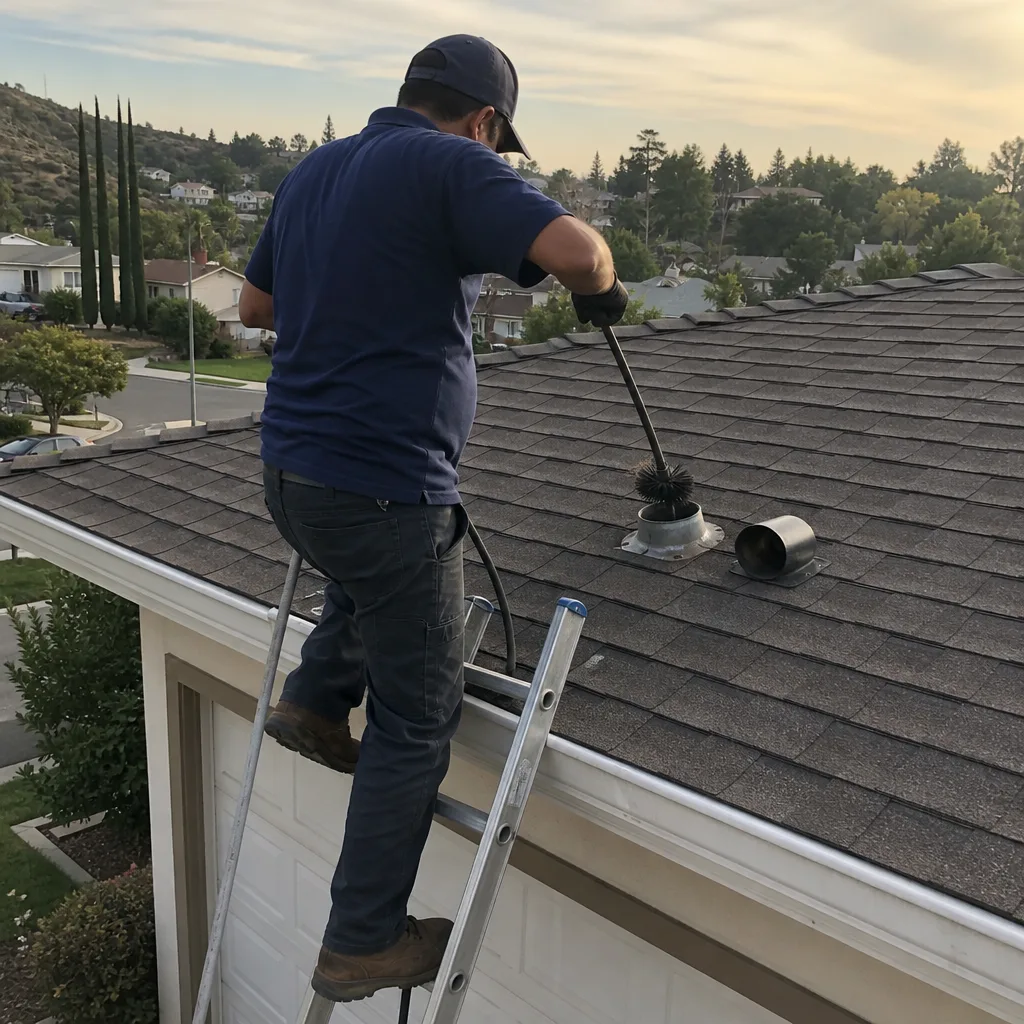
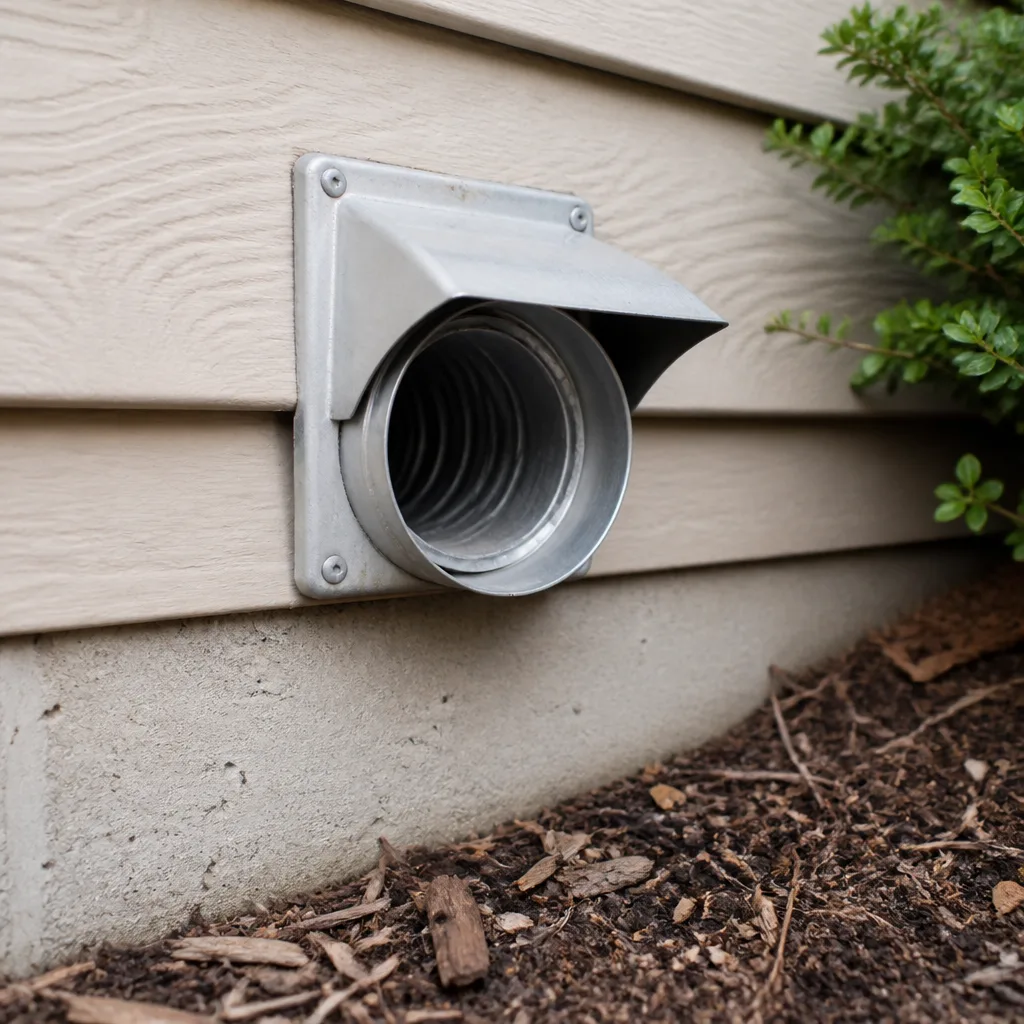 Dryer vent cleaning
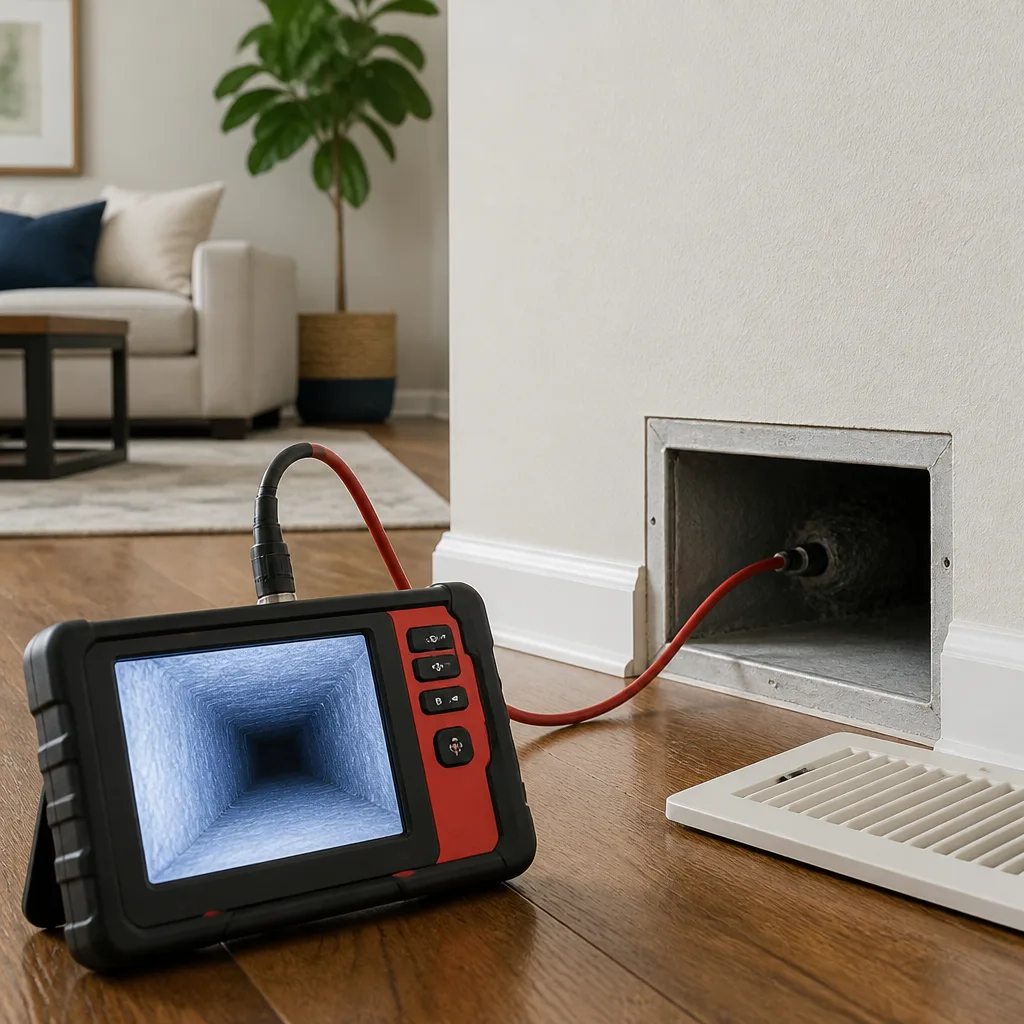 Camera inspection
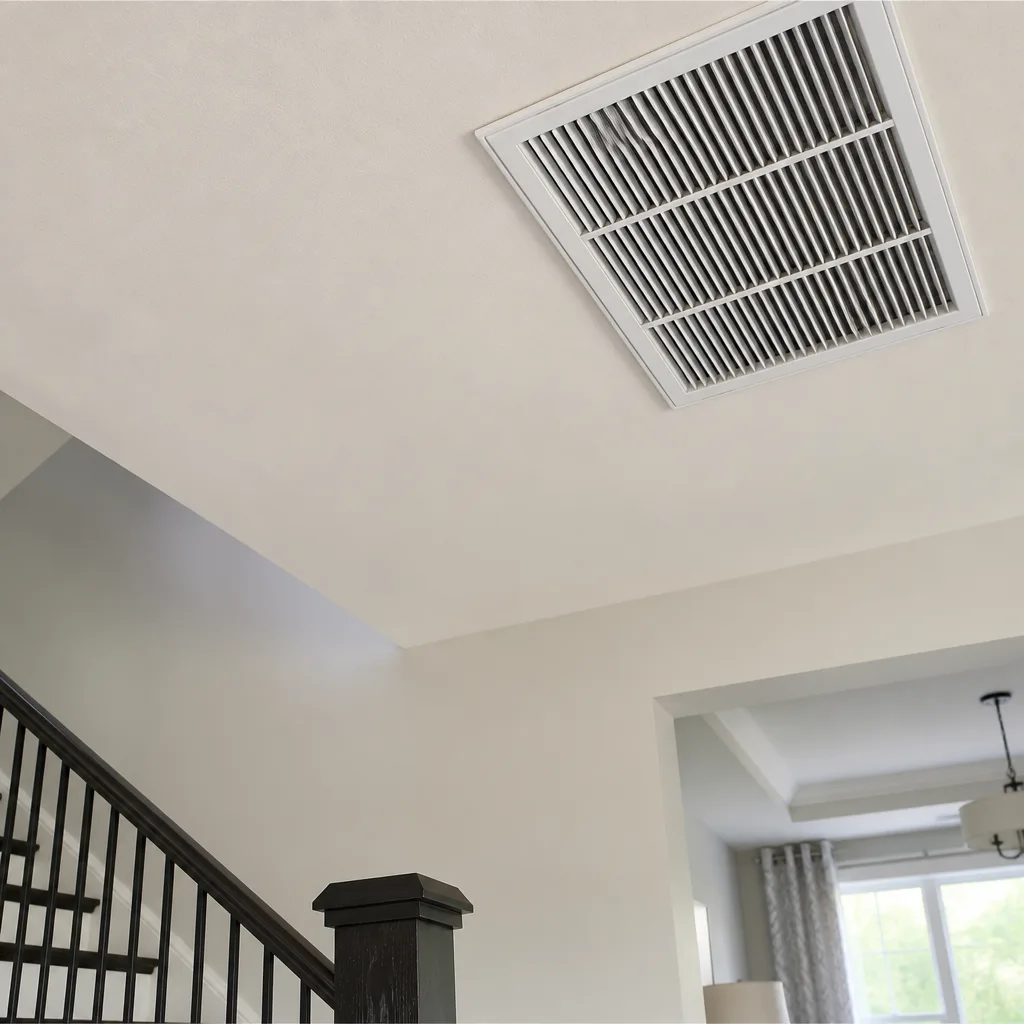 Sanitizing & deodorizing
Whole-system duct and dryer vent check with before-and-after photos - you see exactly what came out of your vents
That "$99 whole-house special" is a bait ad - the real number appears once they are in your hallway, or the "clean" is a shop-vac at the register. We photograph the inside of your ducts before and after instead.
Air Duct Cleaning Cost Breakdown: The Diamond Bar Homeowner’s Reference for 2026
Here’s the number most Diamond Bar homeowners never hear: a $149 duct cleaning quote and a $650 duct cleaning quote are rarely competing for the same job. They’re describing two different services that happen to share a name. One is a visual touch-up. The other is source removal. If you choose on price alone, you’re comparing a wipe-down to a remediation. This guide decodes exactly what you’re paying for at every price tier in Diamond Bar, why legitimate costs vary by hundreds of dollars, and how to calculate what a cleaning is actually worth per year of clean air.
Styles & brands we work with
- Whole-home duct cleaning
- Dryer vent cleaning
- Camera inspection
- Sanitizing & deodorizing
Quick Answer
Air duct cleaning in Diamond Bar typically costs between $350 and $650 for a full single-family home system in 2026, with smaller homes and condos running $250 – $400 and larger two-story homes with complex attic runs reaching $700 – $900. The price depends on register count, trunk line footage, system accessibility, and whether the scope includes true source removal with HEPA-filtered extraction rather than a basic brush-and-vacuum pass. Quotes below $200 almost always indicate a limited-scope service that skips critical steps.
Table of Contents
- Why the Price Gap Exists: Two Different Jobs, One Name
- The Line-Item Breakdown: What Actually Drives Cost in Diamond Bar
- The $99 – $199 Tier: What It Actually Delivers
- The $500 – $800 Professional Scope: What Source Removal Entails
- Add-On Costs: Dryer Vents, Coils, and Antimicrobial Treatments
- How Diamond Bar Homes Specifically Affect Pricing
- The Cost-Per-Year Framework: Cheap Cleaning vs. Better Intervals
- Common Mistakes to Avoid
- When to Call a Professional
- Frequently Asked Questions
- The Bottom Line
Why the Price Gap Exists: Two Different Jobs, One Name
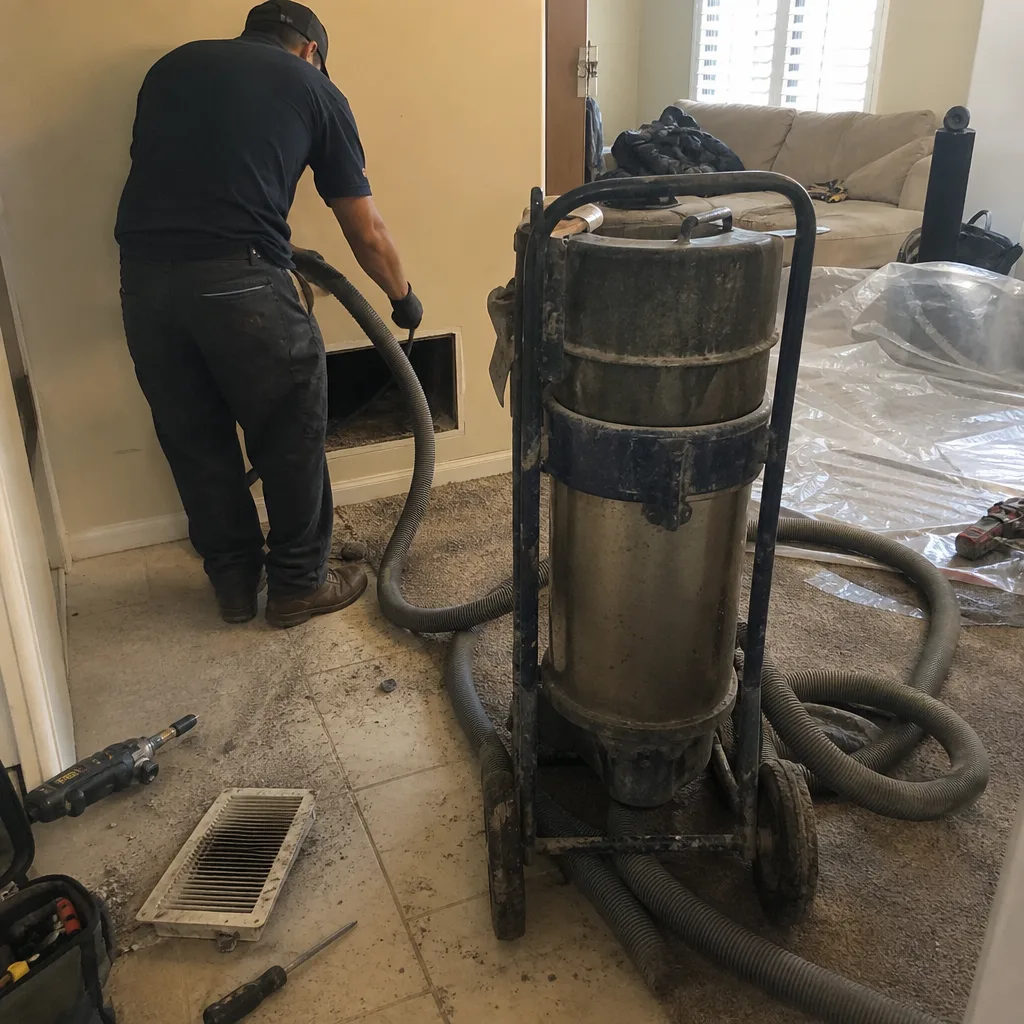
Walk into any Diamond Bar home and ask five contractors to quote duct cleaning. You’ll get numbers ranging from $99 to $900-plus. That spread is not contractor greed or homeowner naivety. It’s a scope-of-work gap. The low end describes a technician with a portable vacuum and a brush attachment spending 45 to 90 minutes on the supply registers. The high end describes a crew running professional-grade rotary brush systems and HEPA-filtered negative air machines for four to six hours, accessing every trunk line, return air cavity, and the air handler itself.
Think of it like a car detail. One shop vacuums the seats for $50. Another pulls the seats, shampoos the carpet, and steam-cleans the vents for $400. Both are “car cleaning.” Only one removed the source of the smell. Duct cleaning works the same way. A rotary brush system physically dislodges debris caked onto duct walls. A HEPA-rated vacuum captures it at the point of extraction. A shop-vac pointed at a vent simply doesn’t have the surface contact or filtration to do either, so the “cleaning” is largely cosmetic.
We run Rotobrush rotary systems and Nikro HEPA-filtered vacuums on every job in Diamond Bar because source removal requires agitation plus containment. Without both, you’re moving dust around, not removing it. Homeowners who understand this distinction rarely complain about the price. They complain when they paid $149 and their ducts look the same.
The Line-Item Breakdown: What Actually Drives Cost in Diamond Bar
Every legitimate duct cleaning quote in Diamond Bar should be built from the same components. When a contractor can’t explain what drives their number, that’s a red flag. Here’s what we look at when pricing a system, and what each component adds to the job.
- Supply register count: Every supply vent must be brushed, vacuumed, and often removed for direct trunk access. Diamond Bar homes built in the 1970s and 1980s often have 8 to 12 registers on the main floor and another 4 to 6 upstairs. Each register adds meaningful labor time. Expect $15 – $25 per register as a rough line-item in a professional scope.
- Return air count and sizing: Returns pull the dirtiest air in the house. Larger central returns in Diamond Bar’s older rambler-style homes are easier to clean than the multiple undersized returns common in 1990s tract homes. Each return cavity needs full access, and the filter housing should be vacuumed and wiped. Return work typically adds $50 – $100 per return.
- Trunk line linear footage: The main supply trunk distributes air through the attic, crawlspace, or between floors. In Diamond Bar’s two-story homes, trunk lines often run 30 to 50 linear feet through tight attic spaces. Longer runs mean more access points are needed, and access holes must be cut, cleaned, and resealed. This is often the single largest driver of legitimate cost variation.
- Air handler access complexity: If your furnace or air handler sits in a hallway closet, accessing the blower compartment, evaporator coil, and plenum is straightforward. If it’s mounted in a Diamond Bar attic where summer temperatures exceed 130 degrees, the technician works in a hostile environment, moves more slowly, and the job simply takes longer. Attic-installed systems legitimately cost more to service.
- System age and contamination level: A 3-year-old system in a home with no pets and regular filter changes cleans quickly. A 20-year-old system that’s accumulated renovation dust, pet dander, and years of bypassed filtration needs repeated passes through every section. Heavier contamination means more agitation time, more extraction time, and more vacuum filter changes.
When you see a line-item quote with register counts, trunk footage, and access notes, you’re dealing with someone who prices the actual job. When you see a flat “$199 whole house” with no detail, you’re dealing with a time-boxed service that ends when the clock runs out.
The $99 – $199 Tier: What It Actually Delivers
The $99 – $199 duct cleaning offer is a real thing in the Diamond Bar market. It is not a scam in the legal sense. It is a limited service with real operational constraints, and understanding those constraints is the only way to decide if the price makes sense for your situation.
Here’s what happens operationally at this price point:
- Time-boxed labor: At $149, the company can afford roughly 60 to 90 minutes of technician time, including setup and teardown. That is not enough time to access every trunk line in a typical Diamond Bar home.
- Portable equipment: The technician typically arrives with a compact vacuum unit, often in the 100-200 CFM range, and basic brush attachments. These tools clean the first few feet of duct visible from each register. They do not reach the full length of trunk lines.
- Register-face cleaning: Supply registers are removed, wiped, and vacuumed from the opening. The visible portion of the duct looks cleaner. Deeper sections remain untouched.
- Return air may be skipped: Returns are often the most contaminated part of the system, but they’re also time-consuming. At the $99 – $199 price point, returns frequently get a quick vacuum at best, or are skipped entirely.
- Air handler and coil: skipped: The blower compartment and evaporator coil are where dust actually enters the airstream. Cleaning them requires opening the air handler. At this price, that step is almost always omitted.
This service can make sense if you’ve just had a small renovation in one room, you want a cosmetic freshening before selling, or you’re maintaining a system cleaned professionally within the last two years. It does not make sense as a first-time cleaning for a home that’s never been serviced, or for anyone concerned about allergens, mold, or post-renovation dust. The dust you can’t see is the dust that matters.
The $500 – $800 Professional Scope: What Source Removal Entails
A professional air duct cleaning in Diamond Bar at the $500 – $800 level is a fundamentally different operation. This is source removal: physically dislodging the debris bonded to duct surfaces, then extracting it from the system with enough airflow and filtration to prevent re-contamination. Done properly, it takes a two-person crew four to six hours on a typical two-story Diamond Bar home.
The process looks like this:
- System inspection and register count: Every register and return is located and mapped. Access points are identified in attic or crawlspace trunk lines.
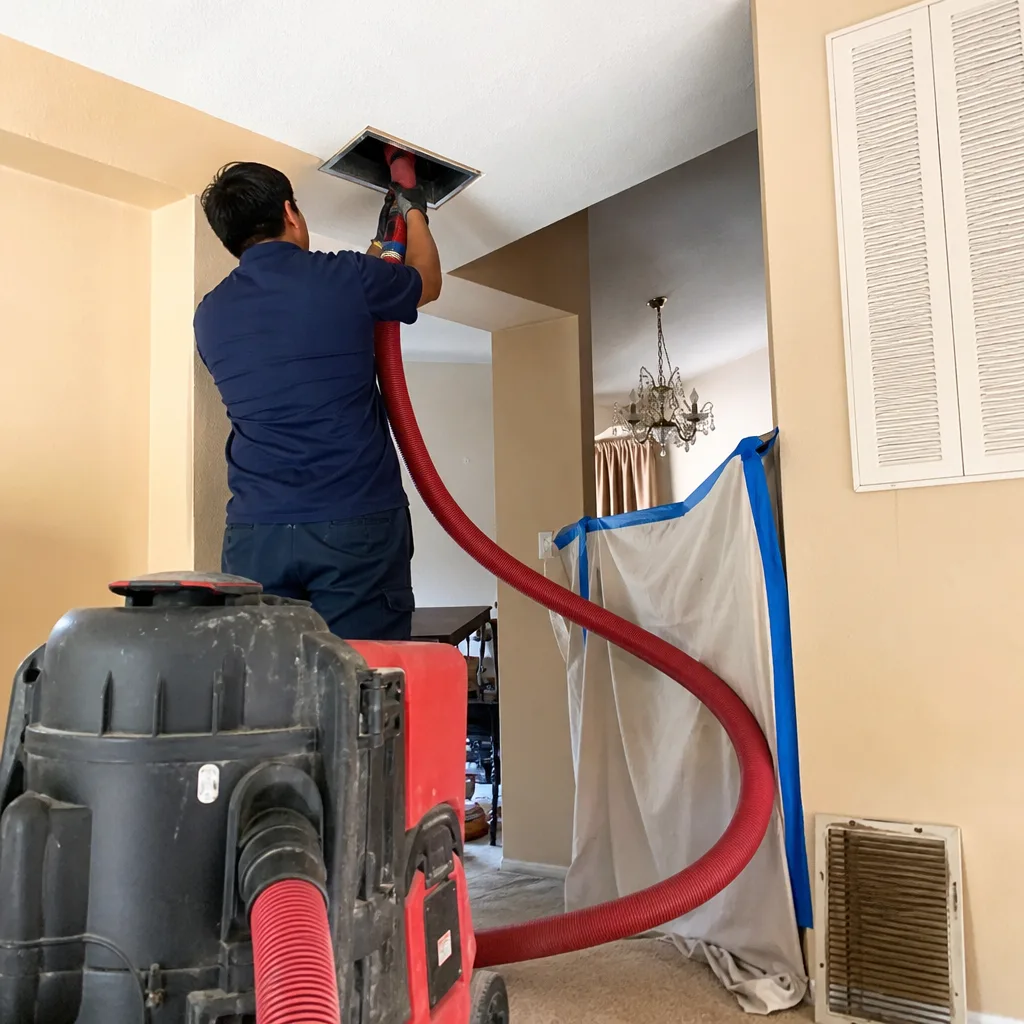
- Access point creation: Holes are cut into the trunk line at intervals, typically every 8 to 10 feet, to permit tool insertion. These access points allow full-length cleaning rather than reach-from-the-register cleaning.
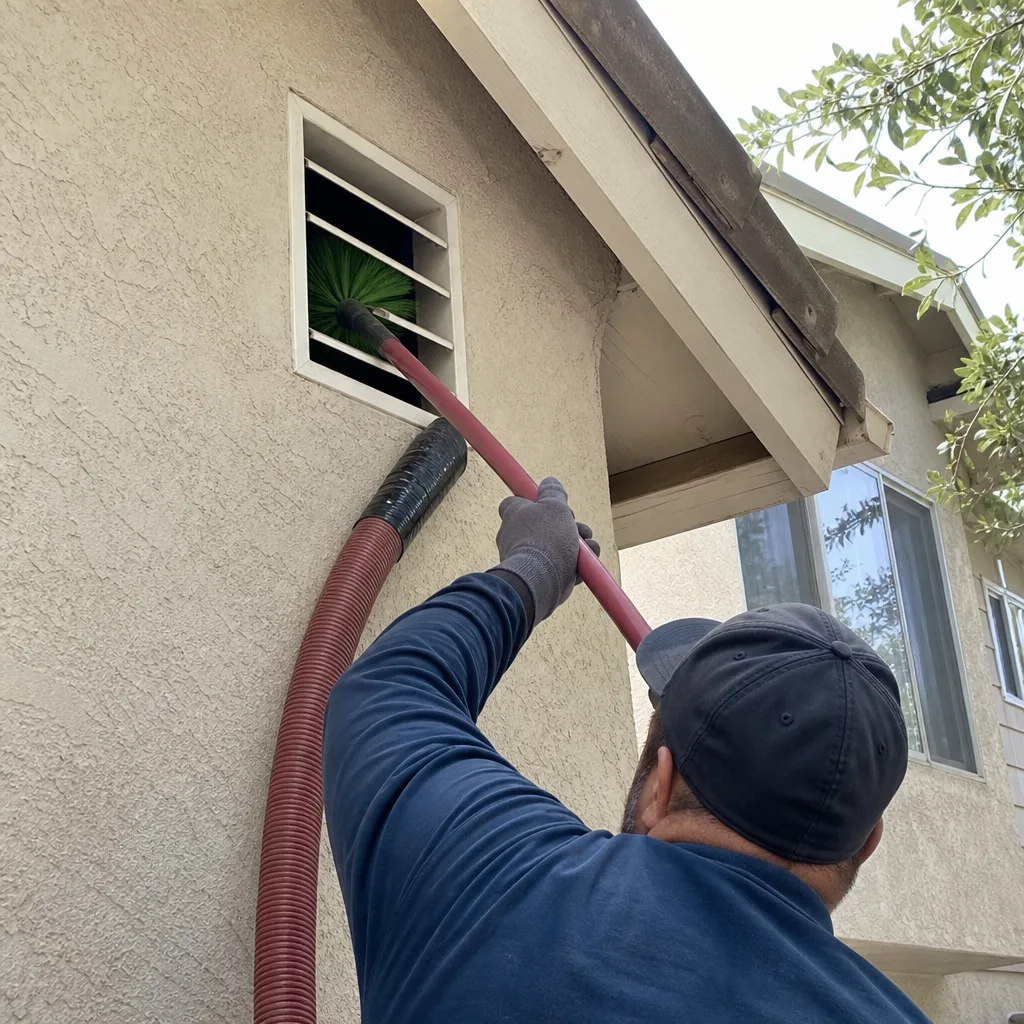
- Mechanical agitation: A rotary brush system, such as the Rotobrush units we run, is fed through each section of duct. The rotating bristles scour the duct walls, dislodging caked dust, debris, construction material, and pet hair that a vacuum alone cannot remove.
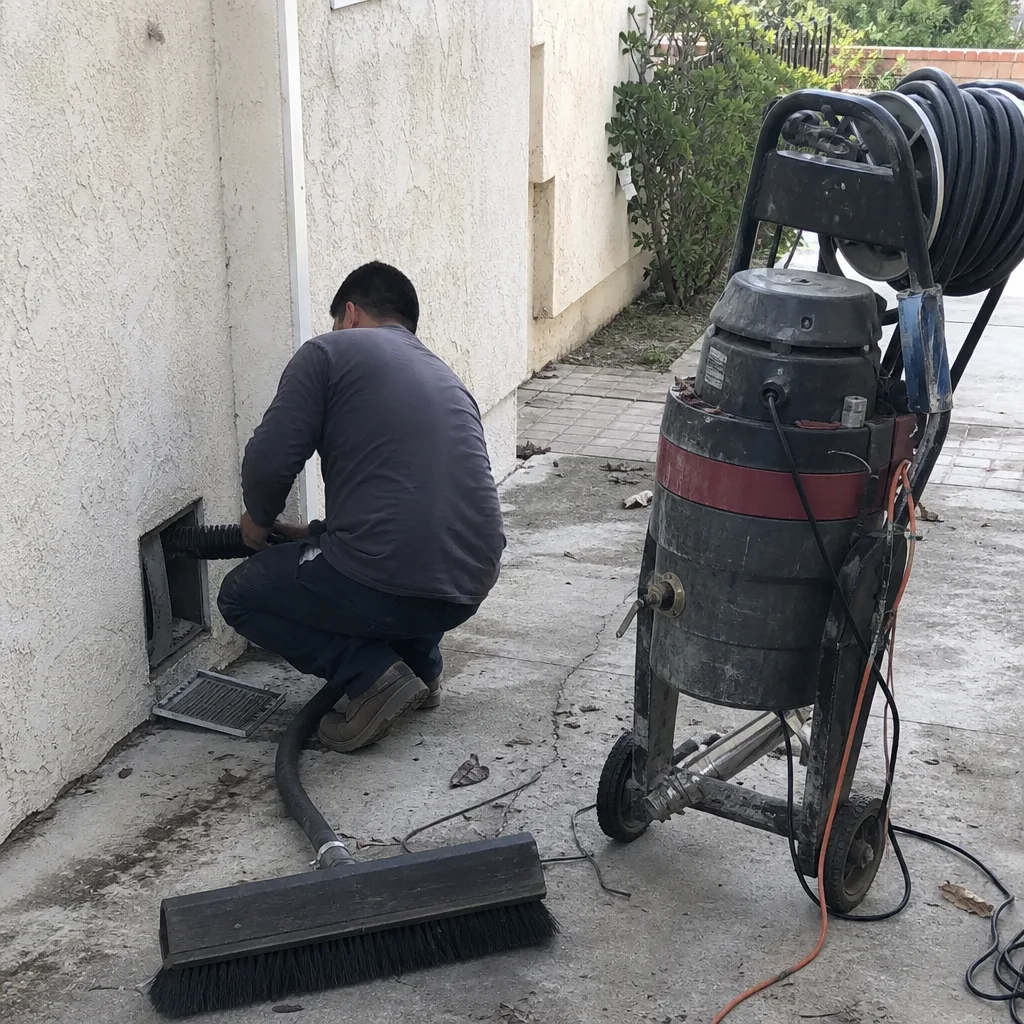
- HEPA filtration and negative air: A Nikro HEPA-filtered vacuum is connected to create negative pressure in the system while cleaning occurs. This ensures dislodged particles are pulled out of the duct rather than pushed into living spaces. HEPA filtration captures particles down to 0.3 microns.
- Return air and air handler service: Returns are fully accessed and cleaned. The blower compartment, evaporator coil (if accessible), and plenum are vacuumed and wiped. This is where the air actually picks up contamination before it reaches your rooms.
- Access point sealing: All cut access points are sealed with metal patches, mastic, or appropriate caps. Furnace filter is replaced or reinstalled. System is run briefly to confirm airflow and pressure.
When we talk about air duct cleaning in Diamond Bar, this is the standard we’re describing. It’s the difference between cleaning the visible dust and removing the source of that dust from the entire distribution system.
Add-On Costs: Dryer Vents, Coils, and Antimicrobial Treatments
Once you’re pricing a professional duct cleaning, you’ll hear about add-on services. Some are legitimate. Some are upsell theater. Here’s how to tell the difference in a Diamond Bar quote.
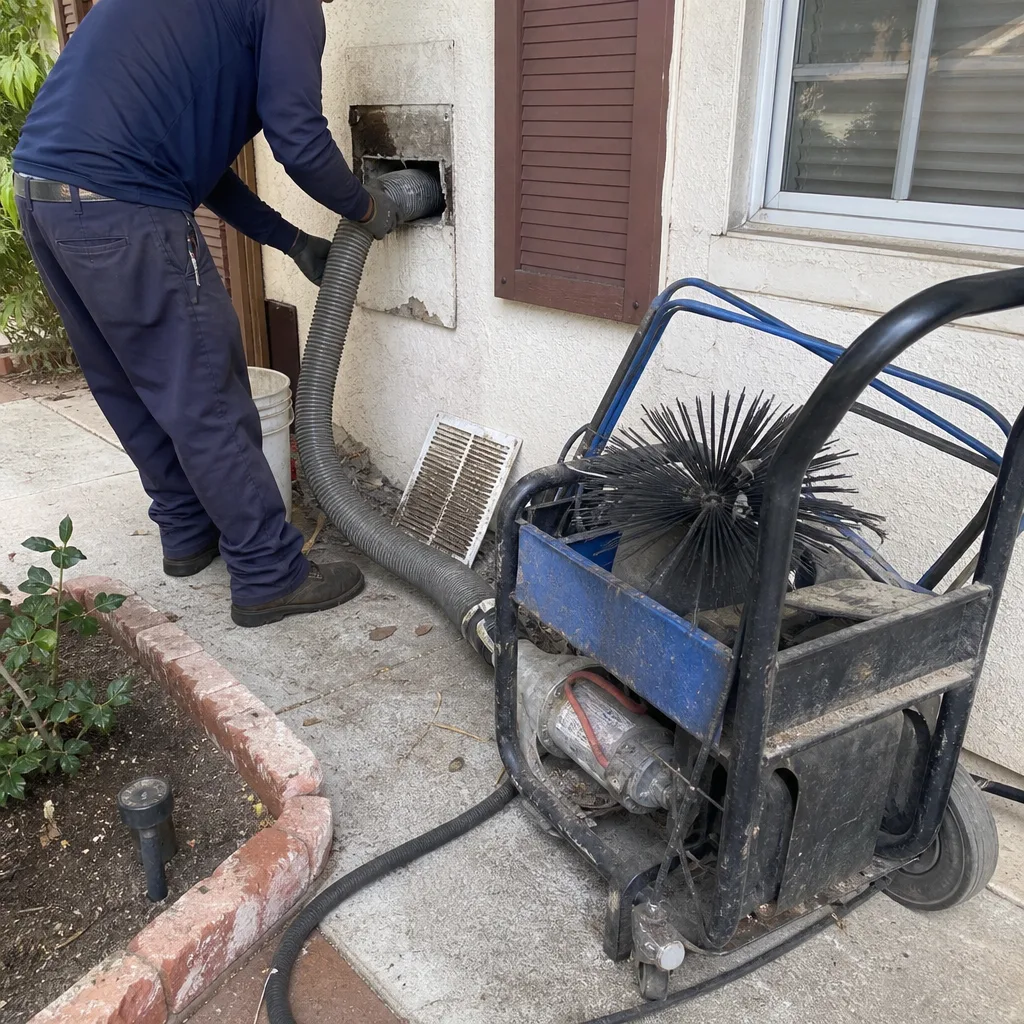
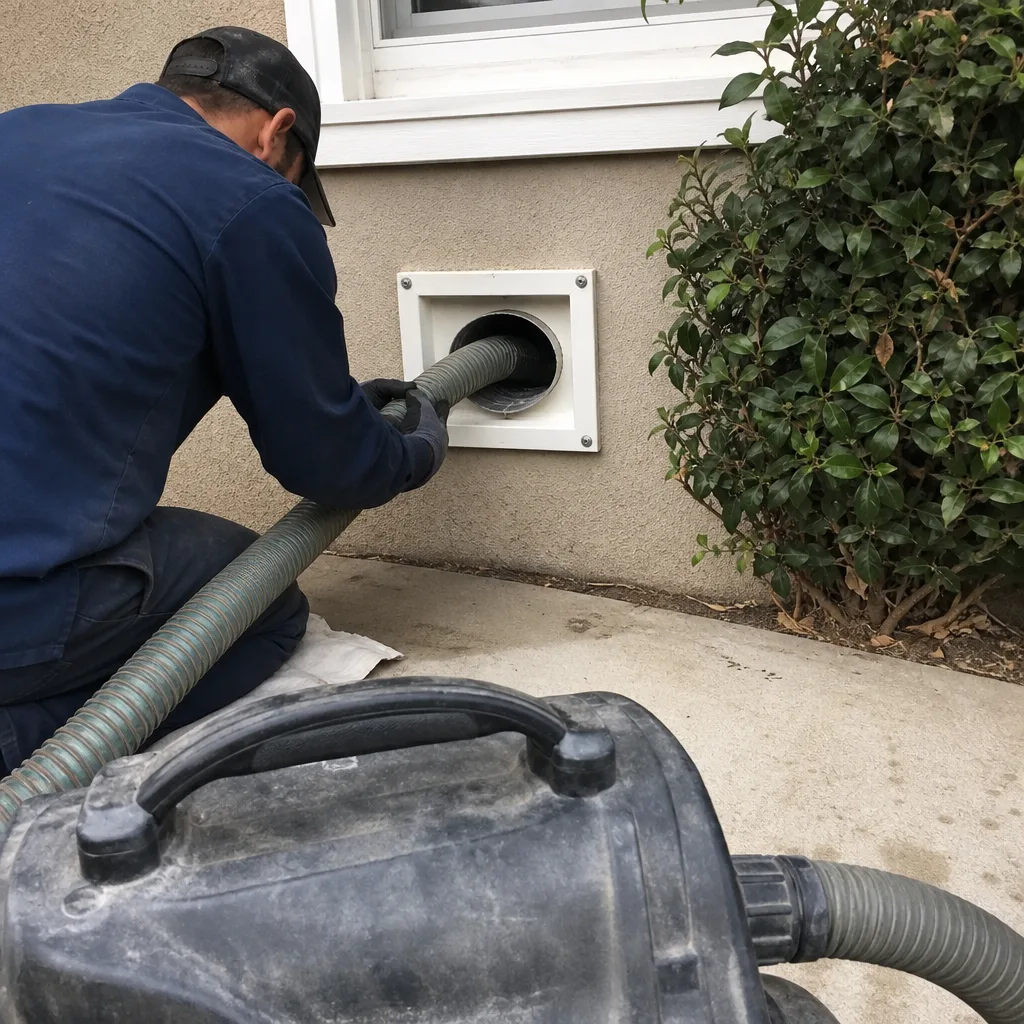
Dryer vent cleaning: $75 – $150. Legitimate, almost always worth it. Your dryer vent is a separate system from your HVAC ducts. It carries lint, which is highly flammable, out of your home. The National Fire Protection Association identifies dryer vent buildup as a leading cause of residential fires. A dedicated dryer vent cleaning in Diamond Bar clears the full run from dryer to exterior termination. If a duct cleaning company offers this, it’s not an upsell. It’s a safety service that should be done annually regardless of your duct cleaning schedule.
Evaporator coil cleaning: $100 – $250. Legitimate if the coil is accessible and hasn’t been cleaned in years. The evaporator coil sits in the air handler and condenses moisture. Dust sticks to wet coils, reducing efficiency and air quality. If your coil has visible buildup and your air handler is accessible, this is money well spent. If the technician can’t show you the coil, be skeptical of the charge.
Antimicrobial fogging or treatment: $100 – $300 per system. Conditional. Antimicrobial agents can inhibit mold and bacterial growth on cleaned surfaces. This makes sense if you’ve had confirmed mold concerns, water damage, or persistent musty odors. It does not make sense as a routine add-on for a dry, clean system. Diamond Bar’s climate is dry for most of the year, so mold pressure is lower than in coastal areas. Ask what product is being used, what it’s EPA-registered for, and whether you have a condition that justifies it.
Duct sealing or air duct repair in Diamond Bar: $50 – $300 depending on scope. If the inspection turns up disconnected joints, crushed flex duct, or holes in the trunk line, repairing them is essential. Clean ducts with leaks pull unfiltered attic air back into the system within weeks. A company that can diagnose and fix ductwork in the same visit is offering a real advantage over one that just cleans and leaves.
How Diamond Bar Homes Specifically Affect Pricing
Diamond Bar is not Orange County. It’s not the Inland Empire. The housing stock here has specific characteristics that shape duct cleaning costs in ways a generic national price guide won’t capture.
Two-story layouts are the norm, not the exception. Much of Diamond Bar’s residential development, particularly the neighborhoods along Diamond Bar Boulevard, Grand Avenue, and the areas around Summitridge Park, consists of two-story single-family homes built between the 1970s and 1990s. Two-story systems mean longer vertical runs, more registers on the upper floor, and trunk lines in attic spaces that require ladder access and careful navigation around roof trusses. A two-story system takes meaningfully longer to clean than a single-story rancher. That’s not a surcharge. That’s labor reality.
Tile roofs create attic heat extremes. Diamond Bar’s signature terracotta and concrete tile roofs look great and last decades. They also trap heat. Attic temperatures in July and August routinely exceed 130 degrees in Diamond Bar. Technicians working in attics to access trunk lines and air handlers work slower, take more breaks, and the job simply costs more in the summer months. If you’re scheduling a duct cleaning, the shoulder seasons (October – November, March – April) offer more comfortable working conditions and often faster scheduling.
Equipment age varies sharply by neighborhood. The older ranch homes in the southern and western sections of Diamond Bar often have original Carrier or Rheem systems from the 1980s and 1990s still running. These systems are simpler but may have never been cleaned in 20-plus years. Newer construction, particularly the homes built in the 2000s and later, often has variable-speed systems with more sensitive airflow dynamics and higher-efficiency filtration. Variable-speed systems are more sensitive to restrictive duct buildup, making regular cleaning more valuable. Neither system is easier or harder to clean by default, but contamination levels and access challenges vary enough to move pricing by $100 – $200.
Renovation activity adds dust load. Diamond Bar has seen consistent remodeling activity in recent years: kitchen remodels, room additions, flooring replacements. Construction dust is finer and more penetrating than everyday household dust. It settles deep in trunk lines and coats fan blades and coils. Homes that have undergone renovation within the last two years almost always need a more thorough cleaning than homes that haven’t. If you’ve remodeled, tell your duct cleaning company before they quote. It changes the expected contamination level and the time required.
The Cost-Per-Year Framework: Cheap Cleaning vs. Better Intervals
Here’s the math most homeowners never run. If a $149 duct cleaning leaves enough contamination behind that you need another cleaning in 18 months, your cost is $99 per year. If a $550 professional source removal cleaning keeps your system clean for four years, your cost is $137 per year. The gap narrows dramatically when you calculate cost per year rather than cost per visit.
But the real calculation goes deeper than cleaning frequency:
- Energy cost: Dust buildup on the evaporator coil and blower wheel reduces system efficiency. The Department of Energy estimates that even modest coil fouling can reduce HVAC efficiency by 5 – 10 percent. In Diamond Bar, where summer air conditioning runs from May through October, a 7 percent efficiency loss on a typical $2,400 annual cooling bill costs you about $168 per year. A cleaning that restores full efficiency pays for itself through utility savings alone over three to four years.
- Filter replacement frequency: A continuously dusty system loads filters faster. If you’re replacing filters every 60 days instead of every 90 days because the ducts keep shedding debris, the extra filter cost and the extra time add up.
- Allergen and respiratory burden: This is harder to quantify in dollars, but for Diamond Bar homeowners with asthma, allergies, or children with respiratory sensitivities, a cleaner system means fewer symptom days. If you’re spending $200 a year on allergy medication or missing work days, a cleaner indoor air environment has measurable financial value.
- Equipment longevity: A blower motor running against a caked coil works harder, runs hotter, and fails sooner. Replacing a blower motor or an entire air handler years earlier than necessary is a $500 – $2,500 event, far exceeding the cost of proper cleaning.
Run the numbers yourself: take the quote you’re considering, divide by the years the company expects the cleaning to last, and add in the energy savings. A $550 cleaning that lasts four years and saves $100 a year in energy costs effectively costs you $37.50 per year. A $149 cleaning that lasts 18 months and saves nothing costs you $99 per year. The cheaper quote is often the more expensive decision.
When your cleaning is done with Rotobrush rotary agitation and Nikro HEPA extraction, the debris is actually gone, not just loosened. That’s what makes the difference between a two-year cleaning interval and a four-year cleaning interval. We work with Honeywell and Aprilaire filtration systems in Diamond Bar homes, and we see the measurable difference in filter loading patterns after a proper source removal cleaning. Clean ducts stay clean longer. That’s the entire value proposition.
Common Mistakes to Avoid
- Choosing on price alone without understanding scope: A $99 quote and a $550 quote are different services. Get a line-item breakdown before comparing. If the cheaper company can’t explain what they’re skipping, they’re skipping it.
- Assuming all dust in the ducts is a problem: Some dust in ducts is normal and harmless. The question is whether it’s adhered to surfaces, whether it’s being redistributed into your air, and whether it’s mixed with moisture or pest debris. A visual inspection, done properly with camera access, tells you what you actually need.
- Skipping the return air side: The supply side gets all the attention, but returns are where the dirt enters the system in the first place. Ask explicitly whether both supply and return ducts are included. Many low-cost providers leave returns untouched.
- Ignoring the air handler and coil: You can clean every foot of duct and still have dirty air if the blower compartment and evaporator coil are caked with dust. Confirm the air handler is part of the scope before signing anything.
- Neglecting dryer vents alongside HVAC ducts: They’re separate systems, and your HVAC contractor isn’t automatically checking your dryer vent. A separate dryer vent cleaning in Diamond Bar is a fire safety service, not an upsell. Schedule both on the same day and you’ll usually save on trip fees.
- Treating duct cleaning as an emergency after renovation: If you’re mid-renovation with dust still being generated, cleaning is premature. Wait until the construction is complete, surfaces are wiped down, and the dust has settled. Otherwise you’re cleaning a system that’s about to get dirty again. Fast duct cleaning Diamond Bar home scheduling makes sense post-renovation, not during.
- Believing ducts never need cleaning: The EPA states that duct cleaning has not been shown to prevent health problems, and that’s accurate for well-maintained systems. But it also acknowledges that cleaning is appropriate when there’s visible mold, pest infestation, or substantial debris. Diamond Bar homes with pets, renovation history, or 15-year-old systems commonly fall into that “substantial debris” category.
When to Call a Professional
Call a professional duct cleaner if you see visible dust plumes from registers when the system starts, if your filter is black or caked within 30 days of replacement, if you’ve completed a renovation, if you’ve had rodents or insects in the attic, or if anyone in the home has developed unexplained allergy symptoms that worsen at home. These are indicators of substantial debris, not normal accumulation. A moisture event, such as a roof leak near ductwork or a condensate pan overflow, warrants an inspection regardless of cleaning schedule. Duct Cleaning Diamond Bar offers free estimates in Diamond Bar, and a proper inspection tells you whether cleaning, air duct repair in Diamond Bar, or both are needed. Call (877) 693-6770 to schedule.
Frequently Asked Questions
Air duct cleaning in Diamond Bar runs $350 – $650 for a typical single-family home, with condos and smaller ranchers at $250 – $400 and larger two-story homes reaching $700 – $900. The range reflects register count, trunk line length, system access, and contamination level. Quotes under $200 indicate a limited-scope service. Call (877) 693-6770 for a line-item quote on your specific system.
Cheaper quotes describe a different service: a time-boxed, register-level cleaning with portable equipment that doesn’t reach deep trunk lines, return cavities, or the air handler. Professional source removal uses rotary brush systems and HEPA-filtered vacuums to dislodge and extract debris from the entire system, a 4-6 hour process that legitimately costs more.
Ask for before-and-after photos of the trunk lines, returns, and air handler. Request that the technician show you the vacuum canister or filter contents after cleaning. A professional company using HEPA equipment will have visible debris to show you. You can also check register boots and the first foot of accessible duct with a flashlight after the job is complete.
For a Diamond Bar home with no unusual contamination sources, every 3 – 5 years is typical after an initial professional source removal cleaning. Homes with multiple pets, recent renovation, or smokers may need service every 2 – 3 years. It should take 5 – 7 years after a comprehensive cleaning to see significant re-accumulation in a well-maintained system.
Yes, for three concrete reasons: a clean coil and blower wheel restore HVAC efficiency, saving 5 – 10 percent on cooling costs in Diamond Bar’s long summer season; cleaner ducts reduce filter loading, extending filter life; and a system that’s clean is easier to inspect for leaks, damage, and developing problems. You don’t need allergies to benefit from lower energy bills.
Yes, and it’s a separately priced service. Dryer vents are not connected to your HVAC system. Lint accumulation is a documented fire risk, and the NFPA points to dryer vent cleaning as a primary prevention measure. Scheduling both services together typically saves on travel and setup costs. Call (877) 693-6770 to ask about combining the two.
The Bottom Line
The wide price spread in Diamond Bar duct cleaning is a scope gap, not a rip-off. The low tier cleans what you can see. The professional tier removes what’s actually in the system. For most Diamond Bar homeowners, a proper source removal cleaning at $350 – $650, done every 3 – 5 years, delivers lower energy costs, longer equipment life, and cleaner air than an annual $149 register polish. Ask for line-item scope, before-and-after documentation, and don’t skip the dryer vent. If you’re comparing quotes, compare the work being described, not just the number at the bottom.
Duct Cleaning Diamond Bar home services are built around the Rotobrush and Nikro equipment that makes source removal possible. If you’re in Diamond Bar and ready for a real cleaning, not a register wipe-down, call (877) 693-6770 for a free estimate. We’ll inspect your system, explain exactly what it needs, and quote one flat price before any work begins.
Written by the team at Duct Cleaning Diamond Bar, serving Diamond Bar since 2015.
See the difference
 Before
 After
 Before
 After
 Before
 After