
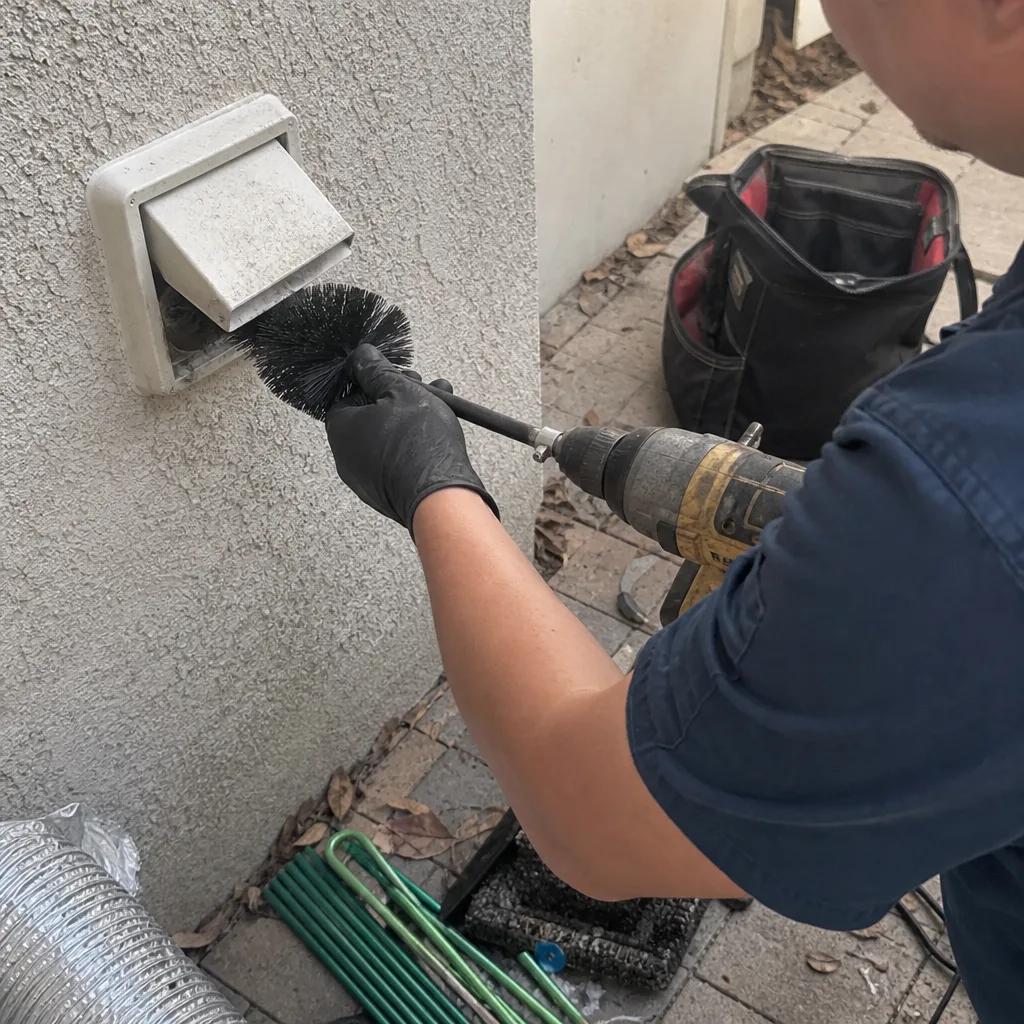
Last updated November 2, 2026
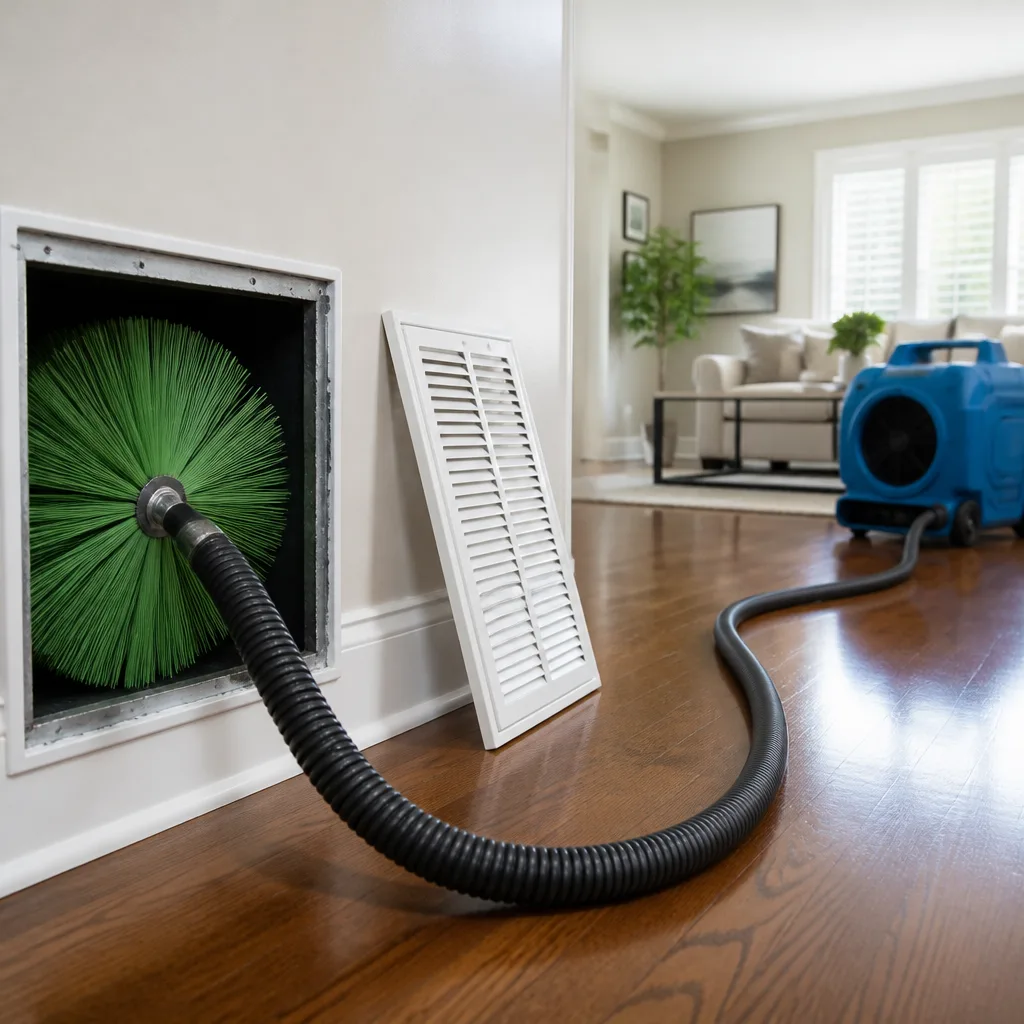 Whole-home duct cleaning
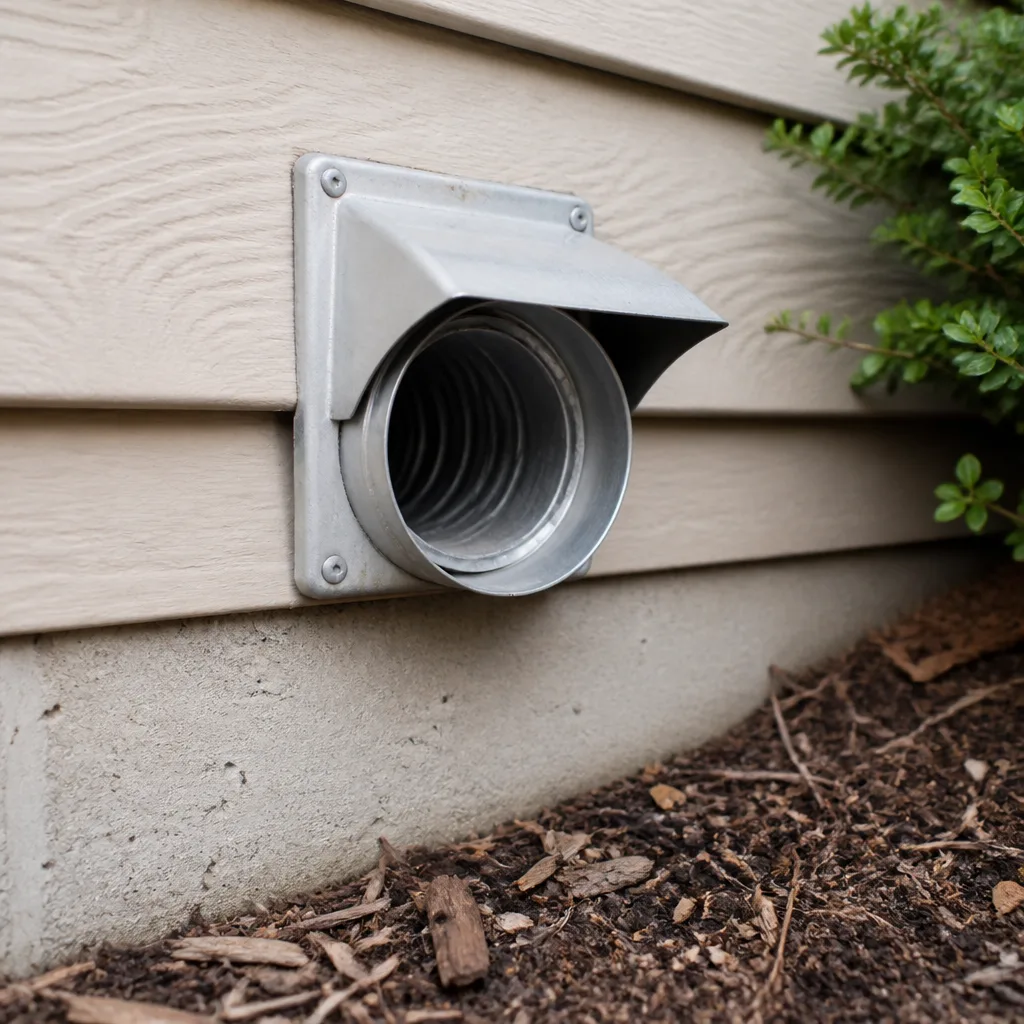 Dryer vent cleaning
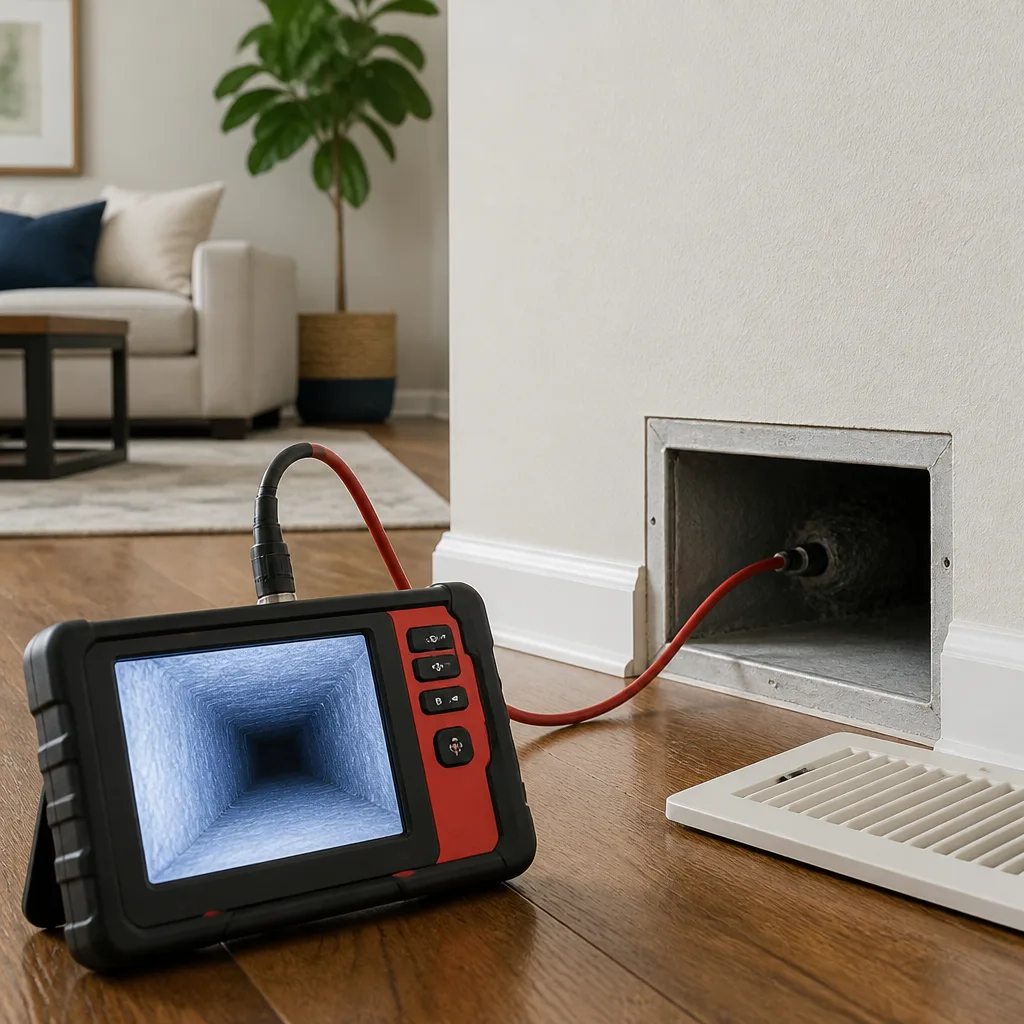 Camera inspection
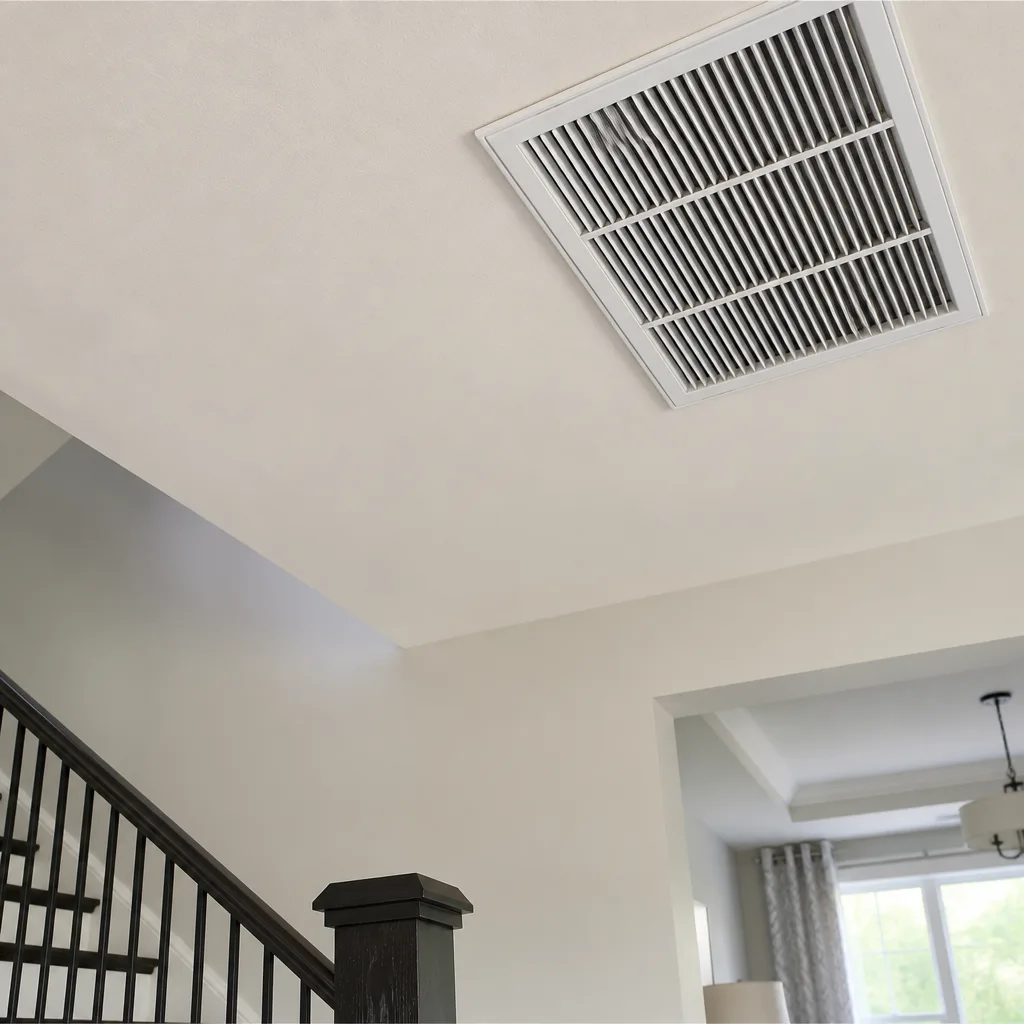 Sanitizing & deodorizing
Whole-system duct and dryer vent check with before-and-after photos - you see exactly what came out of your vents
That "$99 whole-house special" is a bait ad - the real number appears once they are in your hallway, or the "clean" is a shop-vac at the register. We photograph the inside of your ducts before and after instead.
Air Duct Cleaning Emergency Preparedness Guide for Diamond Bar Homes
During the 2020 wildfire corridor events, air quality index readings in the Diamond Bar area exceeded 300 AQI for multiple consecutive days. A standard 1-inch MERV-8 filter has a useful life measured in hours, not days, under those conditions, and a clogged filter creates a pressure drop that can pull unfiltered air around the filter frame entirely. Most Diamond Bar households have an earthquake kit, a go-bag, and a family evacuation plan. Almost none have an HVAC emergency protocol. This guide closes that gap. You’ll learn what happens inside your duct system during a multi-day smoke event, how to prepare before the next fire season arrives, what to do while the smoke is overhead, and how to assess your system after the air clears.
Styles & brands we work with
- Whole-home duct cleaning
- Dryer vent cleaning
- Camera inspection
- Sanitizing & deodorizing
Quick Answer
The most important emergency step for your Diamond Bar duct system is upgrading to a MERV-13 filter before fire season and setting your HVAC fan to run continuously during smoke events to keep indoor air moving through that filter. After a significant smoke or ash event, our Air Duct Cleaning services are not optional for homes with children, seniors, or anyone with respiratory conditions, because fine particulate settles on duct walls and coil surfaces where it will keep circulating for months. Homes in the Diamond Bar wildland-urban interface should treat their ductwork as a first-responder asset, not an afterthought.
Table of Contents
- Pre-Event Preparation: Your HVAC Wildfire Readiness Checklist
- What Happens Inside Your Ducts During a Multi-Day Smoke Event
- How to Set Your HVAC System to Recirculation Mode
- Emergency Filter Sourcing in Diamond Bar
- Post-Event Assessment: Inspecting Your Ductwork After the Smoke Clears
- When to Call a Contractor Immediately vs. When to Wait
- Why Duct Repair Matters After a Fire Event
- Common Mistakes to Avoid
- When to Call a Professional
- Frequently Asked Questions
- The Bottom Line
Pre-Event Preparation: Your HVAC Wildfire Readiness Checklist
Diamond Bar sits in one of California’s most active wildfire-interface corridors. The 60 Freeway corridor, the hills above Diamond Bar Boulevard, and the neighborhoods backing up to the Chino Hills State Park boundary all face predictable smoke exposure during fire season, which now runs effectively from June through November. Preparing your HVAC system before the first smoke plume arrives is the single most effective thing you can do for indoor air quality. Here’s the checklist we recommend to every homeowner we serve in the Diamond Bar area.
- Upgrade your filter to MERV-13 now. If your system can accommodate a 1-inch MERV-13 filter without excessive pressure drop, install one before fire season. If your filter cabinet is tight or your system is older, check with a technician about whether a 4-inch media cabinet upgrade makes sense. A MERV-13 filter captures 90% of particles in the 1 to 3 micron range, which includes most wildfire smoke particulate.
- Stock replacement filters. During fire events, box stores in Diamond Bar and nearby Diamond Bar-adjacent retail centers sell out of MERV-13 filters within 48 hours. Buy two or three extras in May. Store them in a dry location. Write the installation date on the filter frame with a permanent marker.
- Know your filter size. This sounds obvious, but we regularly meet Diamond Bar homeowners who do not know their filter dimensions when an emergency hits. Open the return air grille or the filter slot at the air handler and write down the exact dimensions. The filter size is printed on the filter frame edge.
- Seal obvious leaks around the return air intake. If your return air chase or filter slot has visible gaps, use metal tape, not duct tape, to seal them. Return-side leaks pull attic or garage air into your duct system, and during a smoke event that means pulling soot and ash directly past the filter.
- Have the coil inspected and cleaned if it hasn’t been serviced. A dirty evaporator coil is a smoke magnet. The condensation on the coil surface captures particulate that a dry surface would not, and once baked on by system heat, that residue is difficult to remove without professional equipment.
If you have not had a professional Air Duct Cleaning in Diamond Bar performed in the last three to five years, the pre-fire season window is the right time to schedule one. Cleaning ducts before a smoke event means there is no existing dust load for the smoke particulate to bind with, which keeps the system cleaner longer during the event itself.
What Happens Inside Your Ducts During a Multi-Day Smoke Event
Wildfire smoke is not one thing. It is a mixture of gases, water vapor, and solid particles ranging from visible ash down to sub-micron particulate that behaves more like a gas than a dust. When smoke surrounds a home in Diamond Bar for multiple days, the HVAC system becomes the primary line of defense, but it also becomes a collection point. Understanding the physics of what happens inside the ductwork explains why post-event cleaning is non-negotiable for homes with vulnerable occupants.
During a smoke event, the particles that do get past the filter or around the filter frame settle on every interior surface of the duct system. Duct walls are not smooth metal in most Diamond Bar homes. They are flex duct with ridges, or sheet metal with joints, screws, and accumulated dust film. Smoke particulate adheres to that film like soot to a fireplace flue. The coil is worse. The evaporator coil sits in the air stream and its condensation surface actively captures smoke particles while the system runs. After the system cycles off, that moisture evaporates and leaves a baked-on film. Over a three-day event, that film becomes a measurable residue.
Then there is the pressure problem. When a MERV-8 or MERV-11 filter loads with smoke particulate during hour 6 or hour 8 of a high-AQI day, the pressure drop across the filter spikes. The blower motor, which is sized for a clean filter at normal pressure, now cannot pull enough air through the restricted path. The result is that return air, which is already under negative pressure, seeks the path of least resistance, which is around the filter frame through gaps that should have been sealed. We have opened filter cabinets in Diamond Bar homes after fire events and found a visible soot ring around the outside of the filter, tracing exactly where unfiltered air bypassed the media and entered the supply side of the system. That is why filter maintenance during an active smoke event is not a “check it when you remember” task.
How to Set Your HVAC System to Recirculation Mode
Most central HVAC systems in Diamond Bar homes are closed-loop by design. They do not pull outside air directly unless a dedicated outside air intake is installed, which is rare in residential construction. The exception is a system with a ventilation damper, an energy recovery ventilator, or a leaky return that pulls attic air. That means the primary vulnerability during a smoke event is not outdoor air streaming in through the supply vents. It is infiltration through doors, windows, and the building envelope, plus the pressure effect of whole-house exhaust fans.
Here is the correct sequence for smoke-event HVAC operation:
- Set the thermostat fan switch to ON, not AUTO. This keeps air moving through the filter continuously, even when the system is not actively heating or cooling. A stationary air column means whatever particulate is indoors stays suspended longer and whatever particulate is in the ducts keeps settling.
- Close the fresh air damper if you have one. If your system was upgraded with a Honeywell or Aprilaire fresh air ventilation control, temporarily close or disable the damper during the smoke event. These systems improve indoor air quality under normal conditions but actively import smoke particulate when the outdoor AQI is above 100.
- Do not run kitchen or bath exhaust fans longer than necessary. Every cubic foot of air exhausted from the house must be replaced. During a high-AQI event, the replacement air is smoke-laden outdoor air pulled through every crack in the envelope. Run exhaust fans for their intended purpose, then turn them off.
- If your system has a two-stage or variable-speed blower, use the lower speed. Lower airflow across the filter increases dwell time and capture efficiency. This is one of the quiet advantages of modern equipment.
- Check the filter every 24 hours during heavy smoke conditions. If it looks like the surface of a used charcoal briquette, replace it, even if it has been in service for only a few days.
Our team works with Honeywell and Aprilaire air quality systems regularly, and the homeowners who understand these controls get significantly better outcomes during fire season than those who leave everything on AUTO and hope for the best. The thermostat has a fan setting for a reason. Use it.
Emergency Filter Sourcing in Diamond Bar
Here is the scenario we hear every fire season: the smoke has arrived, the AQI is over 200, and the homeowner finally opens the return air grille to check the filter. It is black. They go to the big-box hardware store and the MERV-13 shelf is empty. This is not a hypothetical in Diamond Bar. It is a predictable annual event, which means it is avoidable with preparation and manageable with a workaround.
Your best retail options in the Diamond Bar area are the major hardware chains along the 60 corridor and the home improvement warehouses just south of the Pomona Freeway. These stores stock MERV-13 filters in common sizes like 16x20x1, 20x20x1, and 16x25x1, but inventory clears fast. Call before you drive. If the exact size is not available, buy a MERV-13 filter one size larger and cut it down. The filter media is rigid enough to cut with scissors or a utility knife, and the frame can be rebuilt with cardboard strips and hot glue. A hand-cut MERV-13 media in a home-built frame is not a permanent solution, but it is vastly better than running a MERV-8 for another two weeks of smoke.
For homes where no MERV-13 is available anywhere, a MERV-11 is the minimum acceptable substitute during an active smoke event. But understand the limitation: MERV-11 filters capture about 65% of particles in the 1 to 3 micron range, compared to MERV-13 at 85 to 90%. That gap matters when the AQI is above 150. If you are running MERV-11, plan to replace it more frequently and consider running a standalone HEPA air purifier in the bedroom of anyone with asthma or COPD.
After the event, schedule a professional Duct Cleaning Diamond Bar home service to remove whatever residue your emergency filter setup missed. The filter is the first line of defense, not the last.
Post-Event Assessment: Inspecting Your Ductwork After the Smoke Clears
When the sky clears and the AQI drops back under 50, most Diamond Bar homeowners breathe a sigh and move on. That is a mistake. The duct system does not clean itself. What settled during the event stays where it landed until someone removes it. For a deeper dive, see our Air Duct Cleaning Maintenance Checklist for Diamond Bar Homeowners; here is a post-event assessment protocol you can perform in 20 minutes without any special tools.
Start with the smell test. Turn the system fan on and walk the house. Pay attention at the supply registers. Wildfire smoke residue has a distinct odor that is strongest when the system has been off for several hours, like a campfire smell that never goes away. If that odor is present at the registers but absent from the room itself, the residue is in the ductwork or on the coil. If the smell lingers in the room even with the system off, the smoke has permeated soft surfaces like carpet and upholstery, which is a separate remediation issue.
Next, remove a few supply registers and look inside. Use a flashlight and your phone camera if the angle is awkward. You are looking for a visible gray or brown film on the duct walls, especially in the first few feet past the register boot. New construction in Diamond Bar typically has flex duct runs. Smoke film on flex duct looks like a dull haze on the inner liner. On sheet metal duct, it looks like a soot film. If you see actual ash accumulation, visible piles of debris, or the residue is thick enough to wipe off on a finger, the system needs professional cleaning.
Check the filter slot and the area around the air handler. If you see a soot ring around the filter frame, as described earlier, air was bypassing the filter during the event. That means the supply side of the system was exposed to unfiltered smoke, which increases the urgency of a full duct cleaning. Check the coil if it is accessible. A coil that was light gray and is now brown or tan needs attention. Coil cleaning is specialized work; this is not a DIY spray-and-wipe situation.
When to Call a Contractor Immediately vs. When to Wait
Not every post-fire duct concern is an emergency. Knowing the difference saves you either unnecessary urgency or dangerous delay. Here are the criteria we use when homeowners call us after a Diamond Bar area fire event.
Call immediately if any occupant of the home has asthma, COPD, chronic bronchitis, an autoimmune condition, or is under 5 or over 65. Smoke residue in ducts becomes airborne every time the system cycles, and for these occupants, that means an ongoing low-grade inflammatory load. This is not a “schedule it when convenient” situation. It merits priority scheduling.
Call immediately if you find visible ash accumulation inside more than one register, if the smell test reveals a strong campfire odor that persists after two weeks of normal operation, or if you saw the soot ring around the filter frame indicating unfiltered bypass. These are objective signs that the system is actively recirculating fire residue.
You can wait if the AQI never exceeded 100 in your neighborhood, if your MERV-13 filter was in place and checked daily, and if post-event inspection shows no visible film or residue. In that case, a standard cleaning on a normal schedule is likely adequate, though a professional inspection is still wise if your system has never been cleaned.
You can wait, but not forever if the event was brief, the AQI stayed moderate, and your home is tight with good filtration. In this scenario, duct cleaning can be scheduled at your convenience within the next few months, before the next fire season puts you back in the same position.
Why Duct Repair Matters After a Fire Event
Cleaning your ducts after a smoke event and then ignoring damaged ductwork is like washing a car with a cracked windshield. The problem keeps coming back. This is where our Air Duct Repair in Diamond Bar capability separates us from companies that only clean. If your duct system has leaks, separated joints, crushed flex runs, or disconnected boots, every future smoke event, every dusty wind event, every attic rodent intrusion will keep re-contaminating the air you just paid to clean.
Fire season is not the only time this matters. Diamond Bar homes sit in a climate where the Santa Ana winds blow dry, dusty air through the valleys for months of the year. A leaky return in the attic draws that dust, plus whatever else is in the attic space, directly into the system. After a fire event, that leaky return is pulling in smoke residue from the attic insulation, which has been soaking up particulate for days. Cleaning the ducts without sealing the return is a half measure.
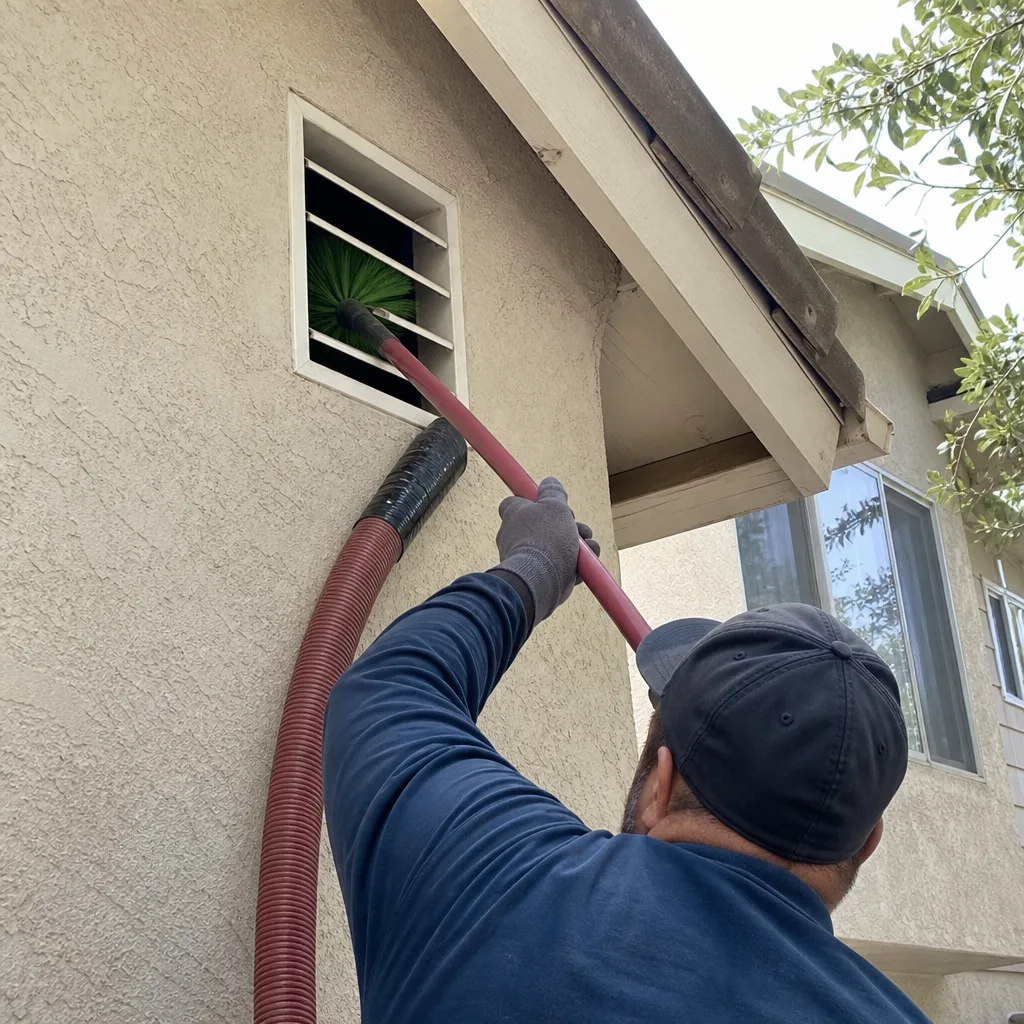
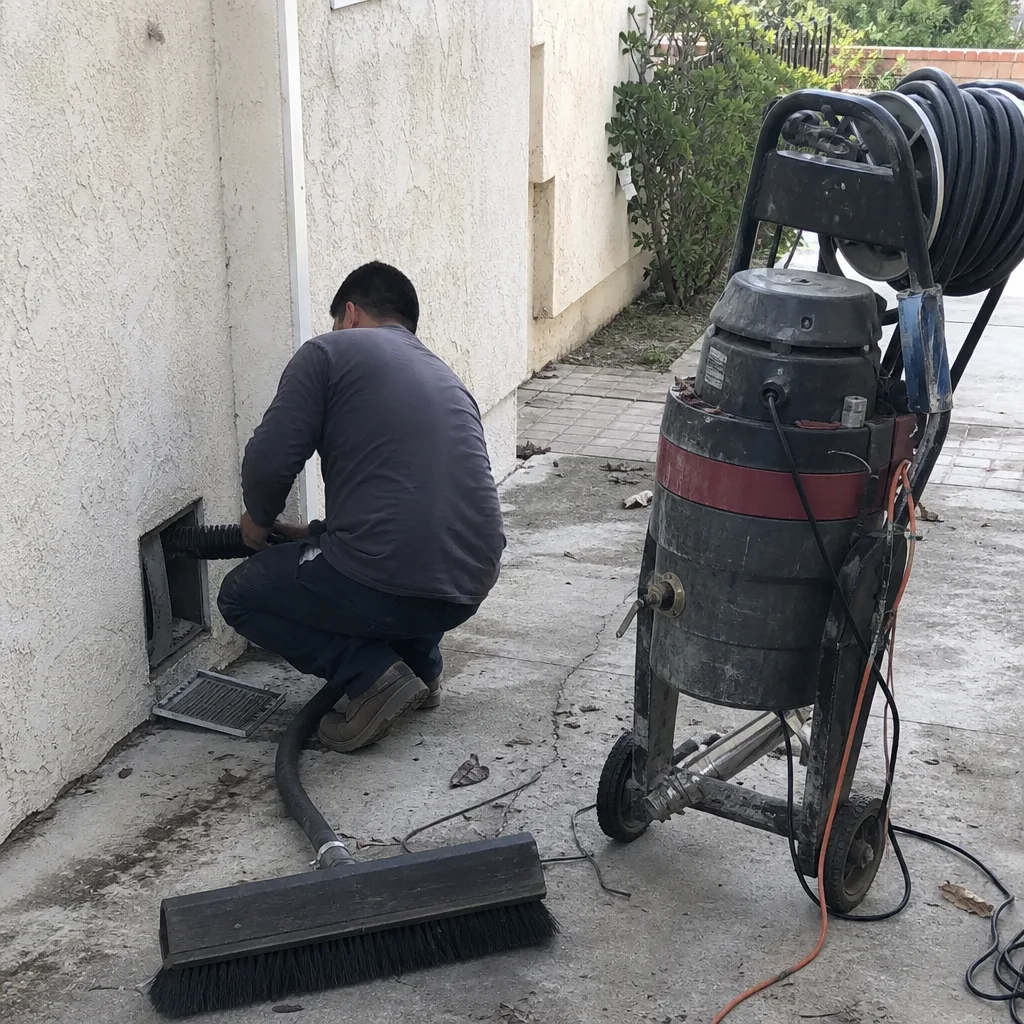
The full-cycle approach looks like this: inspect the duct system for leaks and damage, seal and repair what needs it, then clean the entire system with professional-grade equipment. We bring Rotobrush rotary systems and HEPA-rated Nikro vacuums to every job because the combination of mechanical agitation and true HEPA filtration is what removes smoke residue from duct walls, not just the loose dust on the bottom of the duct. Clean ducts. Repaired ducts. The difference matters, especially after a fire event.
Common Mistakes to Avoid
- Waiting until the smoke arrives to buy a filter. By the time the AQI in Diamond Bar hits 150, the MERV-13 shelf is already thinning. Buy filters in May, not in September.
- Using the wrong filter and expecting the right result. A MERV-8 filter captures about 20% of fine smoke particulate. That is not a defense; it is a speed bump. Upgrade before the season or accept the consequences.
- Leaving the fan on AUTO during a smoke event. AUTO means the system cycles off when the thermostat is satisfied, which means hours of stagnant air where particulate settles and infiltrates. Set the fan to ON.
- Forgetting that the coil is part of the system. Clean ducts with a soot-coated coil means the air picks up residue the moment it passes across the coil. Both need attention.
- Trusting a shop-vac to clean a duct system. Smoke particulate is fine enough to pass straight through a consumer shop-vac filter and back into the room. HEPA filtration is non-negotiable for fire residue.
- Assuming a post-fire duct cleaning is a luxury. For households with respiratory conditions, it is a medical necessity. Even for healthy households, the residue in the system continues to circulate every time the system runs, and it does not break down or go away on its own.
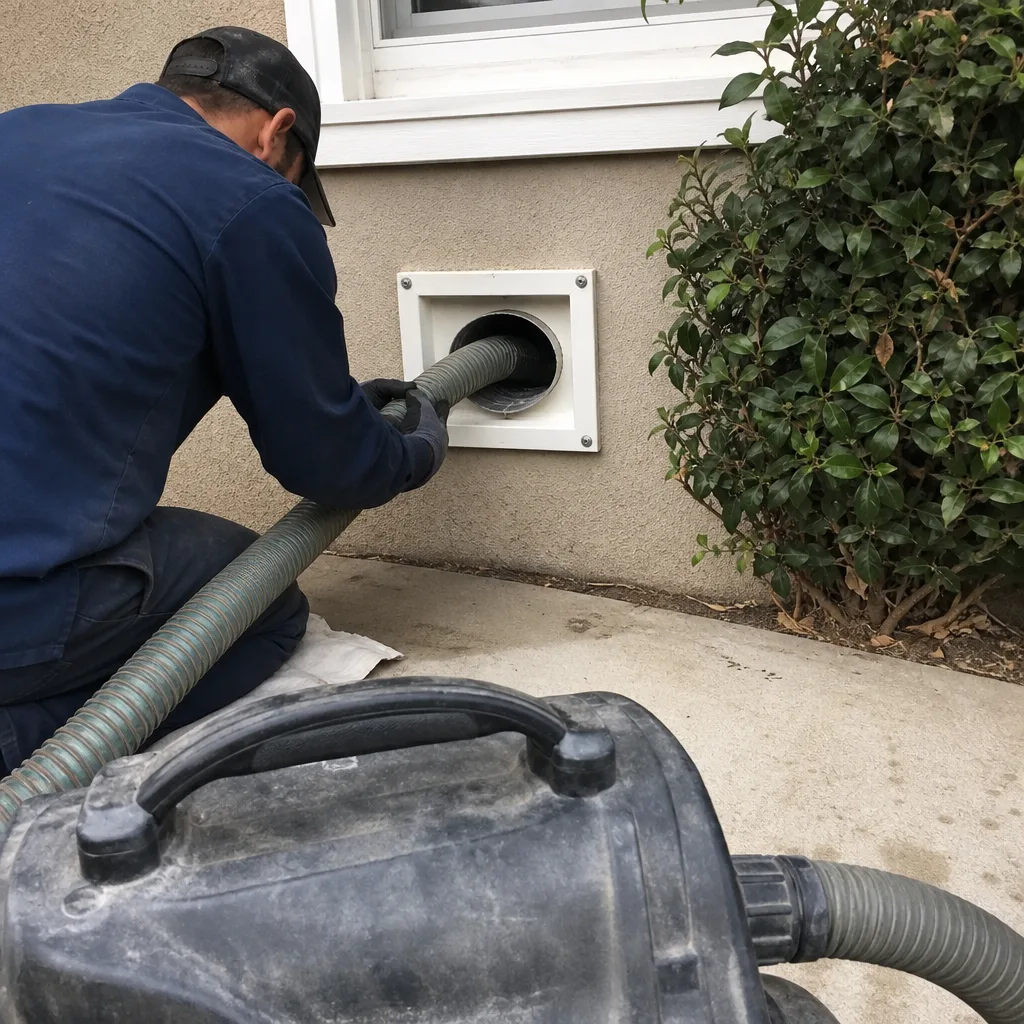
- Ignoring the dryer vent during fire season. Your dryer vent is a separate fire risk waiting to be cleared. Dryer Vent Cleaning in Diamond Bar should be part of your annual fire-season prep, especially in homes where lint has accumulated in a long vertical run or a roof exhaust.
When to Call a Professional
Call a professional when you find visible ash in the ducts, when the smoke smell persists after two weeks of normal system operation, when any household member has a respiratory condition that predates the smoke event, or when you are not certain whether your post-event system is clean. The equipment required for a thorough smoke-residue cleaning is not available at any rental counter. A true cleaning requires rotary agitation and HEPA-rated negative air capture, which is exactly what our team brings to every job. Duct Cleaning Diamond Bar offers free estimates in Diamond Bar – call (877) 693-6770 to schedule an inspection.
Frequently Asked Questions
During active smoke conditions with AQI above 150, check your filter every 24 hours and replace it when it shows visible discoloration, which may be as often as every 3 to 7 days depending on the filter type and smoke density. A MERV-13 filter in Diamond Bar smoke conditions typically lasts 2 to 4 weeks, not the 90 days printed on the packaging. Call (877) 693-6770 if you need help determining whether your filter is loading too quickly.
Coverage depends entirely on your policy language and whether the smoke event caused documented damage to the interior of the home. Many policies exclude gradual accumulation but cover sudden events. Before scheduling work, review Air Duct Cleaning Permits, Codes & Inspections in CA: What You Need to Know, document the condition of your ducts with photos, and save filter purchase receipts. We can provide written documentation of pre- and post-cleaning conditions for your claim.
Perform the register inspection described above, run the smell test with the fan on after the system has been off for several hours, and look for the telltale soot ring around the filter frame. Any of these three indicators means cleaning is warranted, and all three together means it is overdue.
A standard residential HVAC system in Diamond Bar does not pull outside air directly unless a fresh air damper or ventilator is installed. However, negative pressure created by exhaust fans, leaky returns, and a restricted filter can pull smoke-laden attic air into the system indirectly. Sealing return leaks and monitoring the filter are the two most effective defenses against indirect smoke infiltration.
Duct cleaning addresses the interior surfaces of the supply and return duct runs. Coil cleaning addresses the evaporator coil inside the air handler, which captures smoke particulate on its wet surface during system operation. Both are required after a significant smoke event, and coil cleaning requires specialized access and cleaning agents. A duct-only cleaning with a dirty coil leaves a major contamination source in the air stream.
The lower quote is almost always a surface-level cleaning with a consumer-grade vacuum or a vent brush, without HEPA capture, without coil cleaning, and without time spent on the actual duct interior. Smoke residue requires rotary agitation and true HEPA filtration, which takes time and costs money. We use Rotobrush rotary systems and Nikro HEPA-filtered vacuums on every job because professional-grade equipment, not consumer-grade shortcuts, is the only way to actually remove fire residue from a duct system. Call (877) 693-6770 for an honest assessment of what your system needs.
The Bottom Line
Your HVAC system is the single largest indoor air filter in your Diamond Bar home, and during wildfire season it is the primary defense between your family and whatever is burning upwind. Preparing it before the smoke arrives, operating it correctly while the smoke is overhead, and assessing it honestly after the event are the three phases of a complete emergency preparedness plan. The homes that fare best in fire season are the ones where the filter is upgraded early, the fan is running continuously, and the duct system is clean and sealed before the first AQI spike. For more guides & resources, explore our blog. Get the system ready now, before the next fire season decides your schedule for you.
Written by the team at Duct Cleaning Diamond Bar, serving Diamond Bar since 2015.
See the difference
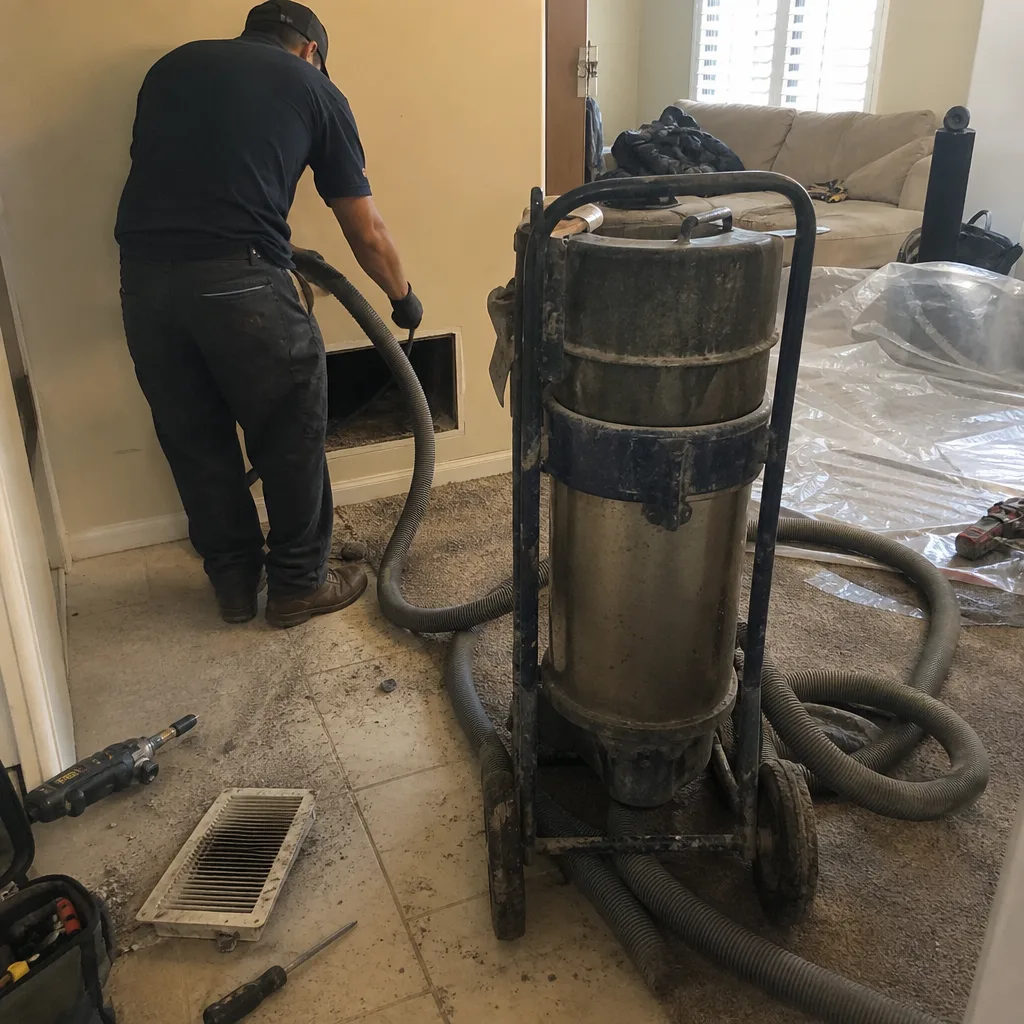 Before
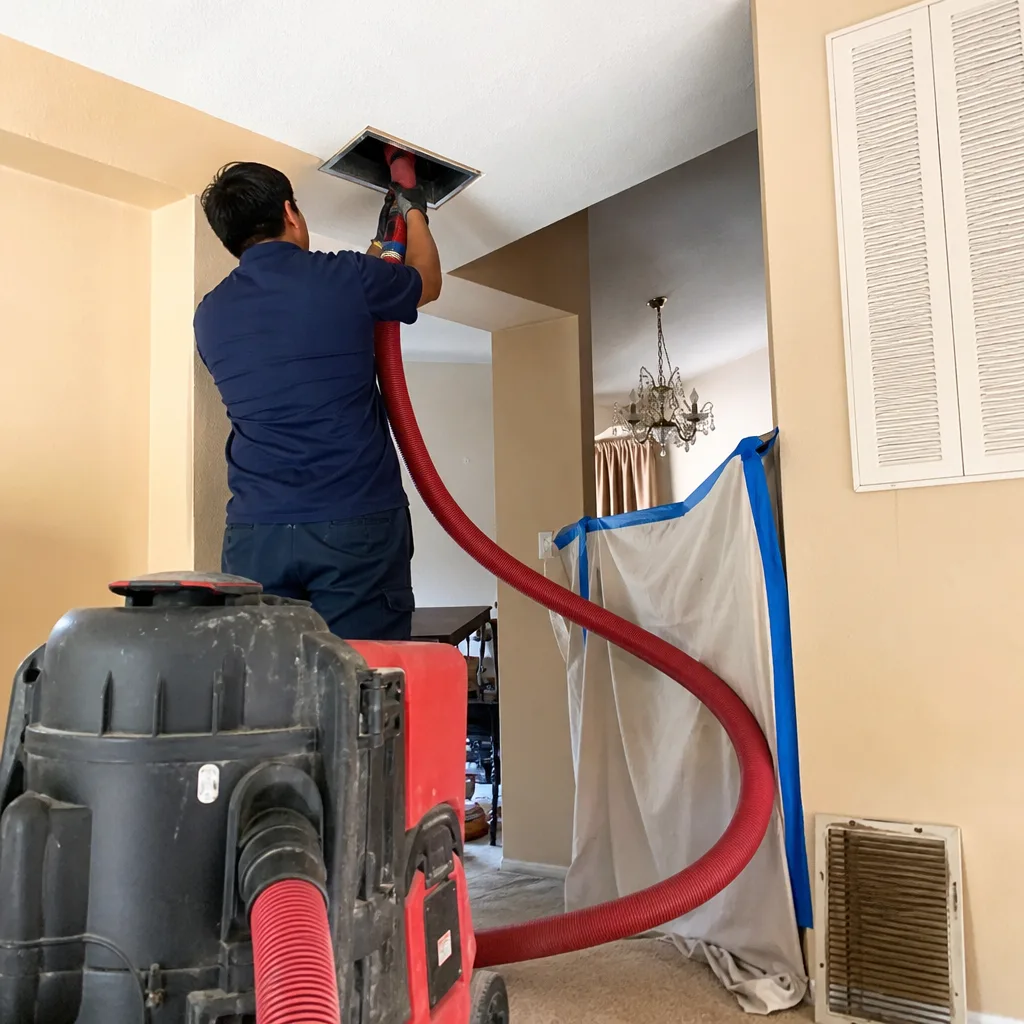 After
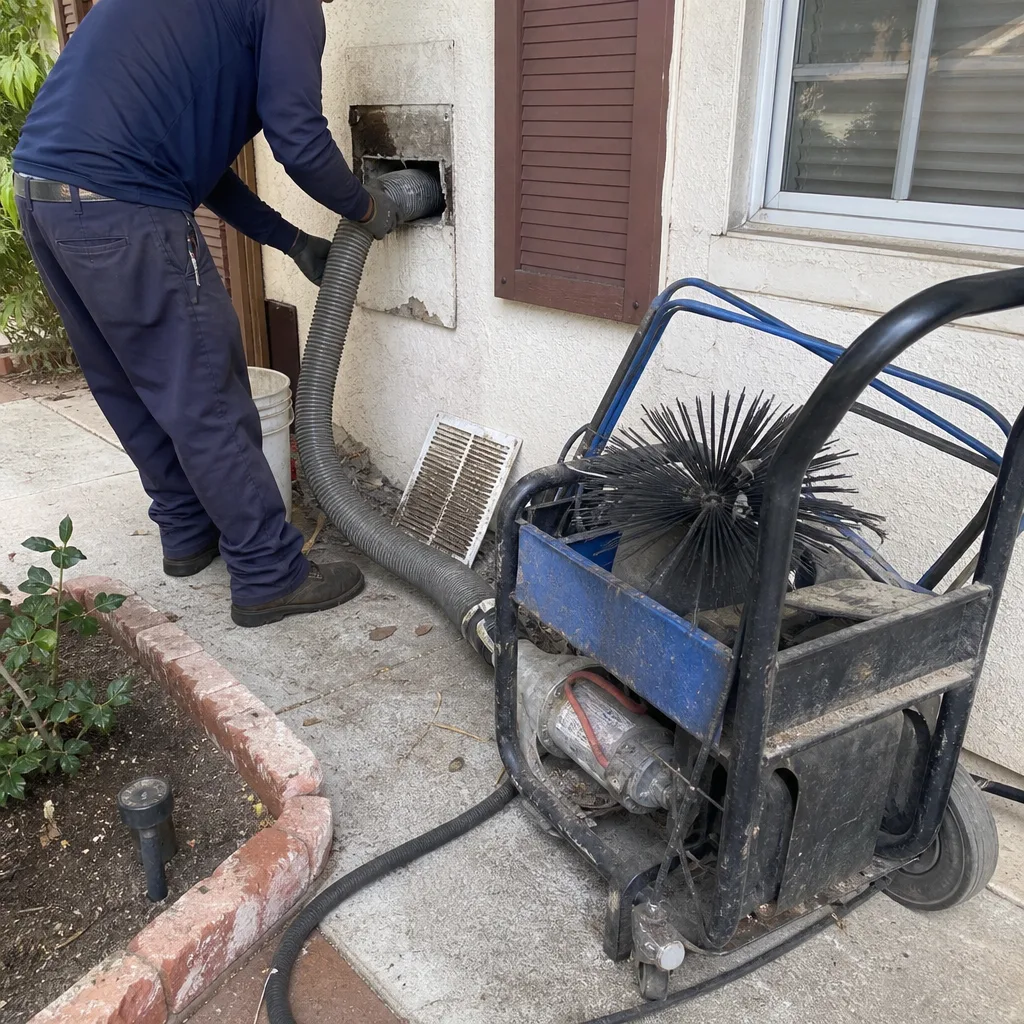 Before
 After
 Before
 After