
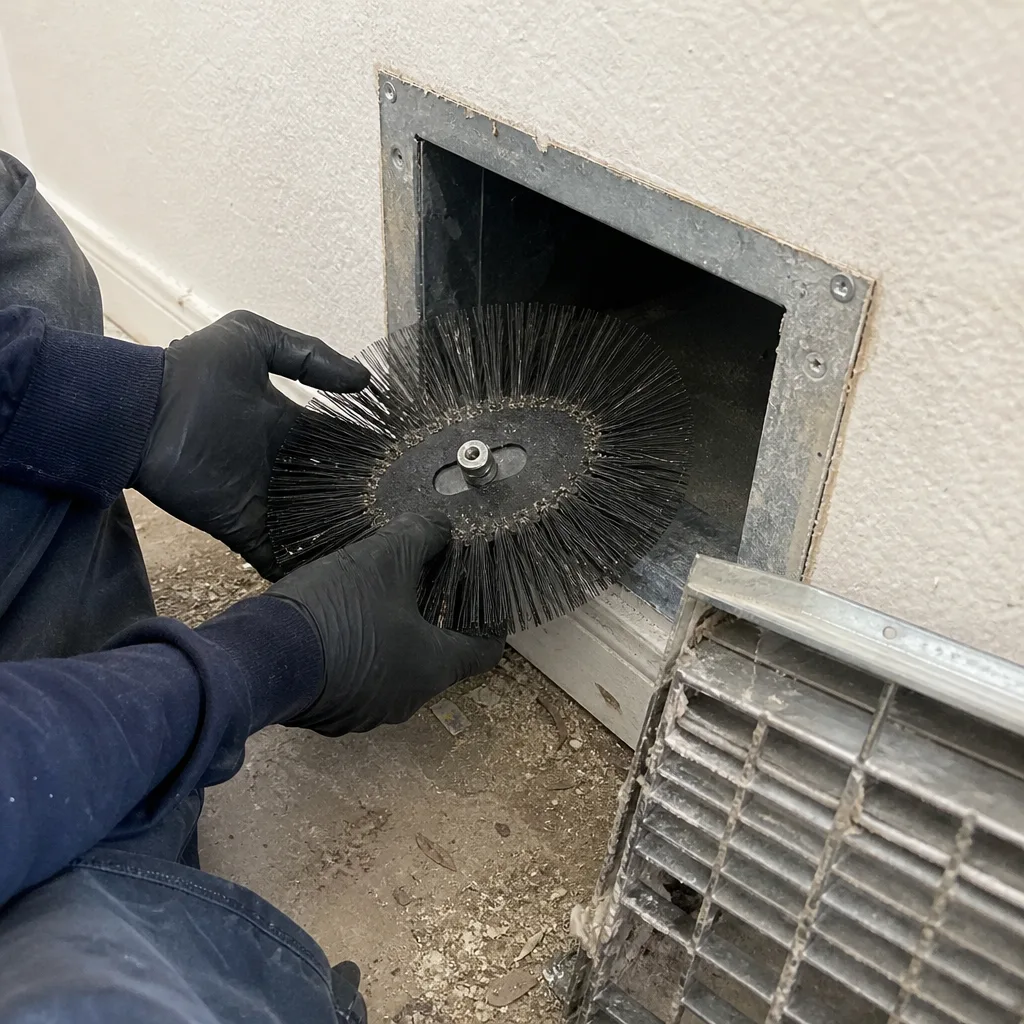
Last updated November 2, 2026
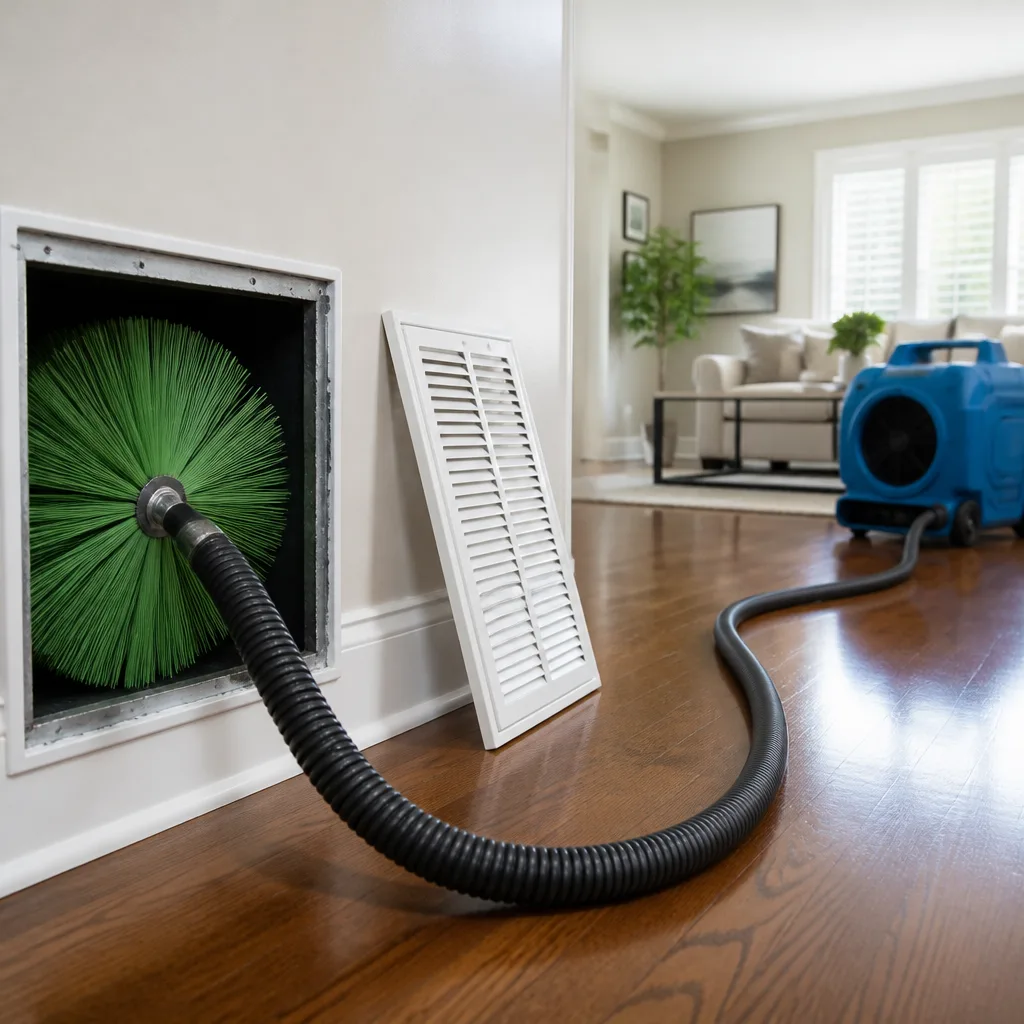 Whole-home duct cleaning
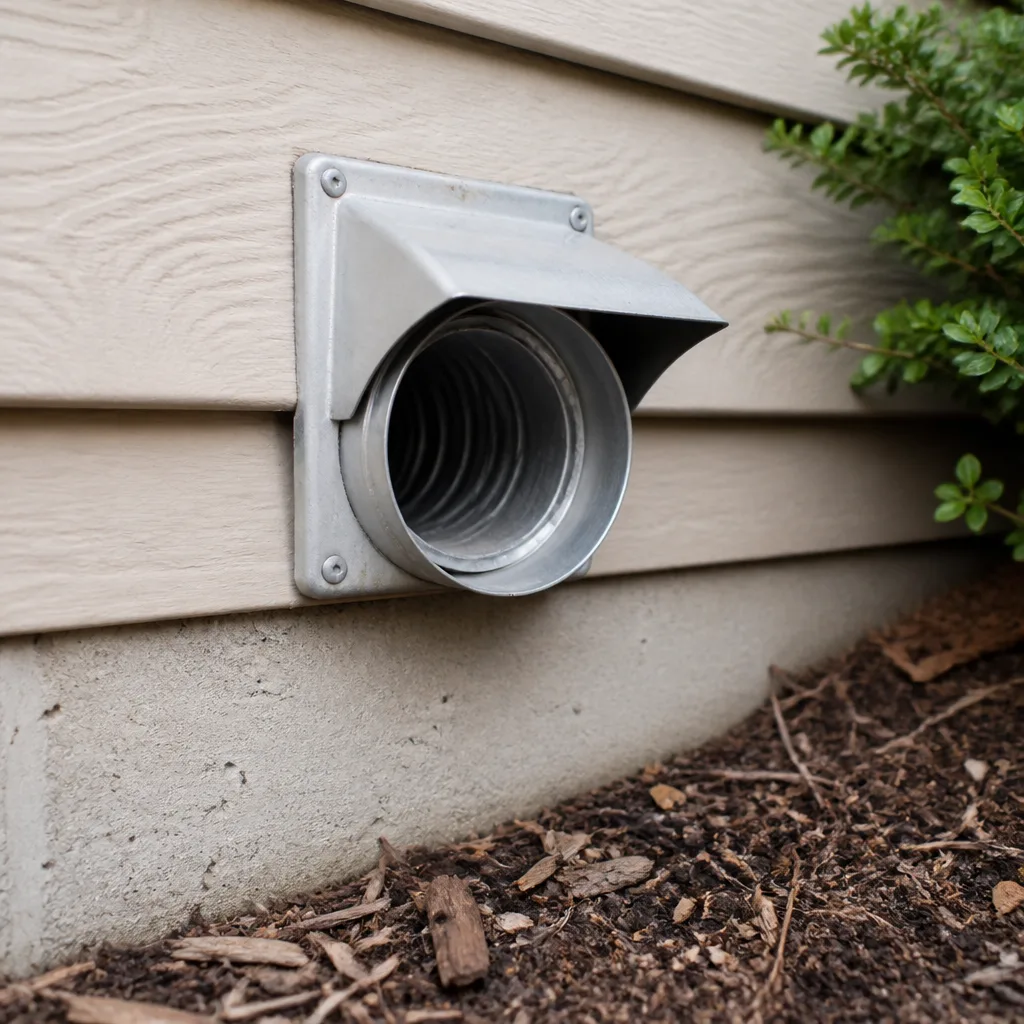 Dryer vent cleaning
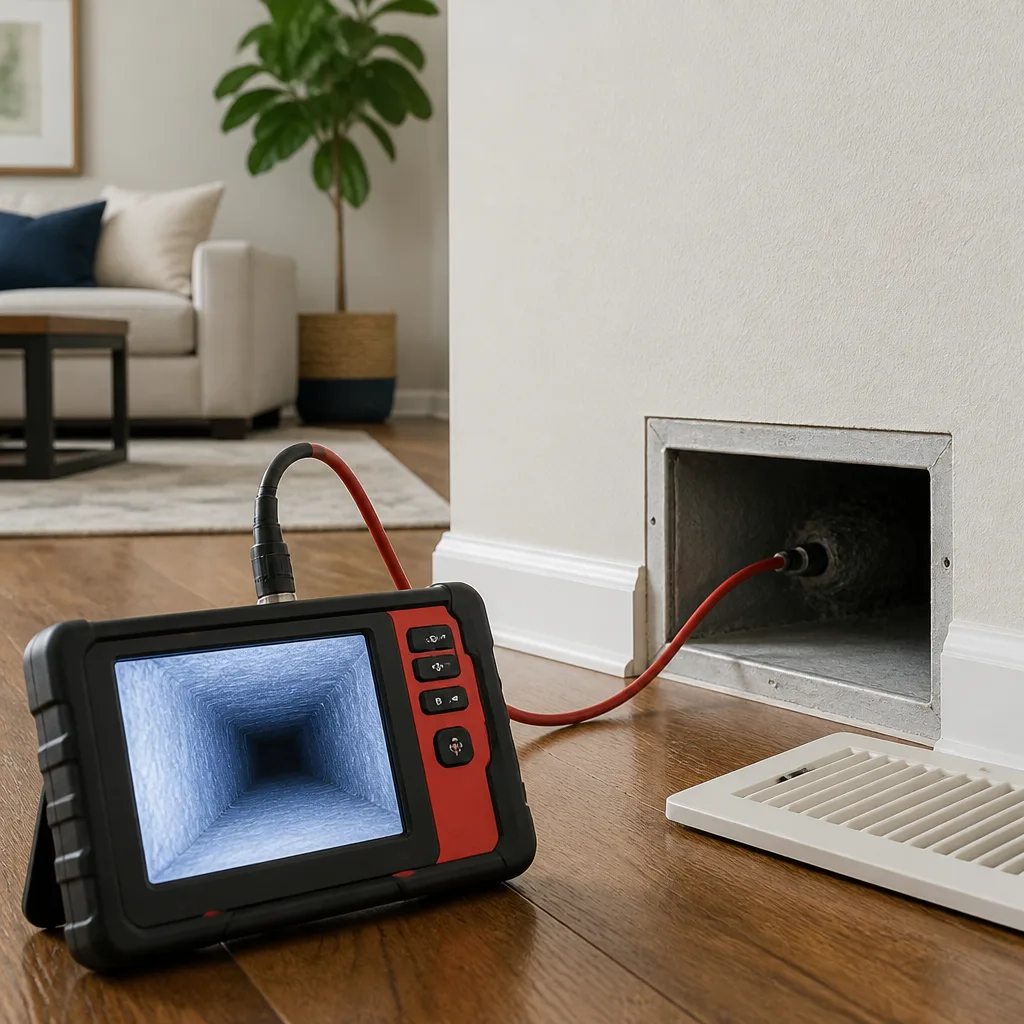 Camera inspection
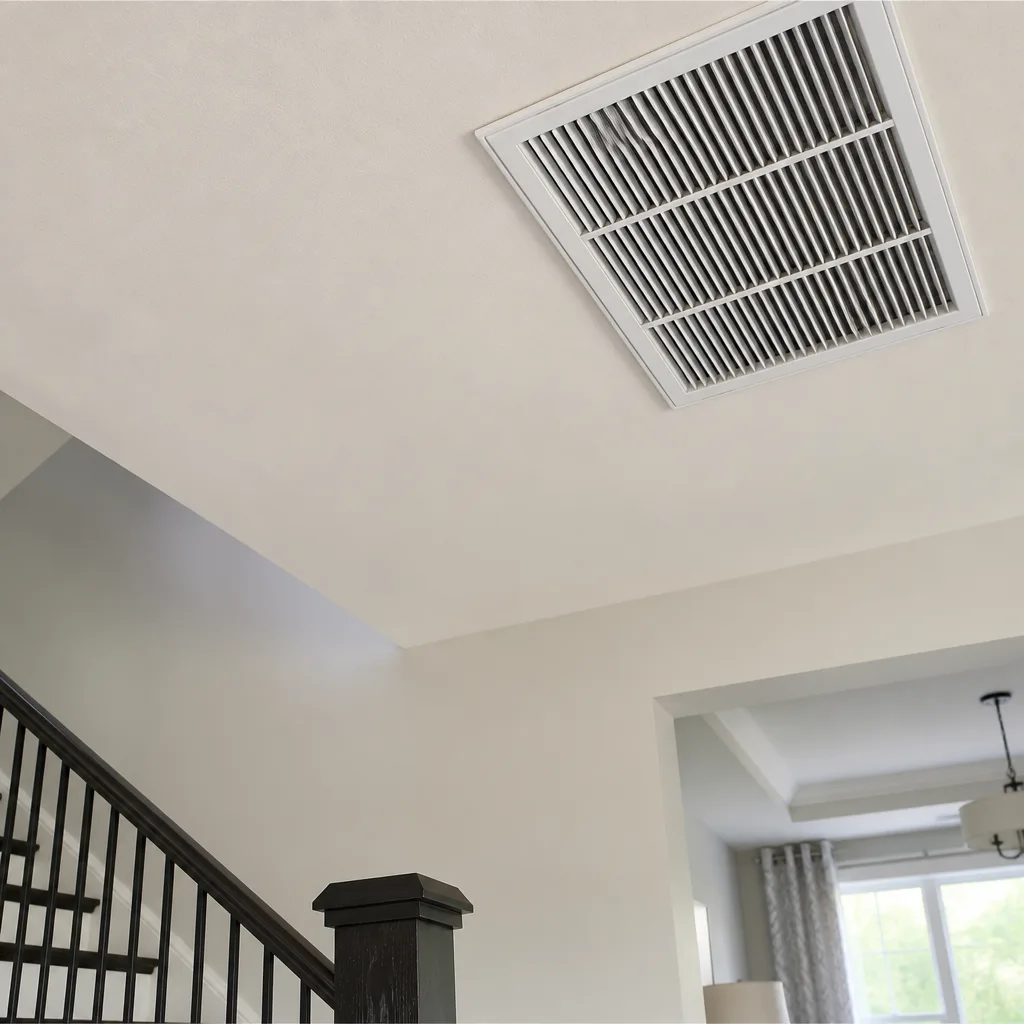 Sanitizing & deodorizing
Whole-system duct and dryer vent check with before-and-after photos - you see exactly what came out of your vents
That "$99 whole-house special" is a bait ad - the real number appears once they are in your hallway, or the "clean" is a shop-vac at the register. We photograph the inside of your ducts before and after instead.
Air Duct Cleaning Permits, Codes & Inspections in CA: What You Need to Know
Here is the counterintuitive reality about air duct cleaning in California: the cleaning itself almost never requires a permit, yet it is the single most common way Diamond Bar homeowners discover they have unpermitted HVAC work on their hands. A technician pulls a register, finds ductwork that was disconnected during a remodel in 1994, reconnects it as a courtesy, and suddenly the house has an unpermitted modification that will surface during a title search. This guide explains exactly where the line sits between maintenance, repair, and modification under California and LA County code, what Title 24 says about duct sealing, how to spot asbestos before anyone disturbs it, and what a legitimate inspection actually protects you from. We write this from years of working in Diamond Bar homes, where flex duct ages fast in attic heat and the line between a cleaning and a repair gets tested on a weekly basis.
Styles & brands we work with
- Whole-home duct cleaning
- Dryer vent cleaning
- Camera inspection
- Sanitizing & deodorizing
Quick Answer
Air duct cleaning in California does not require a permit, a license endorsement, or a city inspection, because it is classified as routine maintenance rather than construction. What does require permits are modifications made during or after a cleaning: reconnecting disconnected duct runs, replacing duct sections, sealing leaks with mastic, or disturbing asbestos-containing duct wrap. If your contractor finds compromised ductwork and fixes it without pulling a permit, that is an unpermitted HVAC alteration that can complicate a future sale, fail a Title 24 compliance check, and in some LA County jurisdictions carry a correction notice with fees attached.
Table of Contents
- The Line Between Cleaning and Repair: Where Permits Actually Begin
- Title 24 and Ductwork: What California’s Energy Code Requires
- Asbestos in Pre-1980 Duct Systems: The Diamond Bar Reality
- Mold, Cal/OSHA, and the Legal Obligation to Stop Work
- How to Pull a Homeowner-Initiated Duct Inspection
- LA County Jurisdictions: How Diamond Bar Compares
- What We See Inside Diamond Bar Ductwork
- Common Mistakes to Avoid
- When to Call a Professional
- Frequently Asked Questions
- The Bottom Line
The Line Between Cleaning and Repair: Where Permits Actually Begin
California construction law is remarkably consistent on one point: maintenance does not require a permit, but alteration does. The California Mechanical Code (CMC), adopted with local amendments by LA County, defines the difference in practical terms. Cleaning the interior surfaces of existing ductwork with rotary brush equipment or HEPA-filtered negative air vacuums is maintenance. Removing a section of damaged flex duct and replacing it is alteration. Reconnecting a duct boot that has separated from a floor register is alteration. Sealing a longitudinal seam with mastic is alteration. Attaching a duct collar to a plenum is alteration.
The reason this matters financially is not the permit fee, which is modest in most jurisdictions. The real cost is what an unpermitted HVAC modification does to a property record. When a Diamond Bar homeowner goes to sell, the disclosure process asks specifically about unpermitted work. If you reconnected a duct run during a cleaning and did not disclose it, the liability lands on you, not the contractor who did the work. In our experience, roughly one in four Diamond Bar homes built before 2000 has at least one disconnected or poorly reconnected duct run in the attic. Most homeowners do not know it exists until a professional-grade cleaning system reaches that section.
Here is the decision framework we use with clients:
- Cleaning interior surfaces, removing debris, sanitizing coils: No permit, no inspection, no code issue.
- Reconnecting a separated duct boot, collar, or flex connector: Alteration. Permit territory in most LA County jurisdictions.
- Replacing a torn flex duct section: Alteration. Permit required if the duct section is longer than the point repair threshold in the local code, which most cities define conservatively.
- Sealing leaks with mastic or foil tape: Alteration under a strict reading of Title 24 compliance, though minor point sealing under a certain area is often exempt. The safest path is to ask the building department.
- Adding or re-routing a register: Alteration. Permit required.
The practical reality is that many contractors blur this line. A technician wants to be helpful, sees a disconnected duct, and reattaches it with tape in ninety seconds. That small act, well-intentioned as it is, now sits on your house record. We make a point of photographing pre-existing conditions before we touch anything and flagging disconnected ductwork to the homeowner so the decision to repair, and the permit responsibility, sits where it belongs: in your hands. Our Air Duct Repair in Diamond Bar service exists precisely because this situation is so common in our market. Knowing the line before work starts keeps everyone protected.
Title 24 and Ductwork: What California’s Energy Code Requires
California Title 24 Part 6, the state energy code, is the document most people never read and most cleaning companies never mention. But it governs what happens after a cleaning reveals duct leakage. The code sets specific maximum duct leakage rates for new construction and for existing homes where ductwork is altered: 6% of conditioned air flow for new systems, and a set acceptable leakage threshold for altered systems measured by a duct pressurization test. When a duct repair crosses the line into alteration, Title 24 compliance becomes mandatory, not optional.
What this means in practice: if a duct leak is found during a cleaning and the homeowner agrees to have it sealed, the sealing should be followed by a duct leakage test, commonly a HERS (Home Energy Rating System) verification, to demonstrate the repair actually improved system efficiency. The test verifies that the sealing work reduced leakage to within acceptable limits. This is not bureaucratic theater. A duct system losing 25% of its conditioned air into an unconditioned attic is why a Diamond Bar home with a new air conditioner still runs hot in August and why July energy bills spike even when the thermostat is set reasonably.
Our Air Duct Cleaning in Diamond Bar process includes a visual duct condition assessment, because we cannot clean what is falling apart and expect results. When we find leakage, we document it, explain what Title 24 requires if a repair is undertaken, and let the homeowner make an informed decision. Some opt for a full repair and HERS verification through a licensed contractor. Others defer the work until a planned remodel. The point is that they know the code reality. Too many homeowners find out when a buyer’s inspector runs a title search and asks about permit status on the duct system.
There is a secondary Title 24 issue relevant to Diamond Bar specifically: attic temperatures. Duct systems in unconditioned attics lose efficiency through surface heat gain. When duct sealing is done, Title 24 also has requirements related to the R-value of insulation on ducts. If you are going to take the step of pulling a permit and doing a proper repair, it makes sense to insulate at the same time, because the code compliance and the home comfort outcome move together.
Asbestos in Pre-1980 Duct Systems: The Diamond Bar Reality
Diamond Bar’s housing boom happened in the late 1960s and 1970s, which means a meaningful percentage of the city’s single-family homes still have the original duct systems, including asbestos-containing materials in two common locations: white paper-wrapped duct seams and corrugated asbestos flex connectors at duct boots. Asbestos was used as an insulator and a reinforcing agent in duct wrap and duct sealant until the late 1970s, when the EPA began phasing it out. Homes built before 1980, and some built in the early 1980s with old stock materials, are most likely to have it.
Here is what the law says, and it is unambiguous: asbestos-containing materials may not be disturbed, removed, or abated without proper licensing, certification, and regulatory compliance under both federal NESHAP rules and California’s Contractors State License Board requirements for asbestos abatement. If a duct cleaning contractor uses aggressive mechanical brushing on duct wrap that contains asbestos, that is a code violation and an environmental hazard. It is one of the reasons professional-grade equipment discipline matters.
How to identify suspect materials before anyone starts work:
- Look for white paper-like wrap on duct seams or on the exterior of older metal ducts. Not all white wrap is asbestos, but the visible texture and the presence of a fibrous edge are indicators that warrant testing. The only way to know is laboratory analysis. A visual inspection can raise suspicion, but it cannot confirm or rule out asbestos.
- Check for corrugated gray or white flex connectors at the duct boot, the transition where the duct meets the register. These corrugated materials in pre-1980 installations frequently contain asbestos. If you see them, no one should be agitating them with a brush. Standard practice is to leave them in place, clean around them gently, and refer to a licensed abatement contractor if removal becomes necessary.
- If the home’s original construction was before 1980 and ductwork has never been replaced, assume suspect material until testing says otherwise. A small sample sent to a lab costs a reasonable amount and takes a few days. When weighed against the alternative of disturbing asbestos unknowingly, it is the cheapest insurance you will ever buy.
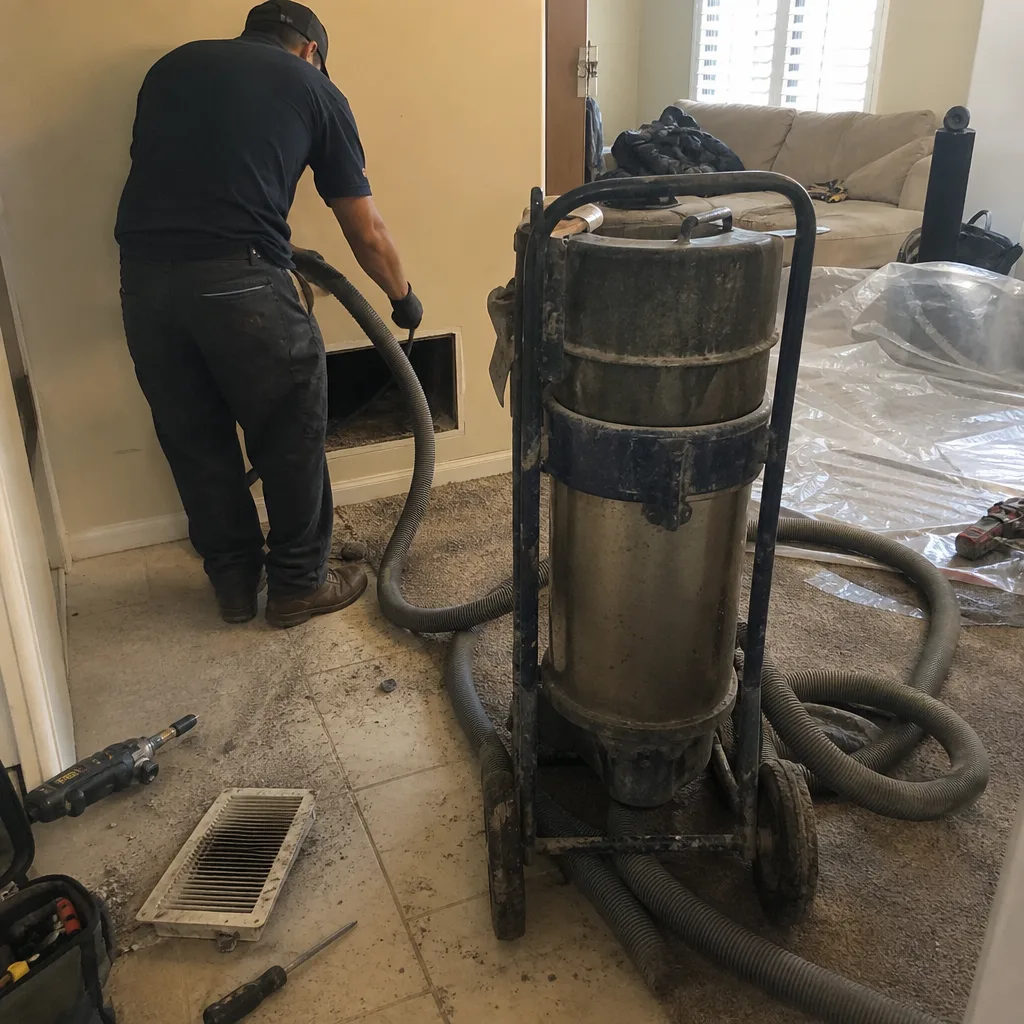
The important legal distinction for homeowners: hiring a company that agitates suspect asbestos materials without proper licensing makes you complicit in the violation. You are the entity, not the contractor, whose property record shows a remediation event. If your Diamond Bar home has pre-1980 ductwork and you are considering any form of duct service, ask the contractor directly: “How do you screen for asbestos before you start, and what do you do if you find suspect materials?” The answer tells you everything about whether you are dealing with a specialist or a shop-vac operator. A professional team using Rotobrush rotary systems and Nikro HEPA-filtered vacuums will have a clear protocol for suspect materials, because the equipment captures what is released, but the protocol determines what gets disturbed in the first place.
Mold, Cal/OSHA, and the Legal Obligation to Stop Work
There is a specific moment in a duct cleaning when the legal obligations of the person holding the vacuum change, and almost no homeowner knows it exists. Under California’s labor code and Cal/OSHA’s Title 8 regulations, anyone who encounters mold in an occupational setting is subject to specific worker protection requirements. The more practical rule, and the one that matters in a residential duct cleaning, is California’s 2001 Toxic Mold Protection Act, which sets notification and remediation standards when mold contamination exceeds a certain threshold.
Combine that with the reality of how mold remediation works in Los Angeles County. Mold remediation is defined as the removal, cleaning, sanitizing, or treatment of mold-contaminated materials in excess of specified thresholds. In a duct system, when does a cleaning cross into remediation territory? The generally accepted trigger points are visible mold growth covering a significant area of the interior duct surface, evidence of moisture intrusion inside the system that has supported active growth, or confirmed mold contamination in the HVAC system associated with documented health symptoms. When any of those conditions exist, a responsible contractor stops work and refers the homeowner to a licensed mold remediator. A cleaning company that just brushes through visible mold and keeps going is not doing you a favor; they are distributing spores through your entire living space and potentially creating a far larger remediation problem.
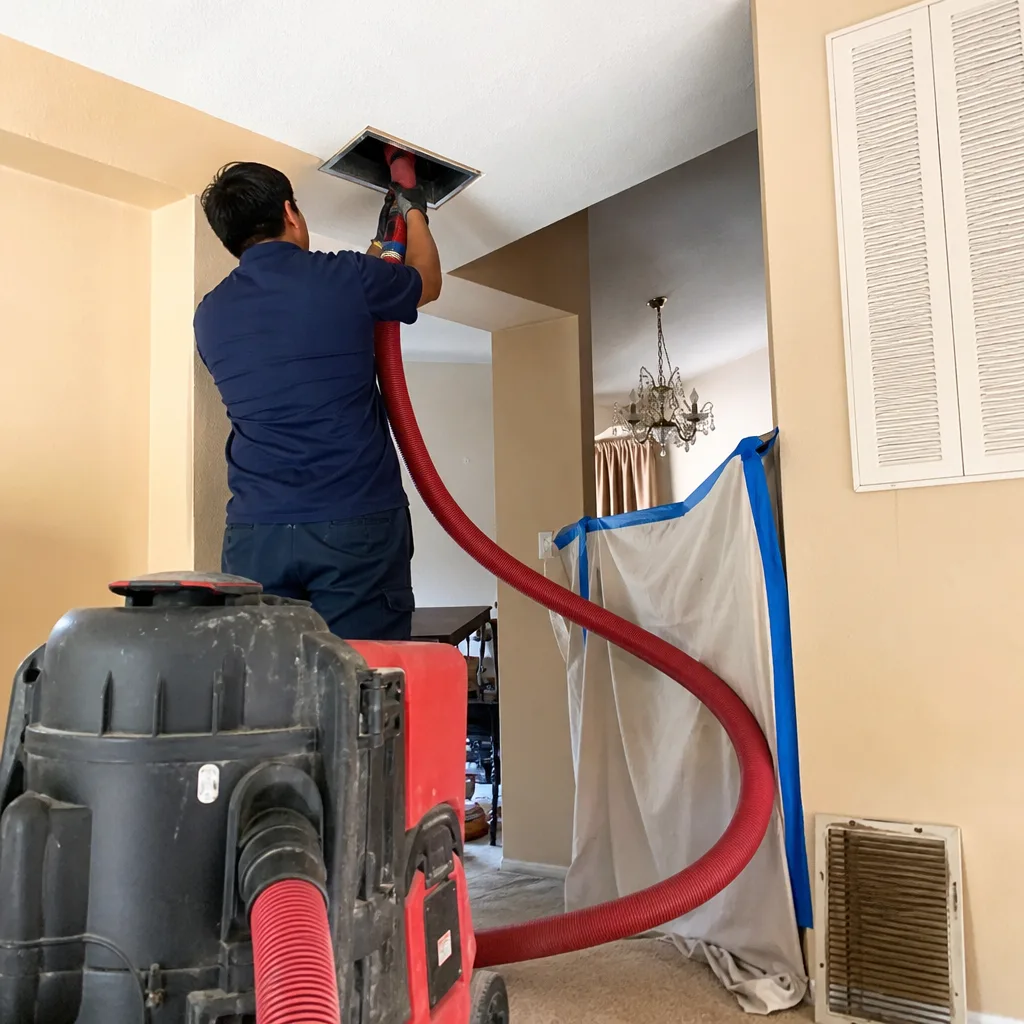
This is where equipment genuinely matters. Our Air Duct Cleaning in Diamond Bar process uses HEPA-filtered negative air systems from Nikro that are designed to capture particulates during cleaning. That is the correct tool for routine cleaning. It is not a mold remediation system. The distinction is not just about effectiveness; it is about legal exposure. The moment a system is identified as mold-affected, the correct action is to stop, document, and refer. A contractor who has Abatement Technologies equipment on hand signals that they understand the boundary between cleaning and remediation, because that company makes the containment and air-scrubbing equipment used in abatement work. Understanding the boundary is the point.
For Diamond Bar homeowners, the practical takeaway is this: if you had a water event in the attic, if you see discoloration around the registers, or if you smell a persistent mustiness that changes with the AC cycle, mention it before the cleaning is scheduled. It changes how the job should be approached.
How to Pull a Homeowner-Initiated Duct Inspection
Most Diamond Bar homeowners do not know they can request an inspection of their own property’s mechanical systems without triggering any adverse action against themselves. A homeowner-initiated inspection is the single most effective tool for resolving the unpermitted work question before it becomes a sale contingency. Here is the step-by-step process, which is the same in most LA County jurisdictions including Diamond Bar’s contracting city:
- Determine which jurisdiction has authority. Diamond Bar contracts with LA County Building and Safety for permit and inspection services in most cases, though specific address-level confirmations should be made through the county’s online portal or a phone call to the local district office.
- Request an owner-initiated inspection, not a permit. You are asking for a code compliance check for information, not filing for a permit to alter something. Many jurisdictions have a specific form for this. You state that you want to understand the current condition of your duct system in light of California Mechanical Code and Title 24 standards.
- Have a licensed HVAC contractor or mechanical engineer present for the inspection. The inspector identifies issues; a qualified professional translates them into a scope of work and a cost estimate. This protects you from acting on incomplete information.
- If the inspector identifies unpermitted work, you decide the correction path. In most cases, obtaining a permit for the work “as-built” and having it inspected is the cleanest resolution. The correction path exists precisely so homeowners are not forced to remove functional work.
- Keep every document. The inspection request, the inspector’s notes, the permit if one is issued, and the final sign-off. This packet becomes the answer to any future disclosure question and typically strengthens rather than weakens a sale, because it demonstrates a proactive homeowner rather than a deferred problem.
This process protects you rather than creating liability for one simple reason: you are establishing a documented baseline before you sell. The disclosure obligation exists regardless of what you know, but unknowing non-disclosure is still a liability in a real estate transaction. A homeowner who can show an inspection report from 2024 and a permit issued in 2025 has zero disclosure risk. A homeowner who never looks is rolling dice on whether a buyer’s inspector will find the disconnected duct in March of the sale year.
Our Air Duct Repair in Diamond Bar team walks clients through this process regularly. The pattern is common: a cleaning reveals a problem, the homeowner learns the previous owner did unpermitted work, and the least stressful resolution is a permit, an inspection, and a documented fix. It sounds bureaucratic until you see the alternative.
LA County Jurisdictions: How Diamond Bar Compares
Diamond Bar sits in a distinctive regulatory position among LA County cities. Unlike fully independent charter cities such as Long Beach or Pasadena, Diamond Bar contracts its building and code enforcement services through LA County, which means the county’s administrative interpretation of the California Mechanical Code applies specifically to much of Diamond Bar regardless of which department handles the day-to-day.
In practical terms, Diamond Bar homeowners face a clearer permit process than some neighboring cities because the county applies a consistent standard rather than a local overlay of varying interpretations. This does not make the standard less strict. It makes it more predictable. For example, LA County’s mechanical permit requirement for ductwork alterations follows a straightforward threshold: replacement of more than a defined percentage of a system’s total ductwork generally requires a permit. In most of the county, this is commonly understood to mean that significant sections of duct replacement, additions of new drops or runs, and major modifications to the distribution system require permits, while point repairs may be evaluated case by case. For a definitive answer on your specific system, contact the county’s Building and Safety district office or see our Duct Cleaning Diamond Bar home page for a straightforward orientation to all our services, including how we help homeowners navigate the permit question.
The other Diamond Bar-specific variable is enforcement context. A city with a high proportion of homes built between 1970 and 1990 will naturally have more aging flex duct, more disconnected runs in the attic, and more asbestos-suspect materials than a city with predominantly newer construction. This means Diamond Bar building officials are not surprised by unpermitted duct work; they see it constantly. That familiarity cuts both ways. It means the correction path is well-established. It also means that when a buyer’s inspector flags ductwork, the title company knows exactly how to calculate the escrow holdback, and the number is rarely small.
The takeaway for Diamond Bar homeowners: do not assume that because a neighbor “just had it done” without a permit, that is the correct reading of the code. Every jurisdiction in LA County enforces the same fundamental principle. Alterations require permits. The question is only whether enforcement comes during your ownership or during your sale.
What We See Inside Diamond Bar Ductwork
In our years working in Diamond Bar, we have seen the full range of duct conditions, and some patterns are reliable enough to describe as typical. Homes built in the 1970s and 1980s, especially in the neighborhoods east of Brea Canyon Road and in the hillside communities north of the 60, generally have original or first-replacement flex duct now reaching the end of its service life. The plastic inner liner becomes brittle in attic heat, the outer vapor barrier tears, and the connections at the boots loosen as the house settles and the earth beneath the slab shifts. Diamond Bar’s hillside geology is a real factor; homes on graded pads experience more movement than homes on flat lots, and duct connections feel that movement over decades.
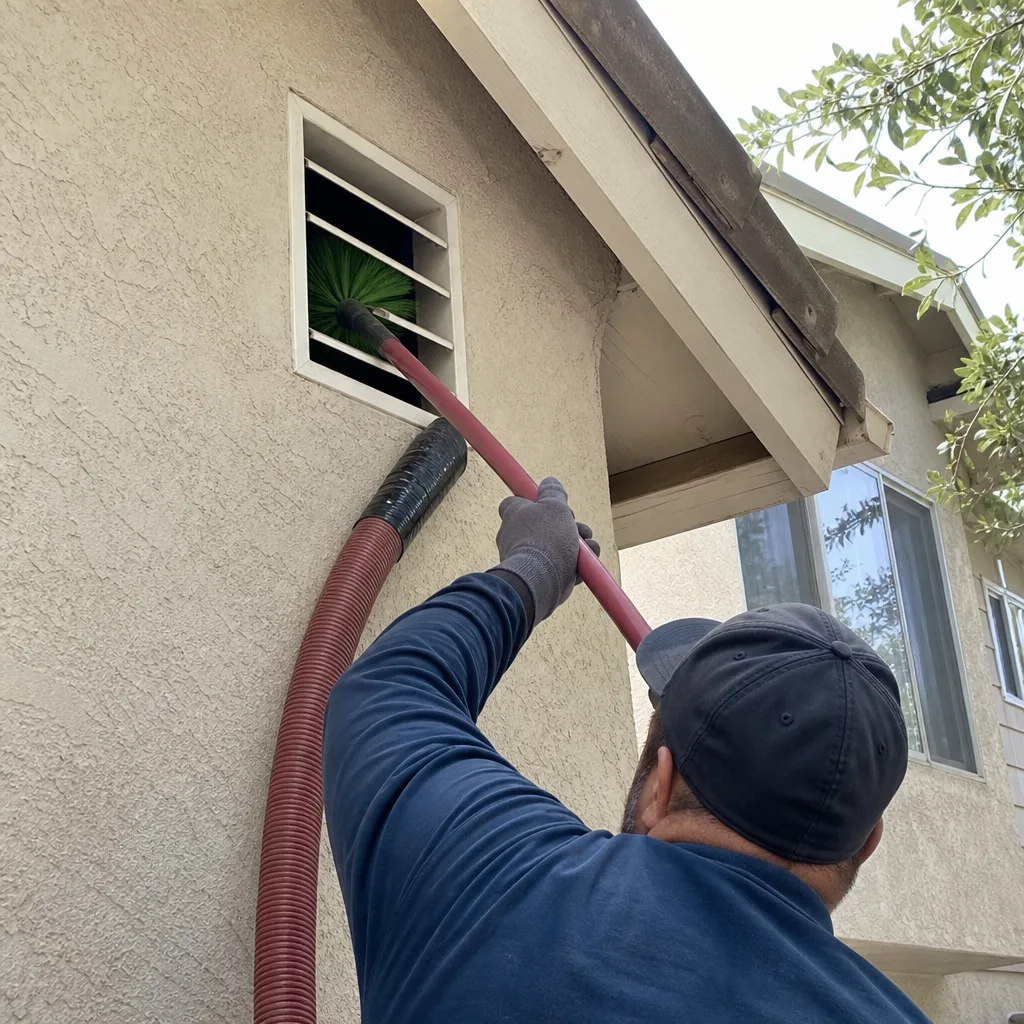
We also see the aftermath of previous work, both permitted and not. The most common problem is a flex duct run that was too long for the distance it spans, causing it to sag, kink, or pull away from the boot. Other times we see duct that was originally installed with inadequate support and has settled onto ceiling joists, wearing through the outer jacket. These are conditions a cleaning alone cannot fix. It is why our Air Duct Cleaning in Diamond Bar service is not a shop-vac operation. We use Rotobrush rotary brush systems that physically dislodge debris and Nikro HEPA-filtered vacuums that capture it before it enters your living space. But the equipment also forces eyes onto the condition of the duct itself, and we report what we find.
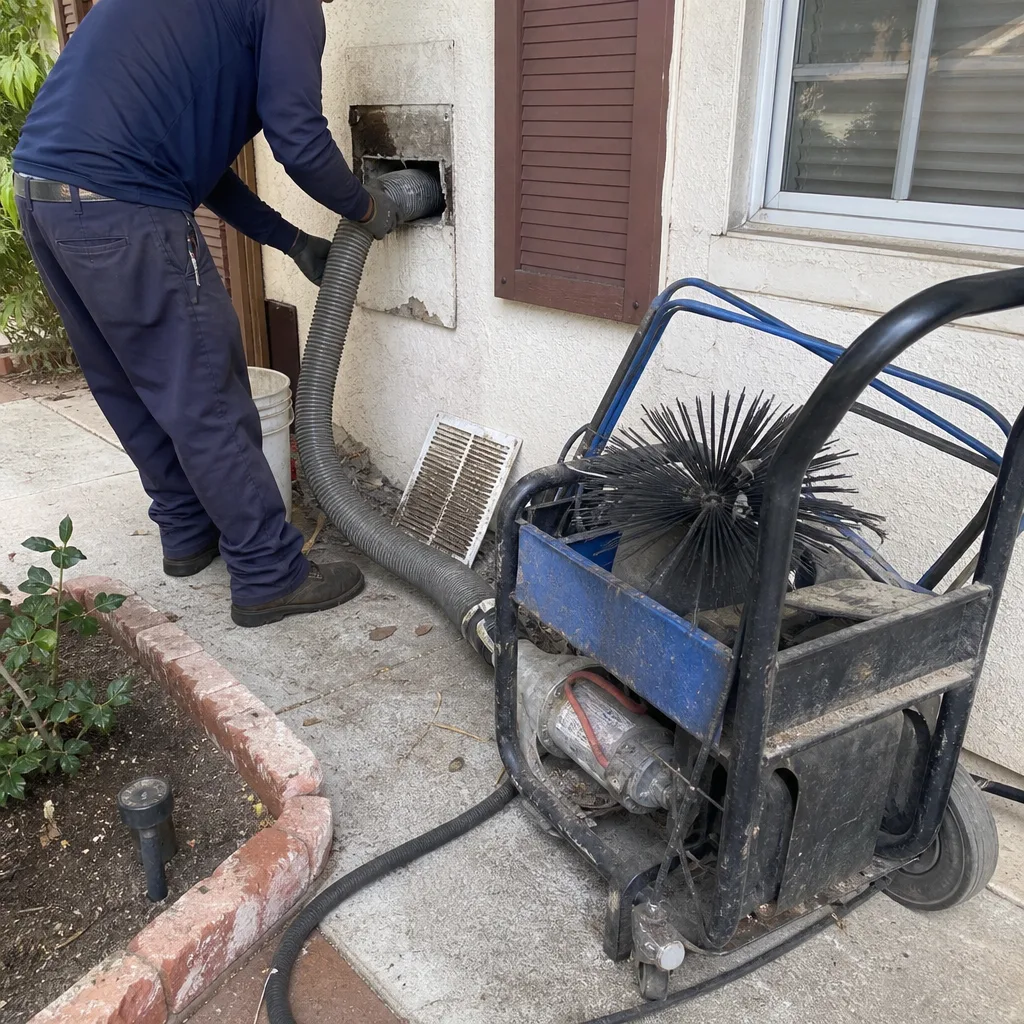
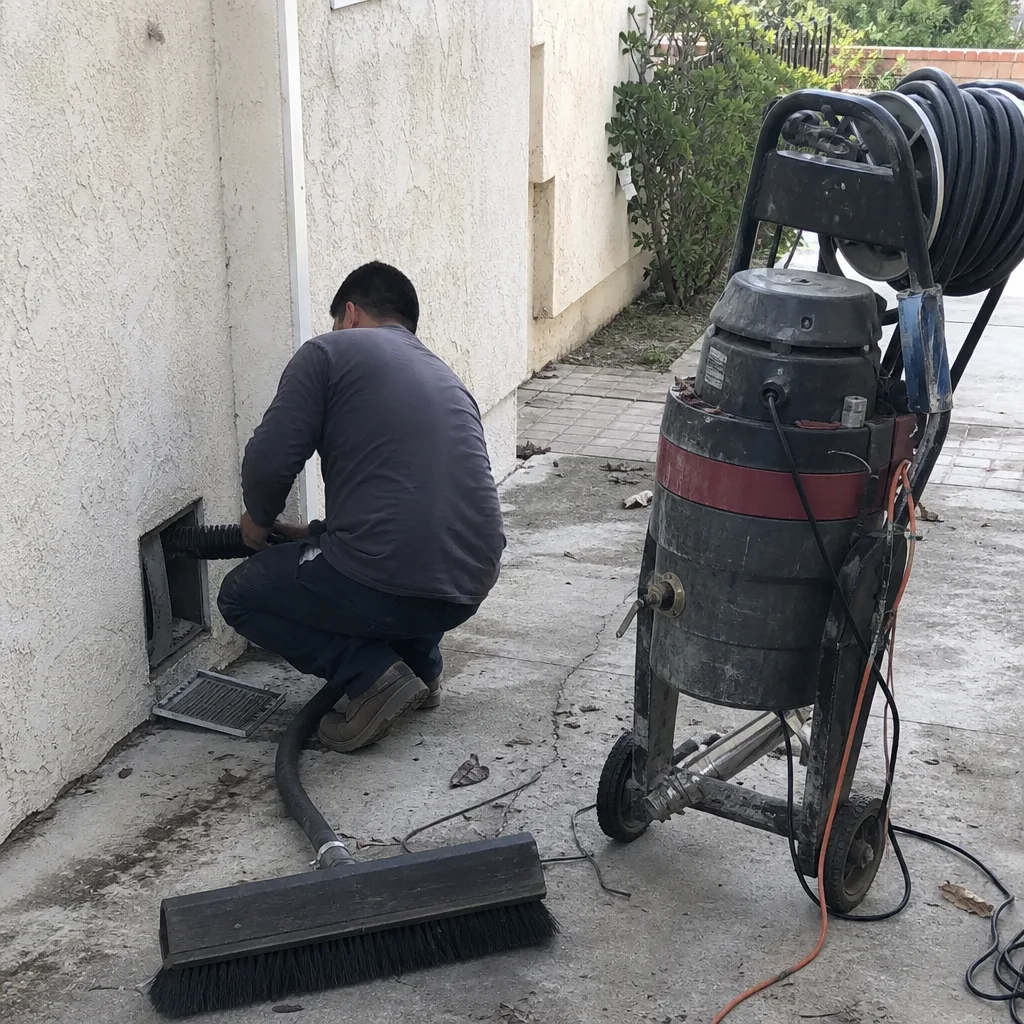
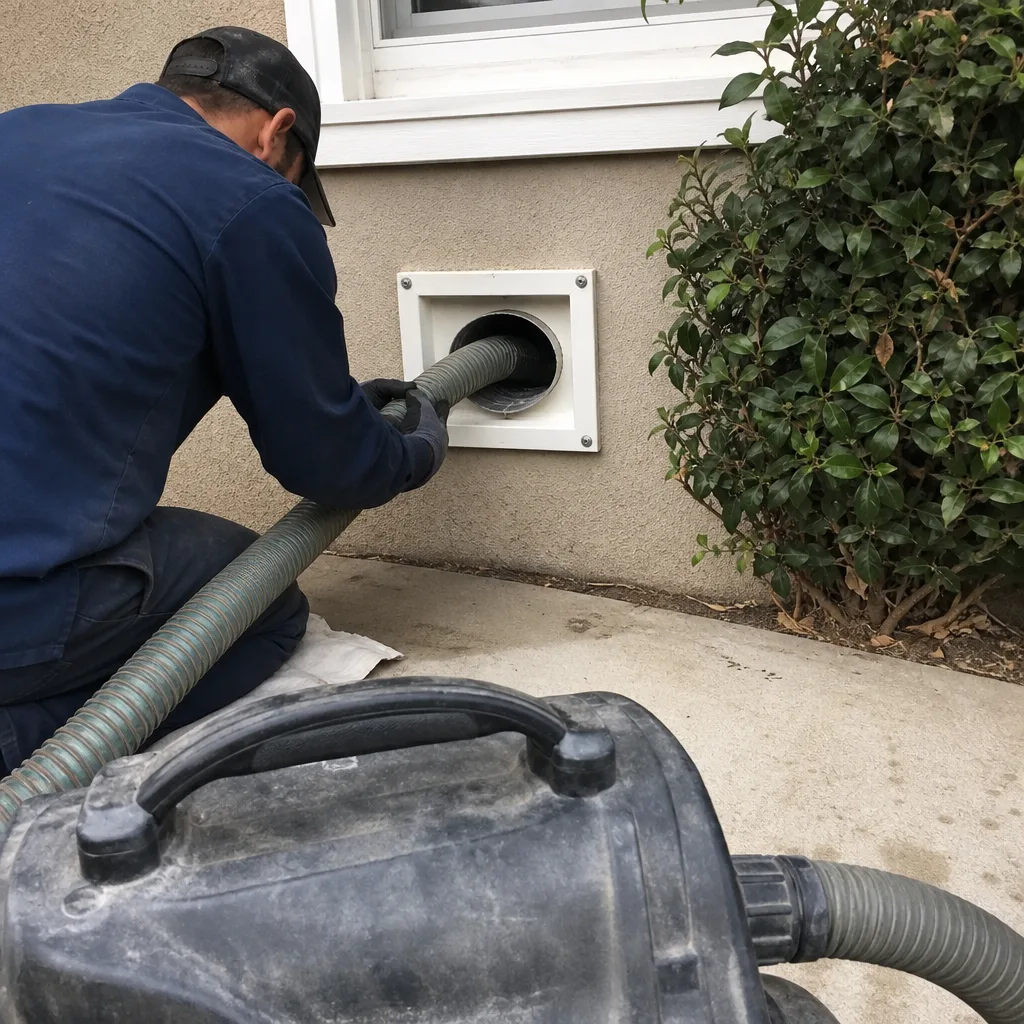
For homeowners concerned about the cost of doing all this correctly, our Dryer Vent Cleaning in Diamond Bar service follows the same principle of professional-grade attention, because a clogged dryer vent is the same kind of hidden risk: not visible until someone looks, and potentially catastrophic when ignored. The NFPA’s data linking clogged dryer vents to residential fires is public record, and it is the reason dryer vent cleaning is a dedicated safety service for us, not an afterthought. The same mindset applies to duct condition. The invisible failure eventually becomes visible, often at the worst possible moment.
Common Mistakes to Avoid
- Assuming a cleaning company’s “free inspection” has any code authority. A visual assessment by a cleaning technician is useful for scoping work. It is not a code inspection, and a technician is not a code official. If the assessment identifies a condition requiring a permit, the actual permit process is separate.
- Letting a contractor “just reconnect” a disconnected duct without asking about permits. This is the most common unpermitted alteration we see created during a cleaning visit. The service seems like common sense, but it changes the property record and creates a disclosure obligation that most homeowners never learn about until contract time.
- Disturbing pre-1980 duct wrap before testing for asbestos. A confirmed asbestos disturbance can put a house into remediation territory quickly, and the remediation pathway is vastly more expensive than the testing would have been. Diamond Bar’s housing stock makes this a live concern for a significant share of addresses.
- Treating mold in ductwork as something a cleaning can fix. Visible mold inside a duct system is not a cleaning issue. It is a water intrusion issue and a remediation trigger. Attempting to clean through it can aerosolize spores and create a larger problem, both for the house and the liability record.
- Sealing duct leaks without understanding Title 24 verification requirements. Duct sealing is beneficial work, but when it rises to the level of an alteration, the code expects verification that the sealing actually reduced leakage to an acceptable standard. Skipping the verification undercuts the value of the work at resale and misses the energy efficiency benefit the code is designed to deliver.
- Waiting until the sale process to think about duct permits. By then, the buyer’s inspector has the first look, the title company has the question, and the escrow holdback number is determined by a stranger. The homeowner-initiated inspection path, done while you own and control the property, is dramatically less expensive and less stressful.
- Choosing the cheapest bid for duct cleaning or repair without understanding what makes the price low. Consumer-grade equipment costs less per job and finds less. Professional-grade equipment such as Rotobrush rotary brush systems and HEPA-filtered Nikro vacuums costs more per job and finds everything. When the discovered condition is a disconnected duct or a compromised run, what the cheaper technician did not find becomes your liability.
When to Call a Professional
Call a professional when you have any of these conditions in a Diamond Bar home: you can see disconnected or sagging ductwork from the attic access; you smell a persistent musty odor that changes with the AC; your energy bills have spiked without a clear cause while cooling has declined; you know your home was built before 1980 and the ducts have never been inspected for asbestos-suspect materials; or you are planning to sell and want a documented baseline on the condition of your mechanical systems. A professional-grade assessment, using equipment and process that would meet the standard of any code inspector, is the cheapest risk reduction available. Duct Cleaning Diamond Bar offers free estimates in Diamond Bar. Call (877) 693-6770 for an honest conversation about what you need.
Frequently Asked Questions
No, air duct cleaning itself does not require a permit because it is classified as routine maintenance under the California Mechanical Code. However, repairs made during a cleaning, including reconnecting disconnected ducts or replacing damaged sections, may require a permit. If a cleaning reveals ductwork in need of repair, the homeowner should understand the permit obligation before work proceeds. Call (877) 693-6770 for an exact assessment of what your system needs.
Whole-system air duct cleaning in the greater Los Angeles market typically runs between $400 and $1,000 depending on the size of the home, the number of returns, accessibility of the mechanical room, and the age and condition of the duct system. Professional-grade equipment and process, including HEPA-filtered extraction, is priced at the upper end of that range for good reason. For an accurate quote for your specific system in Diamond Bar, call (877) 693-6770. Estimates are free and the price is established before any work begins, set as one flat price for the entire system. Never accept a per-vent price. The system is what matters, not a count of vents.
You can, but a consumer-grade approach cannot match the reach and capture capability of professional rotary brush and negative air systems. The interior of your ductwork extends well beyond what you can reach from a register, and the dust you loosen with a household vacuum finds its way back into your living space. More importantly, a professional cleaning is a condition audit. It is how you discover a disconnected duct, a breached jacket, or a fiberglass lining issue. If you need a dependable air duct cleaning in Diamond Bar, give us a call at (877) 693-6770.
Duct cleaning removes accumulated dust, debris, and contaminants from the interior of existing ductwork. Duct repair fixes the physical defects that allowed that contamination in or that compromise system performance, such as a disconnected run, torn jacket, or failed connection. Cleaning a compromised duct system without repairing the underlying defects means re-contamination. The combination is what restores the system to a reliable condition. For an honest assessment of which service your ducts actually need, call (877) 693-6770.
If your home was built before 1980 and the ductwork is original, an asbestos evaluation before cleaning is the responsible step. Not all older duct systems contain asbestos, but the only way to know is laboratory testing of suspect materials. A qualified duct cleaning provider should discuss this screening step with you before touching anything. If you are unsure about your home’s duct era, call (877) 693-6770 and we will help you determine whether testing is warranted before any work begins.
You have two realistic options: disclose it and structure the sale accordingly, which typically means a buyer credit or a holdback, or resolve it before you list by pulling a permit, completing the work to code, and obtaining sign-off. The second path costs money before the sale but typically preserves more equity than the first path costs at closing. A documented permit packet also removes a bargaining chip from any buyer. The earlier you start, the more options you have. Call (877) 693-6770 for guidance on where to begin.
The Bottom Line
The clean-versus-repair distinction is the frame on which everything else hangs. In California, the cleaning activity itself carries no permit requirement. But a Diamond Bar homeowner who treats a cleaning as a purely cosmetic service, and a contractor who does not understand code boundaries, can create a title defect without realizing it. Disconnected ducts, torn flex runs, asbestos-suspect wrap, and mold indicators are not rare in our market; they are common. The difference between a problem discovered early and a problem discovered by a buyer’s inspector is the difference between a planned repair and an urgent negotiation. We provide the equipment, the process, and the documentation habit that keeps our clients on the right side of that line. If you are in Diamond Bar and want a straight answer about the condition of your system, call (877) 693-6770 for a free estimate.
Written by the team at Duct Cleaning Diamond Bar, serving Diamond Bar since 2015.
See the difference
 Before
 After
 Before
 After
 Before
 After