
Last updated November 2, 2026
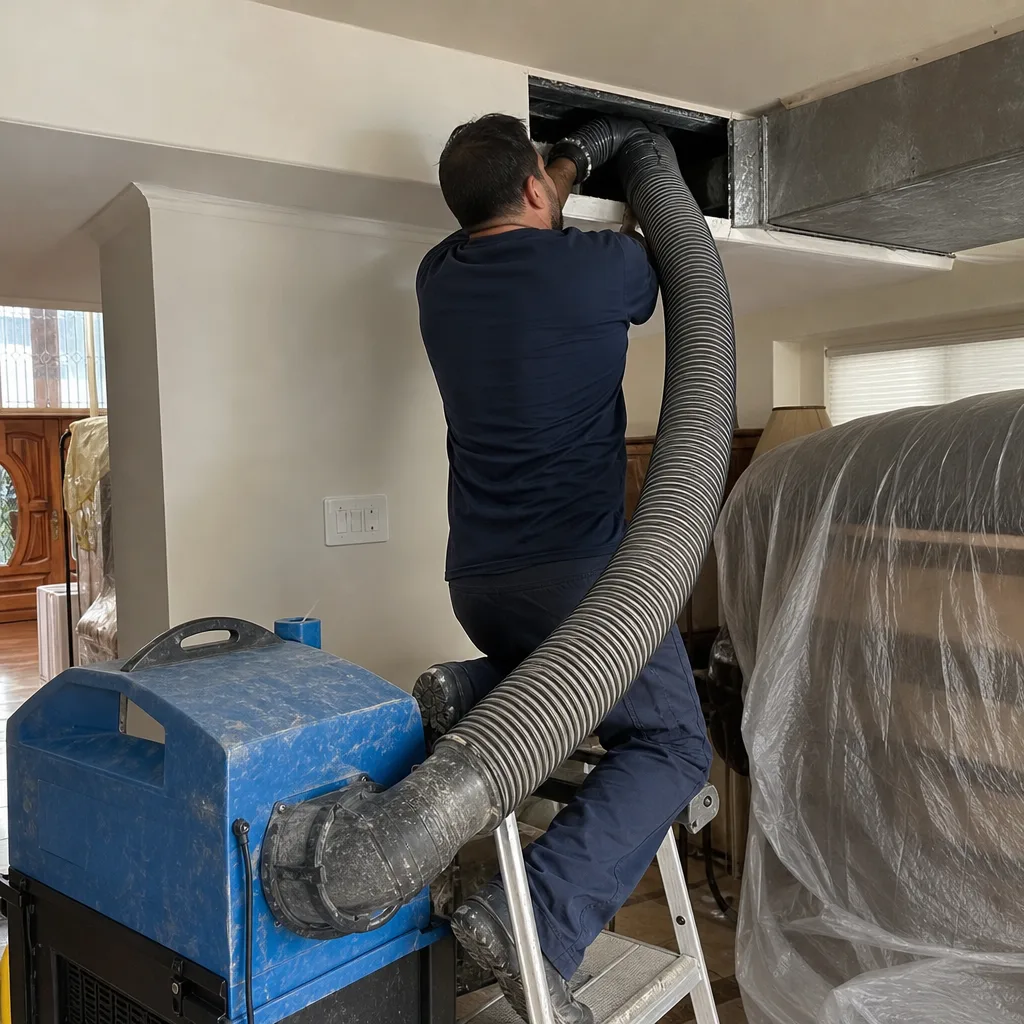
 Whole-home duct cleaning
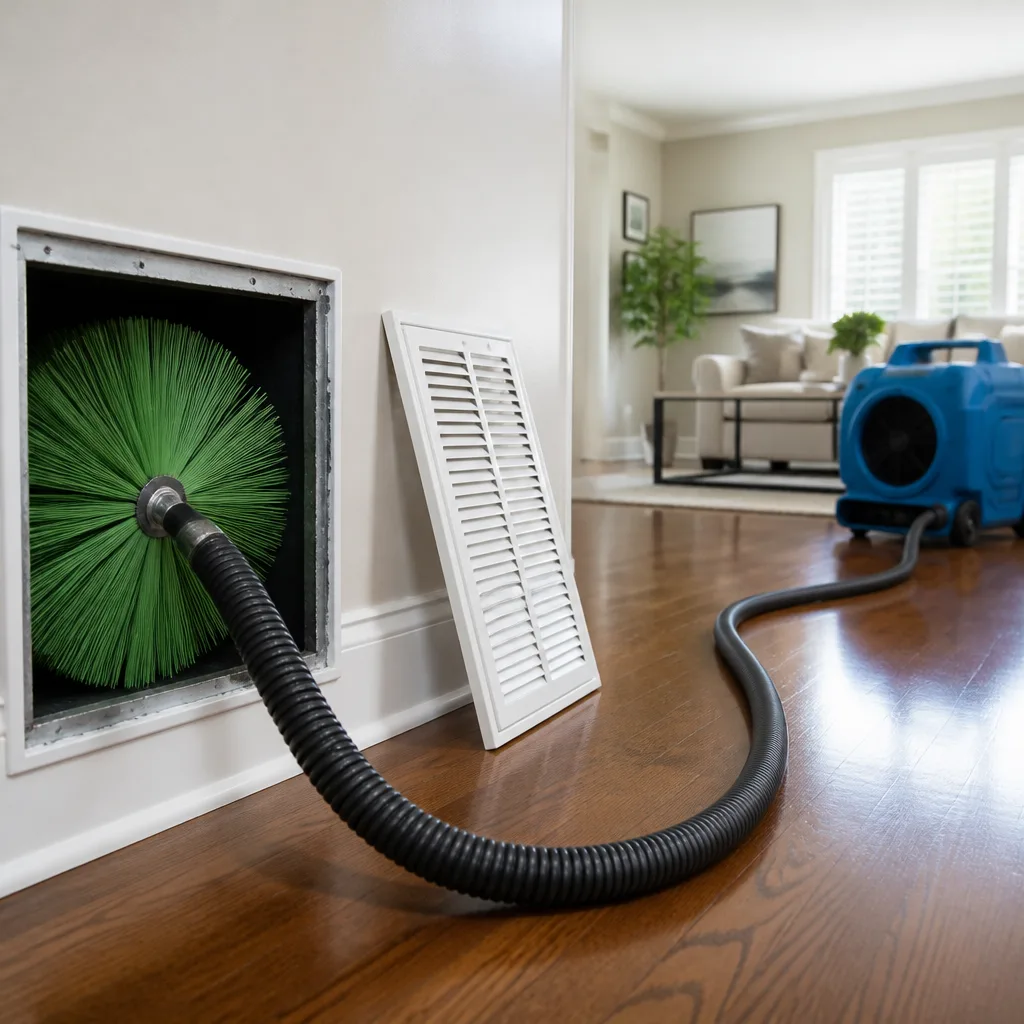
 Dryer vent cleaning
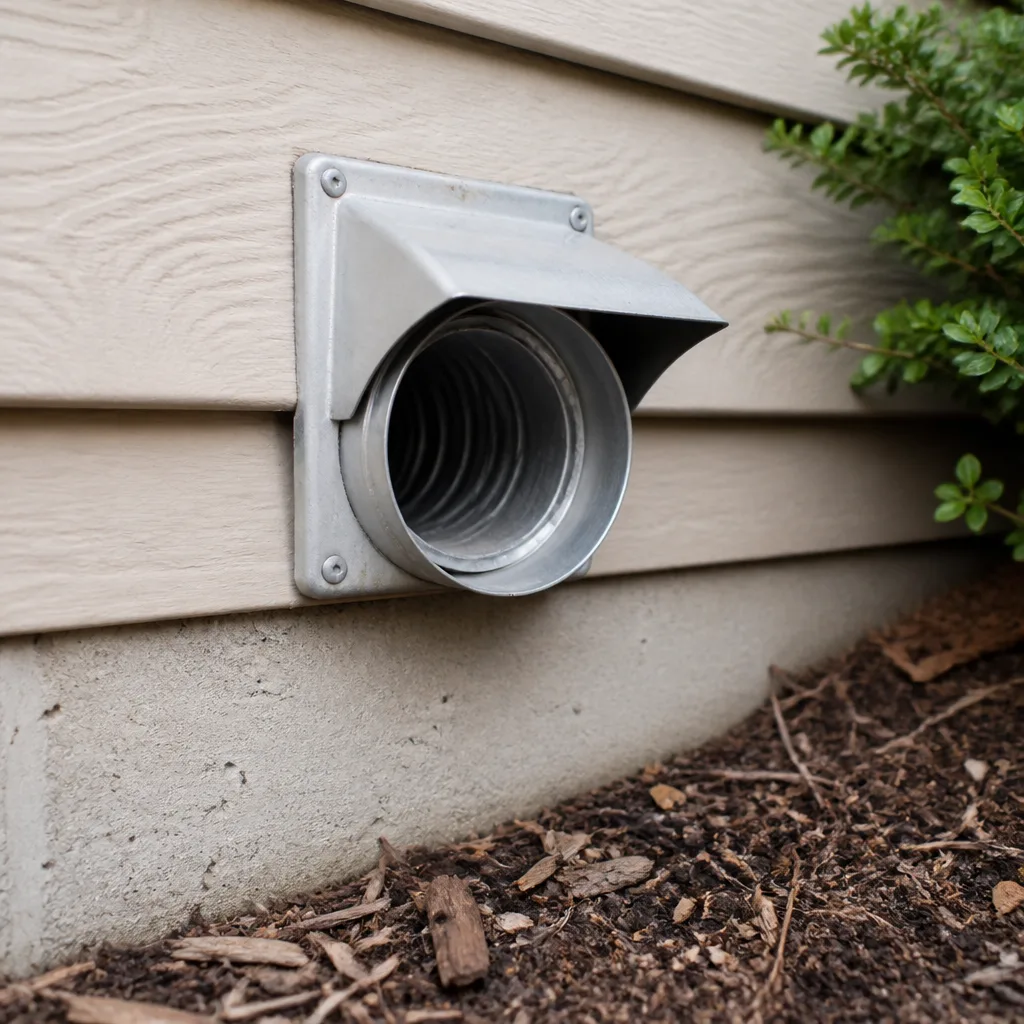
 Camera inspection
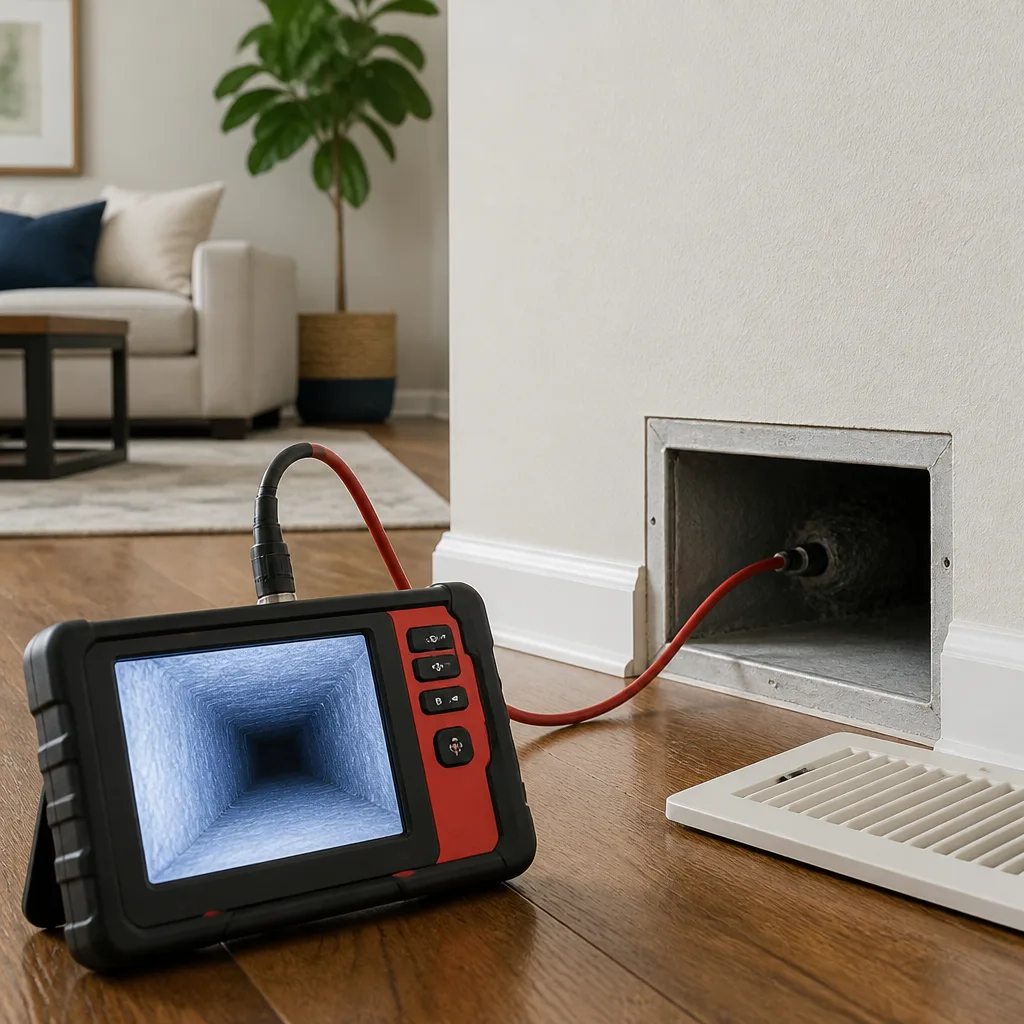
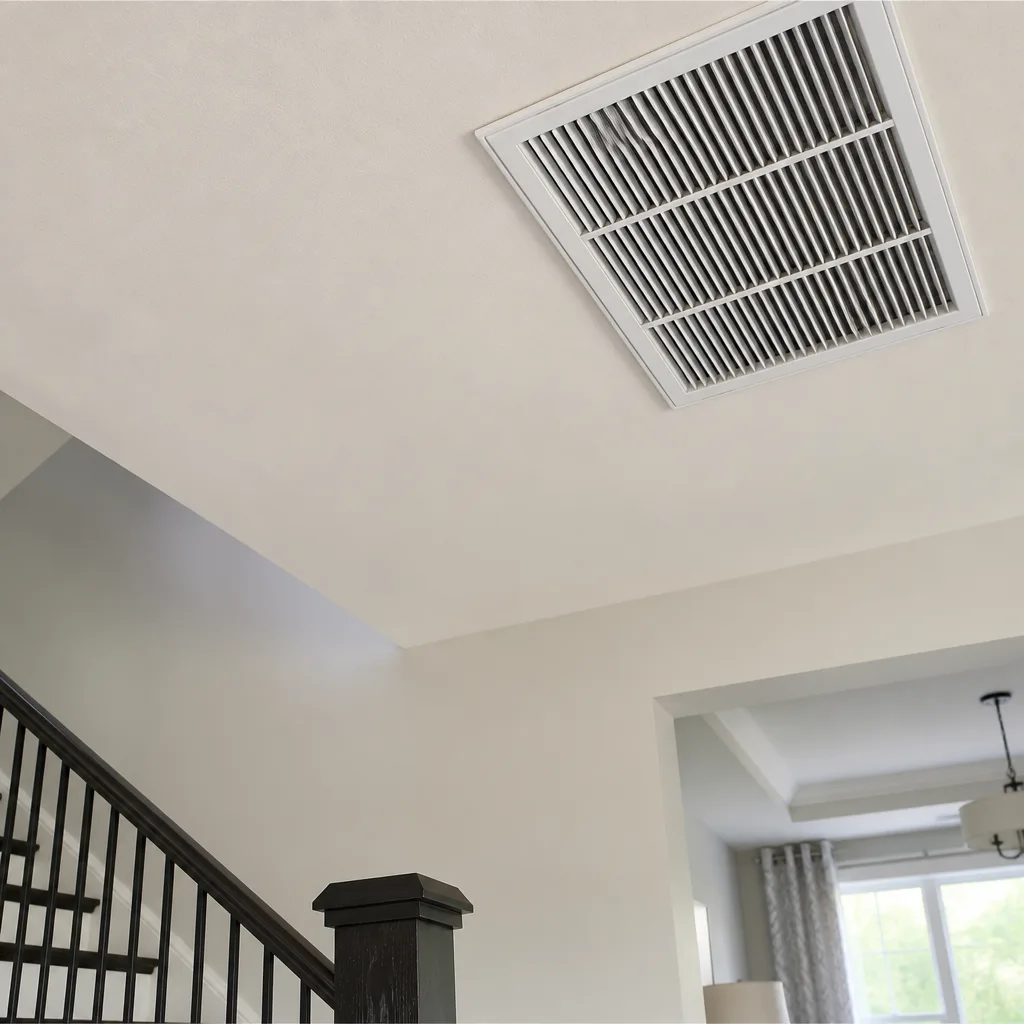 Sanitizing & deodorizing
Whole-system duct and dryer vent check with before-and-after photos - you see exactly what came out of your vents
That "$99 whole-house special" is a bait ad - the real number appears once they are in your hallway, or the "clean" is a shop-vac at the register. We photograph the inside of your ducts before and after instead.
Air Duct Cleaning Maintenance Checklist for Diamond Bar Homeowners
A clogged return grille in Diamond Bar doesn’t just reduce airflow. It forces your air handler to pull harder against a growing wall of resistance, driving up static pressure until flex duct joints begin to separate inside your attic, where no one sees the damage until the energy bill climbs or a bedroom stops cooling. This guide replaces the vague advice you’ve probably read (change the filter, call a pro every few years) with a condition-based inspection protocol built around observable evidence. You’ll learn what to check room by room, how to test airflow balance with a tissue, which MERV rating actually suits Diamond Bar air, and what seasonal events should trigger immediate attention.
Quick Answer
An air duct maintenance checklist for Diamond Bar homeowners should include quarterly filter checks with MERV 8-11 ratings, monthly visual inspections of supply and return registers, tissue-paper airflow tests to detect imbalance, attic duct inspections after any wildlife or renovation event, and professional our Air Duct Cleaning services every 3-5 years unless post-wildfire smoke or rodent activity shortens that window. Document what you find between visits so your contractor starts with data, not guesswork.
Styles & brands we work with
- Whole-home duct cleaning
- Dryer vent cleaning
- Camera inspection
- Sanitizing & deodorizing
Table of Contents
- Room-by-Room Register Inspection Protocol
- How to Test Airflow Balance Between Rooms
- Choosing the Right MERV Rating for Diamond Bar Air
- Seasonal Trigger Events That Demand Immediate Inspection
- What to Log Between Professional Visits
- Attic Duct Inspection: The Overlooked Zone
- Why Duct Repair and Cleaning Belong on the Same Checklist
- Common Mistakes to Avoid
Room-by-Room Register Inspection Protocol
Most Diamond Bar homes have 8 to 14 supply registers and 1 to 3 return grilles, and they all tell different stories. A supply register in a guest bedroom rarely sees the same airflow demand as one in a living room with vaulted ceilings. That means you can’t check one vent and assume the rest are fine. Here’s the protocol we use when we walk a home, adapted for a homeowner doing monthly checks.
Start at the return grilles. These are the larger openings, often located in a hallway ceiling or a wall near the thermostat. Remove the grille cover if it’s a standard residential design with two clips or a swing-down hinge, then look at the visible surface. A light gray dust coating is normal. What’s not normal: a felt-like mat that holds its shape when touched, any visible moisture staining, or a layer of dust thick enough to obscure the metal behind it. In Diamond Bar, where summer temperatures regularly cross 95°F, returns work overtime. A dirty return doubles the workload on your blower motor.
Next, walk each room and inspect supply registers. Use a flashlight. Look for three specific conditions. First, dust streaking on the wall or ceiling around the register, which indicates turbulent air escaping around a poorly seated boot rather than flowing through it. Second, visible debris inside the register throat, especially anything that looks like sand or fine grit. Diamond Bar sits in the path of seasonal Santa Ana winds that carry fine particulate from foothill areas, and that grit loves to settle into duct runs. Third, any register that has been painted over, which restricts the damper movement and reduces the opening size.
Keep a simple log on your phone. Note the room, the date, and what you saw. Over three months, that log becomes the single most useful document you can hand to a technician.
How to Test Airflow Balance Between Rooms
Uneven room temperatures are the most common complaint we hear from Diamond Bar homeowners, and the cause is rarely a thermostat problem. It’s usually airflow imbalance caused by crushed flex duct, disconnected joints, or a damper that was closed years ago and forgotten. Here’s a test that requires nothing more than a single-ply tissue.
The Tissue-Paper Airflow Test
- Set your thermostat to fan-only mode so the blower runs without heating or cooling. This isolates airflow from temperature.
- Close all exterior doors and windows.
- Go to the first supply register and hold a single-ply tissue by one corner, about 2 inches below the opening.
- Observe the angle of the tissue. It should lift to roughly 45 degrees and flutter lightly.
- Move through every room and compare the tissue response.
A tissue that barely moves or hangs limp while others flutter strongly is your signal. That room has low airflow, and the cause is almost always in the duct run serving it: a pinched section, a loose connection, or an accumulation of debris that has narrowed the passage. A tissue that snaps violently upward suggests an oversized register or an unbalanced damper, which steals air from other rooms.
In Diamond Bar’s two-story homes, especially those built in the 1980s and 1990s canyon developments, upstairs bedrooms often suffer from low static pressure at the register because duct runs are longer and stretched through hot attic spaces. If your tissue test shows weak airflow in upstairs rooms every summer afternoon, the duct layout may be fighting against thermal gain inside the attic. That’s not something a filter change fixes. It’s a duct repair in Diamond Bar issue, and it needs a diagnosis, not a guess.
Choosing the Right MERV Rating for Diamond Bar Air
The Diamond Bar air you breathe moves through two filters before it reaches your lungs: the one in your HVAC system and the duct surfaces themselves. Most homeowners think a higher MERV rating means better protection, automatically. That’s not how static pressure works.
MERV 8 filters capture about 70-85% of large particles between 3 and 10 microns: pollen, dust mites, carpet fibers. MERV 11 captures a meaningful share of particles down to 1 micron, including pet dander and some mold spores. MERV 13 and higher enters HEPA-adjacent territory, capturing fine smoke particles and bacteria. But here’s the catch that matters in Diamond Bar: most residential air handlers in this area were sized for MERV 8 filters or lower. Slide a MERV 13 into a system designed for 8, and you increase the pressure drop across the filter. The blower works harder. Airflow drops. Efficiency drops. In some cases, the evaporator coil freezes during peak summer calls for cooling.
Our recommendation for Diamond Bar homes: MERV 8 or 11, never higher, unless a licensed HVAC professional has confirmed your system can handle the restriction. If you want true fine-particle capture, the solution is whole-home filtration paired with a properly matched system, not a high-MERV filter jammed into an undersized slot. This is where working with a team that understands air duct cleaning in Diamond Bar alongside air quality equipment makes a measurable difference.
Change your filter every 60-90 days under normal conditions. Change it every 30 days during wildfire season, after any renovation, or if you have pets that shed heavily. In Diamond Bar, wildfire smoke from the San Gabriel and San Bernardino foothills can sit over the valley for days, and your filter is the first line of defense. A filter loaded with smoke particulate is doing its job. Don’t wait for the calendar to tell you to replace it. Look at it.
Seasonal Trigger Events That Demand Immediate Inspection
Diamond Bar has a specific climate rhythm, and your ducts respond to it in ways a generic maintenance checklist never captures. Four events should put duct inspection at the top of your priority list.
Post-Wildfire Smoke Events
When smoke from the Angeles National Forest or San Bernardino Mountains drifts over Diamond Bar, it carries fine particulate matter that bypasses a standard filter and settles inside duct runs. This isn’t visible dust. It’s a fine, oily residue that adheres to metal and flex duct interiors. If your home smelled like a campfire for more than 48 hours, professional duct cleaning with HEPA-filtered extraction is warranted, not optional. A standard vacuum simply redistributes smoke particulate.
Post-Renovation Dust
Drywall sanding, flooring removal, and cabinet installation produce dust that behaves like no other contaminant. It’s incredibly fine, it stays airborne for weeks, and it gets drawn into return ducts every time the system runs. If you’ve renovated any room in your Diamond Bar home, even if the contractor sealed doorways with plastic, check every return within two weeks. Drywall dust inside a blower motor bearing shortens the motor’s life by years.
Rodent Activity in Attic Spaces
Diamond Bar’s hillside lots and mature landscaping support healthy populations of roof rats and mice. Rodents nest in attics because they’re warm and quiet. Once inside, they travel through flex duct runs, chewing through the outer jacket and sometimes the inner liner. Rodent droppings, urine-soaked insulation, and nesting material inside ducts are a serious air quality hazard. If you’ve heard scratching overhead, seen droppings in the garage, or found chewed vents, treat your ducts as contaminated until proven otherwise.
Post-Monsoon Humidity Spikes
Late summer monsoonal moisture occasionally pushes into Diamond Bar from the southeast, raising indoor humidity into the range where dust inside ducts becomes damp and sticky. That’s the condition where mold can begin growing on accumulated duct debris. If your registers show any dark spotting or musty odor following a humid stretch, don’t wait for your next scheduled cleaning.
What to Log Between Professional Visits
Most homeowners call a duct cleaning company and describe the problem as, “the air seems off.” That’s not a useful starting point. The more data you bring to the appointment, the faster a technician can pinpoint the cause instead of running a generic checklist. Here’s what to record.
Maintenance Log Fields
- Date and room location of every register inspection you perform.
- Filter type and MERV rating installed, including the date you changed it.
- Tissue test results by room: strong, weak, or none, with the date and thermostat setting.
- Any odor, described precisely: musty, smoky, dusty, chemical, and whether it’s constant or only when the system starts.
- Visible dust on registers or return grilles, noting whether it’s gray, dark, oily, or granular.
- Any changes in energy bills that don’t match seasonal expectations, noted by month.
- Renovation dates, pest inspection findings, and any roof work, which can introduce debris into attic ducts.
- Allergy symptoms that worsen at home and improve when away, noted by family member.
This log takes two minutes per week. Hand it to any contractor and you’ve immediately separated yourself from 90% of homeowners, who arrive at a service call with nothing but a vague feeling. It allows the technician to correlate your observations with what the equipment finds, which means faster diagnosis and no wasted time on guesswork. In our experience, a homeowner with a three-month log gets answers on the first visit far more often than one who starts from zero.
Attic Duct Inspection: The Overlooked Zone
In most Diamond Bar homes, the ducts you can’t see are the ones that matter most. Attic-mounted flex duct runs stretch above the living space, exposed to summer temperatures that can exceed 140°F. Heat damages flex duct over time. The outer vapor barrier becomes brittle. The inner liner separates. The wire spiral loses its shape under the weight of rooftop heat gain. Meanwhile, you can’t see any of it from the living room.
Here’s what to check if you’re comfortable accessing your attic, or what to ask a technician to verify during any service visit. First, look for flex duct that is sagging between supports. A proper installation keeps the duct supported at intervals no more than 4-5 feet apart. Sagging creates low points where condensation collects and dust settles. Second, check for pinched sections where duct crosses over framing or gets compressed under stored boxes. A 50% pinch reduces airflow by more than 50% because airflow resistance climbs dramatically as the opening narrows. Third, inspect joints where flex duct connects to rigid boots. Duct tape, ironically, is a red flag. It dries out, loses adhesion, and falls away within a few years in Diamond Bar heat. Proper connections use mastic or UL-listed foil tape, not gray fabric tape.
Any separation here means your conditioned air is blowing into the attic instead of your bedroom. The tissue test from earlier will hint at this problem before you ever climb a ladder. Weak airflow in one room plus a dusty, hot attic points to exactly this failure mode. Fixing it requires professional air duct repair, not just a cleaning.
Why Duct Repair and Cleaning Belong on the Same Checklist
Here’s a scenario we’ve walked into more times than we can count in Diamond Bar: a homeowner pays for duct cleaning, the crew leaves, and within weeks the dust is back. The customer feels scammed. The real culprit wasn’t a bad cleaning. It was a separated duct joint six feet inside the attic that kept pulling dusty attic air into the system after every cleaning.
This is why “clean ducts” and “repaired ducts” are not separate conversations. Cleaning removes what’s inside. Repair stops new contamination from entering. If you only clean, you’re treating the symptom. If you only repair, you’re ignoring the buildup. The two have to work together, and a company that handles both under one roof is working from a different mindset than a cleaning-only outfit. We bring professional-grade equipment to every duct cleaning Diamond Bar home visit, and we inspect for the structural problems that undo cleanings at the same time. That’s not an upsell. That’s diagnostics.
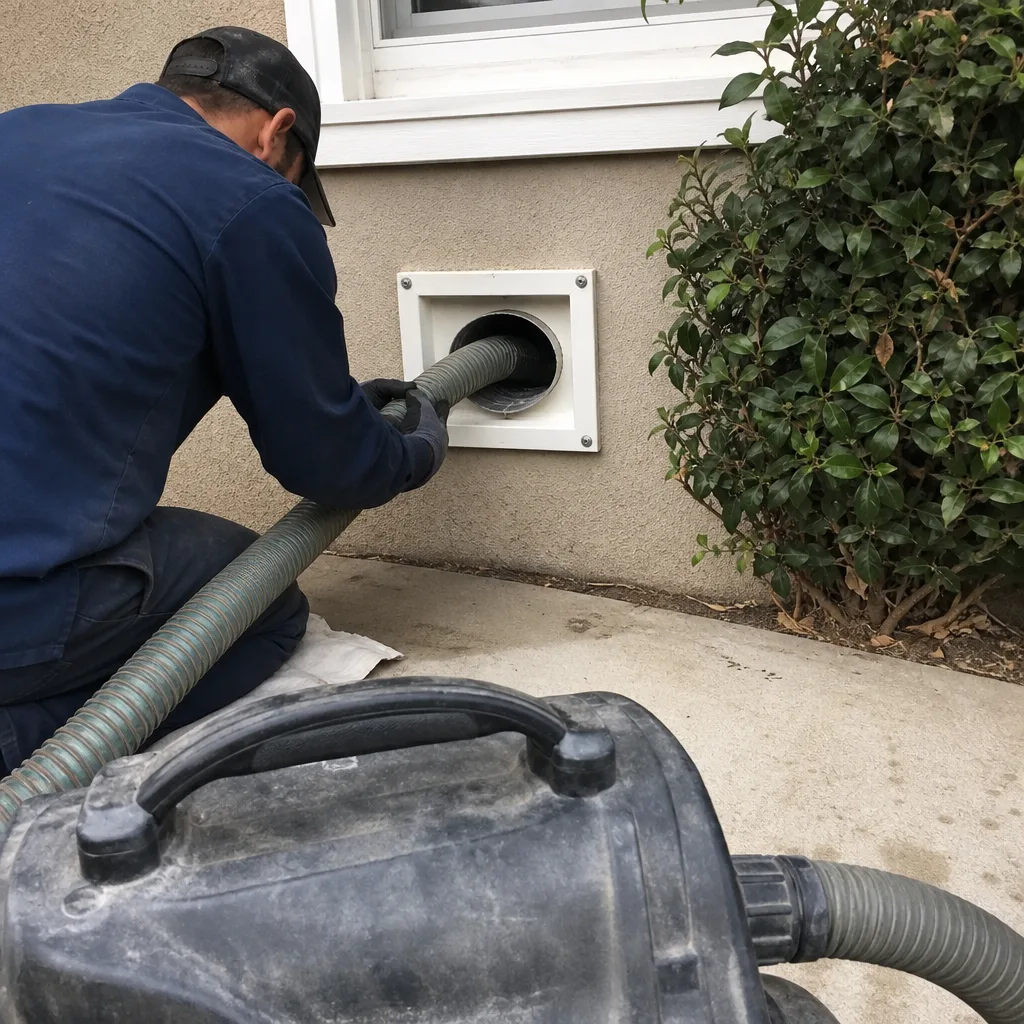
One more point. Dryer vents are a completely separate part of your home’s air system, and they deserve the same attention as your HVAC ducts. Lint buildup inside a dryer vent is a leading cause of residential fires, according to NFPA data, and in Diamond Bar’s dry summer months the risk is elevated. If you’re going through the effort of maintaining one air system, don’t leave the other to chance. Our dryer vent cleaning in Diamond Bar is a dedicated, safety-focused service, not an afterthought tagged onto a duct job.
Common Mistakes to Avoid
- Trusting a clean-looking register. The 8 inches of duct you can see at the register represent less than 1% of total duct surface area. A pristine register means almost nothing about what’s six feet up the run.
- Falling for a low coupon price. The duct cleaning industry has a reputation problem: bait-and-switch pricing where a $79 deal becomes a $900 invoice once the van arrives. Ask for a flat whole-system price before work starts, never a per-vent quote.
- Using a MERV 13 filter on an old system. Diamond Bar homes with original 1990s or 2000s air handlers were sized for low-restriction filters. Over-filtering chokes airflow and can freeze the coil in August.
- Cleaning without checking for leaks. A duct cleaning that doesn’t include a visual inspection of accessible duct runs is a partial job. If leaks go unaddressed, the system re-contaminates itself within weeks.
- Ignoring the dryer vent. HVAC duct cleaning does nothing for your dryer vent. They’re separate runs with separate problems. Lint fires don’t care if your HVAC ducts sparkle.
- Waiting for a smell. Major duct contamination rarely announces itself with odor until it’s advanced. By the time you smell mustiness from a vent, the problem has been building for months or years.
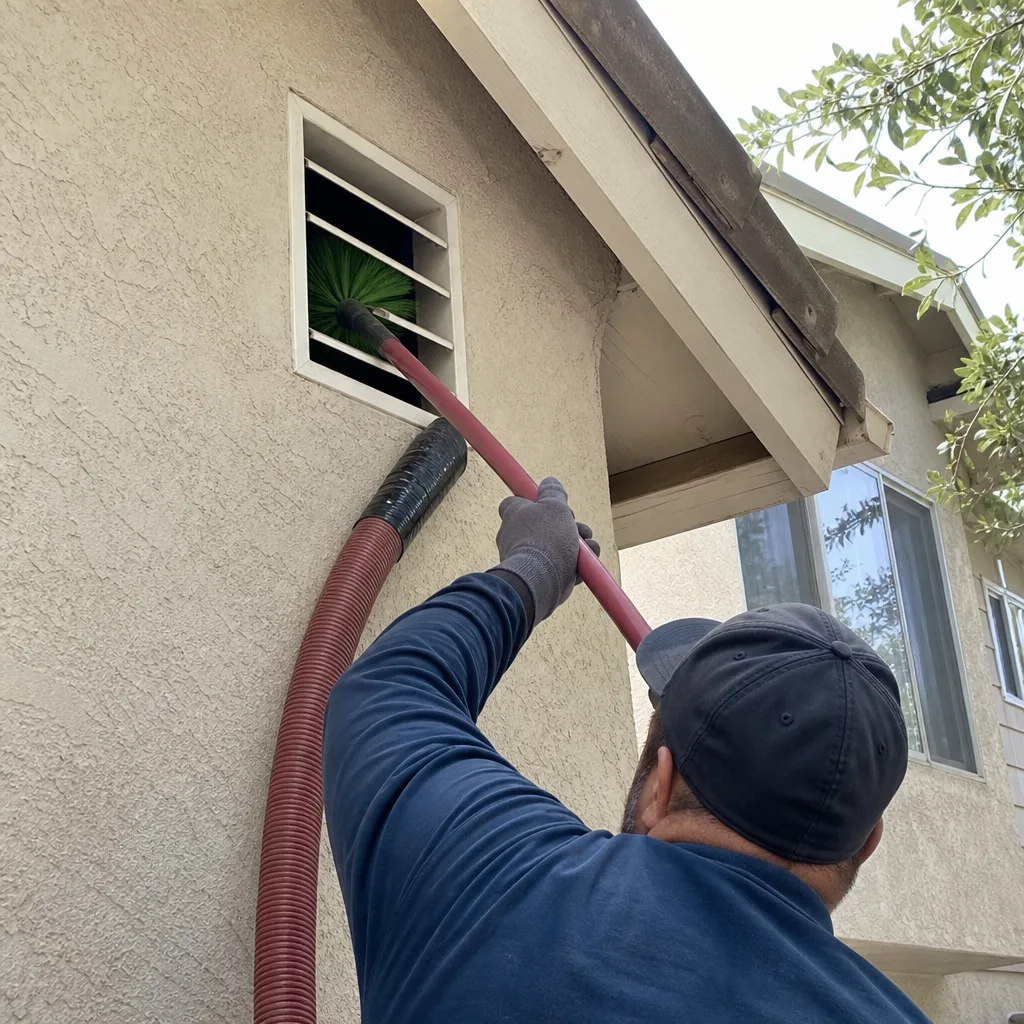
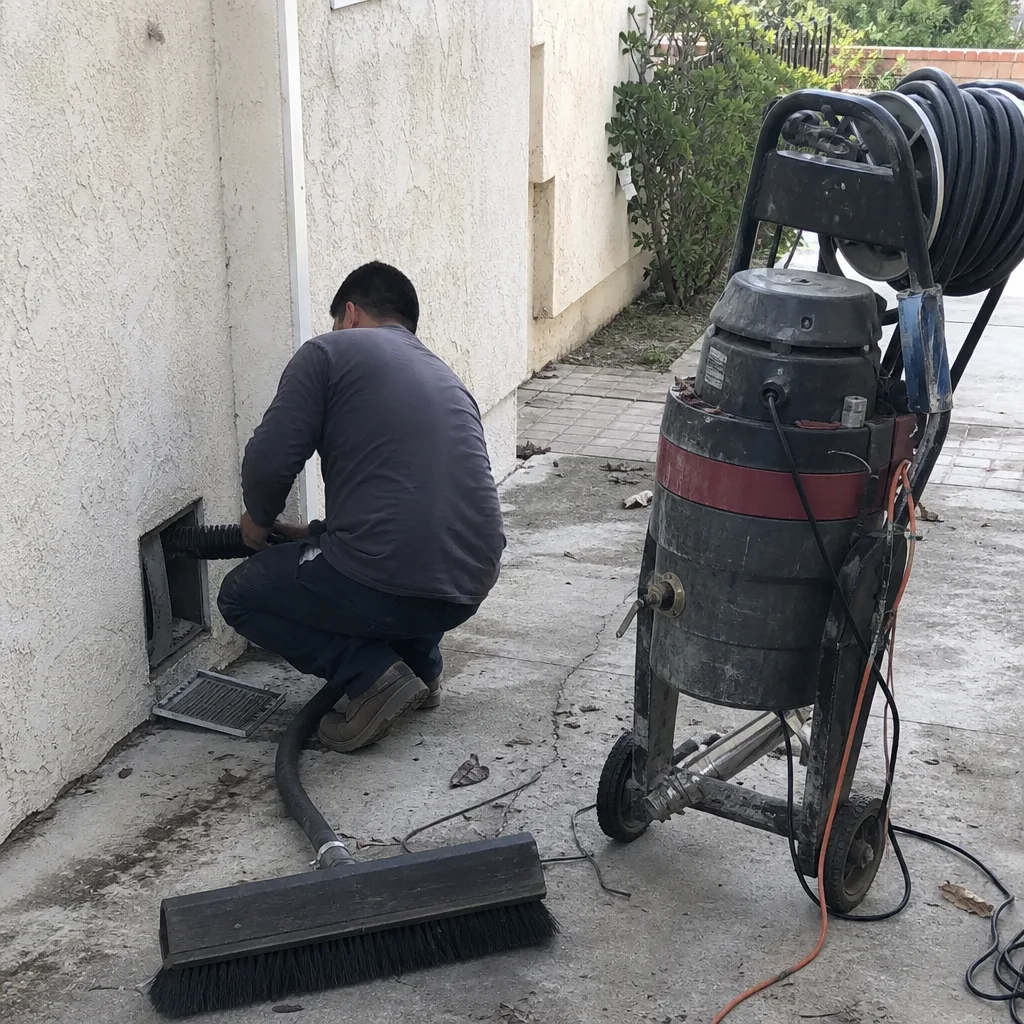
- Hiring based on equipment photos alone. Generic truck-and-hose services use glorified shop vacs. What matters is whether the equipment can physically dislodge and HEPA-capture debris, which is what Rotobrush rotary systems and Nikro vacuums are built to do.
See the difference
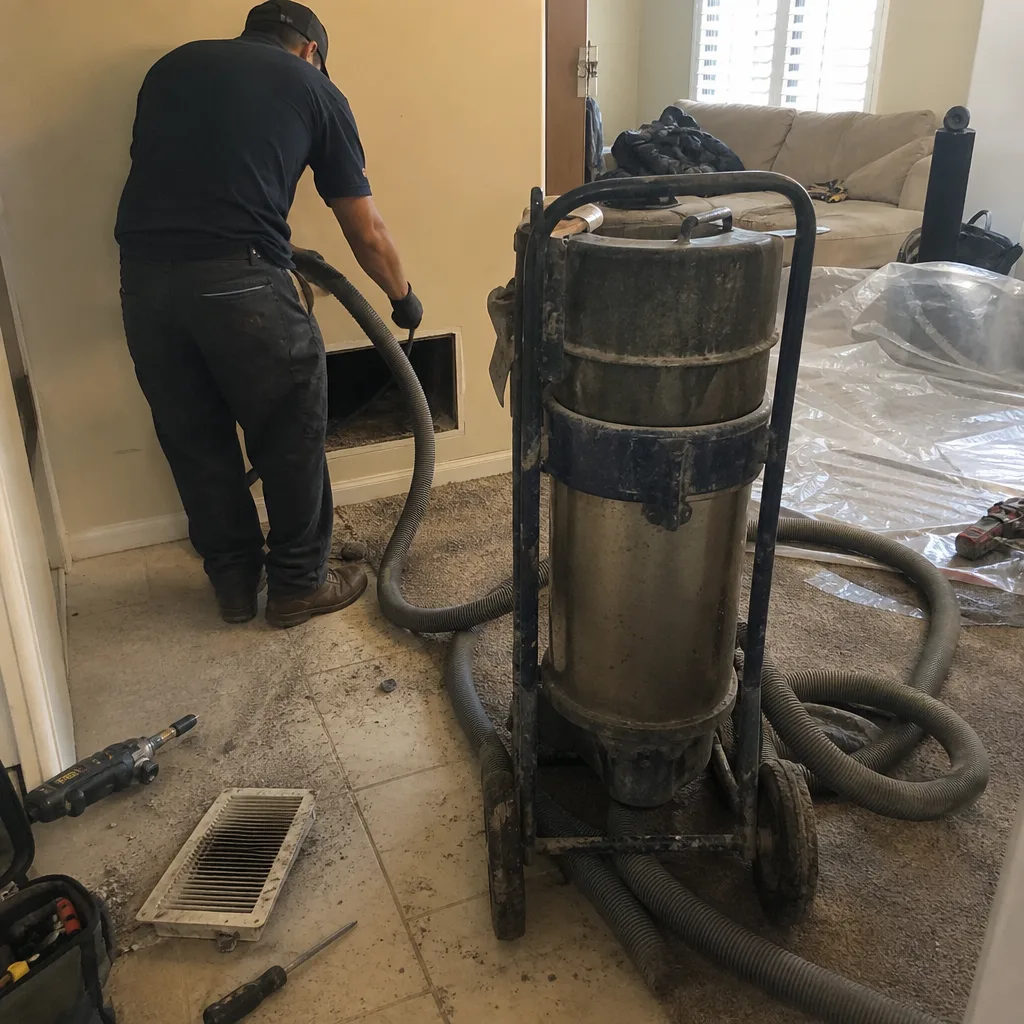 Before
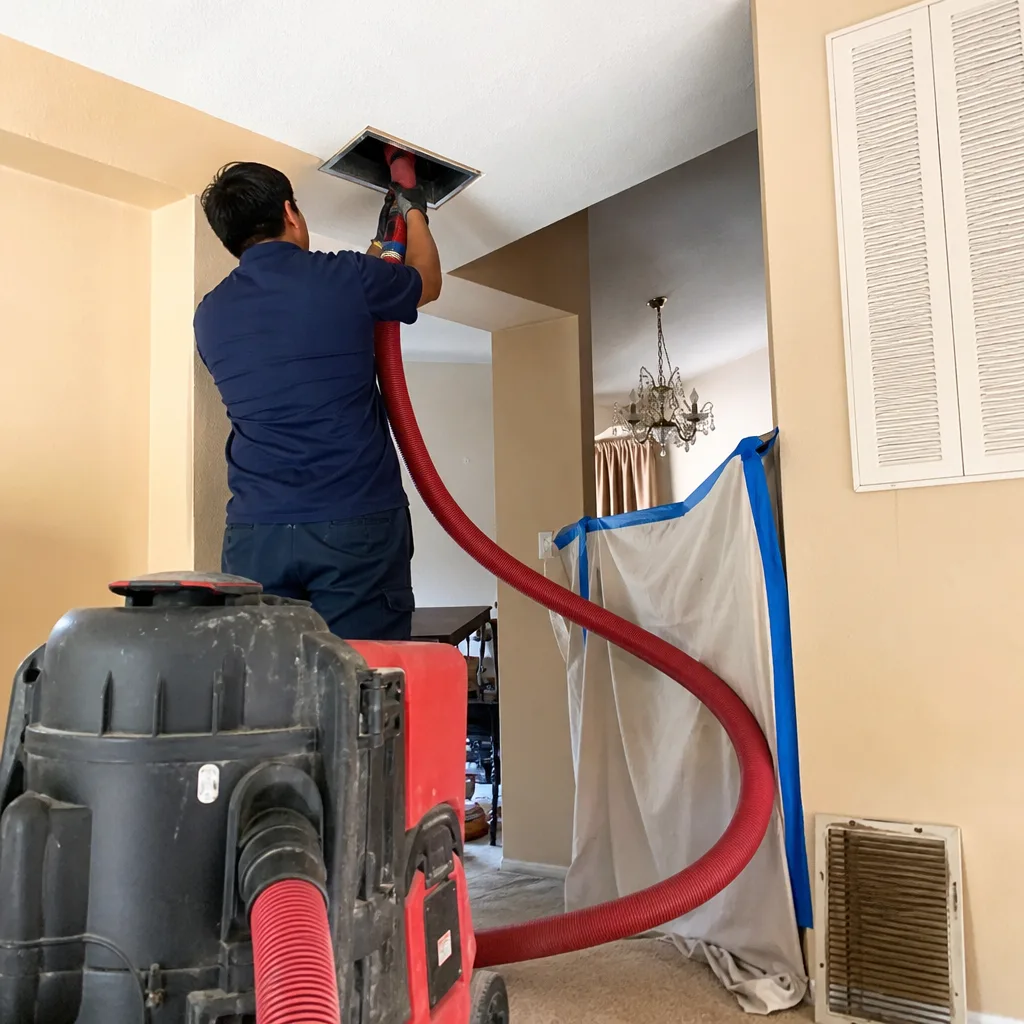 After
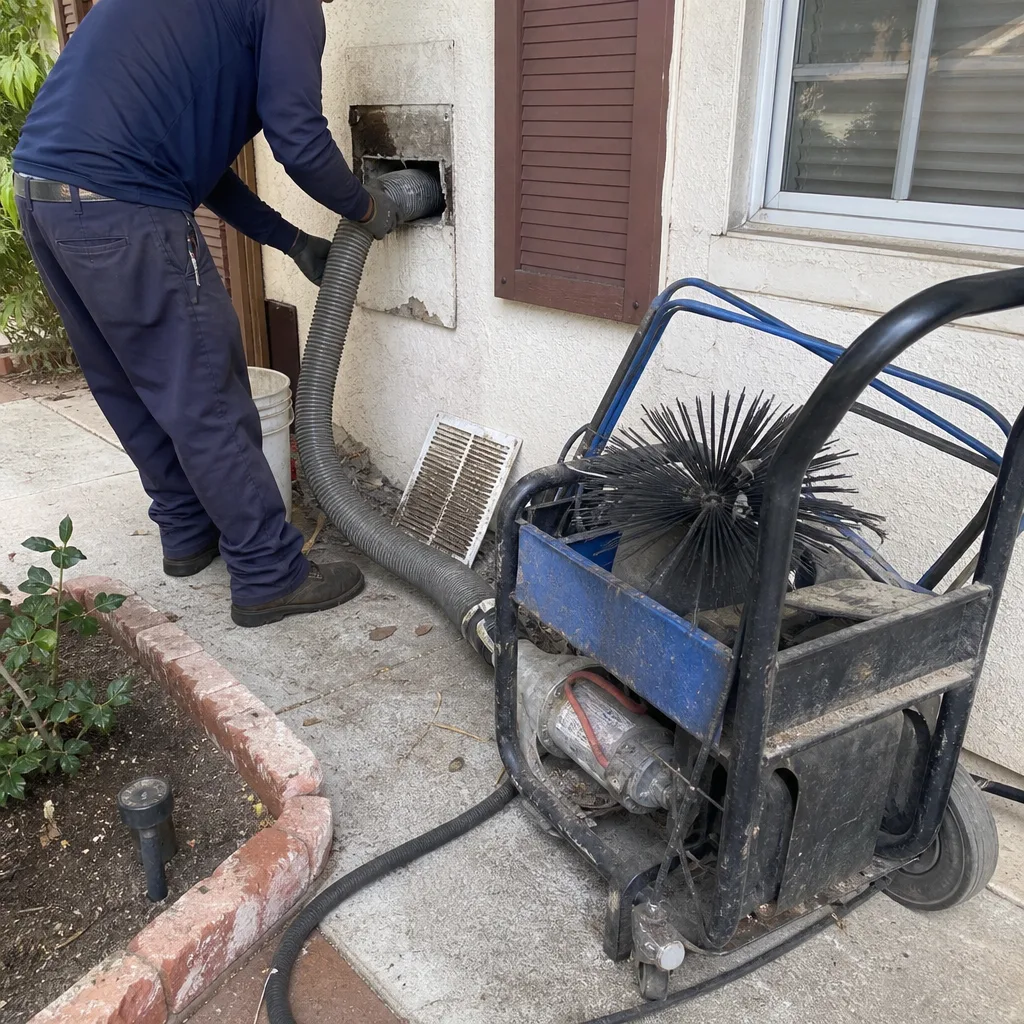 Before
 After
 Before
 After
When to Call a Professional
Call a professional when your tissue test shows persistent airflow imbalance across multiple rooms, when any register shows dark or oily debris that returns within days of cleaning, when you’ve had rodents in the attic, when renovation dust is visible inside return grilles, after significant wildfire smoke exposure, or when energy bills rise without a corresponding change in usage. These are all conditions where visual inspection alone won’t resolve the issue. Duct Cleaning Diamond Bar offers free estimates in Diamond Bar. Call (877) 693-6770 to schedule an evaluation, and bring whatever maintenance log you’ve kept. Real data speeds up the diagnosis.
Frequently Asked Questions
Air ducts in Diamond Bar should be professionally cleaned every 3 to 5 years under normal conditions, but that interval shortens to 1 to 2 years if you have pets that shed heavily, if wildfire smoke has settled over the area for multiple days at a time, or if you’ve completed a home renovation. The right answer is condition-based, not calendar-based: inspect your registers monthly and clean when visible accumulation goes beyond light dust. Call (877) 693-6770 if you’re unsure whether what you’re seeing is normal, and we’ll walk you through it honestly.
Whole-system air duct cleaning for a typical Diamond Bar home generally runs between $400 and $900 depending on the number of vents, system accessibility, and the level of contamination. Homes with rodent activity, significant renovation dust, or multiple systems can exceed that range. Be wary of quotes under $200; they rarely include the labor needed to clean every run properly. We quote one flat price per system before any work begins. Call (877) 693-6770 for an exact number on your home.
Cheap duct cleaning quotes typically come from time-boxed services that spend 15 to 20 minutes on your system, often skipping return runs, attic sections, or multiple rooms entirely. Some use consumer-grade vacuums that lack the negative air pressure to pull debris from deep runs. The result looks fine at the register and solves nothing inside. Professional-grade work with rotary brush systems and HEPA-filtered extraction takes time and equipment investment, which is reflected in a higher but honest flat price, agreed before the van shows up.
Ask for before-and-after photos of the interior of your main return trunk line and at least two supply runs. A legitimate contractor using professional equipment can show you the same camera angles before and after the work. Also ask whether the dryer vent is included or priced separately; many low-cost quotes exclude it, which is a red flag. After the job, run your tissue test again; airflow should feel noticeably stronger in previously weak rooms if the cleaning removed real restriction.
Yes. Diamond Bar’s combination of summer heat, Santa Ana wind events, and proximity to wildfire zones creates higher particulate loads than coastal communities. Fine dust from foothill areas, smoke residue from seasonal fires, and the natural dust of a semi-arid climate all deposit inside duct runs faster than they do in cities with marine air. Add in the attic heat that degrades flex duct over time, and Diamond Bar homes have a structural reason for more frequent duct attention than the generic 3-5 year recommendation.
You can clean visible register surfaces and change filters, but meaningful duct cleaning requires negative air pressure and mechanical agitation that consumer equipment cannot produce. A shop vac with a long hose removes surface dust from the first few feet of a run and leaves everything deeper intact. Worse, aggressive DIY brushing can separate weak duct joints and create leaks you didn’t have before. The interior of your duct system is not designed for homeowner access, and the cost of a professional cleaning is far lower than the cost of repairing damaged ductwork.
The Bottom Line
Air duct maintenance in Diamond Bar is not a once-a-year filter change and a shrug. It’s a monthly rhythm of looking at registers, testing airflow, logging what you find, and responding to the specific triggers that define this region: wildfire smoke, renovation dust, attic rodents, and extreme summer heat. For more guides & resources, explore our blog. The checklist in this guide turns vague advice into observable evidence. When the evidence says cleaning is needed, hire a company that brings real extraction equipment, not a truck with a hose. When the evidence says airflow is compromised, get the leak found and the repair made. Clean ducts that leak will contaminate themselves again. Repaired ducts that are dirty will keep pushing dust through the house. You need both. And with a simple log and a tissue, you’ll know exactly when it’s time.
Written by the team at Duct Cleaning Diamond Bar, serving Diamond Bar since 2015.