
Last updated November 3, 2026
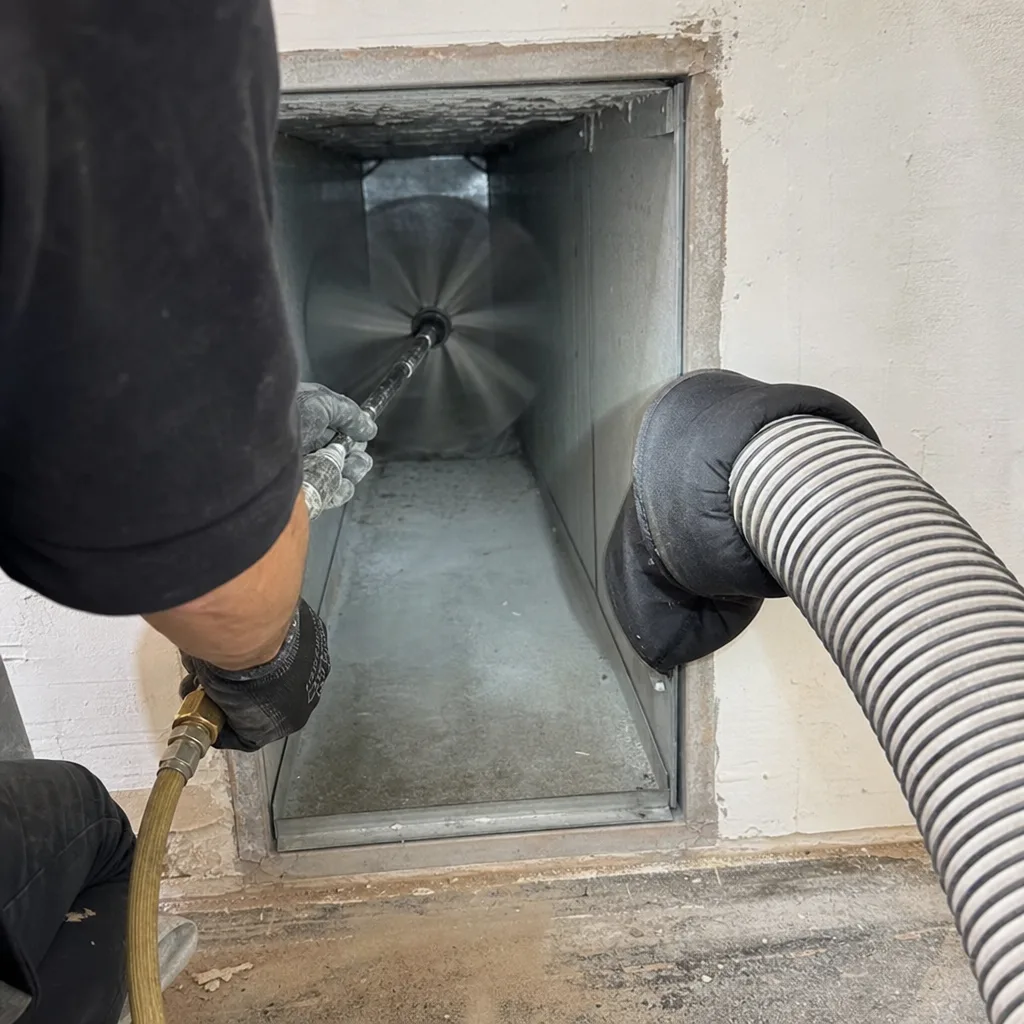
 Whole-home duct cleaning
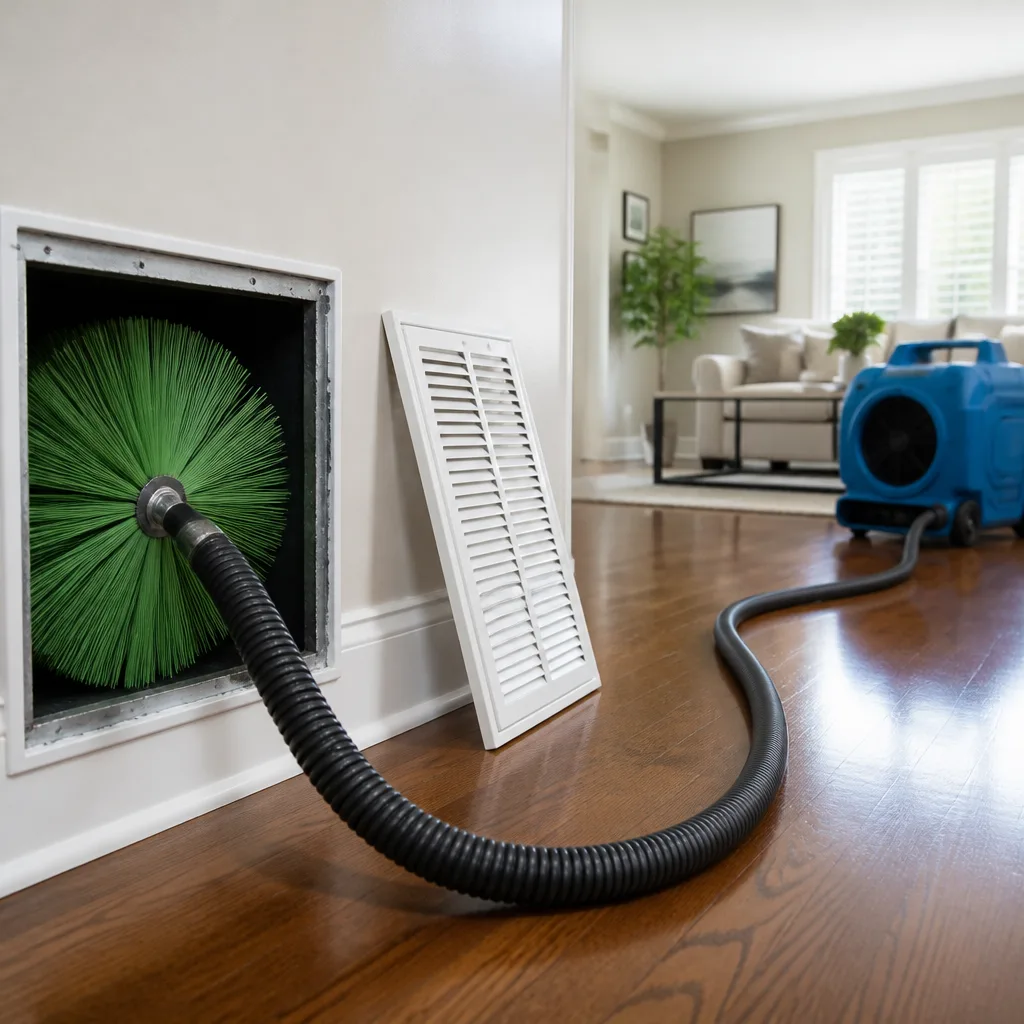
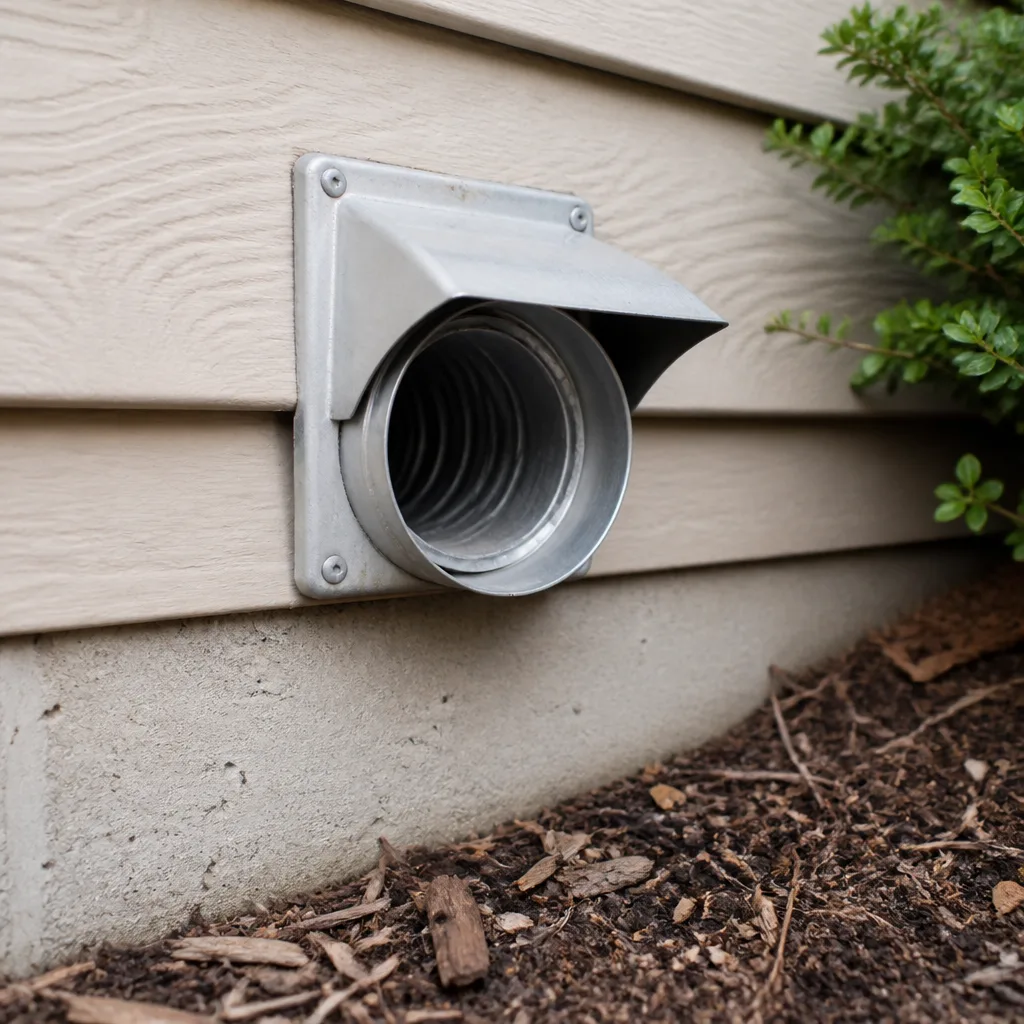 Dryer vent cleaning
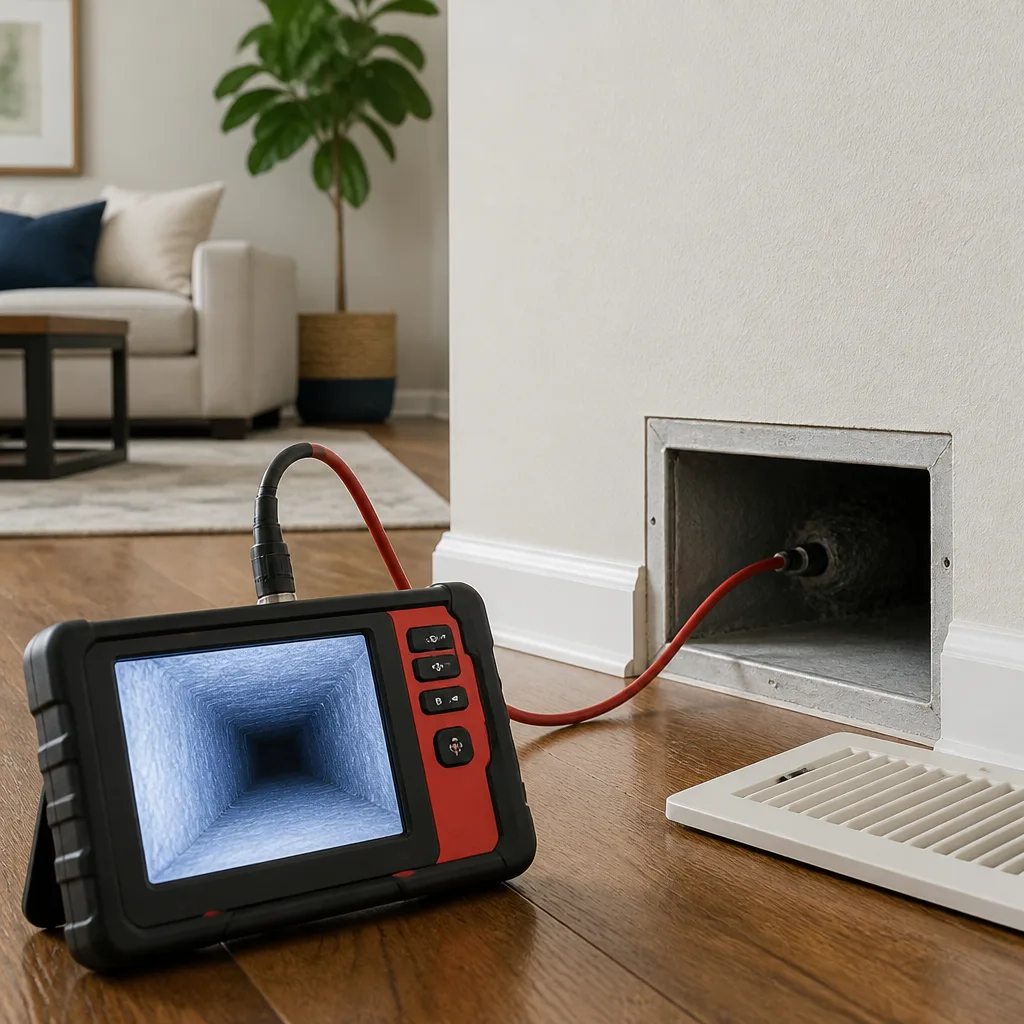 Camera inspection
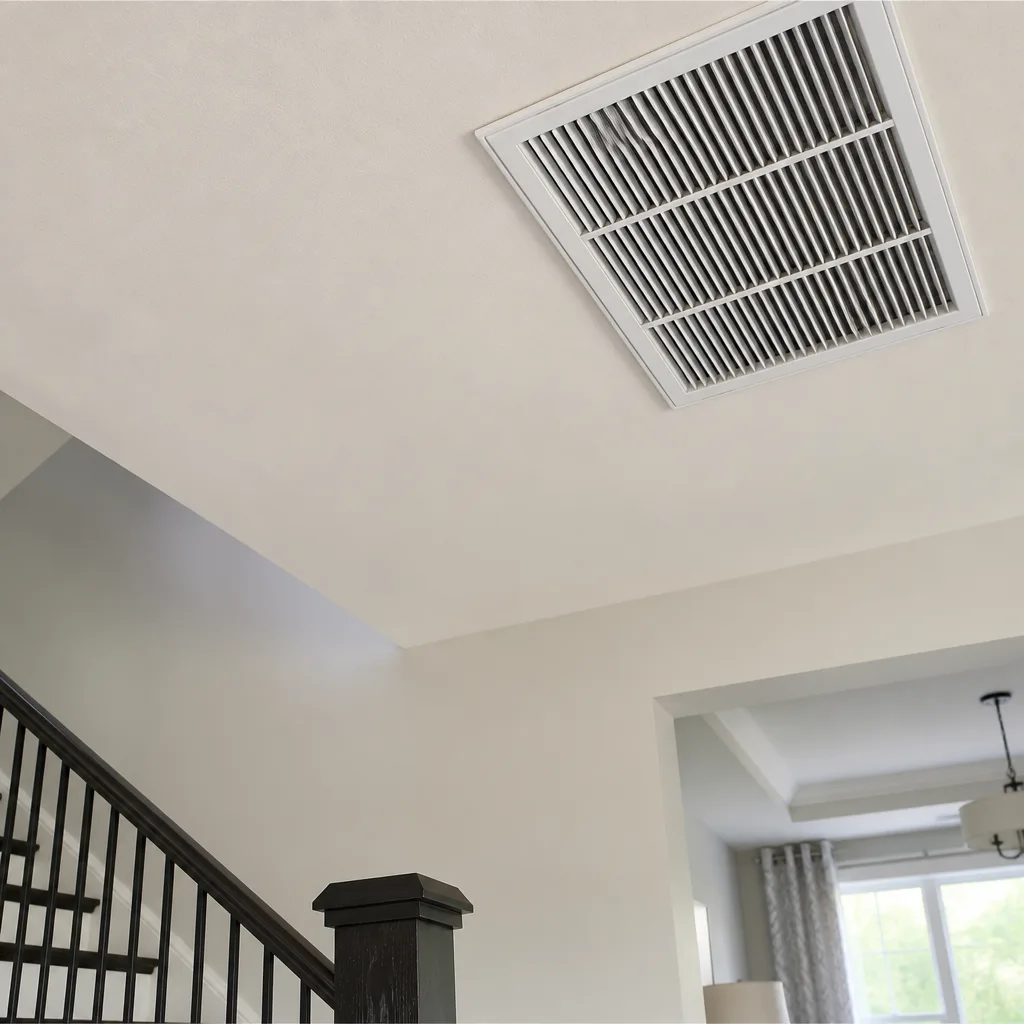 Sanitizing & deodorizing
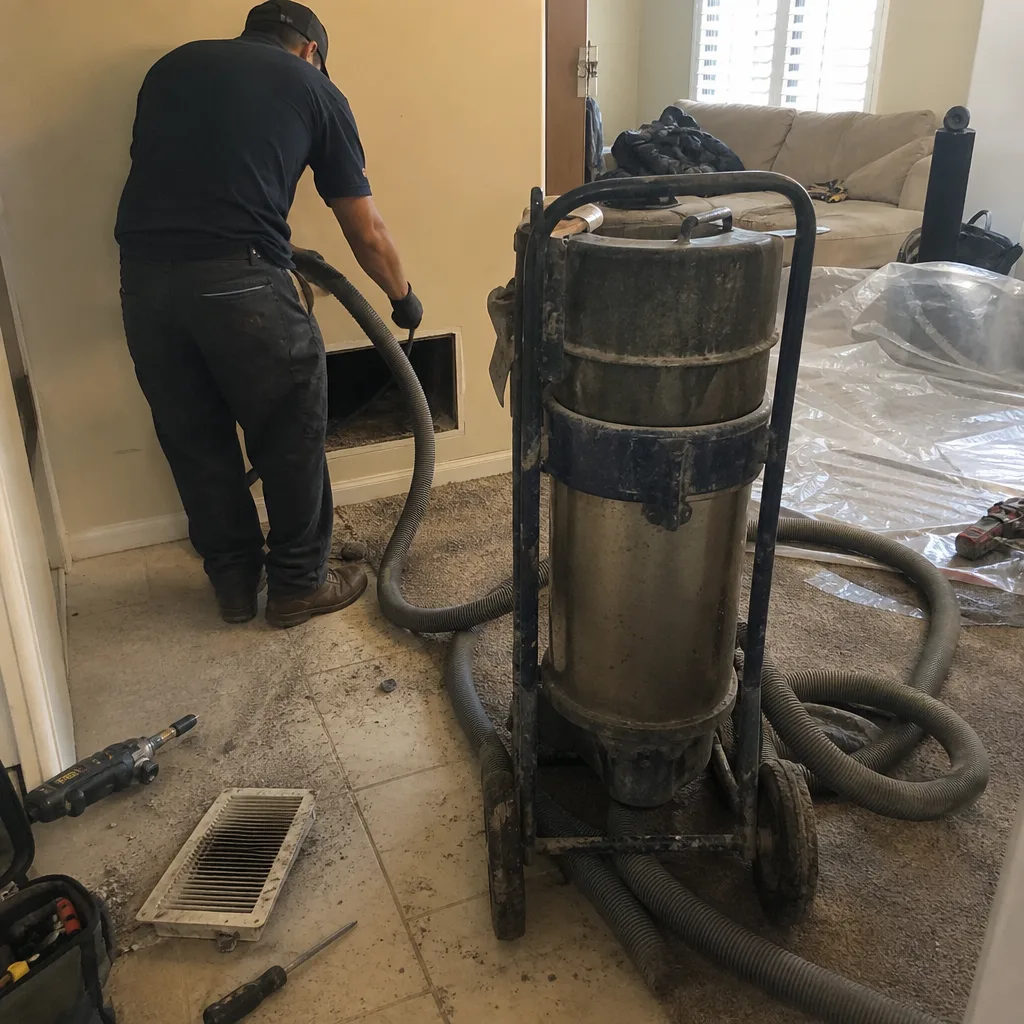
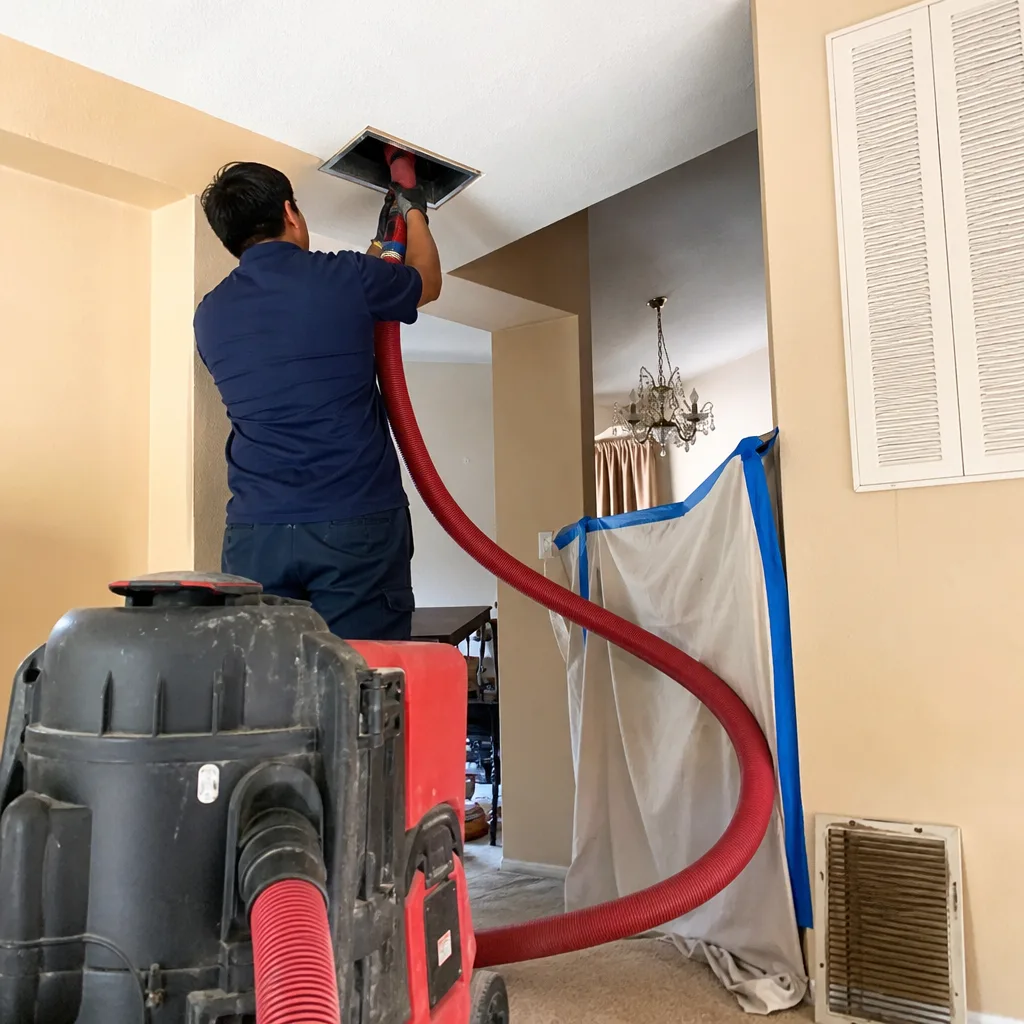
Whole-system duct and dryer vent check with before-and-after photos - you see exactly what came out of your vents
That "$99 whole-house special" is a bait ad - the real number appears once they are in your hallway, or the "clean" is a shop-vac at the register. We photograph the inside of your ducts before and after instead.
Choosing the Right Air Duct Cleaning Brand: A Buyer’s Guide for Diamond Bar
Here’s something most Diamond Bar homeowners don’t realize until it’s too late: the air duct cleaning industry has no mandatory licensing, no inspection process, and no quality enforcement. Anyone with a van, a portable vacuum, and a printed logo can call themselves a duct cleaner tomorrow. That means the burden of vetting falls entirely on you. This Complete Air Duct Cleaning Guide for Diamond Bar Homeowners will show you how to evaluate contractors on the things that actually predict a thorough job: their equipment choices, their process knowledge, and their willingness to answer uncomfortable questions. By the time you finish reading, you’ll know exactly which type of operator you’re talking to before they ever step foot in your home.
Quick Answer
The right air duct cleaning brand for a Diamond Bar home is one that demonstrates professional-grade equipment (rotary brush systems paired with HEPA-filtered negative air machines), can explain why source removal matters, and is willing to discuss their process in detail before quoting a price. In practice, that means choosing a contractor who has invested in commercial-grade tools like Rotobrush and Nikro systems rather than a franchise operator running a hose off a portable shop-vac. The fastest way to separate genuine capability from marketing copy is simple: ask what equipment they use, ask when they last serviced it, and listen carefully to whether they know why each step of the process exists.
Styles & brands we work with
- Whole-home duct cleaning
- Dryer vent cleaning
- Camera inspection
- Sanitizing & deodorizing
Table of Contents
- The Three Contractor Archetypes Operating in Diamond Bar
- Equipment as a Proxy for Capability
- How to Evaluate Online Reviews for Duct Cleaning Contractors
- Questions That Separate a Technician from a Salesperson
- Why Local Ownership and Equipment Investment Matter
- The Brands That Actually Signal Professional Standards
- Duct Cleaning vs. Duct Repair: Why the Distinction Matters
- Dryer Vent Cleaning: The Fire Risk Hiding in Your Laundry Room
The Three Contractor Archetypes Operating in Diamond Bar
When homeowners in Diamond Bar start searching for air duct cleaning, they typically encounter three fundamentally different types of companies. Each represents a distinct operational philosophy, and each makes trade-offs that directly affect the quality of work you’ll receive. Understanding these categories before you start making calls will save you hours of confusion and potentially thousands of dollars in ineffective service.
Archetype 1: The Franchise Coupon Operator. You’ve seen the mailers. Whole-house duct cleaning for $99 or $49.95 per vent. These are national or regional franchise models built on volume. Their technicians are often trained to a script, not to a craft. The low advertised price is a lead generation tool; the real invoice gets built once the technician is in your home, identifying “necessary” add-ons like sanitizing, mold treatment, or extra vent coverage. The equipment is frequently consumer-grade or mid-tier portable equipment designed for portability, not agitation power. In a city like Diamond Bar, where the housing stock includes both original 1960s ranchers and 1990s tract homes with long flex-duct runs, these systems often leave significant debris behind because they cannot maintain adequate negative pressure through the entire duct system.
Archetype 2: The HVAC Handyman Add-On. This is a general HVAC technician who advertises duct cleaning as a secondary service. The appeal is that they already know your system. The problem is that duct cleaning is not an installation or repair task; it’s a source-removal process that requires specific equipment and specific training. An HVAC technician’s primary tools are gauges, meters, and wrenches. A duct cleaner’s primary tools are agitation devices and high-capacity negative air machines. When we clean ducts after an HVAC technician has “done their best” with an improvised setup, in our experience the difference is visible. Flex ducts in particular, which are common in Diamond Bar homes, are prone to accordion-fold pockets that trap debris. A technician without a rotary brush system simply cannot reach those folds.
Archetype 3: The Remediation-Grade Specialist. This is the contractor who has invested in the same equipment used by commercial remediation crews: rotary brush systems, high-capacity HEPA-filtered negative air machines, and access tools for full duct inspection. They treat duct cleaning as a defined technical process, not a chore. They can explain the physics of negative pressure, the mechanics of agitation, and the biological realities of the debris they’re removing. They’re typically owner-operated or small teams with deep local roots. In Diamond Bar, where the summer Santa Ana winds push dust and ash into homes and the proximity to the 60 and 57 freeways introduces brake dust and particulate matter into ventilation systems, this equipment investment translates directly into indoor air quality results.
Your job as a homeowner is to identify which archetype you’re talking to within the first five minutes. The rest of this guide and our Complete Guide to Air Duct Cleaning in Diamond Bar give you the tools to do exactly that.
Equipment as a Proxy for Capability
The single most reliable indicator of a contractor’s commitment to doing the job properly is the equipment on their truck. It’s not the only indicator, but it’s the hardest to fake. Marketing language can be copy-pasted. Equipment requires capital investment, maintenance, and ongoing training to use correctly. When a contractor in Diamond Bar shows up with a Rotobrush rotary brush system and a Nikro HEPA-filtered negative air machine, they’ve made a financial commitment in the five-figure range that a fly-by-night operator simply cannot or will not match.
Here’s what the presence of specific equipment types actually signals:
- Rotary brush systems (Rotobrush): A motorized brush head that physically rotates and agitates debris from duct walls. This is mechanical agitation, not just air pressure. It dislodges caked-on dust, pet dander, and construction debris that a vacuum-only approach leaves behind. This matters in Diamond Bar, where many homes are 30-50 years old and have decades of accumulated material in their ductwork.
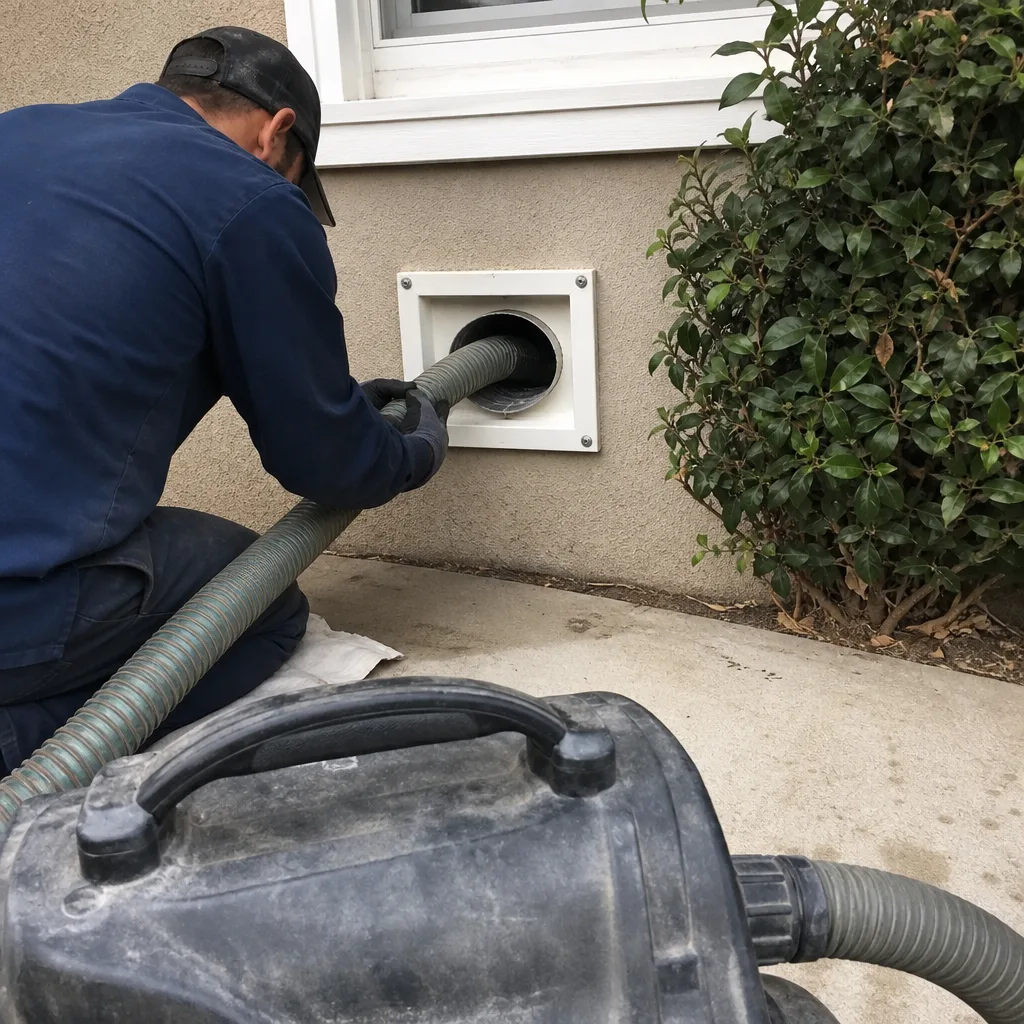
- HEPA-filtered negative air machines (Nikro): These are not vacuums in the consumer sense. They are air-moving machines that create negative pressure inside the duct system while filtering exhausted air through HEPA-rated filtration. This captures contaminants rather than redistributing them through your home. The negative pressure also prevents dislodged debris from escaping into living spaces during the cleaning process.
- Abatement Technologies air scrubbers and filtration units: Equipment from this manufacturer is standard in mold remediation and water damage restoration work. When a duct cleaner has invested in this category of equipment, it signals they understand contamination control, not just surface dust removal. This is a meaningful distinction for Diamond Bar homeowners dealing with post-renovation dust or concerns about biological contaminants.
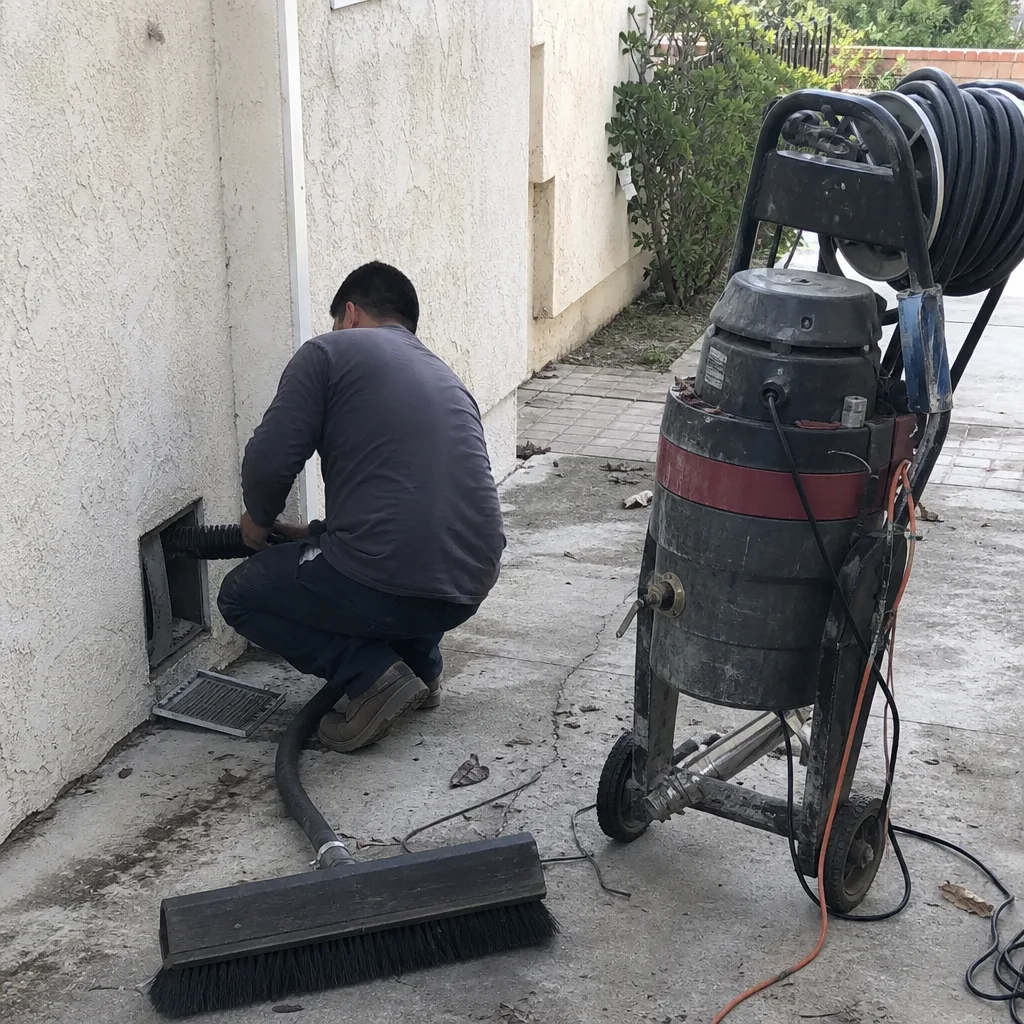
A contractor who shows up with a portable vacuum attached to a hose, or a consumer-grade machine mounted in a van, is not capable of source removal. They can perform a cosmetic surface clean of the first few feet of ductwork near the registers. That’s not nothing, but it’s not duct cleaning in the technical sense. It’s dust rearrangement.
Here’s the counterintuitive part we mentioned at the start: any contractor can name-drop these brands. A Rotobrush system that hasn’t had its brushes replaced on schedule loses about 40% of its mechanical agitation effectiveness. A Nikro negative air machine with a clogged pre-filter or a tired motor cannot maintain the pressure differential required for containment. The brand on the truck tells you less than asking the technician when they last serviced their equipment. We maintain our equipment on a defined schedule because we’ve seen what worn brushes and clogged filters do to cleaning results. A contractor who hesitates when you ask about equipment maintenance is telling you something important: they treat their tools as a sunk cost, and they’ll treat your home the same way.
How to Evaluate Online Reviews for Duct Cleaning Contractors
Online reviews are useful, but only if you know how to read them. A five-star rating for a duct cleaning company in Diamond Bar can mean two very different things: either the technician was genuinely thorough and professional, or the homeowner simply doesn’t know what a thorough duct cleaning looks like. Most homeowners have no frame of reference for evaluating the work. A friendly technician who shows up on time and runs a vacuum around for an hour will often get the same five stars as a specialist who spends four hours doing a genuinely complete source-removal job.
Here’s how to read reviews with a critical eye:
- Look for process-specific language: Reviews that mention “they sealed the registers,” “they showed me before and after photos,” “they explained the negative pressure setup,” or “I could see the debris they removed” signal a genuine source-removal job. Reviews that only mention “they were nice” or “they were quick” without any process detail often reflect a cosmetic clean.
- Search for time-on-site mentions: A thorough duct cleaning of an average Diamond Bar home takes hours, not minutes. Reviews that mention the crew being there for half a day are stronger indicators of genuine work than reviews that emphasize speed.
- Evaluate the homeowner’s stated reason for calling: If the reviewer mentions specific concerns like renovation dust, a child’s allergies, or a mold smell, and the review says the issue was resolved with verifiable evidence, that’s a strong signal. If the review is vague about why they called and what was done, it’s weaker evidence.
- Check response patterns to negative reviews: How does the company respond when something goes wrong? A professional contractor offers to return and address the issue. A defensive or absent response pattern is a red flag.
- Watch for the words “bait and switch” or “upsell”: These are the strongest negative signals in the duct cleaning industry. If multiple reviews describe pressure tactics or surprise invoices, that’s not a coincidence. That’s a business model.
One more thing to understand about reviews: duct cleaning has no regulatory quality floor in California. There is no inspections agency that verifies whether a cleaning actually removed debris from the plenum or the return side of the system. Reviews are the only persistent quality record in this industry. When we talk with Diamond Bar homeowners who have had a bad experience with a previous contractor, the pattern is almost always the same: they chose based on price and a promotional review count, not on process-specific evidence of genuine work.
Questions That Separate a Technician from a Salesperson
The fastest way to identify which archetype you’re dealing with is to ask a few technical questions before you schedule. These aren’t trick questions. A technician who actually understands duct cleaning will answer them easily. A salesperson reading from a script will stumble, deflect, or change the subject. Here are the questions we recommend every Diamond Bar homeowner ask:
- “Walk me through your process for sealing supply registers during negative pressure operation.” This is the single most revealing question in duct cleaning. Proper source removal requires the technician to seal supply registers while pulling negative pressure on the return side. This creates a controlled airflow path that captures dislodged debris. A contractor who doesn’t know why this step matters, or who says they don’t do it, is not performing professional-grade work. They’re running a vacuum around without containment discipline.
- “What equipment do you use for agitation and for collection?” Listen for specific brand names and specific functions. A rotary brush system for agitation, a HEPA-filtered negative air machine for collection, and a clear explanation of how those two pieces work together. Vague answers like “we use professional equipment” without specifics are an answer in themselves.
- “When did you last replace the brushes on your agitation system?” This is the maintenance question we discussed earlier. Worn brushes lose agitation effectiveness. A technician who can answer this question definitively maintains their equipment to a standard. A technician who seems confused by it is treating their tools as a static investment, not a maintained system.
- “Will you show me before and after photos of my own ducts?” Not stock photos. Not photos from another job. Your ducts, photographed during the inspection phase and again after cleaning. This is verifiable evidence of work performed. It’s also a standard practice among remediation-grade contractors because it protects both parties: you get proof, and they get documentation of the condition they found.
- “How do you handle the return side of the system?” Many low-end operators focus entirely on supply vents, where the visible registers are. The return side of the system, including the return drop and the plenum, is often dirtier than the supply side because it carries unfiltered air back to the air handler. A contractor who doesn’t address both sides isn’t doing a complete job. This matters in Diamond Bar homes with central returns, where a single return grill may be handling the entire home’s airflow.
None of these questions require you to be a technical expert. They simply test whether the person on the other end of the phone actually knows the job. A specialist will welcome them. A generalist will try to steer the conversation back to price and scheduling.
Why Local Ownership and Equipment Investment Matter
Here’s a reality that surprises many Diamond Bar homeowners: air duct cleaning has no permits and no inspections. There is no city inspector who verifies the work was done correctly. There is no state license specific to duct cleaning. The quality guarantee in this industry is entirely relationship-based. A contractor who lives in the community, depends on local referrals, and has invested in professional-grade equipment has a structural incentive to do the job right. A franchise operator dispatched from a regional call center has a structural incentive to complete the job quickly and move to the next address.
Local ownership also means accountability has a memory. If we do poor work in a Diamond Bar neighborhood, that word travels. The parents at the school pick-up line talk. The Nextdoor threads get active. The HOA meeting gets awkward. That social accountability is stronger than any warranty clause because it operates in the real world, not in a customer service phone queue.
Equipment investment is the other half of this picture because it’s a visible commitment that predates your phone call. A contractor who has purchased Rotobrush, Nikro, or Abatement Technologies equipment has made a decision about what kind of company they’re building. That decision was made before you called, and it tells you something about how seriously they take their own work. It’s not a guarantee of quality on its own, but it’s a structural indicator that a coupon-based operator simply cannot match, because the coupon model’s entire economic logic depends on minimizing equipment and labor costs per job. That model cannot support professional-grade equipment, and it cannot support the time required to use it correctly.
For Diamond Bar specifically, this matters because the local housing stock spans six decades of construction practices. A tract home built in 1987 has different duct configurations than a custom-built hillside home from 1972. A contractor who has cleaned hundreds of these systems across the city has seen the patterns: the flex-duct sag that accumulates debris in a particular way, the return-air design flaw that pulls dust from the garage, the builder-grade filter rack that lets particulates bypass entirely. That institutional knowledge isn’t available to a franchise technician who may be working in Diamond Bar for the first time this week.
The Brands That Actually Signal Professional Standards
You don’t need to become an equipment expert to evaluate duct cleaning contractors. But knowing which brands signal a professional operation and which are meaningless marketing can save you from a bad decision. Here’s what actually matters among the names you’ll encounter:
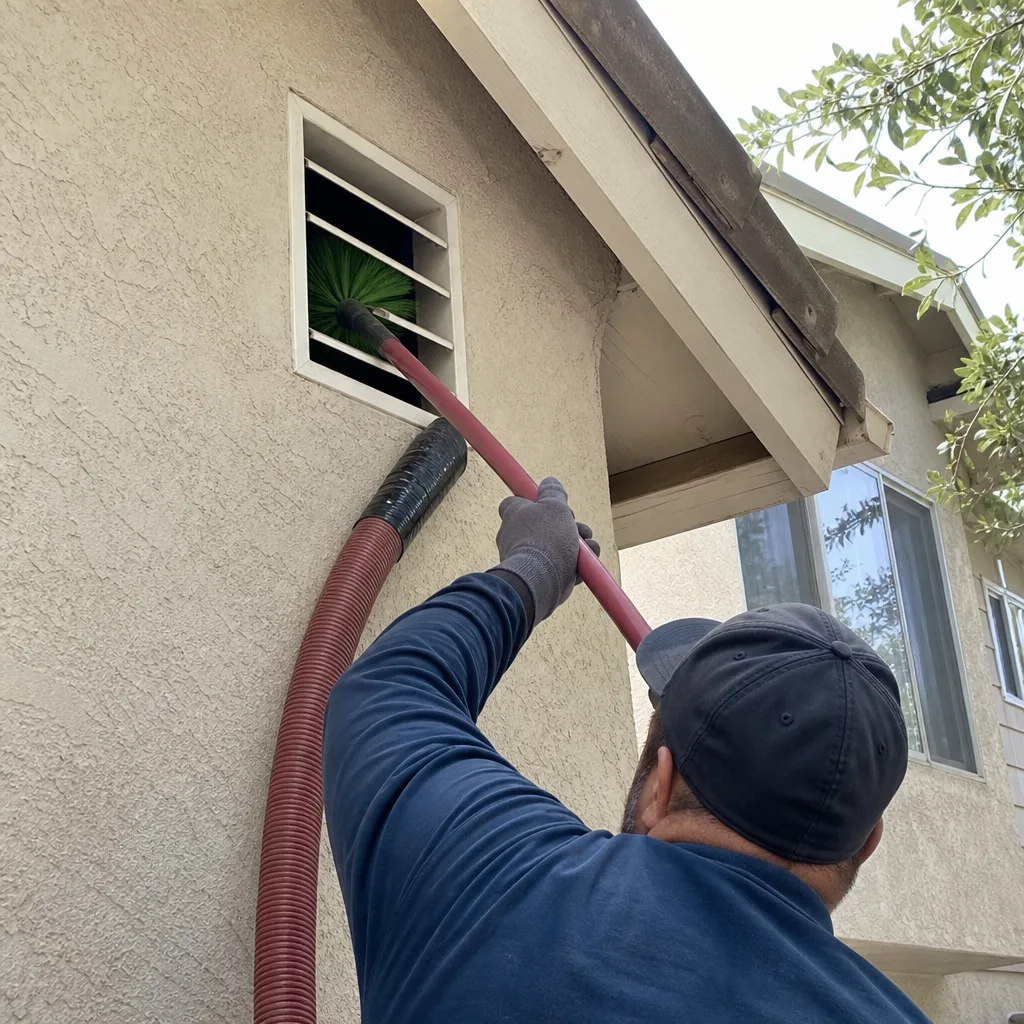
Rotobrush is the most recognized name in rotary brush duct cleaning systems. The machines use motorized brush heads that physically scrub the interior walls of ductwork while a vacuum system captures the dislodged material. This mechanical agitation is what separates source removal from blowing air around. It’s also a brand that has been counterfeited and name-dropped by operators who don’t actually own the equipment. When we arrive at a Diamond Bar home, we bring Rotobrush rotary systems because the physical agitation they provide is not replicable with a vacuum wand.
Nikro manufactures HEPA-filtered negative air machines and air filtration equipment. These are the machines that create negative pressure inside duct systems during cleaning and capture exhausted air through HEPA filters rated for sub-micron particulate. This filtration is the difference between removing debris and redistributing it throughout your home. Nikro equipment is standard in remediation work, which tells you something about the standard it’s built to.
Honeywell and Aprilaire are names you may recognize from thermostat panels and whole-home air quality systems. When a duct cleaning contractor works with these brands, it signals an understanding of whole-home air quality beyond the duct surfaces. It means the technician sees the duct system as one component of a larger indoor air quality picture that includes filtration, humidity control, and ventilation. That context matters when you’re trying to solve a problem, not just get a cleaning.
The pattern across all of these brands is the same: they represent an ecosystem of professional air quality equipment, not just a vacuum and a hose. A contractor who has invested in this ecosystem has made a bet on doing jobs correctly, and that bet is funded by doing jobs correctly. It’s a virtuous cycle that rewards the homeowner who takes the time to ask.
Duct Cleaning vs. Duct Repair: Why the Distinction Matters
Here’s a scenario that plays out in Diamond Bar homes more often than most homeowners realize: you pay for a professional duct cleaning, and six months later your energy bills are still high, your allergies are still bothering you, and you’re finding dust accumulating faster than it should. The cleaning wasn’t the problem. The ducts themselves are compromised somewhere, and every cleaning is being undone by the same underlying issue. This is why air duct repair in Diamond Bar is a distinct service, not an extension of cleaning.
Leaky ducts have a compounding effect. A joint that has separated in an attic or crawlspace pulls unfiltered air from those spaces into your home’s air supply. That air carries insulation fibers, dust, pest debris, and whatever else lives in those unfinished spaces. Cleaning the ducts doesn’t fix the leak. It just means the system starts re-contaminating immediately, because the source of the contamination isn’t inside the ducts, it’s being pulled in through the breach. In some Diamond Bar homes, particularly those built before the 1990s when duct sealing became standard practice, the leakage rate can be significant enough to measurably affect both air quality and HVAC efficiency.
A remediation-grade contractor will identify these issues during the inspection phase and address them as part of a complete solution. That’s the full-cycle distinction we mentioned earlier: clean ducts that stay clean require intact ductwork. Our air duct cleaning in Diamond Bar includes an inspection for compromised connections, separated joints, and damaged sections precisely because we’ve seen too many homes where a previous cleaning was undermined by a duct system that was never properly assessed. Repairing those issues is its own service with its own process, but the diagnostic step belongs in every professional cleaning.
This is also where the equipment question connects back to capability. The same negative air machines and access tools used for cleaning are also used to evaluate and access ductwork for repair. A contractor who only cleans cannot offer you the complete solution. A contractor who cleans and repairs can identify a problem during a cleaning visit and address it in the same service window, which means your re-cleaning isn’t scheduled for six months from now.
Dryer Vent Cleaning: The Fire Risk Hiding in Your Laundry Room
We’re going to be direct about this because the data warrants it: clogged dryer vents are a leading cause of residential fires in the United States. The National Fire Protection Association reports thousands of dryer fires annually, with the leading cause being failure to clean the vent system. Lint is highly combustible, and it accumulates in the vent line over time. When airflow is restricted, heat builds. When heat builds, ignition becomes possible. This is not a theoretical risk; it’s a documented, recurring residential fire pattern.
In Diamond Bar homes, dryer vent runs are often longer than homeowners realize. A laundry room on an interior wall with a roof vent can have 15-20 feet of vent pipe between the dryer and the termination point. Every foot of that run is surface area for lint accumulation. Every bend in that run is a pinch point where lint builds faster. And because the vent is hidden in the wall or ceiling, that accumulation is invisible until it’s already problematic.
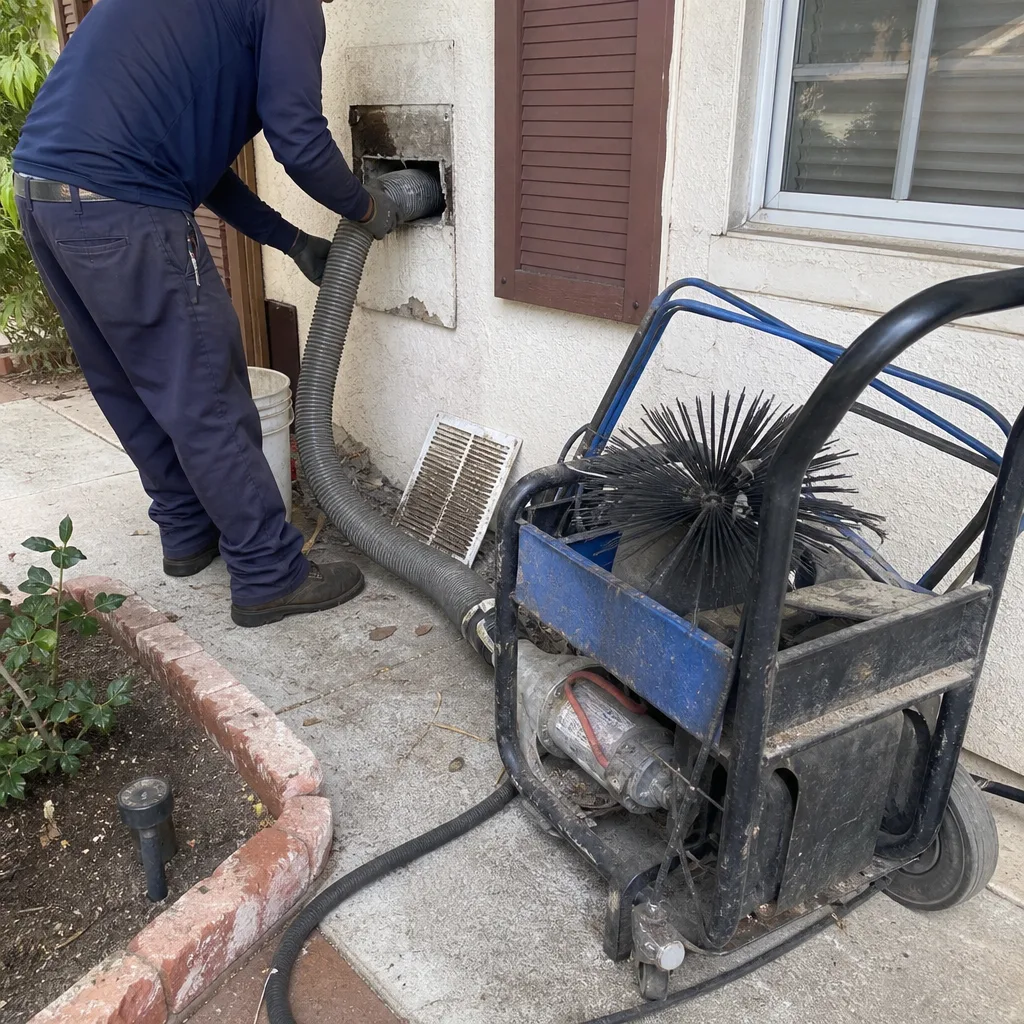
Professional dryer vent cleaning in Diamond Bar is not a vacuum-through-the-exterior-vent job. It requires accessing the full vent run, agitating the interior surfaces to dislodge accumulated lint, and removing it from the system entirely. The equipment used for this is the same professional-grade arsenal we deploy for duct cleaning: rotary agitation systems and HEPA-filtered collection. This is a dedicated service with its own process because it’s a dedicated risk with its own consequences. When we clean a dryer vent, we’re not adding value to a cleaning visit. We’re addressing a documented fire hazard.
If you can’t remember the last time your dryer vent was cleaned, or if you’ve noticed that your dryer is taking longer than it used to complete a cycle, that’s not a convenience issue. That’s restricted airflow, which means heat is building inside a system that was not designed to contain it. The fix is straightforward, the cost is modest, and the alternative is genuinely catastrophic. This is one area where the professional standard matters more than almost anywhere else in the home services space.
Common Mistakes to Avoid
- Choosing based on coupon price alone. The $99 whole-house cleaning is a lead generation tactic in Diamond Bar, not a service price. The real invoice gets built in your living room, and the pressure to convert happens on the spot. When a price seems too low to support the equipment and time required for a genuine cleaning, it is.
- Assuming all duct cleaners are the same. The difference between a franchise operator running a portable vacuum and a remediation-grade specialist running a Rotobrush system and a Nikro negative air machine is the difference between cosmetic dust removal and actual source removal. The results look different, last different amounts of time, and cost different amounts of money in the long run.
- Skipping the equipment question. Most homeowners ask about price, availability, and reviews. Far fewer ask about equipment. The equipment question is the one that actually predicts the quality of the work you’ll receive.
- Treating cleaning and repair as unrelated services. A cleaned duct system with compromised connections re-contaminates quickly. If your energy bills jumped before you called and your ducts haven’t been inspected for leakage, you may need both services, not one.
- Ignoring the dryer vent. The dryer vent is a documented fire hazard, and it’s the most commonly overlooked component of the home’s exhaust system. It’s not an upsell. It’s a separate safety issue with its own process and its own consequences.
- Accepting before-and-after photos of someone else’s ducts. Stock photos and photos from other jobs are meaningless. Request documentation of your own system, in your own home, before and after the work is performed.
- Hiring a generalist for a specialist’s job. An HVAC technician who installs and services equipment is not necessarily a duct cleaning specialist. The tools and training are different. Asking the process questions in this guide will clarify which one you’re talking to within minutes.
See the difference
 Before
 After
 Before
 After
 Before
 After
When to Call a Professional
There are moments when duct cleaning becomes urgent and specific. If you’ve recently completed a renovation and drywall dust has been pulled through the return side of your system, call a professional. If you’ve had a pest intrusion and you suspect nesting material in the ductwork, call a professional. If your energy bills have climbed noticeably without a corresponding change in weather or usage, and you haven’t had the ducts inspected for leakage, call a professional. If someone in your home has developed respiratory symptoms that correlate with time spent in the house, and the ducts haven’t been inspected in years, call a professional. If your dryer is taking longer than 40 minutes to dry a normal load, call a professional immediately and stop using the dryer until the vent is evaluated. Duct Cleaning Diamond Bar offers free estimates in Diamond Bar. Call (877) 693-6770 to schedule an inspection. Our Duct Cleaning Diamond Bar home page has more detail on our service area and approach.
Frequently Asked Questions
A whole-home air duct cleaning in Diamond Bar typically ranges from $350 to $800 depending on the size of the home, the number of systems, the configuration of the ductwork, and the amount of debris present. Homes with multiple HVAC systems or longer duct runs will fall toward the higher end. Genuinely low prices in this industry signal a lead-generation model, not a discount. Call (877) 693-6770 for a free estimate based on your specific home.
Cheaper quotes typically come from operators using consumer-grade or portable equipment that cannot perform source removal, and from franchise models that use low advertised prices to generate in-home sales opportunities. The economics of professional-grade equipment (Rotobrush rotary systems, Nikro HEPA-filtered negative air machines) and the time required to use them correctly cannot support coupon pricing. When one quote is dramatically cheaper than others, the difference is in equipment, process, and time spent on the job.
You should receive before-and-after photos of your own ductwork, taken from the access points during inspection and after cleaning. You should also be able to see the debris removed from your system if you ask to. A professional contractor will document the work because it protects both parties. If a contractor cannot or will not provide verifiable evidence of work performed, that’s a red flag.
For most Diamond Bar homes, professional air duct cleaning is appropriate every 3-5 years. Homes with pets, homes near the 60 or 57 freeways with elevated particulate accumulation, homes where renovation work has occurred, and homes with residents who have respiratory conditions may benefit from more frequent service. The National Air Duct Cleaners Association recommends cleaning when visible mold growth, pest infestation, or significant debris accumulation is present, regardless of the timeline.
Yes. Dryer vent fires are a documented residential fire pattern, and restricted airflow often builds gradually without obvious symptoms in the early stages. A dryer can appear to be functioning normally while heat is building inside the vent system. Professional dryer vent cleaning is a safety service, not a convenience service. If you cannot remember the last time the vent was cleaned, it’s time.
Yes, we serve the entire Diamond Bar area, including the neighborhoods along Grand Avenue, the Country Estates area, and the hillside communities along Diamond Bar Boulevard. Our equipment and process are designed to handle the duct configurations common to Diamond Bar’s housing stock, from 1960s ranchers to 1990s tract homes to custom hillside properties.
The Bottom Line
The air duct cleaning industry in Diamond Bar has no regulatory floor, which means the quality of the work you receive is determined entirely by the choices you make as a homeowner and the standards of the contractor you select. Ask about equipment. Ask about process. Ask about maintenance. Ask for verification of work performed. The right contractor will welcome these questions and answer them with specificity. The wrong contractor will deflect toward price and availability. Your home’s air quality, your energy bills, and in the case of dryer vents, your family’s safety depend on making the distinction. Choose a specialist with professional-grade equipment for your Air Duct Cleaning, not a coupon operator with a van and a vacuum. The difference is measurable, and it’s worth the investment.
Ready to schedule? Call (877) 693-6770 for a free estimate. Our team will walk you through our process, answer every question in this guide, and provide verifiable documentation of work performed in your Diamond Bar home.
Written by the team at Duct Cleaning Diamond Bar, serving Diamond Bar since 2015. Explore more guides & resources.