
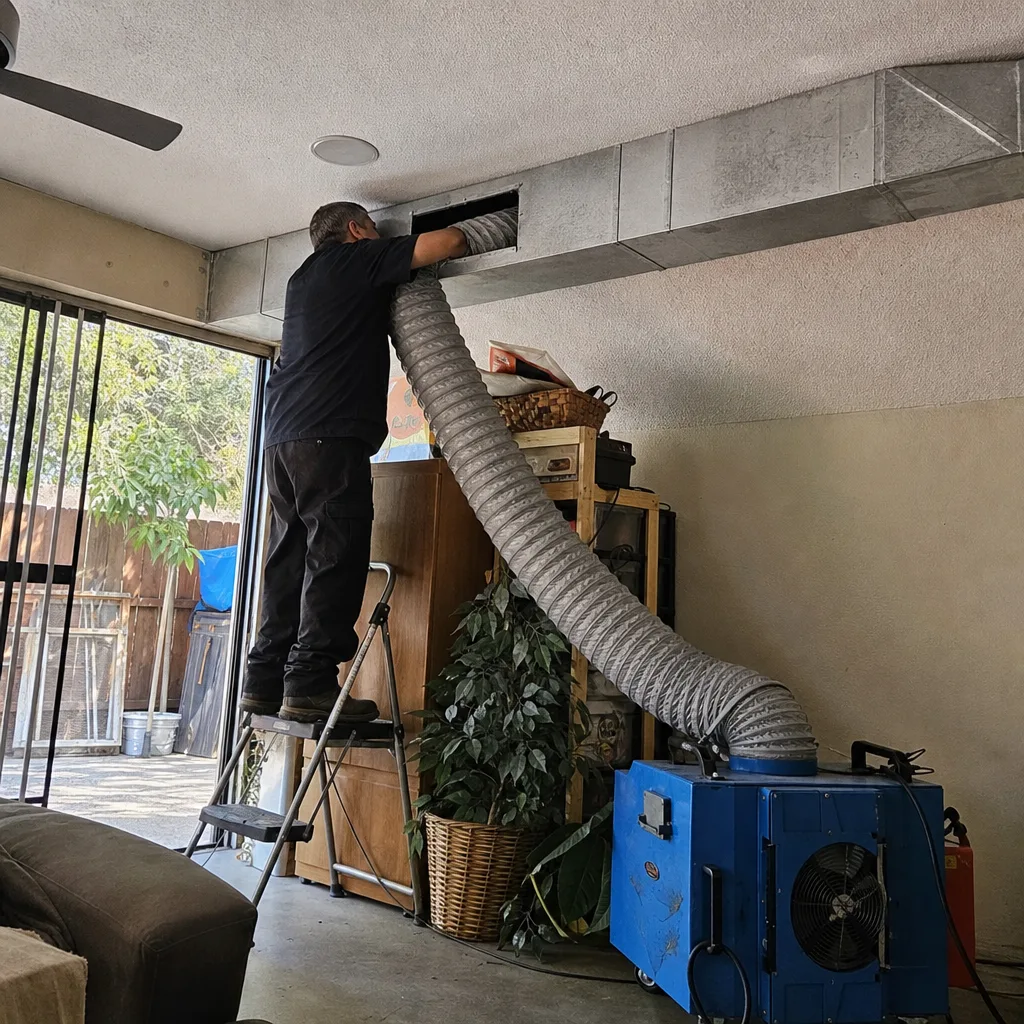
Last updated November 2, 2026
 Whole-home duct cleaning
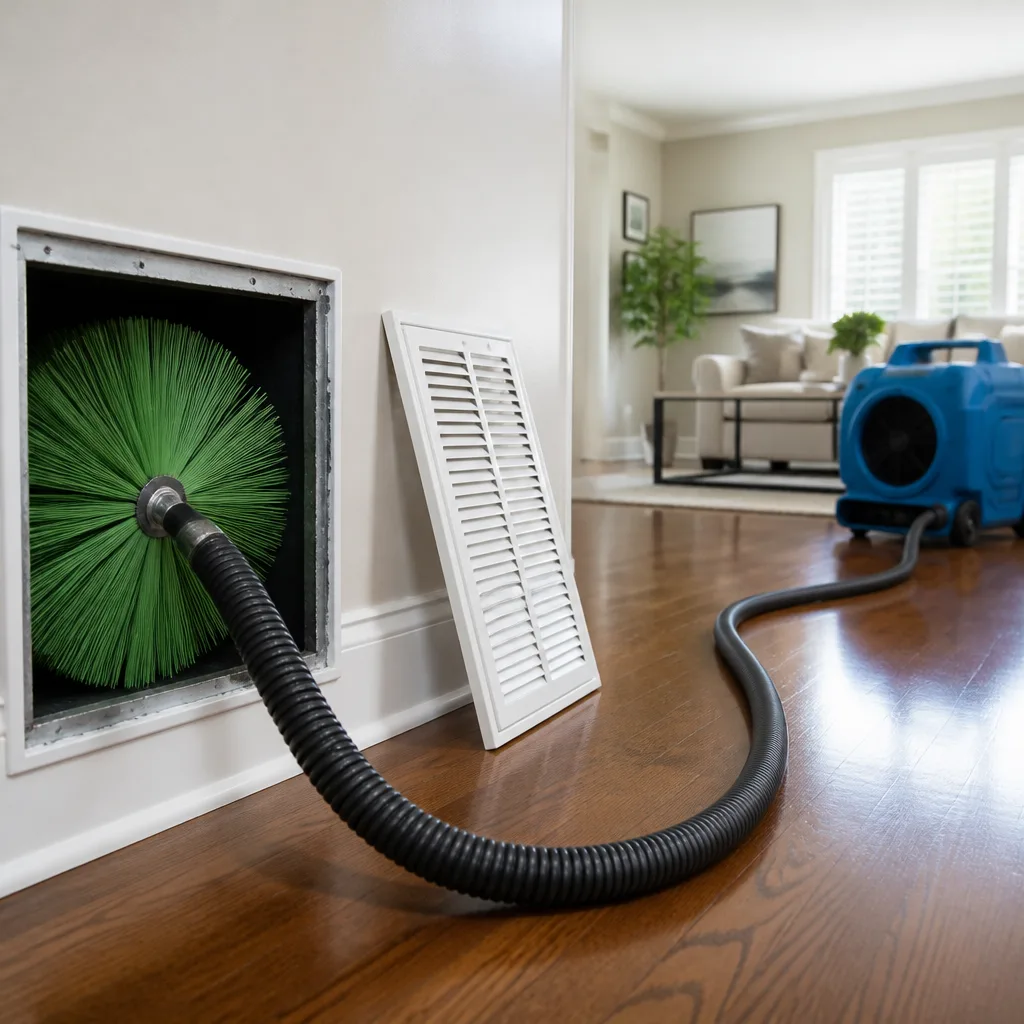
 Dryer vent cleaning
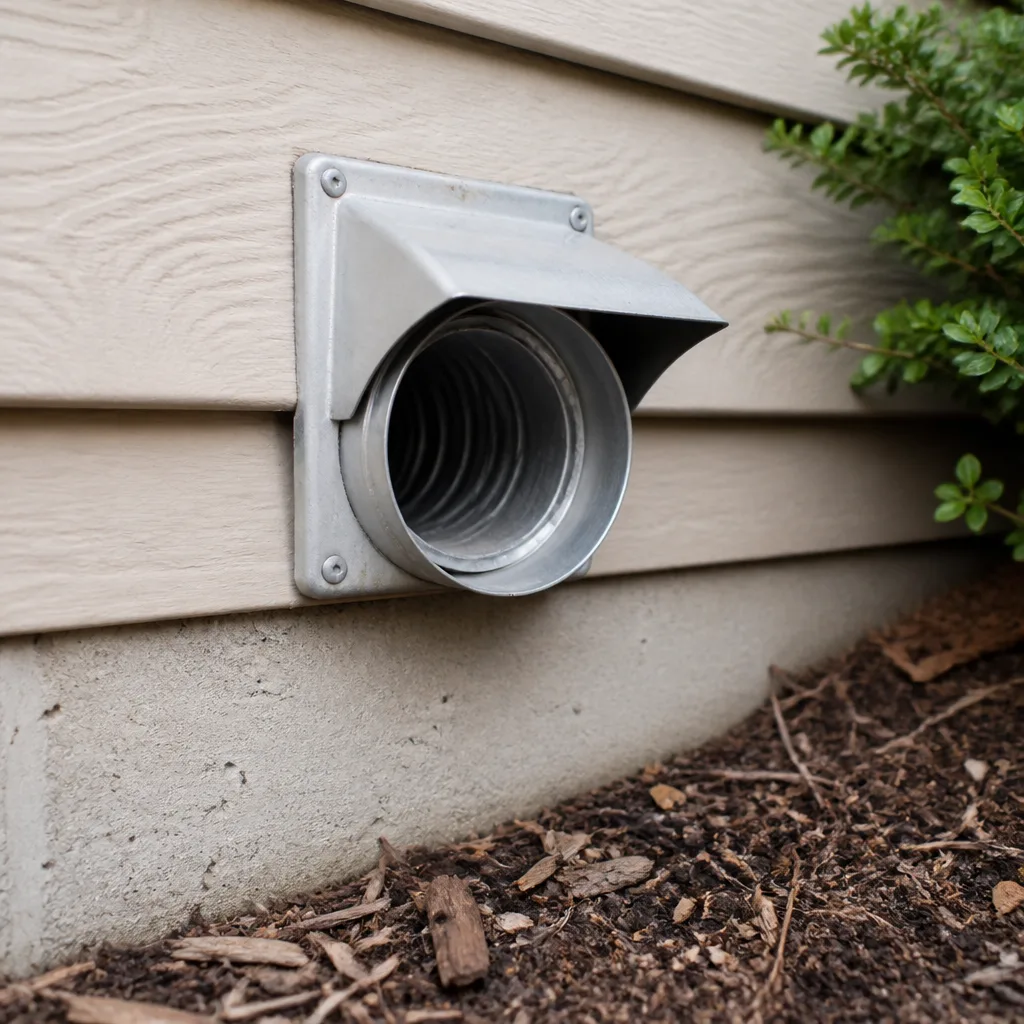
 Camera inspection
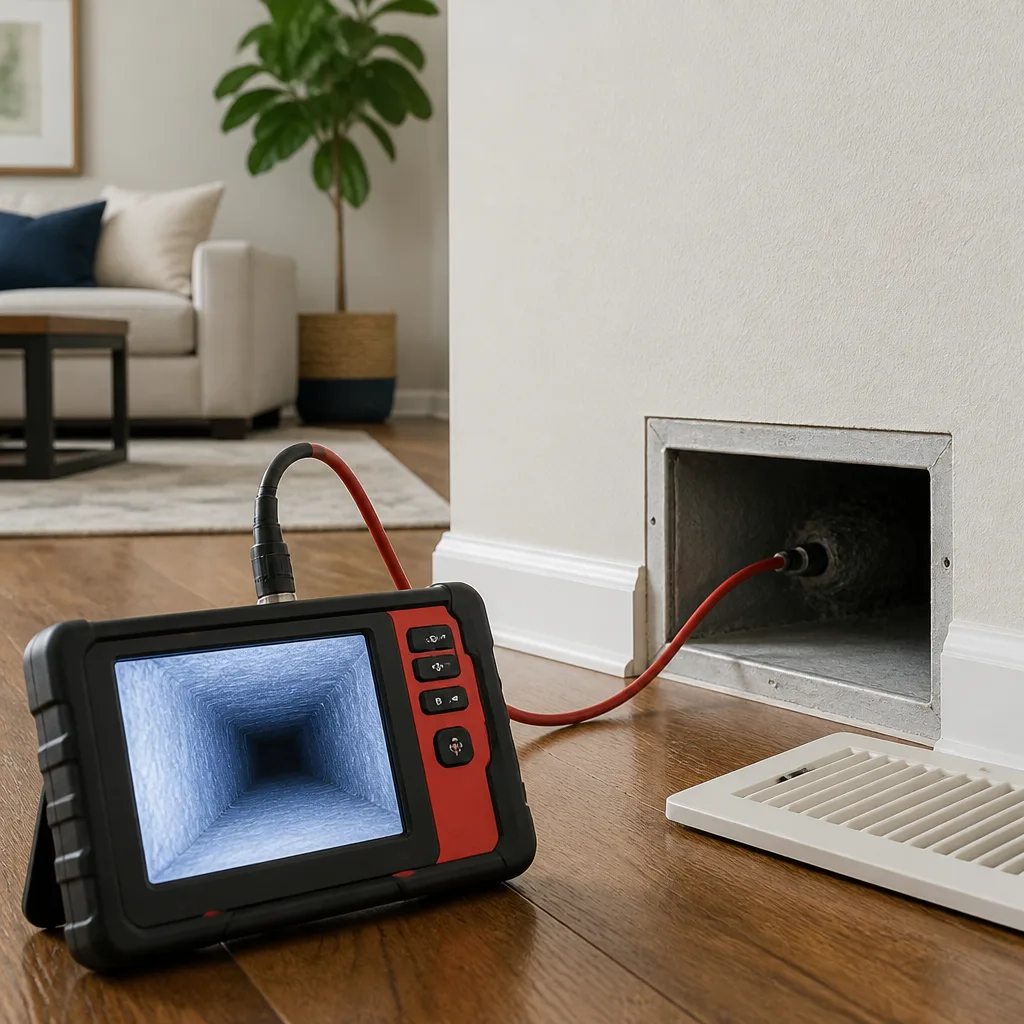
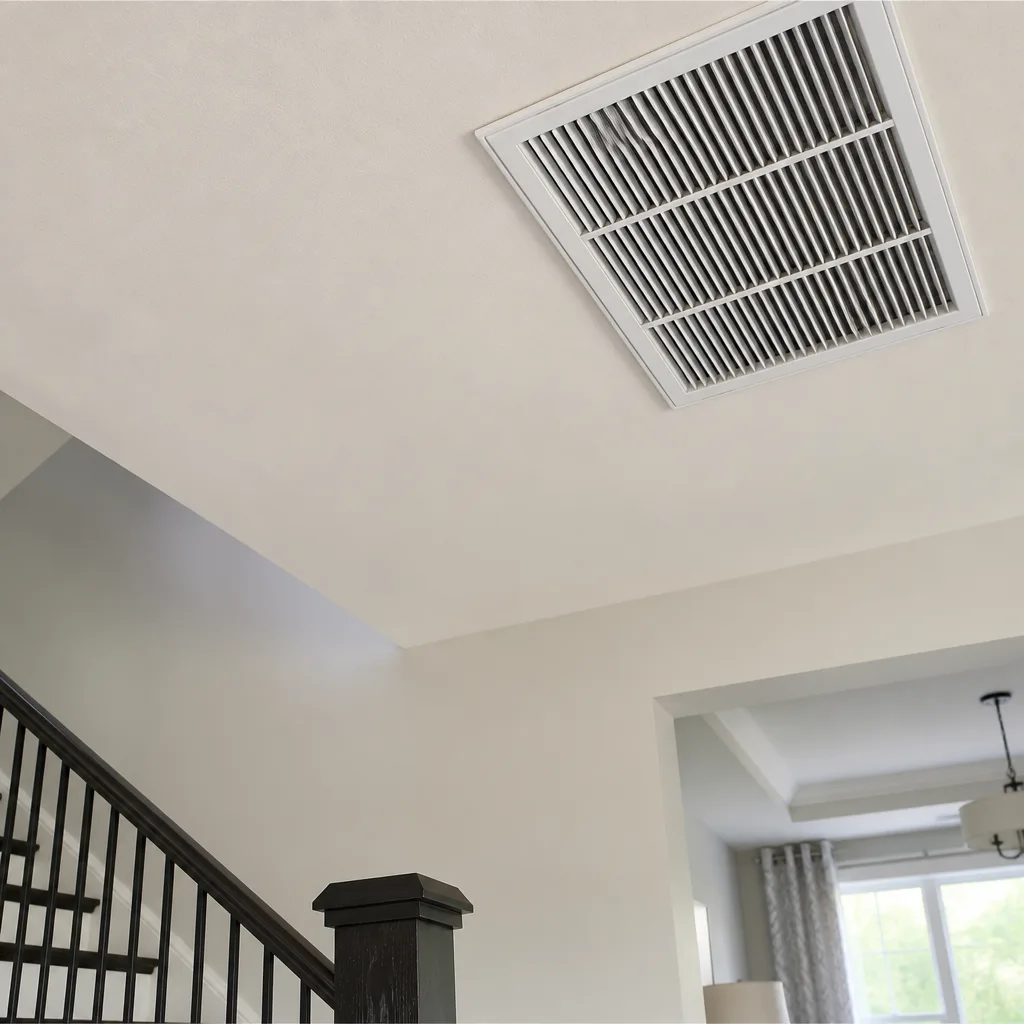 Sanitizing & deodorizing
Whole-system duct and dryer vent check with before-and-after photos - you see exactly what came out of your vents
That "$99 whole-house special" is a bait ad - the real number appears once they are in your hallway, or the "clean" is a shop-vac at the register. We photograph the inside of your ducts before and after instead.
DIY vs Professional Air Duct Cleaning: The Diamond Bar Homeowner’s Decision Guide
Most Diamond Bar homeowners approach duct cleaning with a reasonable question: why pay someone for what appears to be a glorified vacuuming job? The honest answer emerges from physics, not preference. A consumer shop-vac, even a powerful rented model, pulls roughly 130 CFM of airflow through a two-inch hose. A professional Rotobrush or Nikro system moves 1,500 CFM or more through equipment engineered specifically for the geometry of residential ductwork. That twelvefold difference doesn’t just mean faster work. It means the difference between pulling dust off a register face and extracting debris embedded in the duct wall twenty feet inside your chase. This guide walks through what a Diamond Bar homeowner can realistically do themselves, what requires our Air Duct Cleaning services, and exactly where that line sits.
Quick Answer
Professional air duct cleaning in Diamond Bar costs between $450 and $850 for a typical single-family home, while a serious DIY attempt with rented equipment runs $150 to $250 and typically removes only surface dust from accessible registers. The deciding factor isn’t effort or care: it’s airflow volume. A homeowner-grade vacuum cannot generate the negative pressure required to extract debris from interior duct walls, which means most DIY attempts redistribute dust rather than remove it. For anything beyond register face cleaning after a renovation, professional equipment is the substantive difference, not a convenience one.
Styles & brands we work with
- Whole-home duct cleaning
- Dryer vent cleaning
- Camera inspection
- Sanitizing & deodorizing
Table of Contents
- Why Airflow Volume, Not Suction, Decides What Gets Cleaned
- What a Homeowner Can Legitimately Do Themselves
- The Specific Risks of Improper DIY Duct Cleaning in Diamond Bar
- The Real Cost Comparison: Equipment, Time, and Incomplete Results
- The One Scenario Where Targeted DIY Makes Sense
- Why Professional Equipment Changes What Cleaning Means
- What Diamond Bar’s Climate and Housing Stock Mean for Your Ducts
Why Airflow Volume, Not Suction, Decides What Gets Cleaned
Most homeowners think about duct cleaning in terms of suction: how hard can a machine pull? That’s the wrong frame. What actually determines whether debris leaves your duct system is airflow volume, measured in cubic feet per minute (CFM), and the negative pressure differential it creates across the full run of ductwork. A shop-vac, even a commercial rental unit, moves between 100 and 200 CFM through a narrow hose. That’s enough to lift loose dust at the register opening but nowhere near enough to overcome the static friction holding fine particulate against a duct wall thirty feet into the system.
A professional negative air machine, like the Nikro units used in air duct cleaning work, pulls 1,500 CFM or more while connected at the plenum. This creates a pressure differential that draws air from every register toward the vacuum source, suspending and carrying debris with it. The distinction matters: suction is a measurement of force at a point. Airflow is a measurement of movement through a system. One can dislodge surface dust. The other actually extracts material from the full duct run. In our experience, this is the single most misunderstood element of the conversation, and it’s why so many DIY attempts leave homeowners convinced their ducts were cleaner than they were.
How Airflow Translates to Source Removal
Source removal, the standard any serious duct cleaning should meet, means detaching debris from the surface where it has adhered and carrying it out of the home. It happens in two stages that must work together:
- Agitation: A brush or pneumatic device physically breaks the bond between debris and the duct wall. This is the part most homeowners can approximate with a brush.
- Extraction: Airflow strong enough to carry the now-suspended debris through the duct system and into a collection point. This is the part that fails without professional CFM ratings.
Doing only the first step, which is what happens when a homeowner scrubs a register and vacuumed around it, loosens dust without removing it from the system. The next time the blower kicks on, that dust becomes airborne and travels through the living space. It doesn’t disappear. It relocates.
What a Homeowner Can Legitimately Do Themselves
This section matters because the honest answer isn’t “nothing.” There are legitimate, useful maintenance tasks a Diamond Bar homeowner can perform without professional equipment. Some of them genuinely improve air quality and system performance. The key is understanding what you’re accomplishing: you’re addressing visible, accessible dust, not performing source removal on the full duct run.
Tasks Within a Homeowner’s Reach
- Register face and boot cleaning: Remove each register cover, wipe it down, and vacuum the first few inches of the duct boot. In Diamond Bar’s dry, dusty summers, this is worth doing every three to four months.
- Filter replacement with an upgrade: Swap standard fiberglass filters for MERV 8 to 11 pleated media. Homes in Diamond Bar near the 60 Freeway corridor see elevated particulate from vehicle traffic, and a better filter makes a measurable difference. Aprilaire media filters, for example, offer substantially more surface area than standard one-inch panels, which extends their effective life in dusty conditions.
- Visual inspection of accessible flex duct connections: In attics with open access (common in Diamond Bar’s 1970s and 1980s ranch homes), a homeowner can inspect visible connections where flex duct meets trunk lines. Loose zip ties, sagging runs, and disconnected collars are visible to the naked eye and worth flagging. An Air Duct Repair in Diamond Bar service call becomes far more focused when you can tell the technician exactly which connection looks compromised.
- Return vent cleaning: The return side pulls air from the living space and often collects household dust, pet hair, and what the HVAC industry politely calls “occupant debris.” A HEPA-filter vacuum applied to return grilles and accessible return plenums is real maintenance with a real effect.
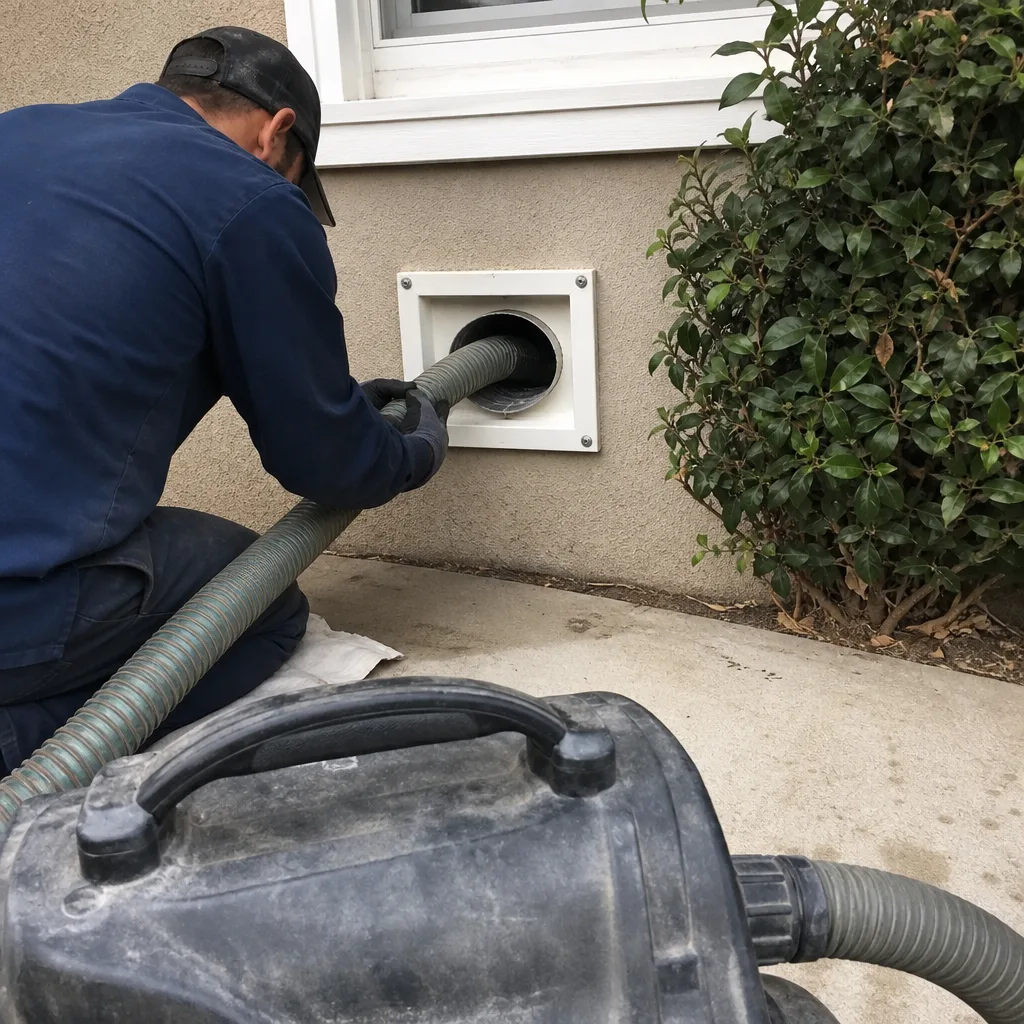
- Dryer lint trap and visible vent cleaning: Cleaning the lint screen after every load is baseline. A homeowner can also brush out the first few inches of the dryer vent from the appliance side using a flexible dryer vent brush, though this is not a substitute for full-run Dryer Vent Cleaning in Diamond Bar service on multi-story homes where the vent run exceeds ten feet and therefore exceeds the reach of any consumer brush.
These tasks share a characteristic: they address surfaces you can see and reach. That’s the boundary line. Duct cleaning that matters happens where you can’t see, and the equipment that reaches those spaces is the equipment we bring to every job.
The Specific Risks of Improper DIY Duct Cleaning in Diamond Bar
Attempting source removal without professional equipment isn’t just ineffective. In many Diamond Bar homes, it causes damage that costs more to fix than the cleaning would have cost in the first place. The housing stock in this area, much of it built between 1965 and 1985, has specific characteristics that make DIY duct work particularly hazardous.
Risk 1: Punctured Flex Duct
Flex duct, the insulated, spiral-wire tubing used in most residential branch runs, tears far more easily than homeowners expect. The inner liner is a thin plastic or foil material. A brush head with even moderate rigidity, pushed into a flex duct run with a bend or sag (common in Diamond Bar attics that reach 130 degrees in August), can catch the inner lining and puncture it. A quarter-inch tear creates a pathway for conditioned air to leak into the attic. That leak is invisible from inside the living space. It silently increases cooling costs through the entire Diamond Bar summer and pulls in attic air, which carries insulation fibers and whatever else lives up there.
Risk 2: Dislodged Mastic Seals on Trunk Lines
Sheet metal trunk lines at the plenum connection are sealed with mastic, a thick adhesive that hardens over time and turns brittle in Diamond Bar’s temperature cycling. Twenty years of summer-winter expansion and contraction leaves these seals fragile. A homeowner pushing a brush or rod through a branch collar toward the trunk line can crack or dislodge the seal without realizing it. The result is a leak at the most important junction in the system, the one closest to the blower, where positive pressure is highest. A compromised seal there can push 15 to 25 percent of your conditioned air into the attic before it ever reaches a register.
Risk 3: Introducing Humidity into Duct Interiors
Some DIY guides recommend wet-cleaning methods, from damp cloths wrapped around brushes to light water mists intended to knock down dust. This is a mistake that compounds quickly in a Diamond Bar home. Duct interiors are dark, poorly ventilated, and, during the summer, warm from the attic environment. Introducing moisture into that space, even a small amount, can take days to evaporate. In the meantime, it creates exactly the conditions that support mold growth on the accumulated organic matter already in the duct. What started as a dust problem becomes a biological contaminant problem, and the remediation cost dwarfs what a professional cleaning would have cost.
Risk 4: The Redistribution Problem
The most common outcome of a DIY duct cleaning attempt is not damage. It’s simply failure. Loosened dust that isn’t extracted gets redistributed when the blower cycles on. In a Diamond Bar summer, when the AC runs for eight or ten hours a day, this means the dust you attempted to clean is now blowing into your living space continuously. It settles on the surfaces you just cleaned. If you have forced air pushing that dust through the home day after day, the air quality in the living space actually worsens compared to before the attempt. This is the most frustrating outcome because the homeowner did the work and got a worse result.
The Real Cost Comparison: Equipment, Time, and Incomplete Results
The financial comparison between DIY and professional duct cleaning seems one-sided until you account for what the DIY option actually achieves. Here’s how the numbers shake out for a Diamond Bar single-family home with a typical duct run:
| Cost Factor | DIY Approach | Professional Service |
|---|---|---|
| Equipment | $40-$80 for a rental shop-vac with HEPA filter, or $30-$60 for brush kits | Included in service price (Rotobrush rotary brush system and Nikro HEPA-filtered negative air machine) |
| Time | 3-6 hours for a homeowner attempting full system cleaning | 3-6 hours for a crew with professional equipment, completing source removal on the full run |
| Result | Register faces cleaned; interior debris loosened but not extracted | Source removal meeting industry standard for the full duct system |
| Risk of Damage | Moderate: punctured flex duct, broken seals, moisture introduction | Low: technicians trained on the specific equipment and the specific failure modes |
| Out-of-Pocket | $70-$140 for the attempt itself | $450-$850 depending on system size and accessibility |
| Potential Hidden Cost | $300-$800 for duct repair if flex duct is punctured or seals are broken | $0-$200 for minor repairs identified during cleaning, quoted before work starts |
The scenario nobody plans for is the one where a DIY attempt requires professional remediation. A homeowner rents equipment, spends a Saturday pushing a brush through a few accessible runs, punctures a flex duct in a spot they can’t see, and then notices a new warm spot in a bedroom six weeks later. The resulting service call to diagnose and repair the puncture costs more than a professional cleaning would have, and the ducts still haven’t been cleaned. In our experience working throughout Diamond Bar, this happens more often than the DIY success stories do.
The math changes when you’re honest about the outcome. A professional cleaning is $450 to $850. A DIY attempt that achieves surface-level cleaning and no damage is $70 to $140 for a partial result. A DIY attempt that causes damage is $370 to $940 once you add repair costs, for a result that still needs professional cleaning to actually remove accumulated debris.
Why Professional Equipment Changes What Cleaning Means
The preceding sections establish what we mean by professional equipment, so let’s be specific about what it is and why it matters. The distinction isn’t branding. It’s a difference in what the equipment accomplishes.
Rotobrush Rotary Brush Systems: Agitation Through the Full Run
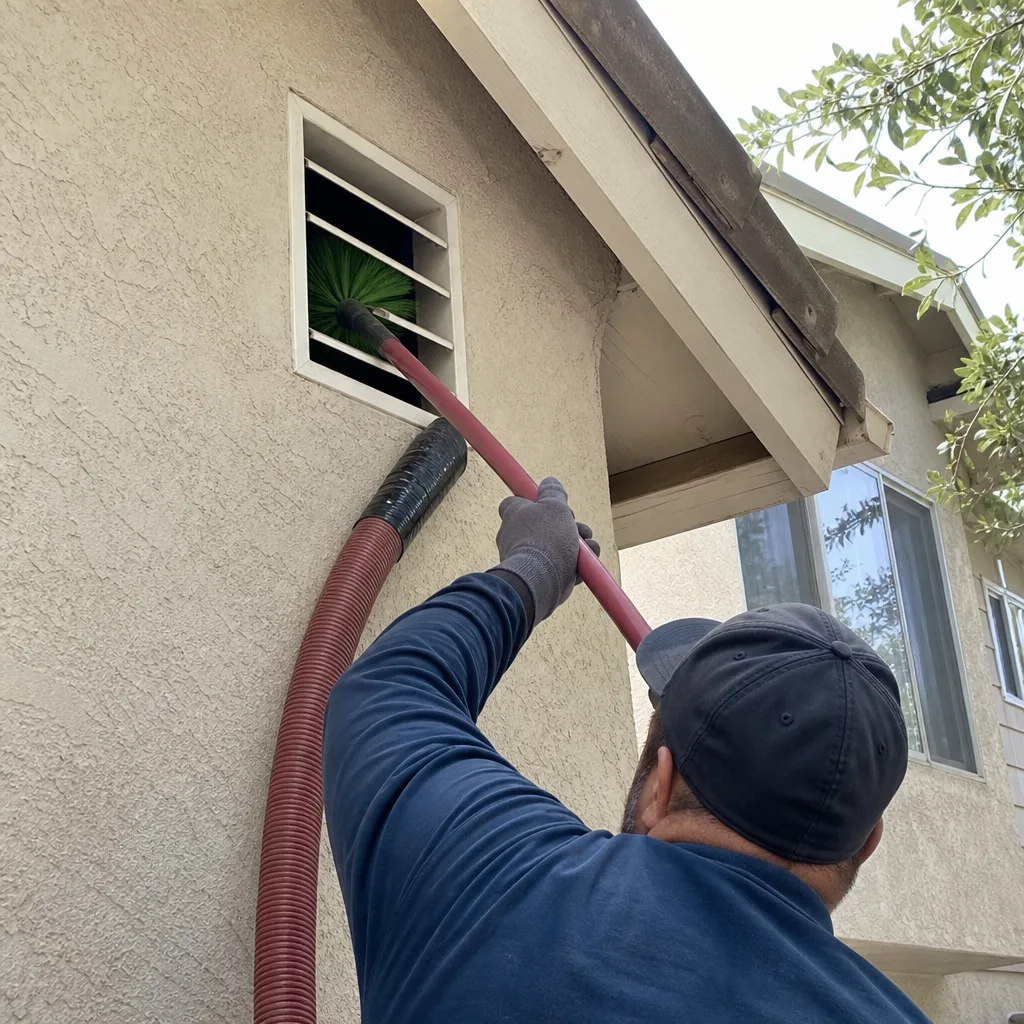
A Rotobrush system feeds a rotating brush head through the full duct run while simultaneously applying vacuum extraction. The brush head scrubs the duct wall, dislodging debris that has adhered over years of conditioning cycles, while the vacuum immediately captures it. This differs from a homeowner pushing a brush into the first bend of an accessible run because the Rotobrush head is designed for the full run, including transitions, elbows, and branch connections.
Nikro HEPA-Filtered Negative Air Machines: True Source Removal
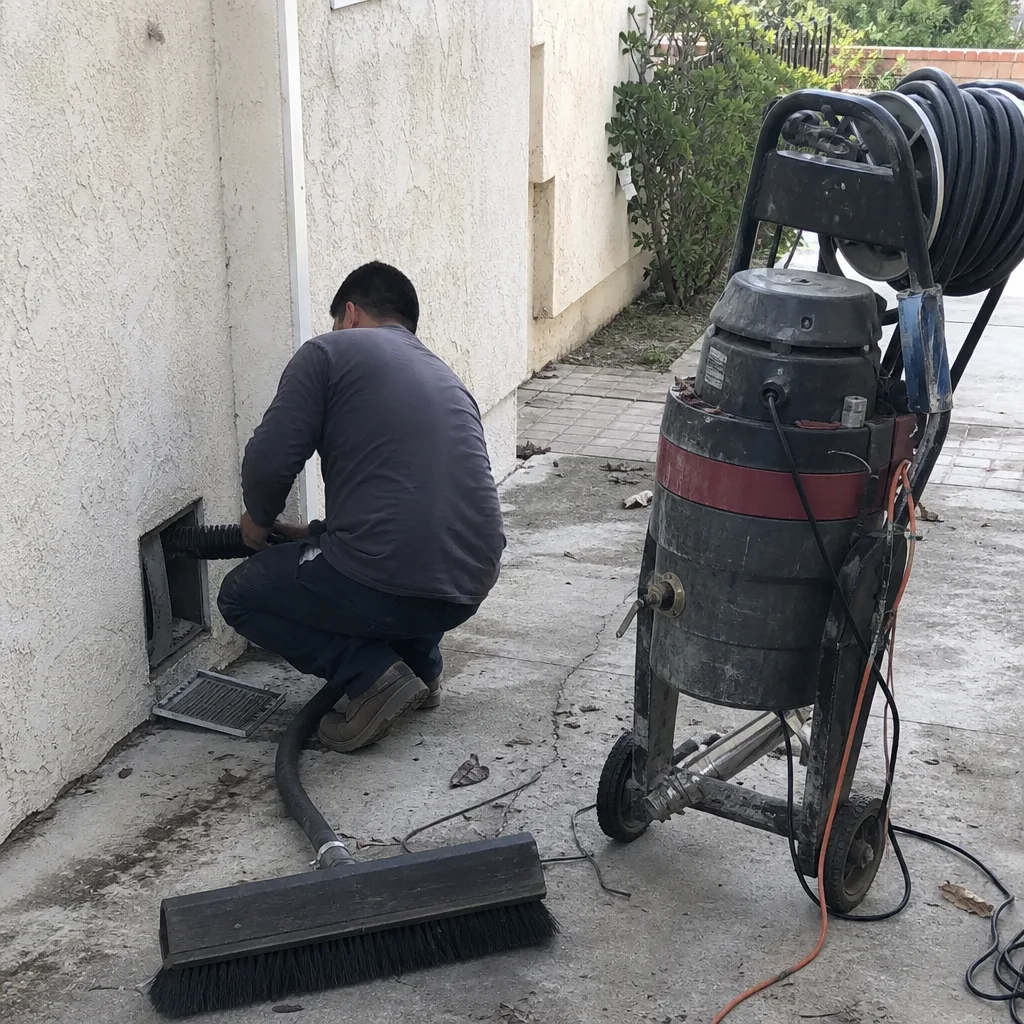
A Nikro negative air machine connects at the plenum and pulls 1,500 CFM or more through the entire duct system while the cleaning head works. The key component is the HEPA filtration system, which captures 99.97 percent of particles down to 0.3 microns. When a professional crew cleans your Diamond Bar ducts with this equipment, the debris removed from your duct walls is captured in the machine’s collection system, not exhausted into your home or your attic. Homeowner equipment, even with HEPA filters marketed for allergy use, rarely achieves this capture rate at the airflow volumes duct cleaning requires.
We bring Rotobrush rotary systems and HEPA-filtered Nikro vacuums to every job we perform in Diamond Bar. The equipment is the reason a professional cleaning achieves source removal rather than surface-level neatness, and it’s the reason a photographic before-and-after of the duct interior actually shows a difference.
What Diamond Bar’s Climate and Housing Stock Mean for Your Ducts
Homes in Diamond Bar face a specific combination of environmental pressures on their duct systems. Understanding these conditions explains why a cleaning schedule that works for a Riverside homeowner might not suit this community, and why the DIY calculus shifts; for timing guidance, see Seasonal Air Duct Cleaning Care for Diamond Bar: Year-Round Homeowner’s Guide.
Climate Factors
Diamond Bar summers are hot and dry, with average highs above 90 degrees from June through September. The air conditioning runs hard for months at a time. This means your ducts cycle through long periods of active airflow, which is when they collect debris, alternating with long periods of disuse in the mild winter months, when the blower stays off. The cold-start cycle in spring, when the AC powers up for the first time, pushes a winter’s worth of settled house dust into the ducts in a matter of days.
This area also sits against the Chino Hills and catches wind patterns that push dust from the Inland Empire’s dirt and construction activity into the region. Homes on hillside lots in the Country Estate and Diamond Crest neighborhoods see more dust infiltration than homes in the valley floor communities. This affects both filter loads and duct accumulation.
Housing Stock Factors
The majority of Diamond Bar housing stock was built between 1965 and 1985. This matters for three reasons. First, homes from this era have duct systems with mastic seals that are now 40 to 60 years old, making them more fragile during any cleaning process. Second, many of these homes have never had a full duct cleaning in their operational lives, meaning the accumulated load is heavier than a newer home’s. Third, the flex duct used in 1970s and 1980s construction has a thinner inner liner than modern materials, making the puncture risk during amateur cleaning higher than it would be in a newer home.
What This Means for a Cleaning Schedule
For most Diamond Bar homes, professional cleaning every three to five years strikes a sensible balance between cost and air quality. Homes with significant remodel history, homes that have experienced pest intrusion (rodent droppings in ducts are a common find in foothill neighborhoods), and homes near active construction zones justify shorter intervals. A professional evaluation can tell you what your specific system needs. We are the Duct Cleaning Diamond Bar home service that handles cleaning, repair, and dryer vents in one coordinated visit, so you don’t end up with three separate vendors for three connected systems.
Common Mistakes to Avoid
- Assuming a shop-vac with a long hose is a duct cleaning tool. The CFM output of any consumer vacuum is physically insufficient for source removal. You can clean a register with it. You cannot clean a duct with it.
- Using liquid cleaning products inside the duct system. Any moisture introduced into duct interiors in Diamond Bar’s warm attics creates mold-friendly conditions that can take weeks to dissipate. Duct interiors are air-scrubbed and agitated dry, not washed.
- Pushing a rented rod-and-brush kit into flex duct without knowing the system layout. Flex duct in Diamond Bar’s older homes tears easily at bends and transitions. The cost of repairing what you puncture exceeds the cost of the cleaning you were trying to do.
- Believing a post-remodel register cleaning is all the ducts need. Construction dust doesn’t stay at the registers. It travels through the full run during the first few weeks of system operation. A full cleaning is the only way to remove it.
- Treating the dryer vent as an afterthought. Lint accumulation in the full dryer vent run is the second leading cause of residential fires in the U.S., according to NFPA data. The first few inches you can reach from the appliance side is not the same thing as the full run. Your dryer vent is a fire risk waiting to be cleared, not a maintenance footnote.
- Assuming a clean duct stays clean if the system leaks. Leaky ducts pull attic air into the system, which re-contaminates cleaned ducts quickly. Clean ducts and repaired ducts are the same solve, not two separate conversations. Clean ducts. Repaired ducts. The difference matters.
- Comparing companies on price alone. The cost difference between a $299 “whole house” duct cleaning from a discount operation and a professional cleaning with Rotobrush and Nikro equipment exists because the work performed is fundamentally different. Price shopping without equipment awareness is how you pay for surface dusting twice.
See the difference
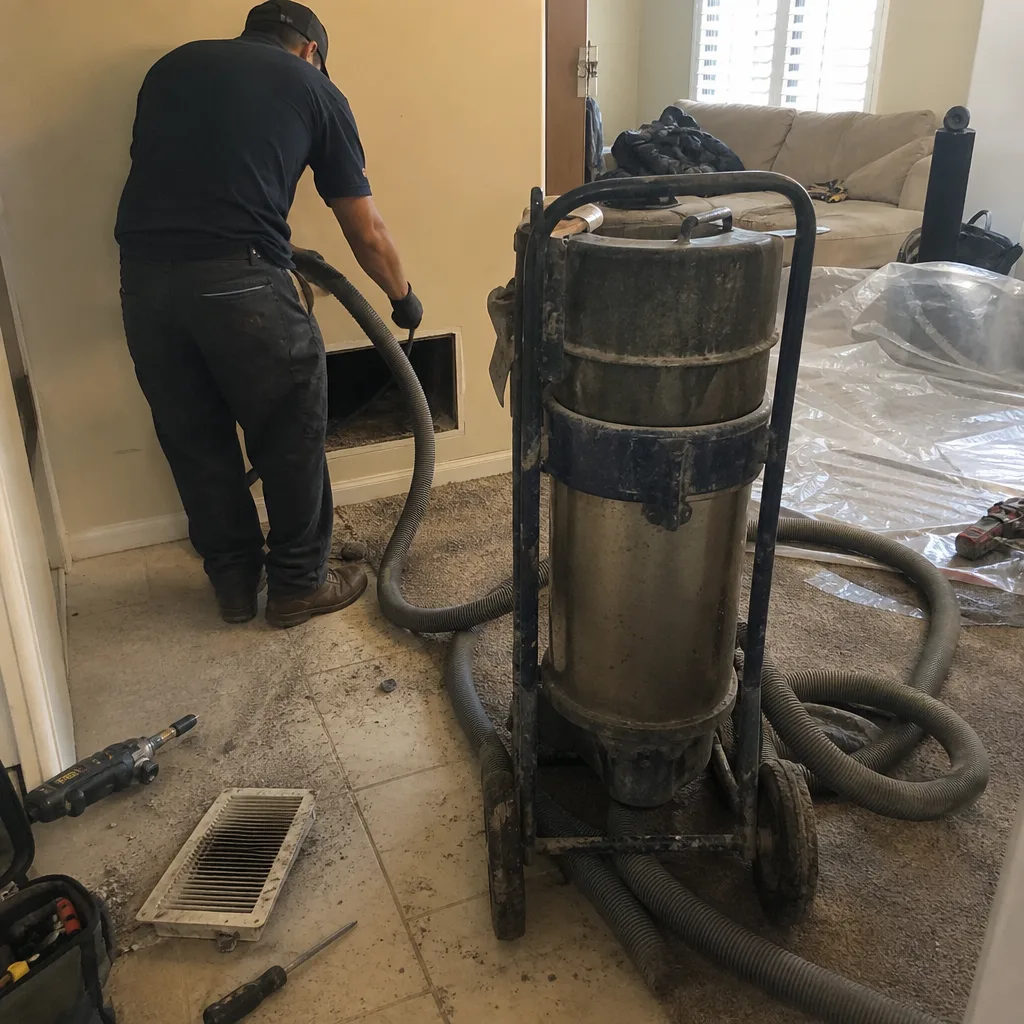 Before
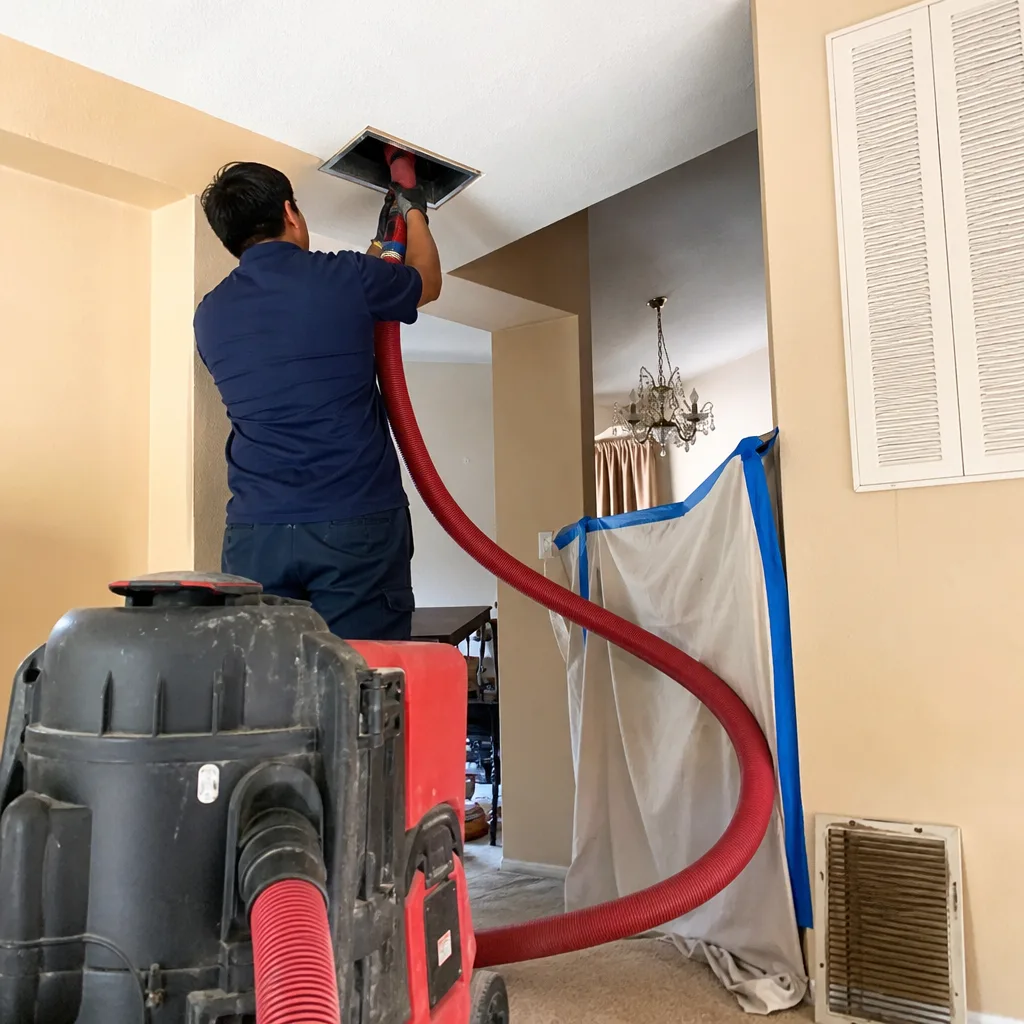 After
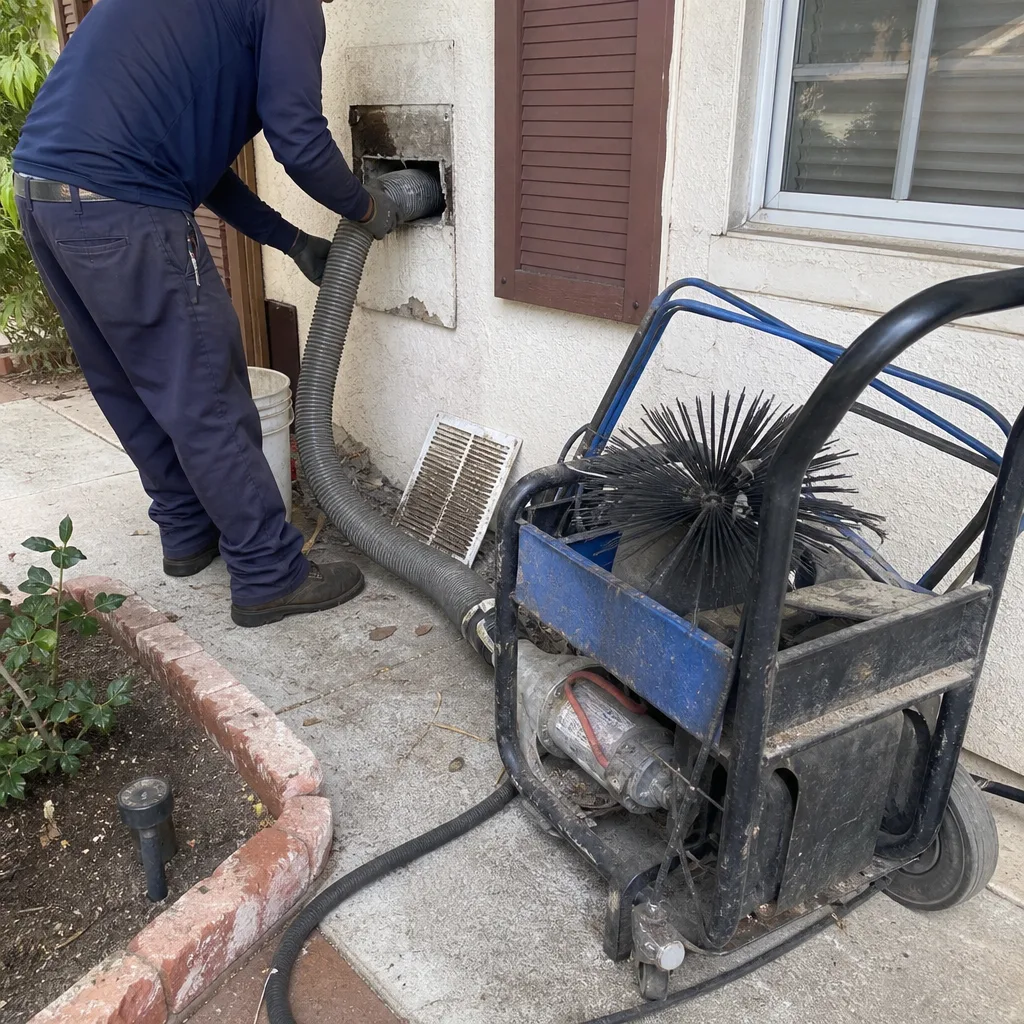 Before
 After
 Before
 After
When to Call a Professional
Call a professional when you’re dealing with more than register-level dust. That means post-renovation construction dust that has spread through the system, visible mold growth on register faces or duct interiors, pest intrusion evidence like rodent droppings in the system, a sudden unexplained increase in energy bills alongside reduced airflow, or any suspicion that a previous DIY attempt caused damage. If you’ve never had the ducts cleaned in a home older than fifteen years, a professional evaluation will tell you what you’re actually dealing with in the parts of the system you can’t see; for preparation tips, see How to Hire an Air Duct Cleaning Contractor in Diamond Bar: A Step-by-Step Guide. Duct Cleaning Diamond Bar offers free estimates in Diamond Bar, Call (877) 693-6770 to schedule an evaluation of your specific system. Air quality you can measure, not just feel, comes from work backed by professional-grade equipment, not consumer-grade shortcuts.
Frequently Asked Questions
Professional air duct cleaning in Diamond Bar typically runs between $450 and $850 for a single-family home, depending on system size, number of registers, and accessibility. The range accounts for homes with single trunk lines and a dozen registers up to larger homes with multiple plenums and 20-plus registers. The price includes full source removal with agitation and HEPA-filtered extraction. Call (877) 693-6770 for an exact quote on your home, estimates are free.
For register face cleaning, filter replacement, and routine surface maintenance, yes, it’s absolutely worth doing yourself. Those tasks are within reach and they genuinely improve air quality between professional cleanings. For any work that involves the interior of the duct run, the airflow required for source removal can’t be generated with homeowner equipment, and attempting it risks damage to flex duct and seals. The line is the register boot: everything inside the entry to the system belongs to professional equipment.
Most Diamond Bar homes benefit from professional cleaning every three to five years. The specific factors that shorten the interval are recent renovation work, pest intrusion history, living near active construction, and homes on hillside lots that catch more windblown dust. A professional evaluation after your first cleaning can give you a more accurate interval based on what the extraction actually removed from your specific system.
You can clean the first few inches of the run from the appliance side, and you should do that regularly along with lint trap cleaning. What you can’t reach with a consumer brush is the full run, especially on Diamond Bar homes where dryer vents traverse interior walls or exit through the roof. Those full runs accumulate compacted lint that a professional extraction removes completely. As a fire safety measure, professional dryer vent cleaning pays for itself in reduced fire risk, which is why we treat it as a dedicated service rather than an add-on.
The equipment and the process differ fundamentally. A discount cleaning often involves a vacuum at the register opening, which cleans the visible boot and nothing else. A professional cleaning uses a rotary agitation system paired with a HEPA-filtered negative air machine pulling 1,500 CFM or more, which achieves source removal across the full duct run. If you’re comparing prices, ask what equipment will be on site and what CFM the extraction unit produces. The answer tells you which service you’re actually buying.
Cleaning the ducts themselves has a modest effect on system efficiency on its own. The larger efficiency win comes from having the system inspected while it’s being cleaned, because leaky ducts identified and repaired during the same visit address airflow loss that directly increases cooling costs during Diamond Bar summers. The cleaning gives us access to the full system. The repair capability means when we find a problem, we can fix it without calling in another contractor. That’s the full-cycle solution that actually moves the needle on energy use.
The Bottom Line
The DIY versus professional question resolves around what you want the work to accomplish. If you want clean register faces and fresh filters, a homeowner can do that work effectively and we share more guides & resources on exactly how. If you want the accumulated years of dust, pet dander, construction debris, and whatever else has settled into your Duct Cleaning Diamond Bar home’s system actually removed from the interior of the duct run, that requires airflow volume a homeowner can’t generate, equipment built for the job, and the ability to see and repair the compromised sections that frequent cleaning reveals. Diamond Bar’s climate, housing stock, and environmental dust load mean a professional cleaning isn’t a premium or a convenience. It’s the version of the service that actually happens.
Written by the team at Duct Cleaning Diamond Bar, serving Diamond Bar since 2015.